
When our production team first started receiving calls from US distributors asking about insurance documentation, we realized something important FAA Part 137 compliance documentation 1. Many buyers struggle to get claims approved. Their suppliers never gave them the right paperwork FCC compliance certificates 2. This costs real money and creates real frustration.
To verify if agricultural drone suppliers support third-party insurance claims, request FAA Part 137 compliance documentation, confirm they provide flight data logs compatible with insurer platforms, check for maintenance record systems, and ask for sample certificates of insurance listing their drone models. Direct supplier-insurer partnerships indicate strong claim support capabilities.
This guide breaks down exactly what you need to check before signing any purchase agreement CE marking for components 3. We will cover certifications, flight data requirements, OEM modification impacts, and how to research supplier track records.
What specific certifications should I request to ensure my agricultural drones are eligible for third-party insurance?
Our engineers have spent years ensuring our agricultural drones meet export requirements for American markets third-party liability coverage 4. We have learned that missing even one certification can void your entire insurance policy. This is a problem you can avoid with the right questions upfront.
Request FAA Part 137 certification eligibility, FCC compliance certificates, CE marking for components, and manufacturer declarations of conformity. Your drone must also have documented serial numbers traceable to production records. Insurers like VT Insurance Agency require these documents before listing drones on policies for payout eligibility.
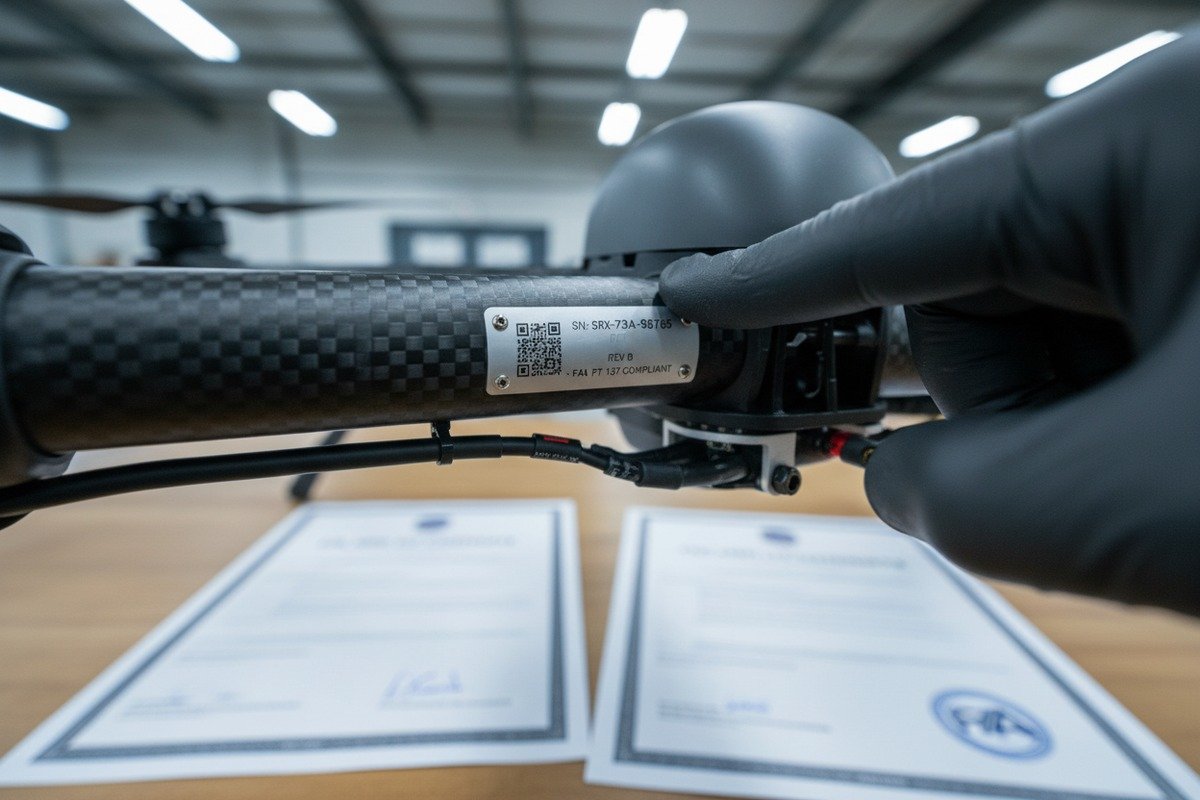
Why FAA Part 137 Matters Most
FAA Part 137 governs agricultural aircraft operations in the United States. If your drone is not certified under this regulation, insurers will deny claims. Period. This is not optional.
When we ship drones to US distributors, we include Part 137 eligibility documentation. This shows the drone meets weight, performance, and safety standards required for aerial application work. Without this, your customer cannot legally spray crops commercially.
Essential Certification Checklist
| Certificering | Doel | Who Requires It |
|---|---|---|
| FAA Part 137 Eligibility | Legal commercial ag operations | All US insurers |
| FCC Compliance | Radio frequency approval | FCC, insurers |
| CE-markering | Component safety standards | European insurers |
| Serial Number Documentation | Traceability for claims | All insurers |
| Manufacturer Declaration of Conformity | Production quality proof | Most insurers |
Secondary Certifications That Help
Beyond Part 137, several other certifications strengthen your insurance position. IP ratings prove weather resistance. This matters because weather-related damage claims require proof your drone was rated for the conditions.
Battery certifications matter too. UN38.3 testing for lithium batteries 5 shows compliance with transport safety. Insurers view this as evidence of quality manufacturing.
Rode vlaggen om op te letten
Some suppliers provide vague certification claims. They say "FAA compliant" without specifying Part 137. This is not the same thing. Part 107 covers recreational and commercial photography drones. Part 137 specifically covers agricultural operations.
Ask for actual certificate copies. Not summaries. Not verbal confirmations. Physical documents with dates, serial numbers, and official stamps. Our quality control team maintains these records for every unit we produce.
How can I confirm that the supplier's flight data logs meet my insurance company's claim requirements?
In our experience exporting to the US market, flight data logging has become the single most disputed element in insurance claims. We have seen distributors lose thousands because their drones recorded data in formats insurers could not read. This is fixable if you ask the right questions.
Confirm suppliers provide tamper-proof flight logs with GPS coordinates, altitude readings, timestamps, and battery status. Verify data exports in standard formats like CSV or integrates with platforms like DroneDeploy. Insurers require these logs to validate incident details and prove operational compliance during claims investigation.
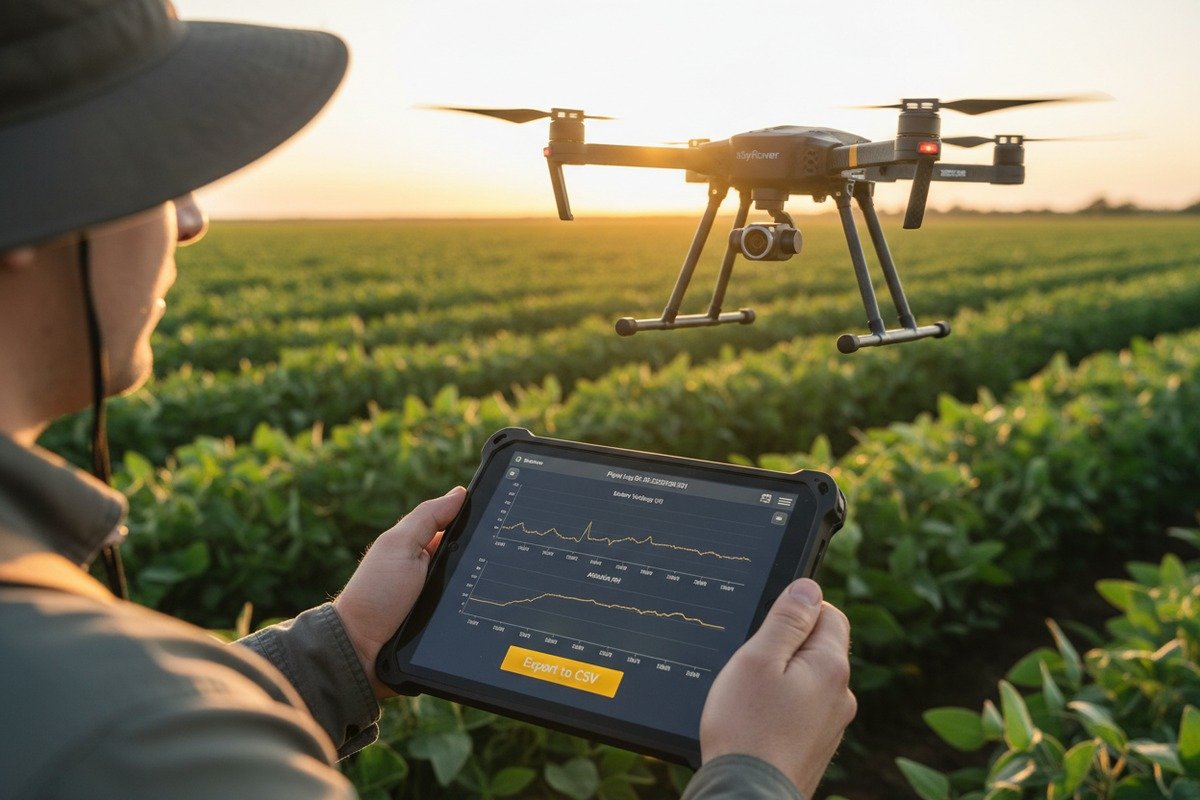
What Data Points Insurers Actually Need
Insurance adjusters do not care about fancy dashboards. They need raw data proving what happened, when it happened, and where it happened. Our flight controllers record over 50 parameters, but only about 12 matter for claims.
| Gegevenspunt | Why Insurers Need It | Recording Frequency |
|---|---|---|
| GPS Coordinates 6 | Location verification | Every 0.5 seconds |
| Hoogte | Flight compliance proof | Every 0.5 seconds |
| Timestamp | Timeline reconstruction | Every data point |
| Batterijspanning | Equipment condition | Every 1 second |
| Motor RPM | Mechanical status | Every 1 second |
| Control Inputs | Pilot action proof | Every 0.1 seconds |
| Wind Speed Estimate | Milieuomstandigheden | Every 5 seconds |
| Error Codes | Malfunction documentation | Event-triggered |
Compatibiliteit gegevensindeling
Here is where many suppliers fail. Their drones record excellent data. But the format is proprietary. The insurer's adjuster cannot open the files.
When we calibrate our flight controllers, we ensure data exports to CSV, KML, and JSON formats. These work with DroneDeploy 7, Aerial Vantage, and most insurance investigation tools. Ask your supplier for sample data exports before purchasing.
Tamper-Proof Requirements
Insurers worry about data manipulation. If you can edit flight logs, claims become unprovable. Our systems use encrypted storage with hash verification. Any modification breaks the verification chain.
Ask suppliers these specific questions:
- Can flight logs be edited after recording?
- How is data integrity verified?
- What encryption protects stored data?
Integration Testing Before Purchase
Request a sample flight log from any supplier you consider. Send it to your insurance company. Ask them to confirm they can process it. This ten-minute test prevents months of claims headaches.
Great American Insurance Company and similar firms use specific analysis platforms. If your drone data does not integrate, you start the claims process at a disadvantage.
Will my custom OEM drone modifications impact my ability to secure third-party liability coverage?
When we collaborate with clients on custom designs, this question comes up in nearly every project meeting. Our engineering team has learned that some modifications help insurance coverage. Others destroy it. The difference matters enormously.
Custom OEM modifications can impact insurance coverage positively or negatively depending on documentation and certification maintenance. Modifications that maintain FAA Part 137 compliance and include updated technical specifications typically remain insurable. Undocumented changes or those affecting flight safety systems often void coverage entirely.
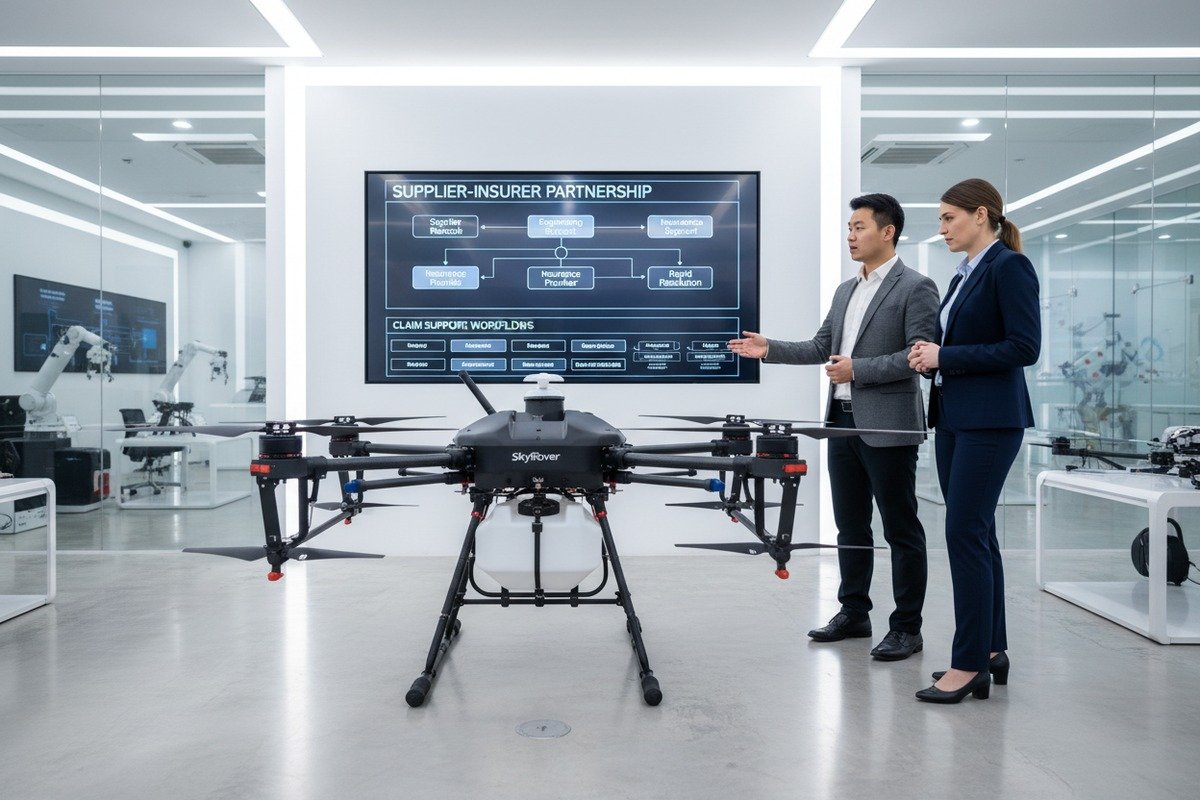
Modifications That Usually Remain Insurable
Not all customization creates insurance problems. In fact, some modifications improve your coverage position. The key is documentation and compliance maintenance.
| Type wijziging | Insurance Impact | Documentation Required |
|---|---|---|
| Custom spray nozzle patterns | Usually neutral | Updated specifications |
| Increased tank capacity | Often requires policy update | Engineering analysis, weight certification |
| Custom paint/branding | No impact | Geen |
| Different battery chemistry | Requires notification | New UN38.3 certification |
| Software feature additions | Usually neutral | Version documentation |
| Modified flight controller firmware | High risk | Full recertification often needed |
| Structural frame changes | High risk | Engineering certification required |
High-Risk Modifications
Changes affecting flight safety systems create the biggest problems. Modified flight controllers, altered motor configurations, or structural changes often void coverage completely.
Our approach when clients request these modifications is full recertification. We treat the modified drone as a new product. This costs more upfront but protects the customer's insurance position.
Documentation Requirements for Custom Work
Every modification needs paper trails. When our engineers change a spray system design, we produce updated technical drawings, test reports, and compliance statements. This package goes to the customer along with the modified drone.
Insurers want to see:
- Original specifications
- Modification description
- Engineering justification
- Updated compliance verification
- Test results post-modification
Working With Your Insurer During Customization
The best practice is involving your insurance company before modifications happen. Many insurers offer pre-approval reviews. They tell you what documentation they need before the work begins.
VT Insurance Agency specifically mentions working with operators on modified equipment. But they require advance notification and documentation review. Surprises during claims cause denials.
Protecting Your Investment
If you are investing in custom OEM modifications, budget for documentation costs. This typically adds 5-10% to modification pricing but protects your entire equipment investment. A denied claim on a $50,000 drone makes documentation costs look trivial.
How do I verify if a supplier has a history of providing the documentation I need for successful insurance claims?
Our sales team hears this concern regularly from experienced distributors. They have been burned before. A supplier promised support, then disappeared when claims paperwork was needed. Verification before purchase protects your business.
Verify supplier documentation history by requesting references from existing customers, asking for sample documentation packages, checking for insurer partnerships, reviewing service level agreements covering claim support, and testing response times with documentation requests. Suppliers with established US export experience typically have proven systems for insurance support.
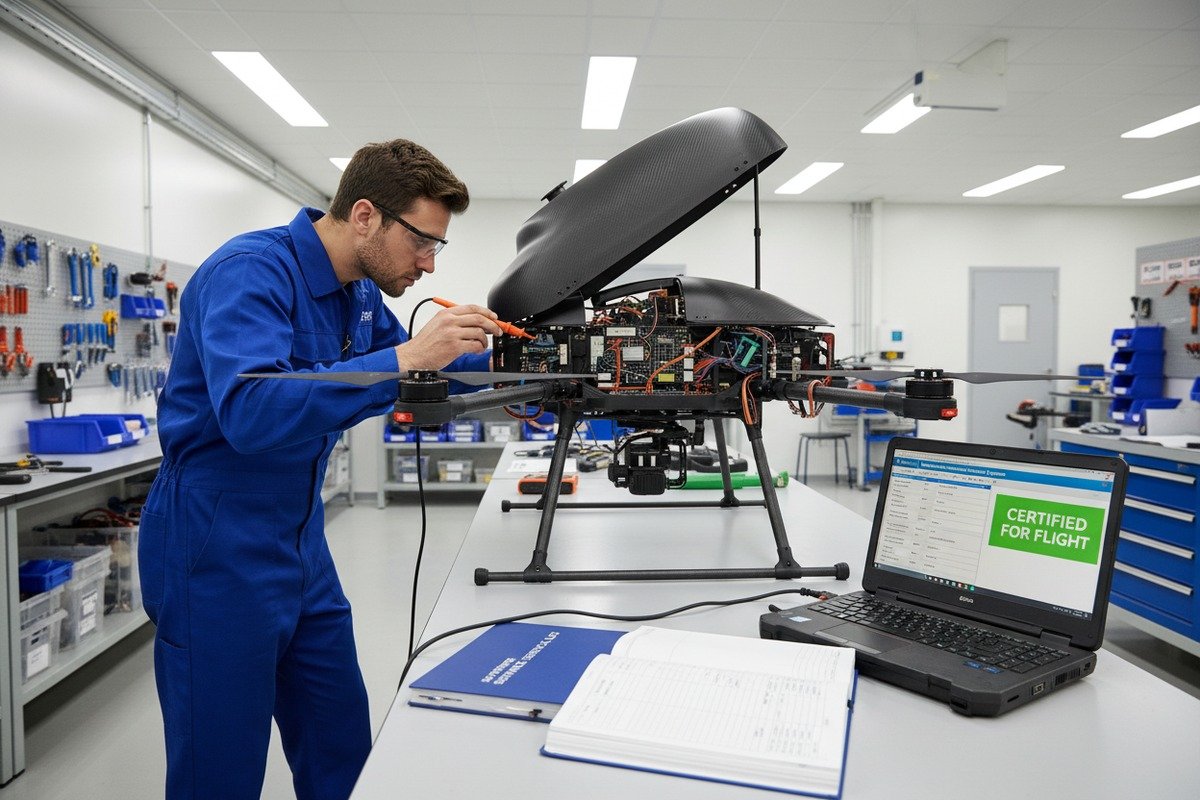
Reference Checks That Actually Work
Generic references do not help. You need specific questions about insurance documentation experience.
Ask references:
- Have you filed any insurance claims involving this supplier's drones?
- Did the supplier provide documentation when requested?
- How long did documentation requests take to fulfill?
- Were any claims denied due to missing supplier documentation?
Our customers can speak to these questions directly. We maintain relationships specifically because we support them through claims processes.
Sample Documentation Package Review
Before purchasing, request a complete sample documentation package. This should include everything an insurance adjuster might request. Evaluate it against this checklist:
| Document | Doel | Red Flag If Missing |
|---|---|---|
| Certificate of Conformity | Manufacturing quality proof | Major concern |
| Serial Number Registry | Traceability | Major concern |
| Maintenance Log Template | Service history tracking | Moderate concern |
| Flight Log Export Sample | Incident documentation | Major concern |
| Spare Parts List with Numbers | Repair documentation | Moderate concern |
| Technical Specifications | Equipment verification | Major concern |
| Warranty Documentation | Coverage details | Minor concern |
Service Level Agreements Matter
When we finalize distribution agreements, we include specific SLA terms covering documentation support. Service Level Agreements 8 Response times, availability, and escalation procedures are written into contracts.
Look for these SLA elements:
- Maximum response time for documentation requests
- Dedicated support contact for insurance matters
- Document retention period commitments
- Emergency support availability
Testing Supplier Responsiveness
Before signing large contracts, test the supplier. Request documentation for a hypothetical scenario. Time the response. Evaluate completeness.
Send an email asking: "If one of your drones was involved in a crop damage incident, what documentation would you provide for my insurance claim?"
A quality supplier responds within 24-48 hours with a comprehensive list. Vague responses or delays signal problems.
Supplier-Insurer Partnerships
Some suppliers have direct relationships with agricultural drone insurers. ZenaDrone and similar companies integrate with crop insurance platforms. These partnerships indicate mature documentation systems.
Ask suppliers if any insurance companies have pre-approved their documentation packages. Pre-approval means faster claims processing for you.
Red Flags in Supplier Communication
Watch for these warning signs during supplier evaluation:
- Reluctance to discuss insurance topics
- Claims that "certification is the buyer's responsibility"
- No existing US customers to reference
- Unable to provide sample documentation
- Long response delays to documentation questions
Our approach is transparency. We explain exactly what documentation we provide because we understand how critical it is for our customers' businesses.
Conclusie
Verifying agricultural drone supplier insurance support requires checking certifications, data compatibility, modification policies, and documentation history. Take time to test these elements before purchasing. Your insurance claim success depends on decisions made during supplier selection, not after incidents occur.
Voetnoten
1. Explains FAA Part 137 regulations for agricultural aircraft operations. ↩︎
2. Details the FCC’s equipment authorization program and compliance requirements. ↩︎
3. Official EU information on CE marking, its purpose, and manufacturer responsibilities. ↩︎
4. Explains third-party liability insurance and its function in protecting against claims. ↩︎
5. Updated page on the original authoritative Intertek domain for UN 38.3 testing. ↩︎
6. Defines GPS coordinates and explains how they work for location identification. ↩︎
7. Official site of DroneDeploy, a platform for drone mapping and data analysis. ↩︎
8. Provides a comprehensive definition and explanation of Service Level Agreements. ↩︎

 English
  Spanish
  German
  French
  Dutch
Dutch  Arabic
