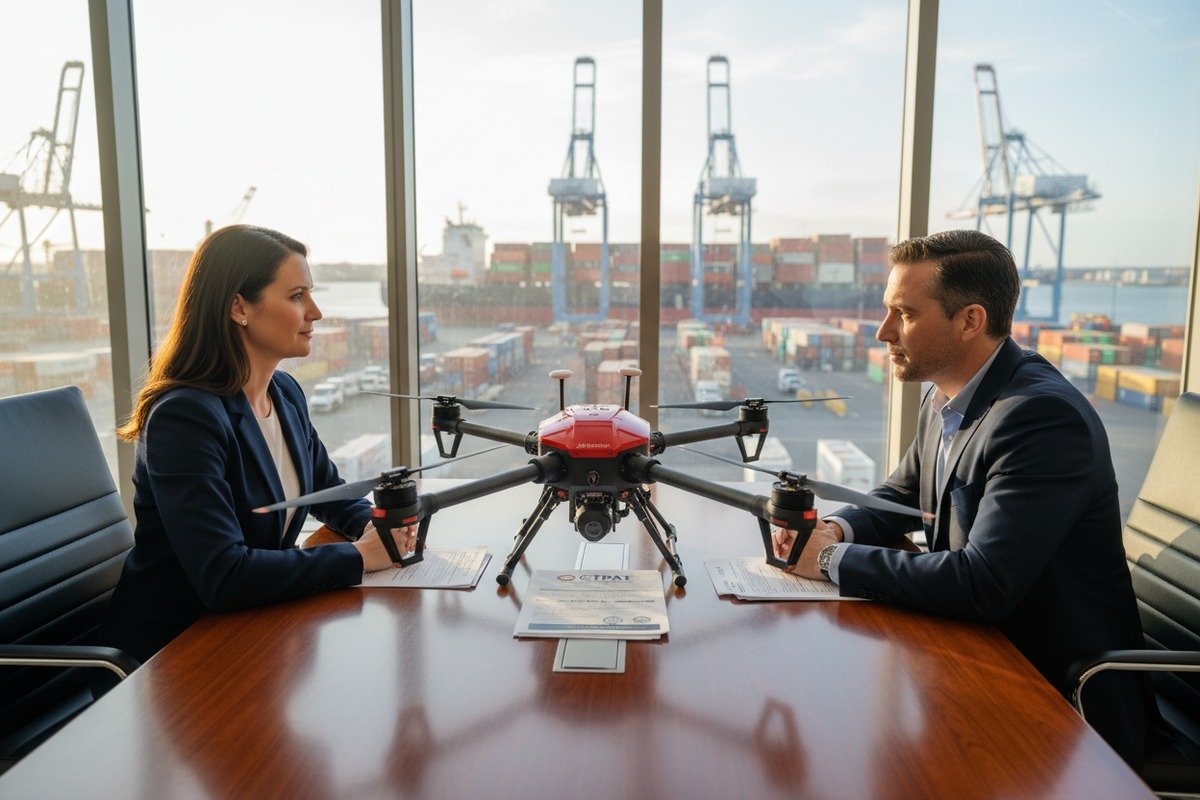
Every week, our production team ships firefighting drones overseas. Yet nothing stings more than hearing a client’s shipment got stuck at US customs for weeks. The wrong freight forwarder can turn a simple import into a costly nightmare.
To choose a freight forwarder for US customs clearance of firefighting drones, verify their licensed customs broker status, confirm experience with industrial drone imports, ensure they handle lithium battery hazmat certifications, check C-TPAT participation, and assess their track record with dual-use technology compliance and documentation accuracy.
This guide breaks down exactly what qualifications matter, how to verify forwarder expertise, and what questions to ask before signing any contract. Let’s dive into the details that protect your shipment and your budget.
What specific qualifications should I look for in a freight forwarder to handle my firefighting drone imports?
When we calibrate flight controllers and test payload systems at our facility, we know every component meets strict standards. Your freight forwarder needs the same level of qualification. Without proper credentials, your expensive firefighting drone could sit in a warehouse for months.
Look for a licensed US customs broker, C-TPAT certification, hazardous materials handling credentials for lithium batteries, experience with HTSUS drone classification, knowledge of dual-use technology regulations, and proven documentation accuracy with industrial electronics imports.
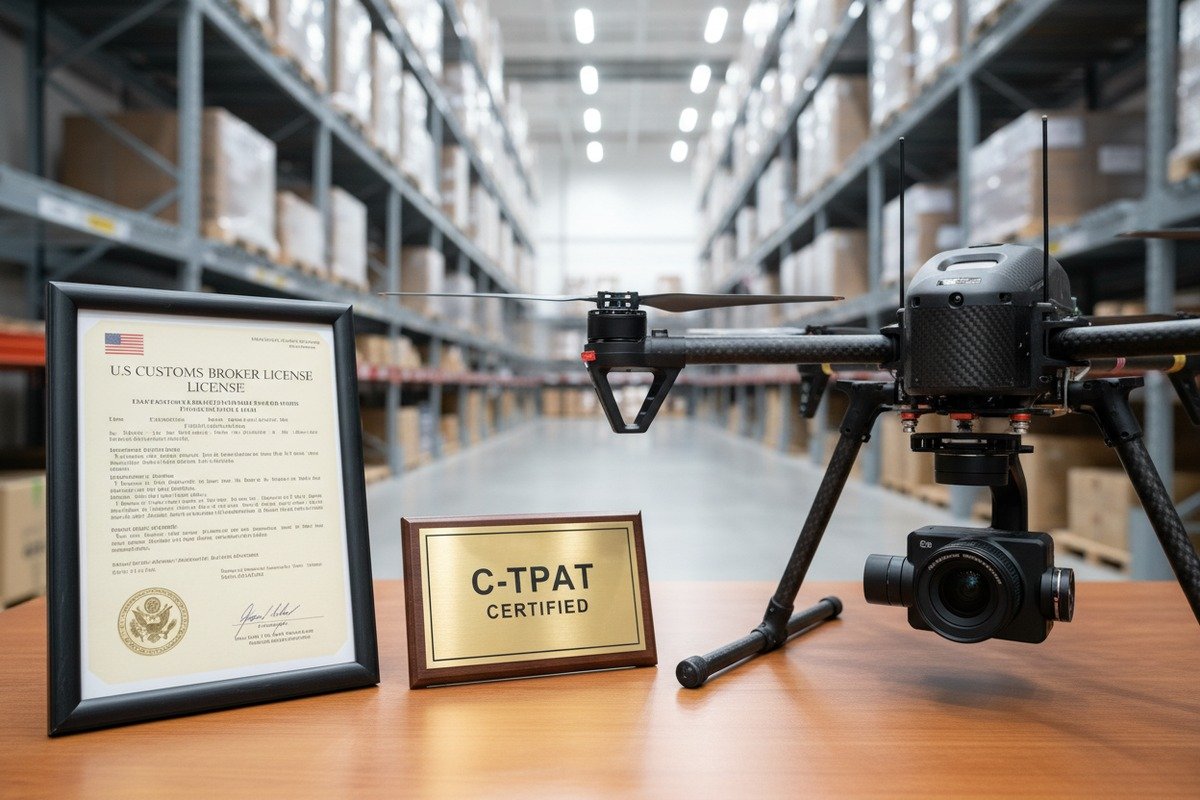
Essential Licenses and Certifications
A qualified freight forwarder must hold specific credentials. The most critical is a US Customs Broker License 1 issued by CBP. This license proves they passed rigorous exams on customs regulations. Without it, they cannot legally file entry documents on your behalf.
C-TPAT certification 2 matters greatly. The Customs-Trade Partnership Against Terrorism program identifies forwarders who meet strict security standards. C-TPAT members enjoy faster clearance times and fewer inspections. For time-sensitive firefighting equipment, this advantage proves invaluable.
Hazardous Materials Expertise
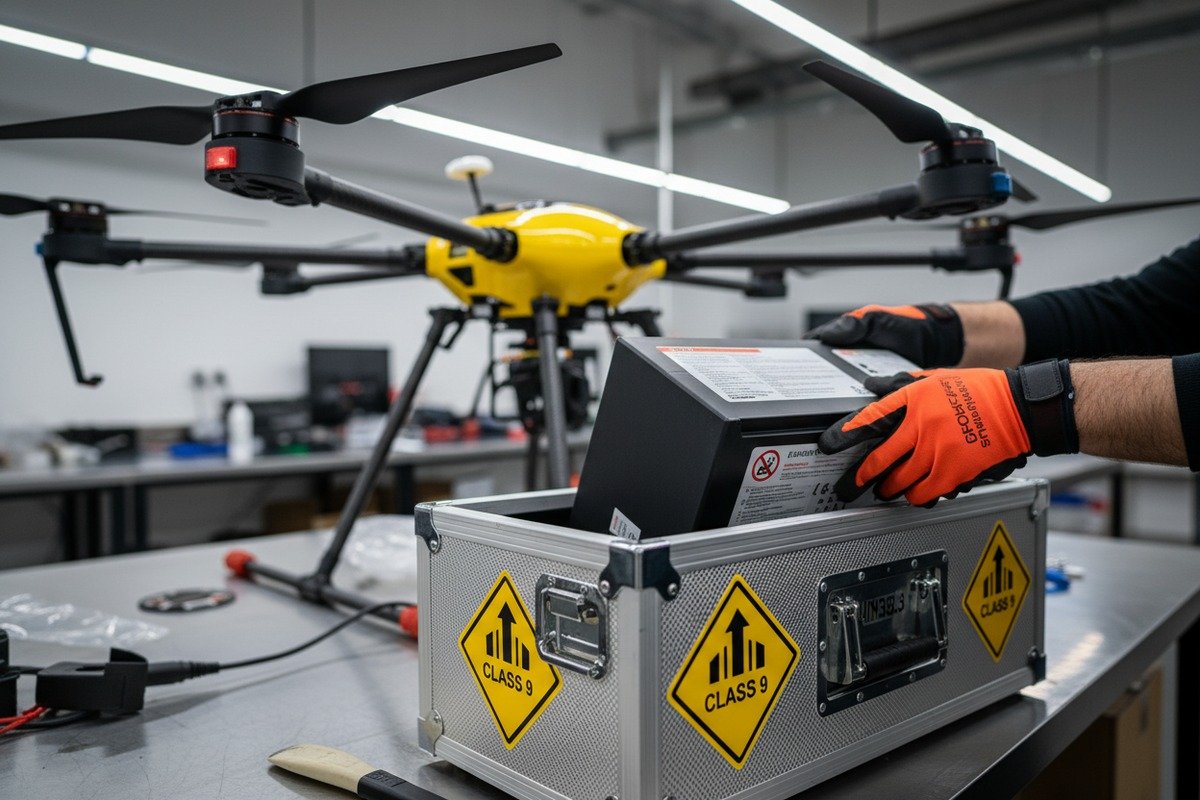
Firefighting drones contain high-capacity lithium-ion batteries 3. These batteries fall under dangerous goods regulations. Your forwarder must have IATA Dangerous Goods certification. They need UN38.3 testing knowledge for battery compliance. Improper battery documentation triggers automatic holds.
| Qualification | Waarom het belangrijk is | Hoe te controleren |
|---|---|---|
| US Customs Broker License | Legal authority to file CBP documents | Request license number, verify on CBP website |
| C-TPAT Certification | Faster clearance, fewer inspections | Ask for certificate, check CBP partner list |
| IATA Dangerous Goods | Required for lithium battery shipments | Request training certificates |
| FMC License | Ocean freight authority | Verify on FMC website |
| Insurance Coverage | Protection against loss or damage | Request certificate of insurance |
Classification Knowledge
Tariff classification directly impacts your costs. Firefighting drones fall under specific HTSUS codes 4 for Unmanned Aircraft Systems. Misclassification leads to penalties, delays, and overpaid duties. Our engineering team provides detailed technical specifications for each drone model. Your forwarder must understand how to use these specs for accurate classification.
A qualified forwarder asks detailed questions about your drone. They want payload capacity, maximum takeoff weight, flight controller specifications, and camera systems. These details determine the correct tariff code. Vague responses signal inexperience.
How can I verify if a forwarder has experience with US customs regulations for industrial-grade drones?
In our experience exporting firefighting drones to American fire departments, we've seen forwarders claim expertise they don't have. Talk is cheap. Verification requires specific questions and reference checks. Your due diligence protects thousands of dollars in equipment.
Verify forwarder experience by requesting case studies of previous drone imports, asking for client references in aerospace or electronics, confirming knowledge of FCC Covered List restrictions, testing their understanding of ITAR implications, and checking their familiarity with End-User Certificate requirements.

Ask the Right Questions
Generic answers reveal inexperience. A qualified forwarder should explain specific challenges with drone imports. They should mention recent regulatory changes. The FCC's Covered List 5 affects foreign-made drones and components. The Uyghur Forced Labor Prevention Act creates additional documentation requirements.
Here are questions that separate experts from pretenders:
- What HTSUS codes apply to octocopter drones with thermal cameras?
- How do you handle UN38.3 certification for high-capacity lithium batteries?
- What End-User Certificate requirements 6 apply to drones with dual-use sensors?
- Have you cleared drones affected by FCC restrictions?
- What's your process when CBP requests additional technical documentation?
Reference Verification
Request three to five references from clients who import similar products. Industrial electronics, aerospace equipment, or surveillance technology share regulatory overlap with firefighting drones. Contact these references directly. Ask about clearance times, communication quality, and problem resolution.
| Verificatiemethode | Waar moet je op letten? | Rode vlaggen |
|---|---|---|
| Client References | Successful drone or electronics imports | No references available |
| Case Studies | Specific clearance challenges overcome | Generic descriptions only |
| Staff Credentials | Customs specialists with drone experience | High turnover, no specialists |
| Regulatory Knowledge Test | Accurate answers to technical questions | Vague or incorrect responses |
| Industry Associations | Membership in trade organizations | No professional affiliations |
Technology and Tracking Capabilities
Modern forwarders use digital systems for customs filing. EDI integration speeds up AES filings. Real-time tracking shows exactly where your shipment sits in the clearance process. Our clients appreciate knowing when their drones clear inspection.
Ask for a demonstration of their tracking platform. Can you see document status? Will you receive automatic updates at each milestone? Technology investment signals a forwarder's commitment to service quality.
Government Contract Experience
If you sell to fire departments or government agencies, your forwarder needs relevant experience. Government procurement involves specific compliance, reporting, and invoicing requirements. Forwarders who understand GSA schedules and municipal purchasing processes add significant value.
Will my freight forwarder manage the entire door-to-door delivery process and handle all my import documentation?
When we complete final assembly and quality testing at our Xi'an facility, the drone is ready to ship. But the journey from our warehouse to your operations center involves dozens of steps. Understanding what your forwarder actually handles prevents nasty surprises.
Full-service freight forwarders manage pickup from origin, international transport, customs brokerage, documentation filing, duty payment, and final delivery. However, services vary significantly between providers. Always confirm specific inclusions in writing before signing any agreement.
Full-Service vs. Limited Service
The term "freight forwarder" covers a wide range of service levels. Some handle only international transport. Others manage the complete supply chain. For firefighting drones, you need comprehensive coverage.
| Service Element | Full-Service Forwarder | Limited Forwarder | Customs Broker Only |
|---|---|---|---|
| Origin Pickup | ✓ Included | Sometimes extra | ✗ Not provided |
| Exportdocumentatie | ✓ Included | ✓ Usually included | ✗ Not provided |
| International Freight | ✓ Included | ✓ Included | ✗ Not provided |
| US Customs Entry | ✓ Included | Sometimes outsourced | ✓ Core service |
| Duty Payment | ✓ Included | Sometimes extra | ✓ Usually included |
| Final Delivery | ✓ Included | Sometimes extra | ✗ Not provided |
| Warehousing | Often available | Rarely available | ✗ Not provided |
Documentation Requirements
Firefighting drone imports require extensive paperwork. Your forwarder should prepare or verify all documents before shipping. Missing or incorrect documents cause delays at every checkpoint.
Essential documents include:
- Commercial Invoice with detailed product descriptions
- Packing List with weights and dimensions
- Bill of Lading or Air Waybill
- Certificaat van oorsprong
- UN38.3 Test Summary for batteries
- Technical datasheets for drone specifications
- CBP Form 3461 for entry
- CBP Form 7501 for duty calculation
Customs Bond Management
Importing goods valued over $2,500 requires a customs bond 7. Your forwarder can arrange either a single-entry bond or a continuous bond. Continuous bonds make sense if you import regularly. They cover unlimited entries for one year.
Our recommendation: discuss bond options early. Single-entry bonds cost more per shipment but require no upfront annual commitment. Continuous bonds save money for frequent importers. Your forwarder should explain both options clearly.
Post-Clearance Logistics
Clearance marks the halfway point, not the finish line. Your firefighting drone still needs to reach your warehouse or directly to a fire department client. Ask about final-mile delivery options. Can the forwarder deliver to multiple locations from a single shipment? Do they offer specialized handling for sensitive electronics?
Some forwarders offer value-added services like inspection, testing, or kitting at their warehouse. These services can speed up your distribution to end customers.
How do I choose a logistics partner that minimizes the risk of customs delays for my firefighting drone orders?
Our production team works hard to meet delivery schedules. Nothing frustrates us more than a drone sitting at port because of preventable delays. The right logistics partner anticipates problems before they occur. Proactive planning beats reactive scrambling every time.
Minimize customs delay risks by selecting forwarders with strong documentation accuracy, pre-clearance filing capabilities, established CBP relationships, contingency plans for inspections, real-time communication systems, and experience navigating the specific regulatory challenges of drone imports.

Pre-Clearance Filing
The best forwarders file customs documents before your shipment arrives. Pre-clearance means CBP reviews your entry while the drone is still on the water or in the air. When the shipment lands, clearance happens within hours instead of days.
Ask your forwarder about their pre-clearance process. Do they file entry documents 5+ days before arrival? Do they use ACE (Automated Commercial Environment 8) for electronic filing? Delays often start with late paperwork.
Documentation Accuracy
Studies show reliability ranks as the top factor in forwarder selection. Reliability includes accurate documentation. A single typo on a commercial invoice can trigger a CBP hold. Wrong tariff codes cause examination requests.
Our quality control process catches product defects before shipping. Your forwarder needs similar attention to detail with paperwork. Ask about their document review process. Do multiple people check entries before filing? What's their error rate?
Contingency Planning
Even perfect preparation cannot prevent all problems. CBP conducts random inspections. Regulations change unexpectedly. Your forwarder needs backup plans.
Ask these questions about contingency planning:
- What happens if CBP selects my shipment for examination?
- How quickly can you respond to requests for additional information?
- Do you have legal counsel for complex regulatory issues?
- What alternative ports or routes can you use if problems arise?
- How do you communicate delays to clients?
Communication Systems
When problems occur, fast communication limits damage. Your forwarder should contact you immediately when issues arise. Waiting days to learn about a hold extends delays significantly.
| Communication Factor | Best Practice | Waarschuwingstekens |
|---|---|---|
| Reactietijd | Same-day replies to inquiries | Multi-day delays in responses |
| Proactive Updates | Automatic milestone notifications | Updates only when asked |
| Problem Escalation | Immediate notification of issues | Learning about holds after the fact |
| Point of Contact | Dedicated account manager | Different person each call |
| Beschikbaarheid | Extended hours, emergency contact | Strict 9-5 only |
Relationship with CBP
Experienced forwarders build relationships with CBP port personnel. These relationships don't guarantee preferential treatment, but they help resolve ambiguous situations. A forwarder who knows the local port director can get questions answered faster than one making cold calls.
C-TPAT certification indicates a forwarder's relationship with CBP. Members undergo regular audits and maintain security standards. This investment in compliance pays dividends when problems need resolution.
Insurance and Risk Coverage
Despite best efforts, things go wrong. Shipments get damaged. Customs seizes goods due to regulatory misunderstandings. Proper insurance protects your investment.
Confirm your forwarder carries adequate cargo insurance. Ask about their claims process. How long does resolution typically take? Have they handled claims for similar high-value electronics? Insurance costs a small percentage of shipment value but provides enormous peace of mind.
Conclusie
Choosing the right freight forwarder protects your firefighting drone investment. Verify qualifications, test their expertise, confirm service scope, and prioritize reliability over price. Your due diligence today prevents costly delays tomorrow.
Voetnoten
1. Explains the license, requirements, and role of customs brokers. ↩︎
2. Details the program, its benefits, and how it enhances supply chain security. ↩︎
3. Provides IATA regulations and safety requirements for transporting lithium batteries. ↩︎
4. Official source for Harmonized Tariff Schedule codes, crucial for drone classification. ↩︎
5. Explains the list, its purpose, and restrictions on foreign-made drones. ↩︎
6. Replaced HTTP 404 with a comprehensive guide on End-User Certificates from a reputable trade resource. ↩︎
7. Defines customs bonds and their necessity for importing goods into the U.S. ↩︎
8. Describes ACE as the primary system for trade data submission to CBP. ↩︎

 English
  Spanish
  German
  French
  Dutch
Dutch  Arabic
