
Every week, our logistics team fields calls from anxious buyers who just discovered their firefighting drone shipment is stuck at customs. The fees pile up. The delivery date slips. The fire season waits for no one.
Choosing between FOB and DDP depends on your logistics expertise, order volume, and risk tolerance. FOB typically saves 15-35% on costs but requires you to manage shipping and customs. DDP offers predictable door-to-door pricing with the seller handling all complexities, but costs 20-40% more due to built-in service markups.
This decision shapes your entire import experience. Let me walk you through the real factors that matter when bringing firefighting drones across borders.
How can I calculate whether FOB or DDP offers better cost-efficiency for my firefighting drone imports?
When we ship our industrial drones from Xi'an to customers in the United States, the cost breakdown looks very different depending on the chosen Incoterm 1. Many procurement managers focus only on the quoted price, missing the true landed cost.
To calculate cost-efficiency, compare total landed costs under both terms. Add FOB price plus your freight, insurance, duties, and clearance fees. Then compare against the DDP quote. FOB typically saves $8,000-$12,000 on a $50,000 firefighting drone order, but only if you have established freight forwarder relationships and customs expertise.

Breaking Down the FOB Cost Structure
Under FOB terms 2, our responsibility ends when the drone crate crosses the ship's rail at the origin port. From that moment, you control—and pay for—everything else.
Here is what you will pay separately under FOB:
| Kostencomponent | Typical Range (US Import) | Who Manages |
|---|---|---|
| Ocean Freight | $2,500 – $4,500 per container | Buyer |
| Marine Insurance 3 | 0.3% – 0.8% of cargo value | Buyer |
| Import Duties | 0% – 25% (varies by HS-code 4) | Buyer |
| Customs Brokerage | $150 – $500 per shipment | Buyer |
| Inland Trucking | $300 – $1,200 | Buyer |
| Port Handling Fees | $200 – $600 | Buyer |
For a $50,000 order of firefighting drones, your additional costs under FOB might total $5,000-$8,000. But experienced importers with negotiated carrier rates often pay 20-30% less than these figures.
Understanding DDP's All-Inclusive Pricing
DDP quotes 5 look simple. One number covers everything from our factory floor to your warehouse door. But that simplicity has a price.
Our DDP quotes include a margin for logistics coordination, risk coverage, and potential duty fluctuations. This margin typically runs 10-25% above our actual costs. We absorb the risk of shipping delays, duty changes, and customs complications. You pay a premium for that peace of mind.
The Volume Factor
Order size dramatically affects which option makes sense. Here is a quick comparison:
| Order Size | Recommended Term | Reden |
|---|---|---|
| 1-3 units | DDP | Setup costs outweigh FOB savings |
| 4-9 units | Either | Depends on your logistics capability |
| 10+ eenheden | FOB | Bulk negotiation creates significant savings |
For a single firefighting drone prototype, DDP makes sense. For a fleet purchase of 15 units, FOB with a reliable freight forwarder could save you $15,000 or more.
Real Cost Calculation Example
Let me show you actual numbers from a recent shipment:
A US fire department contractor ordered 8 firefighting drones valued at $64,000 total.
FOB Option:
- FOB price: $64,000
- Ocean freight (negotiated): $2,800
- Insurance: $320
- Import duties (7.5%): $4,800
- Customs brokerage 6: $350
- Inland delivery: $600
- Total: $72,870
DDP Option:
- DDP price: $82,500
- Additional costs: $0
- Total: $82,500
The FOB option saved nearly $10,000. But this buyer had an established freight forwarder and in-house customs expertise.
Will opting for DDP help me avoid the headaches of customs clearance and import documentation?
Our export team handles documentation for over 200 drone shipments annually. We have seen customs hold shipments for weeks over a single misclassified document. These delays cost our customers money and reputation.
Yes, DDP transfers all customs and documentation burdens to the seller. You avoid preparing import declarations, paying duties directly, or coordinating with customs brokers. However, this works only if your supplier has genuine import expertise in your destination country—not all suppliers do, despite offering DDP terms.

What Documentation Firefighting Drones Require
Firefighting drones are not simple consumer products. They involve complex regulatory requirements:
| Documenttype | Doel | Required For |
|---|---|---|
| Commerciële factuur | Declares value and origin | All shipments |
| Paklijst | Details contents and weights | All shipments |
| Bill of Lading | Proof of shipment | All shipments |
| Certificaat van oorsprong | Determines duty rates | Most countries |
| FAA Declaration | Drone registration compliance | US imports |
| Lithium Battery Test Summary 7 | IATA dangerous goods compliance | All drone shipments |
| End-User Certificate | Dual-use technology 8 tracking | Some markets |
Under FOB, you or your customs broker must prepare and file these documents. Under DDP, we handle everything.
The Lithium Battery Challenge
Firefighting drones carry large lithium-ion batteries. These classify as dangerous goods under IATA regulations. Mishandling this classification causes shipment rejections, airline refusals, and port delays.
Our logistics team works with certified dangerous goods shippers daily. We know which airlines accept large batteries, which routes avoid problematic transfer ports, and how to prepare the UN38.3 test documentation properly.
When you choose DDP, we navigate these complexities. Under FOB, you need a freight forwarder experienced with Class 9 dangerous goods.
Export Controls and Dual-Use Regulations
Firefighting drones sometimes trigger dual-use technology reviews. The same thermal imaging cameras that spot fire hotspots can also serve military surveillance purposes. This creates export license requirements in some cases.
We maintain compliance records and export licenses for our products. Under DDP, we manage these clearances on both ends. Under FOB, you must verify that your import does not violate your country's import restrictions.
When DDP Customs Handling Falls Short
Not every DDP offer is equal. Some suppliers quote DDP but use inexperienced logistics partners. The result: delays, incorrect duty payments, and shipments stuck in customs longer than FOB alternatives.
Ask these questions before trusting a DDP offer:
- Does your supplier use their own import brokerage or outsource it?
- How many shipments have they successfully delivered DDP to your country?
- Can they provide references from other customers in your region?
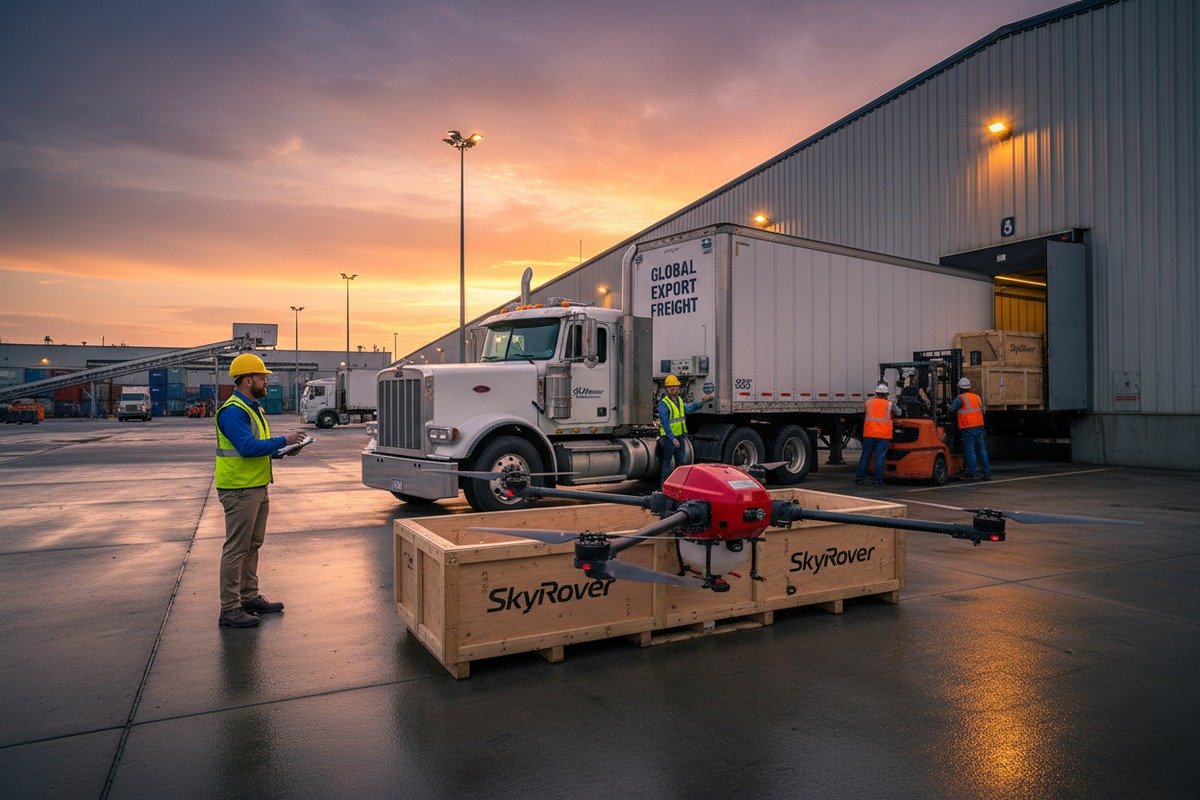
During our quality control process, we test every drone before packing. But we have received photos of drones that arrived damaged—bent arms, cracked housings, dislodged sensors. The transit journey is hard on precision equipment.
FOB transfers physical risk to you when cargo loads at the origin port. Hidden risks include inadequate packaging by cost-cutting carriers, improper handling of lithium batteries, temperature damage to sensitive electronics, and limited recourse when damage occurs mid-transit. Without specialized drone freight experience, damage rates can exceed 5% on sensitive shipments.
Why Firefighting Drones Are Fragile Cargo
Our firefighting drones feature carbon fiber frames, precision gimbal systems, and high-resolution thermal cameras. These components tolerate fire and heat. They do not tolerate being dropped, stacked incorrectly, or exposed to moisture.
Key vulnerabilities during transit:
Gimbal Systems: The 3-axis stabilized camera mount uses delicate motors and bearings. A single hard impact can knock calibration off or damage the mechanism.
Propeller Motors: Our octocopter designs use eight precision brushless motors. Shock damage can create bearing wear that shortens motor life dramatically.
Thermal Sensors: The infrared cameras that detect fire hotspots contain sensitive detector arrays. Extreme temperature swings during transit can degrade their accuracy.
The Carrier Selection Problem
Under FOB, you choose the carrier. This control is a double-edged sword.
General freight carriers offer lower rates. They also handle drones like any other box. We have seen drones shipped alongside heavy machinery, stored in uncontrolled temperature containers, and handled with standard loading equipment designed for durable goods.
Specialized drone freight forwarders cost more. They provide:
- Temperature-controlled containers for electronics
- Shock-absorbing packing materials
- "Fragile/This Side Up" handling protocols
- Real-time tracking and transit monitoring
- Experience with lithium battery shipping rules
Insurance Gaps Under FOB
Standard marine cargo insurance covers loss and obvious damage. It often excludes:
- Concealed damage discovered after delivery
- Calibration drift from rough handling
- Gradual deterioration during extended transit
- Damage from improper battery storage
For firefighting drones, we recommend "all-risk" policies with specific coverage for electronic equipment. These cost more than basic coverage but protect your investment properly.
Temperature and Storage Risks
Lithium batteries have optimal storage temperature ranges. Extended exposure to heat above 45°C or cold below -10°C degrades battery capacity permanently.
Container ships crossing equatorial routes can expose cargo to extreme temperatures. Uninsulated containers sitting on sun-baked docks make this worse.
Under FOB, you must specify climate-controlled containers or accept this risk. Under DDP, we select appropriate shipping methods because the risk stays with us.
What Happens When Damage Occurs
Under FOB, damage discovered after delivery becomes your problem. You file claims with your carrier and insurance. This process takes weeks or months. Meanwhile, you have damaged drones and upset customers.
Under DDP, you report damage to us. We handle the claim and typically ship replacements immediately because maintaining your relationship matters more than arguing over a transit claim.
How do I know if my supplier has enough export experience to handle a DDP delivery to my door?
When our sales engineers visit trade shows in the US and Europe, we meet competitors who offer DDP without understanding what it requires. They quote attractive prices, then struggle when customs questions arise.
Evaluate supplier export experience by asking for specific evidence: number of successful DDP shipments to your country, references from buyers in your region, their customs brokerage partnerships, and their handling process for drone-specific regulations like lithium battery shipping and aviation compliance. Experienced suppliers answer these questions immediately with specifics, not vague assurances.

Red Flags That Signal Inexperience
Watch for these warning signs when evaluating DDP offers:
| Rode vlag | Waarom het belangrijk is |
|---|---|
| No specific country references | May not have delivered successfully to your market |
| Vague duty estimates | Duties vary significantly; guesses signal inexperience |
| No dangerous goods documentation | Lithium battery compliance is mandatory, not optional |
| Unusually low DDP price | May not include actual duties or full logistics costs |
| Long or uncertain delivery windows | Experienced shippers provide accurate timelines |
Questions That Reveal True Capability
Stel deze specifieke vragen:
"How many DDP shipments have you completed to [your country] in the past 12 months?"
An experienced supplier gives a specific number. Vague answers like "many" or "several" suggest limited experience.
"Who handles your customs clearance on the import side?"
Good answers name specific brokerage partners or describe in-house capabilities. Poor answers deflect or generalize.
"What is your process when a shipment gets held at customs?"
Experienced suppliers describe specific escalation procedures. Inexperienced ones have never faced this situation—or worse, have no plan.
"Can you provide contact information for a reference customer in my country?"
Willingness to provide references indicates confidence. Reluctance suggests problems.
Verifying Certifications and Compliance
Legitimate drone exporters maintain:
- Export licenses for controlled technology
- IATA dangerous goods 9 shipping certifications
- Product certifications relevant to destination markets
- Documentation templates for common import requirements
Request copies of these documents. Review them with your customs broker if needed.
The Track Record Test
Ask for shipping documentation from previous orders to similar destinations. Experienced suppliers maintain organized records and share them readily.
Review these documents for:
- Accurate HS code classification
- Complete commercial invoices
- Proper dangerous goods declarations
- Reasonable transit times
Our Approach to DDP Confidence
When we offer DDP terms, we back them with specific commitments:
- Named delivery date with penalty provisions for delays
- Complete documentation provided digitally before shipment
- Real-time tracking shared proactively
- Direct contact with our logistics coordinator
- Clear process for damage claims and replacements
We have delivered successfully to fire departments, distributors, and government contractors across North America and Europe. We provide references on request.
Conclusie
The right choice between FOB and DDP depends on your specific situation. High-volume buyers with logistics expertise save significantly with FOB. Newcomers and small-order buyers benefit from DDP's simplicity. Evaluate your capabilities honestly, verify your supplier's experience thoroughly, and choose the path that protects both your budget and your equipment.
Voetnoten
1. Defines Incoterms rules, standard international trade terms for buyer/seller responsibilities. ↩︎
2. Explains Free On Board (FOB) Incoterms, outlining seller and buyer obligations. ↩︎
3. Defines marine insurance, covering loss or damage to cargo and vessels during transit. ↩︎
4. Describes the Harmonized System (HS) code for classifying goods in international trade. ↩︎
5. Clarifies Delivered Duty Paid (DDP) Incoterms, detailing seller’s maximum responsibilities. ↩︎
6. Describes customs brokerage services, assisting importers/exporters with customs formalities. ↩︎
7. Provides information on the UN38.3 test requirements for safe lithium battery transport. ↩︎
8. Explains dual-use items and their export control implications for civilian and military applications. ↩︎
9. Details IATA’s regulations for the safe transport of dangerous goods by air. ↩︎

 English
  Spanish
  German
  French
  Dutch
Dutch  Arabic
