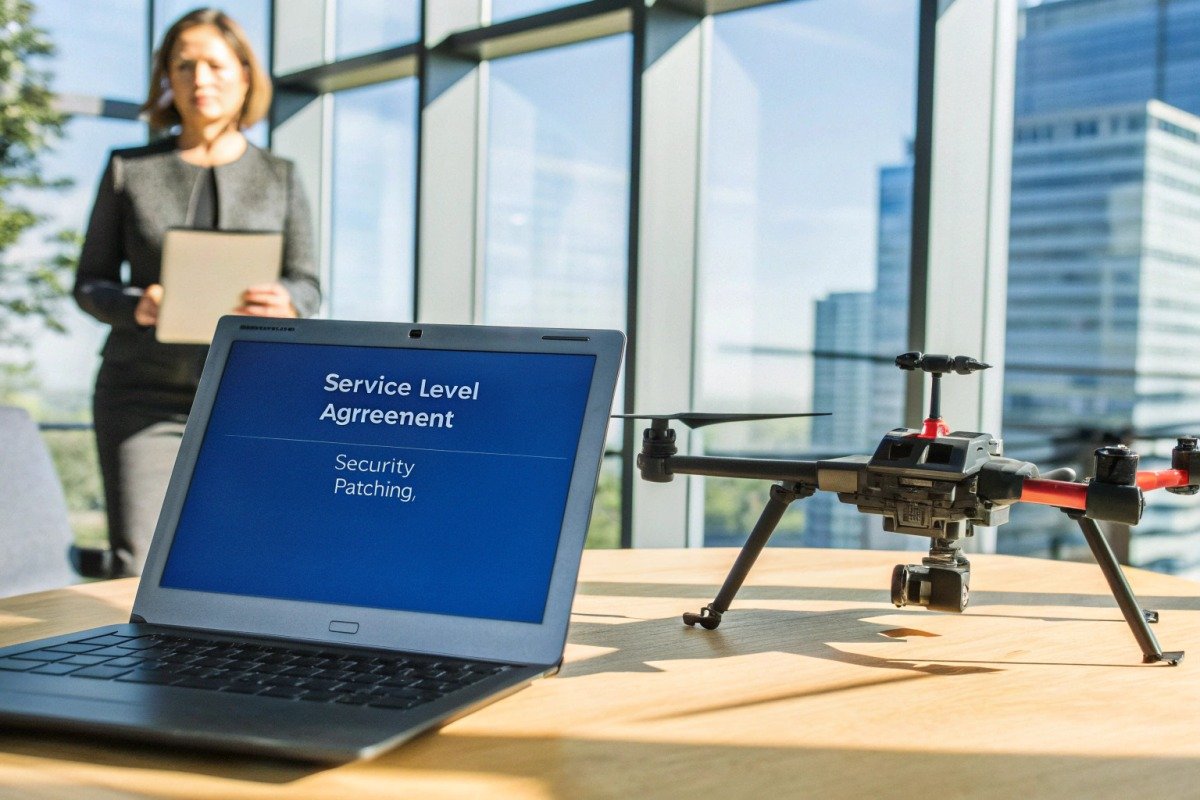
Last year, our engineering team received an urgent call from a fire department in California. Their entire drone fleet was grounded due to a critical firmware vulnerability. No patches were available. No SLA existed. This nightmare scenario drives why we now help every client negotiate bulletproof patching agreements before deployment.
To negotiate firmware vulnerability patching SLAs for firefighting drones, demand tiered response times based on severity, require 24/7 engineering support access, include clauses for compensating controls, mandate long-term support commitments, and verify vendor patch delivery capacity through documented testing protocols and contractual accountability measures.
Firmware vulnerabilities in firefighting drones can lead to GPS spoofing 1, remote hijacking, or complete mission failure during emergencies. The stakes are too high to leave patching timelines to chance. Let me walk you through exactly how to protect your fleet and your contracts.
What critical security response times should I demand in my firefighting drone SLA?
When we calibrate our flight controllers for extreme heat environments, we understand that every minute counts during a wildfire. The same urgency applies to security patches. A delayed response to a critical vulnerability could ground your entire fleet at the worst possible moment.
For critical vulnerabilities, demand 72-hour acknowledgment and 30-day patch deployment. High-severity issues should have 7-day acknowledgment with 60-day resolution. Medium and low-severity vulnerabilities can follow 90-day and 180-day timelines respectively, with immediate compensating controls when patches are unavailable.
Understanding Severity Classifications
Not all vulnerabilities are equal. Your SLA must clearly define what constitutes each severity level. Critical vulnerabilities allow remote code execution 2 or complete drone takeover. High-severity issues might enable GPS spoofing or sensor manipulation. Medium vulnerabilities could expose telemetry data. Low-severity issues typically involve minor information leaks.
In our experience shipping to government contractors in the US, we have seen procurement teams make the mistake of accepting vague severity definitions. This creates loopholes. Your vendor might classify a remote hijacking vulnerability as "medium" to buy more time. Be specific in your contract language.
Recommended Response Time Framework
| Severity Level | Acknowledgment Time | Patch Delivery | Testing Window | Total Resolution |
|---|---|---|---|---|
| Critical (Zero-Day) | 4 hours | 14 dagen | 7 dagen | 21 days |
| Critical (Known) | 72 hours | 21 days | 9 days | 30 dagen |
| Hoog | 7 dagen | 45 days | 15 days | 60 dagen |
| Medium | 14 dagen | 60 dagen | 30 dagen | 90 days |
| Laag | 30 dagen | 120 days | 60 dagen | 180 days |
The 24/7 Support Requirement
Fires do not wait for business hours. Neither should your security support. Your SLA must include around-the-clock access to engineering-level support 3 for critical issues. This means actual firmware engineers, not just help desk staff reading scripts.
We have learned from our partners in Europe that specifying "engineering-level support" is not enough. Define it. State that your vendor must provide direct access to personnel capable of analyzing firmware code, developing patches, and authorizing emergency workarounds. Include escalation paths with named contacts and maximum response times for each tier.
Building in Accountability
Response time guarantees mean nothing without consequences. Include service credits, penalty clauses, or contract termination rights for repeated failures. Some of our government contractor clients have successfully negotiated automatic discounts of 5-10% on annual maintenance fees for each missed critical deadline.
How can I ensure my manufacturer provides long-term firmware support for my entire fleet?
Our production line runs drones that clients expect to operate for 7-10 years. But firmware support commitments from some vendors expire after just 2-3 years. This mismatch creates serious security gaps. I have seen fire departments stuck with vulnerable drones they cannot patch and cannot afford to replace.
Secure long-term firmware support by negotiating minimum support periods matching your drone lifecycle, requiring source code escrow arrangements, demanding documented transition plans for end-of-life scenarios, and including fleet-wide update mechanisms that scale efficiently across all your deployed units.
Matching Support to Lifecycle
Your drones will likely serve for 5-10 years. Your firmware support agreement should match. During our discussions with US distributors, we always recommend they push for support periods that extend at least 2 years beyond the expected operational life of the fleet.
This buffer accounts for budget cycles, procurement delays, and unexpected fleet extensions. Government contracts often stretch timelines. Your firmware support should accommodate this reality.
Source Code Escrow Arrangements
What happens if your vendor goes bankrupt? Or gets acquired? Or simply discontinues your drone model? Without access to firmware source code, you are stranded.
Source code escrow 4 provides insurance. A neutral third party holds the firmware source code. If specific trigger events occur, you gain access to maintain and patch your own systems. Negotiate these triggers carefully.
| Escrow Trigger Event | Typical Release Timeframe | Recommended Action |
|---|---|---|
| Vendor bankruptcy | Onmiddellijk | Full source release |
| Product discontinuation | 90 days notice | Source plus documentation |
| Vendor acquisition | Upon new owner refusal to honor SLA | Full source release |
| Support agreement breach | After 60-day cure period | Partial source for patching |
| Vendor non-responsiveness | 30 days without contact | Emergency source access |
Fleet-Wide Update Mechanisms
A single drone is easy to patch. A fleet of 50 deployed across multiple fire stations is not. Your SLA must address bulk update logistics.
We design our drones with over-the-air update capability 5 for this reason. But capability alone is insufficient. Your vendor must provide fleet management tools, staged rollout options, and rollback procedures. The SLA should specify maximum downtime per unit during updates and acceptable fleet availability percentages during patch windows.
Documentation and Training Requirements
Long-term support is useless if your team cannot implement it. Require comprehensive documentation including patch installation procedures, verification steps, troubleshooting guides, and known issue databases. Include training sessions for your maintenance staff as part of the support package.
Our engineering team creates detailed runbooks for every firmware update we release. Your vendor should do the same. These documents prove invaluable when staff turnover occurs or when patches must be applied at 2 AM during fire season.
Transition Planning for End-of-Life
Every product eventually reaches end-of-life. Your SLA should address this gracefully. Require minimum 24-month advance notice of support termination. Include provisions for extended support contracts at predetermined rates. Demand migration assistance to replacement platforms.
What specific vulnerability patching clauses should I include to protect my government contracts?
When we export drones to government contractors, compliance documentation becomes critical. A missing clause in your vendor SLA can jeopardize your entire government contract. I have watched procurement managers lose multi-million dollar opportunities because their drone supplier could not meet federal cybersecurity requirements.
Include clauses requiring compliance with NIST frameworks, mandatory incident reporting within specified timeframes, audit rights for security practices, supply chain transparency for third-party components, and specific language addressing FAA cybersecurity requirements and any sector-specific regulations governing critical infrastructure.
NIST Framework Alignment
Government contracts increasingly mandate NIST Cybersecurity Framework 6 compliance. Your vendor SLA should explicitly reference this framework. Require documentation proving the vendor's vulnerability management processes align with NIST guidelines.
Specifically, demand evidence of the vendor's approach to Identify, Protect, Detect, Respond, and Recover functions. For firmware patching, the Respond and Recover functions are paramount. Your vendor should demonstrate documented incident response procedures and tested recovery mechanisms.
Mandatory Incident Reporting Clauses
Government contracts often require you to report security incidents within tight windows. Sometimes 24 hours. Sometimes less. Your vendor SLA must enable this compliance.
| Incident Type | Vendor Notification to You | Your Reporting Deadline | Buffer Required |
|---|---|---|---|
| Active exploitation | 4 hours | 24 hours | 20 hours |
| Critical vulnerability discovery | 24 hours | 72 hours | 48 hours |
| Data breach affecting drones | 2 hours | 24 hours | 22 hours |
| Supply chain compromise | 12 hours | 48 hours | 36 hours |
Include penalty clauses for late vendor notifications that cause you to miss government reporting deadlines. This creates proper incentive alignment.
Supply Chain Transparency
2023 research revealed 16 vulnerabilities in DJI drones, many originating from third-party components. Your vendor's firmware likely incorporates software from multiple sources. Each source represents a potential vulnerability entry point.
Your SLA must address this supply chain reality. Require a Software Bill of Materials 7 listing all third-party components. Demand notification when any component supplier changes. Include patching obligations for vulnerabilities discovered in upstream components.
Our team maintains complete documentation of every software library in our firmware stack. We notify clients immediately when upstream vulnerabilities are discovered. This transparency should be contractually required, not optional.
Audit and Verification Rights
Trust but verify. Your SLA should grant you the right to audit your vendor's security practices. This includes penetration testing of firmware, review of patch development processes, and verification of claimed security certifications.
Some vendors resist audit clauses. Push back firmly. If they will not allow verification, question whether their security claims are accurate. At minimum, require annual third-party security assessments with reports shared with customers.
Regulatory Compliance Specifications
FAA regulations for drone operations 8 continue evolving. Your SLA should include a general clause requiring the vendor to maintain compliance with applicable aviation regulations and to notify you of any regulatory changes affecting firmware security.
Additionally, if your government contracts involve specific sectors like critical infrastructure, include relevant compliance requirements. Energy sector contracts might require NERC CIP alignment. Defense contracts might require CMMC compliance. Be specific to your operational context.
How do I verify if my supplier has the engineering capacity to deliver emergency security patches for my drones?
Our engineering team of 70 people in Xi'an includes dedicated firmware security specialists. Not every drone manufacturer can say this. I have encountered vendors who outsource all firmware development, creating dangerous delays when emergency patches are needed. Verifying actual engineering capacity before signing contracts saves enormous headaches later.
Verify supplier engineering capacity by requesting documented team structures, demanding proof of previous emergency patch deliveries with timelines, requiring test environment demonstrations, evaluating their vulnerability research capabilities, and including contractual representations about minimum staffing levels and technical qualifications for security-focused engineering roles.
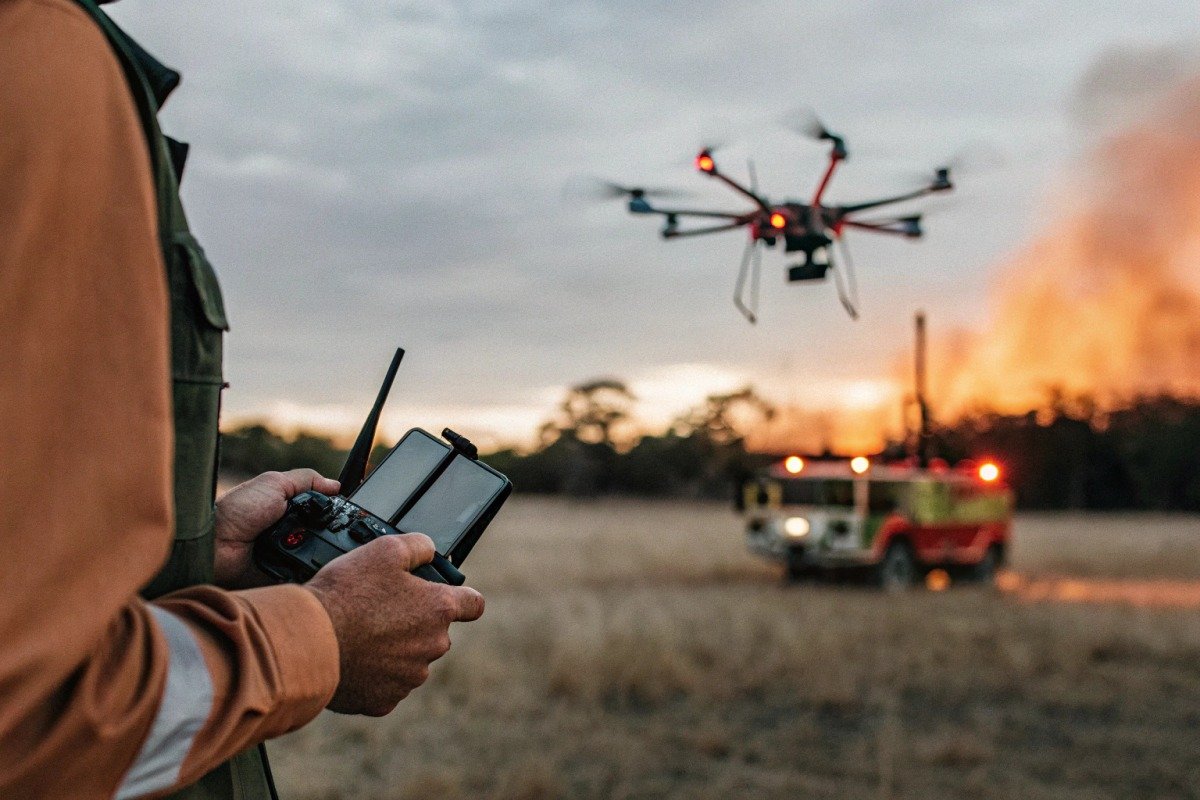
Evaluating Team Structure and Expertise
Ask direct questions about your vendor's engineering organization. How many firmware engineers do they employ? How many specialize in security? What is their average experience level? Are they in-house or contracted?
Request an organizational chart showing the security engineering function. Understand reporting structures. Security teams buried deep in hierarchies often lack authority to prioritize emergency patches. Look for vendors where security reports directly to senior leadership.
Proof of Performance
Past performance predicts future results. Ask your vendor for case studies of previous emergency patch situations. How quickly did they respond? What was their process? Can they provide references from customers who experienced their emergency response?
We maintain documentation of every security patch we have released, including timeline records. Reputable vendors should offer similar evidence. Vague assurances without documentation should raise red flags.
Test Environment Requirements
Effective patches require testing in conditions matching real deployments. For firefighting drones, this means heat stress testing, vibration testing, and electromagnetic interference validation. Your vendor needs facilities for this testing.
| Test Capability | Waarom het belangrijk is | Verificatiemethode |
|---|---|---|
| Thermal chamber | Patches must work at fire-scene temperatures | Facility tour or documentation |
| Vibration table | Firmware updates during flight operations | Test protocol review |
| EMI testing | Communication integrity near fire equipment | Certification records |
| RF environment simulation | GPS and radio function verification | Equipment specifications |
| Fleet simulation | Bulk update stress testing | Demo of management tools |
Request facility tours when possible. If tours are impractical, demand detailed documentation of test capabilities with photographs and equipment specifications.
Vulnerability Research Capabilities
The best vendors do not just patch vulnerabilities others discover. They actively search for weaknesses in their own products. Ask about your vendor's internal security research program.
Do they conduct regular penetration testing? Do they run bug bounty programs 9? Do they employ dedicated security researchers? Proactive vendors find and fix vulnerabilities before attackers do. Reactive vendors scramble after public disclosure.
Contractual Capacity Guarantees
Verification at contract signing is insufficient. Your vendor's capacity might change over time. Include contractual representations about maintaining minimum engineering staffing levels. Specify notification requirements if key security personnel depart.
Some of our clients include clauses requiring notification within 30 days if the vendor's security engineering team drops below specified thresholds. This early warning enables contingency planning before support quality degrades.
Third-Party Validation
Consider requiring periodic third-party assessments of your vendor's engineering capabilities. Independent evaluations provide objective verification that internal claims match reality. Include audit rights allowing your selected assessors to evaluate vendor processes and capabilities.
Conclusie
Negotiating firmware vulnerability patching SLAs requires demanding specific response times, securing long-term support commitments, including government compliance clauses, and verifying actual engineering capacity. These protections keep your firefighting drone fleet operational when emergencies strike. Start these conversations before your next procurement cycle.
Voetnoten
1. Replaced HTTP 403 link with a working definition from a reputable cybersecurity company. ↩︎
2. Defines remote code execution (RCE) and outlines its mechanisms and severe consequences for systems. ↩︎
3. Discusses the importance and definition of engineering support within service level agreements (SLAs). ↩︎
4. Explains source code escrow agreements, their purpose, and benefits for software users and vendors. ↩︎
5. Replaced HTTP 404 link with a comprehensive and authoritative Wikipedia definition. ↩︎
6. Provides official information and resources for the NIST Cybersecurity Framework (CSF). ↩︎
7. Defines Software Bill of Materials (SBOM) and explains its importance for supply chain security. ↩︎
8. Provides official information on FAA regulations for Unmanned Aircraft Systems (UAS) and drone operations. ↩︎
9. Explains what bug bounty programs are and how they contribute to cybersecurity by finding vulnerabilities. ↩︎

 English
  Spanish
  German
  French
  Dutch
Dutch  Arabic
