
When our engineering team first tested firefighting drones in desert conditions, we watched static discharge fry a flight controller mid-mission. That costly lesson taught us everything about ESD risks in dry environments.
To ask suppliers about anti-static measures for firefighting drones, request IEC 61000-4-2 certification documentation, inquire about TVS diode protection on critical components, verify conductive material specifications, and demand test reports from simulated dry environment conditions below 20% relative humidity.
Statische elektriciteit 1 becomes a silent killer for drone electronics when humidity drops. Let me walk you through the exact questions that separate reliable suppliers from risky ones.
What specific ESD protection features should I ask my supplier to include in my firefighting drone's design?
Our production floor handles hundreds of drones monthly, and we have seen firsthand how buyers struggle to specify ESD requirements 2 clearly. Without the right questions, you risk receiving drones that fail during critical fire operations.
Ask suppliers to include TVS diodes rated for ±20kV air discharge on all communication ports, conductive composite frames with surface resistivity below 10^9 ohms, encapsulated motor coils, and shielded flight controllers with dedicated grounding paths throughout the airframe.
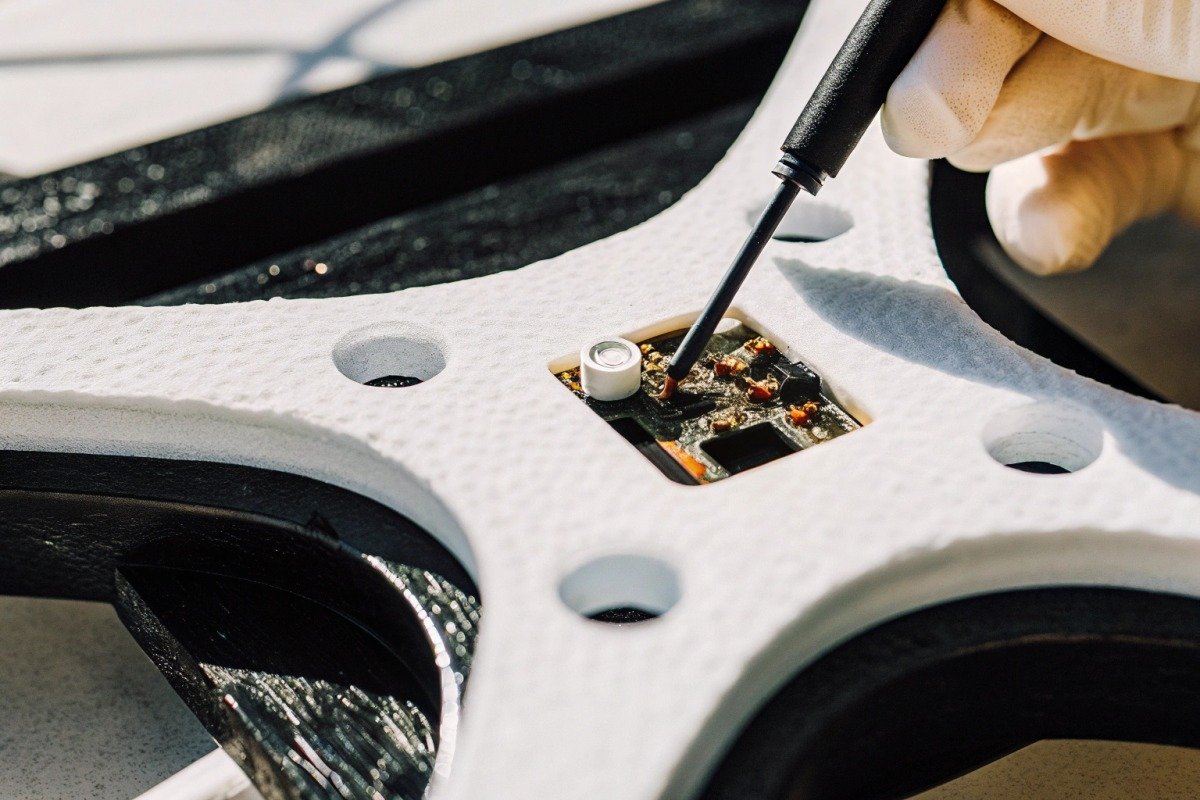
Understanding ESD Vulnerability Points
Every firefighting drone has specific weak spots where static discharge causes the most damage. Flight controllers sit at the top of this list. They contain sensitive microprocessors that can fail from discharges as low as 100 volts.
IMUs (Inertial Measurement Units) 3 come next. These sensors detect orientation and movement. Static discharge corrupts their readings, causing erratic flight behavior. In a fire zone, this means potential crashes.
ESCs (Electronic Speed Controllers) regulate motor power. When static hits these components, motors can surge or cut out entirely. Imagine losing thrust while carrying a water payload over active flames.
Critical Components Requiring ESD Protection
| Component | ESD Risk Level | Recommended Protection |
|---|---|---|
| Vluchtregelaar | Zeer hoog | TVS diodes, metal enclosure, grounding |
| GPS/Antenna | Hoog | RClamp diodes, shielded cables |
| ESCs | Hoog | Encapsulation, ferrite beads |
| Motoren | Medium | Coil encapsulation, grounding |
| Cameras/Sensors | Hoog | Conductive housings, isolation |
| Battery Connectors | Medium | Protected contacts, discharge paths |
Specific Questions for Your Supplier
Start with component-level protection. Ask: "What TVS diode models protect the flight controller inputs?" Good suppliers specify exact part numbers like Semtech µClamp2411ZA.
Then ask about materials. "What is the surface resistivity of your drone frame material?" Answers should fall between 10^5 and 10^9 ohms for proper static dissipation.
Grounding matters greatly. Ask: "How does your grounding system connect all conductive elements?" Look for continuous paths from frame to motor mounts to payload brackets.
Finally, inquire about encapsulation. "Are motor coils and ESCs sealed against dust infiltration?" Dry environments carry particles that accelerate charge buildup.
How can I verify that my supplier's drones have passed rigorous static discharge testing for dry environments?
When we ship drones to customers in Arizona or the Middle East, they always ask about our testing procedures. Many suppliers claim ESD compliance but cannot produce actual test data. This gap creates serious procurement risks.
Verify supplier testing by requesting IEC 61000-4-2 compliance certificates, demanding test chamber photographs showing humidity-controlled environments, reviewing discharge test logs with specific voltage levels, and confirming third-party laboratory validation from accredited facilities.
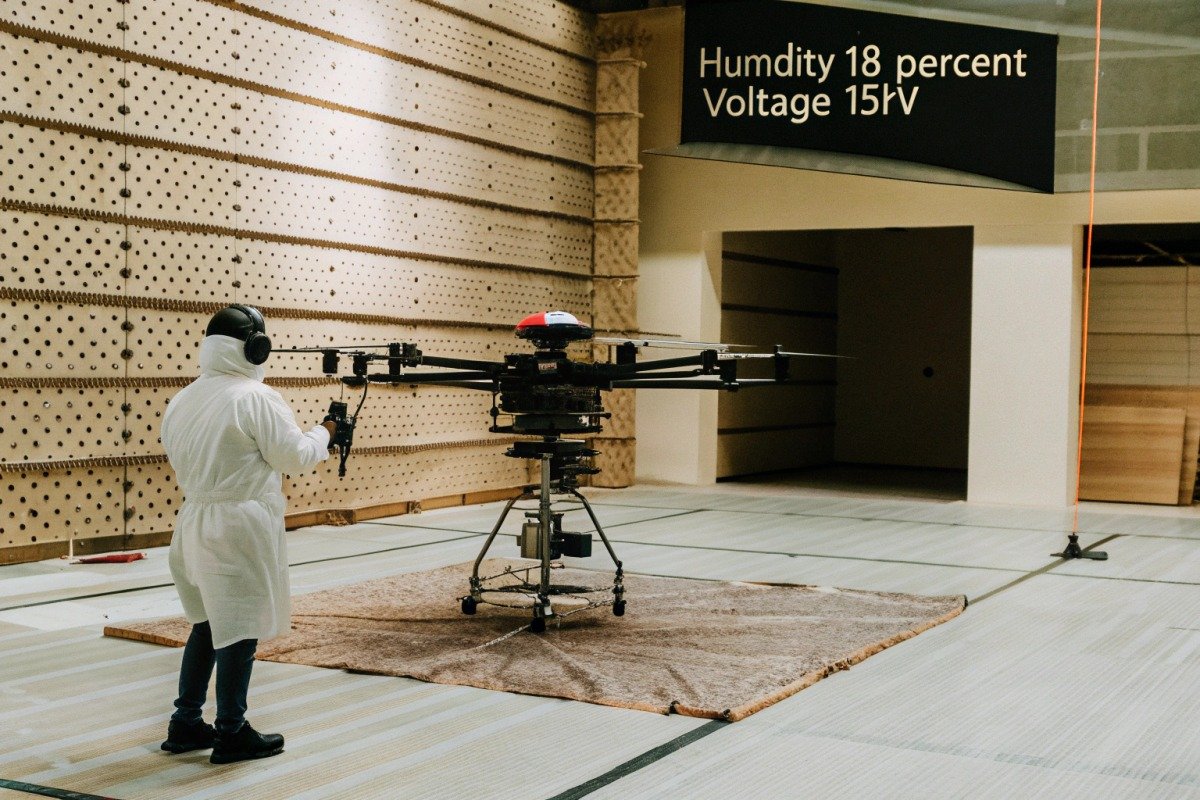
Understanding Testing Standards
IEC 61000-4-2 remains the gold standard for ESD testing. This international standard specifies test levels, procedures, and pass/fail criteria. Suppliers should reference this standard directly in their documentation.
The standard defines two discharge types. Contact discharge applies voltage directly to exposed surfaces. Air discharge simulates real-world static events where sparks jump across gaps.
For firefighting drones, Level 4 testing provides minimum acceptable protection. This means ±8kV contact discharge and ±15kV air discharge tolerance.
Test Environment Requirements
| Test Parameter | Minimumvereiste | Ideal Specification |
|---|---|---|
| Relative Humidity | Below 40% | 10-20% |
| Temperatuur | 15-35°C | 25-45°C |
| Discharge Voltage (Air) | ±15kV | ±20kV |
| Discharge Voltage (Contact) | ±8kV | ±10kV |
| Test Points | All ports and seams | Full surface mapping |
| Repetitions per Point | 10 minimum | 20+ |
Documentation You Should Request
Ask for the actual test report, not just a certificate. Reports should include date, equipment used, technician names, and individual test point results.
Request photographs of test setups. These show whether testing occurred in proper environmental chambers with humidity control.
Demand functional verification data. Drones should operate normally after ESD exposure. Some suppliers test to destruction, which proves tolerance limits but not operational survival.
Third-party validation adds credibility. Independent laboratories like TÜV or UL provide unbiased verification. In-house testing alone raises questions about objectivity.
Red Flags in Supplier Responses
Vague answers signal problems. "Our drones meet industry standards" without specifics means nothing. Push for exact standard numbers and test levels.
Resistance to sharing reports indicates either failed testing or no testing at all. Reputable manufacturers proudly share compliance documentation.
Outdated certificates also raise concerns. ESD protection degrades over time. Testing from five years ago may not reflect current production quality.
Can I customize the anti-static shielding on my OEM drone order to meet my specific regional safety standards?
Our OEM customers often need modifications for their local markets. European buyers face different requirements than those in Australia or North America. We have learned that flexibility in anti-static customization separates good suppliers from great ones.
Yes, reputable OEM suppliers can customize anti-static shielding including upgraded TVS diode specifications, enhanced conductive coatings, additional grounding points, regional certification testing, and specialized enclosure materials to meet specific national or industry safety standards.
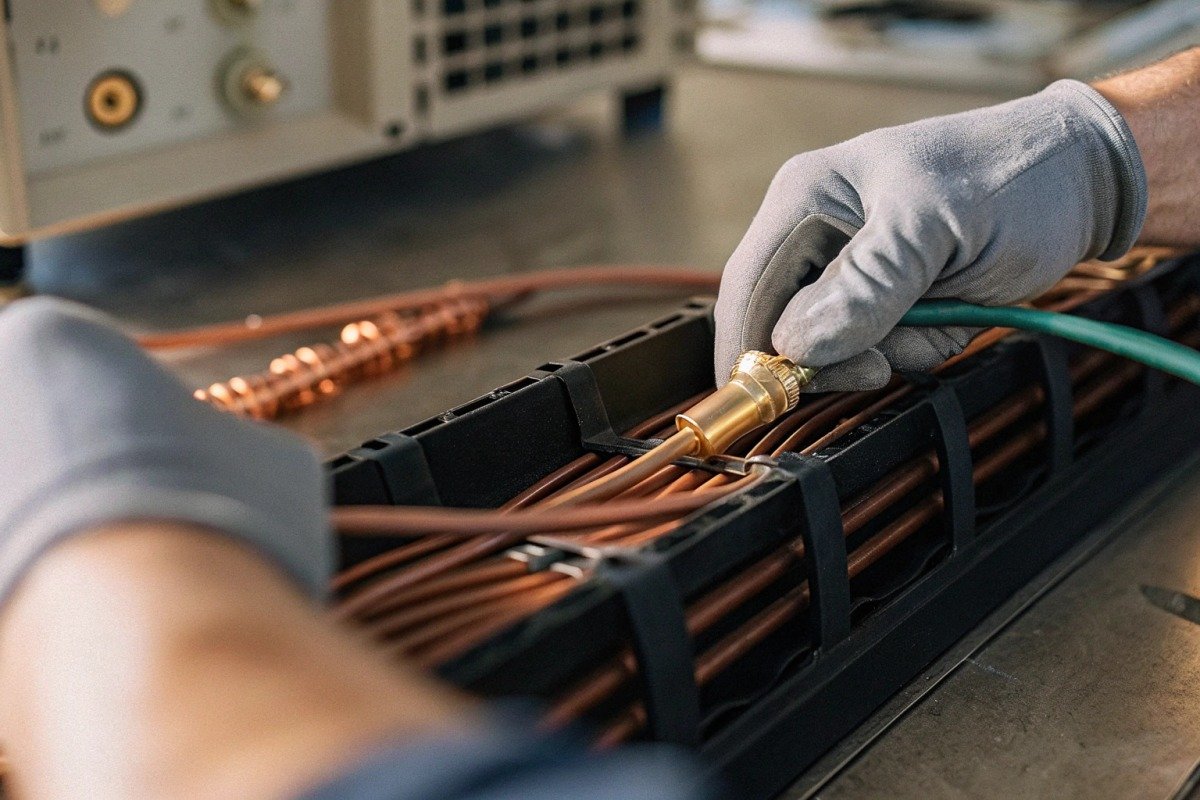
Regional Standard Variations
Different markets enforce different requirements. The United States follows ANSI/ESD S20.20 5 for electronics handling. European markets reference EN 61340-5-1. Australia has specific standards for emergency service equipment.
Firefighting applications add another layer. NFPA standards 6 in the US address electrical equipment near combustible materials. Your supplier must understand these overlapping requirements.
Military or government contracts often exceed commercial standards. Defense procurement may require MIL-STD-461G compliance for electromagnetic compatibility.
Customization Options to Discuss
| Aanpassingsgebied | Standard Option | Premium Upgrade |
|---|---|---|
| TVS Diode Rating | ±15kV | ±25kV |
| Frame Coating | Standard anti-static | Carbon nanotube composite |
| Grounding Points | 4 connection points | 8+ distributed points |
| Cable Shielding | Basic foil | Braided copper with ferrites |
| Enclosure Sealing | IP54 | IP67 with conductive gaskets |
| Testing Level | IEC Level 3 | IEC Level 4+ |
Questions for OEM Customization
Start with capability assessment. Ask: "What anti-static modifications have you completed for previous OEM customers?" Experience with similar projects indicates realistic capabilities.
Discuss minimum order quantities. Customization costs money. Suppliers need volume to justify tooling changes and special material procurement.
Clarify certification responsibility. Ask: "Will you handle regional certification testing, or must we arrange this separately?" Some suppliers include testing in OEM packages. Others require buyers to manage compliance independently.
Timeline matters too. Custom anti-static solutions require engineering time, material sourcing, and validation testing. Rush orders may compromise quality.
Kostenoverwegingen
Enhanced ESD protection adds expense. Better TVS diodes cost more. Conductive coatings require specialized application processes. Additional testing extends lead times.
However, failure costs exceed upgrade costs. One drone crash during firefighting operations creates liability exposure far exceeding component price differences.
Request itemized quotes showing base configuration and upgrade costs separately. This transparency helps you make informed decisions about protection levels.
What technical documentation do I need from my manufacturer to ensure the drone remains stable during high-static fire operations?
Before our drones leave the factory, we compile comprehensive documentation packages. Buyers who skip document verification often face problems during deployment. The right paperwork protects your investment and your operations.
Request IEC 61000-4-2 test certificates, material composition datasheets showing conductivity specifications, grounding system diagrams, component-level ESD ratings, maintenance schedules for anti-static coatings, and operational guidelines specifying humidity thresholds and discharge procedures for field use.
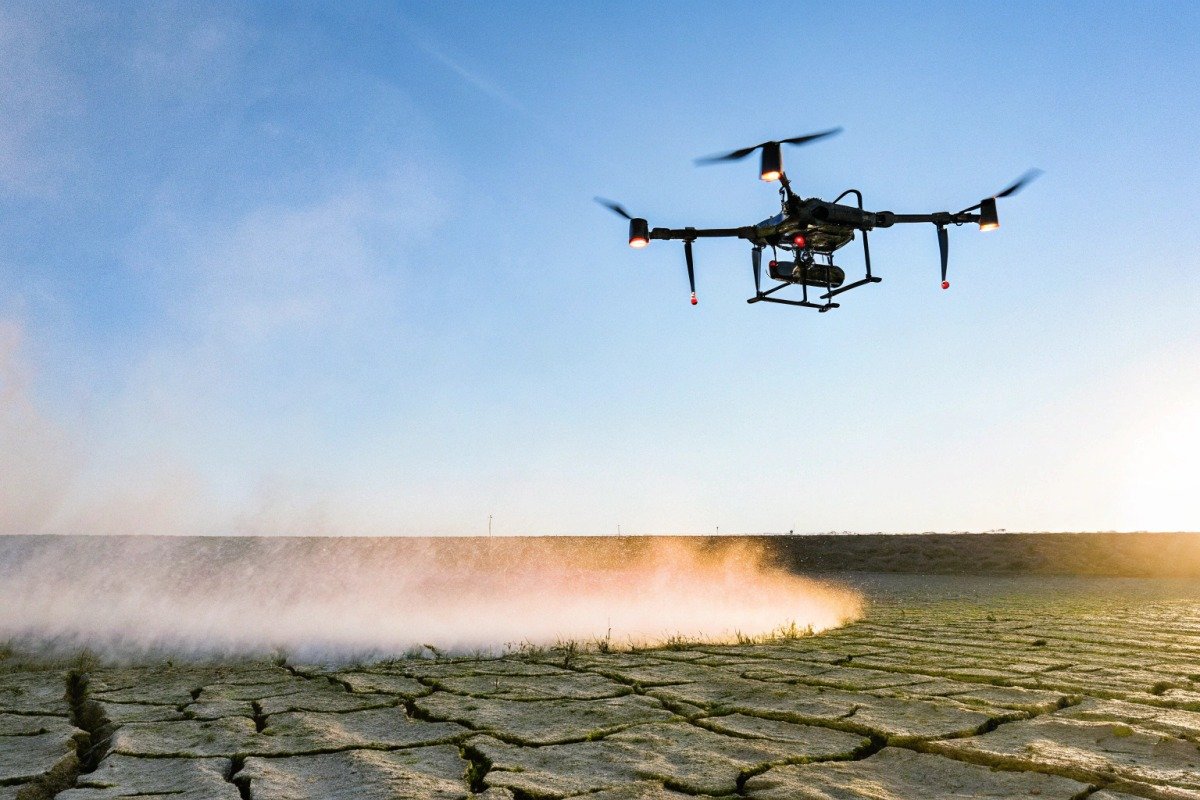
Essentiële documentatiecategorieën
Documentation falls into three categories: compliance certificates, technical specifications, and operational guidelines. Missing any category creates knowledge gaps.
Compliance certificates prove third-party verification. These include ESD test reports, electromagnetic compatibility assessments, and regional safety approvals.
Technical specifications detail how protection works. Material datasheets, circuit diagrams, and component specifications belong here.
Operational guidelines explain field procedures. Pre-flight checks, maintenance schedules, and environmental operating limits fall into this category.
Documentation Checklist
| Documenttype | Doel | Verificatiemethode |
|---|---|---|
| IEC 61000-4-2 Certificate | ESD compliance proof | Check laboratory accreditation 7 |
| Material Datasheets | Conductivity verification | Confirm resistivity values |
| Grounding Diagram | System understanding | Match to physical inspection |
| Component ESD Ratings | Protection level verification | Cross-reference with standards |
| Maintenance Schedule | Long-term reliability | Review coating reapplication intervals |
| Environmental Limits | Operational boundaries | Confirm humidity/temperature ranges |
| Troubleshooting Guide | Field problem resolution | Check static-related fault codes |
Authenticiteit van documenten verifiëren
Fake certificates exist in this industry. Verify laboratory accreditation through official databases. Contact testing facilities directly to confirm report authenticity.
Check dates carefully. Documents should reflect recent testing on current production models. Old certificates may not apply to current manufacturing.
Cross-reference specifications across documents. Material datasheets should match values stated in test reports. Inconsistencies indicate either errors or fabrication.
Maintenance Documentation Importance
Anti-static coatings degrade over time. UV exposure, abrasion, and chemical contact reduce effectiveness. Documentation should specify reapplication intervals.
Grounding connections loosen with vibration. Maintenance schedules should include torque checks on ground straps and connection points.
Operating in ash-filled environments accelerates wear. Firefighting-specific maintenance intervals may differ from standard industrial applications. Your documentation should address this clearly.
Creating Your Document Request Template
Structure your request formally. List each document type, specify format requirements, and set delivery deadlines.
Include consequences for non-delivery. State that orders cannot proceed without complete documentation packages.
Request both digital and physical copies. Electronic files allow easy reference. Physical copies provide backup and may satisfy regulatory inspectors.
Conclusie
Asking the right questions about anti-static measures protects your firefighting drone investment. Demand specific certifications, verify testing procedures, explore customization options, and collect comprehensive documentation before committing to any supplier.
Voetnoten
1. Provides a comprehensive explanation of static electricity, its causes, and examples. ↩︎
2. Replaced with a comprehensive guide on ESD protection best practices in electronics manufacturing. ↩︎
3. Explains what Inertial Measurement Units are, their components, and how they function. ↩︎
4. Official page for the international standard IEC 61000-4-2, detailing its scope and purpose. ↩︎
5. Replaced with the official standard page from the Electrostatic Discharge Association (ESDA), the developer of the standard. ↩︎
6. Official source for NFPA codes and standards, covering fire, electrical, and life safety guidelines. ↩︎
7. Defines laboratory accreditation and highlights its importance for competence and compliance in testing. ↩︎

 English
  Spanish
  German
  French
  Dutch
Dutch  Arabic
