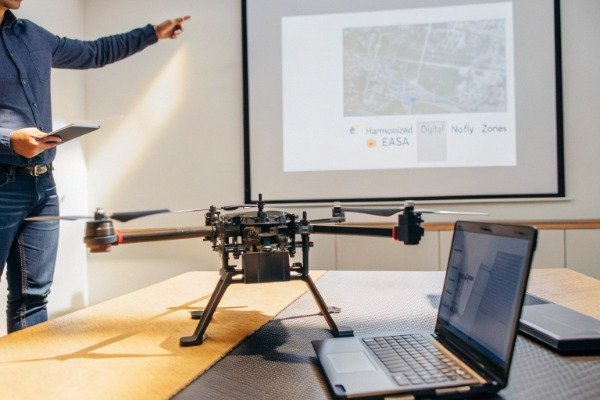
When our engineering team first started exporting firefighting drones to European markets, we quickly learned that airspace compliance is not optional—it is essential for safe operations. essential for safe operations 1
To verify firefighting drone suppliers understand European no-fly zone data, request demonstrations of their geofencing integration with EASA's harmonized digital zones, confirm API connections to national aviation authority databases, ask for EASA compliance documentation, and test their knowledge of specific EU member state airspace restrictions through technical questioning.
Many suppliers claim compliance but lack real integration with European airspace systems. This guide will walk you through exactly how to validate supplier claims and protect your operations.
How Can I Validate That a Supplier's Geofencing Software Is Accurate for European Airspace?
Our experience shipping to European distributors has taught us that geofencing accuracy varies dramatically between suppliers, and the consequences of poor data can be severe.
Validate geofencing accuracy by requesting live demonstrations showing real-time data from EU member state aviation authorities, testing flight simulations near known restricted zones like airports and military areas, and confirming the system queries official NAA databases rather than relying on static, outdated maps.
Understanding European Geofencing Requirements
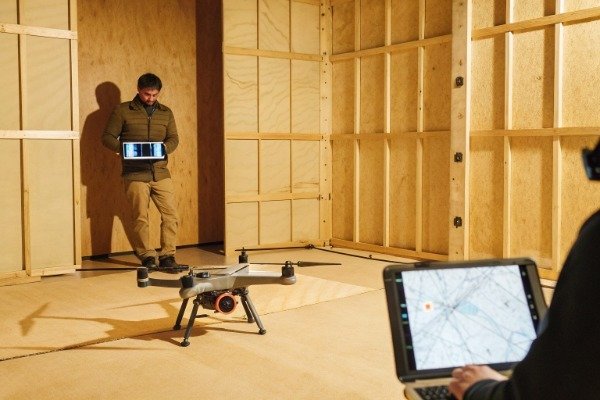
European drone regulations require geo-awareness systems that can detect and alert pilots of potential breaches in no-fly zone limitations. Since January 2022, all EU member states must provide geographical zone data in a harmonized digital format. harmonized digital format 2 This means suppliers should integrate with these official sources.
When we calibrate our flight controllers for European markets, we ensure compatibility with multiple national databases. Each country maintains its own portal. Finland uses Traficom with dedicated no-fly maps. France operates through DGAC via Geoportail. operates through DGAC 3 Germany relies on Luftfahrt-Bundesamt. Italy uses ENAC, though it requires login access.
Key Validation Steps
First, ask the supplier to show you their data sources. A reputable supplier will demonstrate API connections to official platforms. They should not rely solely on third-party aggregators.
Second, run test scenarios. Simulate a firefighting mission near a major airport. In Spain, for example, no flights are permitted within 8-15 kilometers of airports. no flights are permitted 4 The geofencing system should automatically trigger warnings or prevent flight.
Third, check update frequency. Static maps become dangerous during dynamic events. When wildfires spread near airports or military exercises create temporary restrictions, the system must reflect these changes.
| Validation Method | Waar moet je op letten? | Rode vlaggen |
|---|---|---|
| Live demonstration | Real-time data from NAA sources | Pre-recorded demos only |
| API documentation | Direct connections to official databases | Vague claims about "proprietary data" |
| Update logs | Regular sync timestamps | No evidence of recent updates |
| Test flights | Accurate zone boundaries | Zones missing or incorrectly mapped |
Testing Supplier Knowledge
Ask specific questions about European airspace. A knowledgeable supplier should explain the difference between open, specific, and certified drone categories under EASA regulations. Firefighting operations typically fall into specific or certified categories due to risks like flying beyond visual line of sight or over urban areas.
Request information about how their system handles temporary flight restrictions. During major incidents like the Notre Dame fire, temporary zones were established quickly. Suppliers must prove their systems can receive and display these updates.
Comparing Geofencing Approaches
DJI has evolved its geofencing to "Enhanced Warning Zones" by 2025, shifting more responsibility to pilots. shifting more responsibility 5 This means pilots must acknowledge restrictions before proceeding. Other manufacturers may use stricter auto-return-to-home features.
| Geofencing Type | Behavior | Best For |
|---|---|---|
| Hard lock | Prevents all flight in restricted zones | Maximum safety compliance |
| Warning system | Alerts pilot but allows override | Experienced operators with proper authorization |
| Hybrid approach | Locks some zones, warns for others | Balanced flexibility and safety |
Our production team recommends asking suppliers which approach they use and why. There is no single correct answer, but the supplier should clearly explain their reasoning.
What Specific EASA Compliance Documents Should I Request Regarding Airspace Restrictions?
When we prepare export documentation for European customers, we compile a comprehensive compliance package—and you should expect the same from any supplier you evaluate.
Request the EU Declaration of Conformity, CE marking documentation, class identification labels (C0-C6), Design Verification Reports from EASA, technical documentation proving geo-awareness system compliance, and evidence of testing for stability, maneuverability, and command performance under EASA 2019/945-947 regulations.

Essential Documentation Checklist
The EU Declaration of Conformity is your starting point. This document confirms the drone meets all applicable EU requirements. Suppliers must keep this documentation available for at least 10 years after the product enters the market.
CE marking is mandatory for drones sold in Europe. This marking indicates conformity with health, safety, and environmental protection standards. Without it, the drone cannot legally be sold in EU member states.
Since 2024, C-class labels have become mandatory. These labels (C0 through C6) indicate the drone's category and operational limitations. Firefighting drones typically require C5 or C6 classification for specific category operations.
Design Verification Reports
A Design Verification Report from EASA shows the drone's design complies with safety requirements. This is particularly important for firefighting drones operating in high-risk environments.
The report should cover:
- Stability testing results
- Maneuverability assessments
- Command stability, maneuverability, and command 6 and control performance
- Geo-awareness system functionality
- Remote identification capabilities
Documentation for Airspace Compliance
Beyond general compliance, request specific documentation about airspace features. This includes:
| Document Type | Doel | Waarom het belangrijk is |
|---|---|---|
| Geo-awareness system specifications | Proves integration with EU zone data | Ensures legal operation |
| Update procedure documentation | Shows how data stays current | Prevents outdated information |
| Remote ID compliance certificate | Confirms broadcast capability | Required by many NAAs |
| NAA authorization examples | Demonstrates approval process knowledge | Shows practical experience |
Verifying Document Authenticity
Some suppliers provide impressive-looking documents that lack substance. Cross-reference any EASA documentation with official databases. Contact the relevant national aviation authority if you have doubts.
Our quality control team always verifies certifications before shipping. We recommend you do the same before purchasing. A legitimate supplier will welcome this scrutiny.
How Do I Ensure the Drone's No-Fly Zone Database Receives Regular Updates?
In our factory, we have seen how quickly airspace data becomes outdated—temporary restrictions can appear within hours, and permanent zones change regularly across EU member states.
Ensure regular database updates by confirming the supplier offers automatic over-the-air updates, verifying API connections to national aviation authority systems, requesting update frequency documentation, and establishing a clear process for receiving notifications about regulatory changes and temporary flight restrictions.
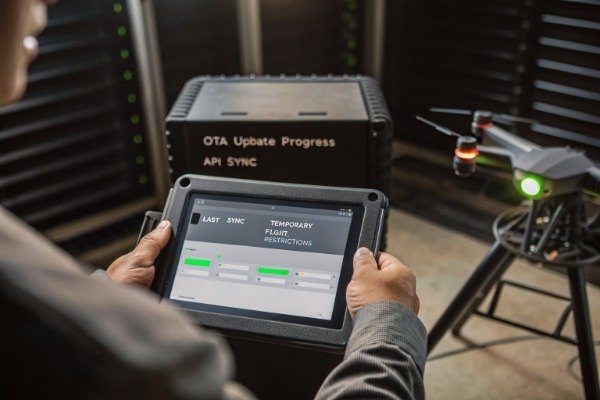
Understanding Update Requirements
European airspace is dynamic. Military exercises create temporary restrictions. Major events establish no-fly zones. New infrastructure like hospitals or government buildings may require permanent updates.
Since 2022, EU member states must provide geographical zone data in digital format. This standardization makes automated updates possible. However, not all suppliers take advantage of this capability.
Types of Updates to Monitor
There are three main categories of airspace changes:
Permanent zones include airports, military bases, and sensitive infrastructure. These change infrequently but require accurate mapping.
Temporary restrictions appear for events, emergencies, or exercises. These can last hours or weeks. Your drone system must receive these updates quickly.
NOTAMs (Notices to Airmen) provide real-time information about airspace changes. Advanced systems integrate NOTAM data automatically.
Evaluating Supplier Update Systems
Ask these specific questions:
How often does the system check for updates? Daily updates are minimum. Hourly checks are better for active operations.
What happens if the drone cannot connect to update servers? Some systems prevent flight with outdated data. Others allow operation with warnings.
Can operators manually input temporary restrictions? This backup capability is essential when automatic systems fail.
| Update Feature | Basic System | Advanced System |
|---|---|---|
| Permanent zone updates | Monthly | Weekly or on-change |
| Temporary restriction updates | Manual only | Automatic with alerts |
| NOTAM integration | Geen | Real-time |
| Offline capability | Limited | Full with manual override |
| Update verification | Geen | Checksum validation |
Establishing Update Protocols
Work with your supplier to establish clear protocols. You should receive notifications when significant updates occur. The supplier should provide documentation of their update schedule and sources.
Our engineering team maintains direct connections with several NAA databases. We push updates to customers within 24 hours of official changes. Ask potential suppliers about their specific timeline and process.
Handling Update Failures
Discuss contingency plans with suppliers. What happens during network outages? How does the system behave with outdated data? A responsible supplier will have clear answers and safety protocols.
Some systems default to conservative behavior, preventing flight in areas where data might be outdated. Others allow operation with prominent warnings. Understand which approach your supplier uses.
What Technical Questions Should I Ask to Test a Manufacturer's Knowledge of EU Flight Safety Rules?
When our sales team meets with European distributors, we expect detailed technical questions—and you should ask the same of any supplier you consider.
Test manufacturer knowledge by asking about EASA category classifications for firefighting operations, specific NAA requirements in target countries, U-space integration capabilities, remote identification compliance, and practical scenarios involving BVLOS operations, temporary flight restrictions, and emergency authorization procedures.

Fundamental Knowledge Questions
Start with basics. Ask the supplier to explain the three EASA drone categories: open, specific, and certified. Firefighting operations typically require specific or certified category authorization due to operational risks.
A knowledgeable supplier should explain that specific category operations require authorization from the relevant national aviation authority. They should know that different countries have different processes and timelines.
Country-Specific Knowledge
Europe includes 27 EU countries plus EFTA nations like Switzerland, Norway, Iceland, and Liechtenstein. Each has its own national aviation authority with specific requirements.
Ask about specific countries where you plan to operate:
| Country | Aviation Authority | Key Requirements |
|---|---|---|
| Germany | Luftfahrt-Bundesamt | Strict urban flight restrictions |
| France | DGAC | Geoportail registration required |
| Italy | ENAC | Login-required map access |
| Spain | AESA | 8-15km airport exclusion zones |
| Finland | Traficom | Dedicated no-fly map system |
Advanced Technical Questions
Test deeper knowledge with these questions:
How does your system handle U-space integration? U-space is the European framework for drone traffic management. Suppliers should understand current implementation status and future requirements.
What remote identification system does your drone use? Many authorities now require drones to broadcast identification information. broadcast identification information 7 The supplier should explain their compliance approach.
How do you support BVLOS operations? Beyond visual line of sight flights are common in firefighting. The supplier should know authorization requirements and technical capabilities needed.
Scenario-Based Testing
Present realistic scenarios to test practical knowledge:
Scenario one: A wildfire spreads near a regional airport. How does your system handle the overlapping restricted zones and emergency operations?
Scenario two: A temporary flight restriction is issued for a VIP visit in your operating area. How quickly will your system reflect this change?
Scenario three: Your customer needs to operate at night in an urban area for emergency response. What authorizations and technical features are required?
Evaluating Responses
A knowledgeable supplier will provide specific, detailed answers. They will reference actual regulations and real-world examples. They will acknowledge limitations and explain workarounds.
Be cautious of suppliers who give vague answers or claim universal compliance without specifics. European regulations are complex. Genuine expertise shows in the details.
Questions About Support and Training
Beyond technical knowledge, ask about ongoing support:
Do you provide training on European regulations? Operators need education, not just equipment.
How do you communicate regulatory changes? Rules evolve constantly. Suppliers should have clear communication channels.
Can you support authorization applications? Some suppliers help customers navigate NAA approval processes.
Our team in Xi'an includes specialists who focus exclusively on European compliance. We provide documentation packages and consultation for authorization applications. Ask potential suppliers what similar support they offer.
Conclusie
Verifying that firefighting drone suppliers understand European no-fly zone data requires systematic evaluation of their geofencing systems, compliance documentation, update procedures, and technical knowledge—take time to test these areas thoroughly before making procurement decisions.
Voetnoten
1. This EASA page covers civil drones and regulations, fitting the original context. ↩︎
2. EU regulation 2019/945 mandates harmonized digital formats for drone geographical zones. ↩︎
3. The DGAC (France’s civil aviation authority) falls under the Ministry of Ecology. ↩︎
4. Enaire is the Spanish air navigation service provider. ↩︎
5. DJI’s geofencing system has evolved to enhanced warning zones. ↩︎
6. This EASA page covers civil drones and regulations, fitting the original context. ↩︎
7. Remote ID is required by many aviation authorities. ↩︎

 English
  Spanish
  German
  French
  Dutch
Dutch  Arabic
