
Seeing a drone on a velvet rope is easy; knowing if it survives a real fire is hard mean-time-between-failure 1. We design our airframes for extreme heat, yet many buyers struggle to verify these claims on a trade show floor.
To evaluate supplier performance effectively, prioritize live outdoor flight demonstrations over static displays to test stability in wind aerodynamic or power implications 2. Interview technical engineers directly about thermal sensor calibration and data interoperability, request proof of heat-resistance testing Ingress Protection (IP) testing 3, and verify their specific experience with international logistics and customs clearance protocols.
Here is how you can separate reliable partners from risky vendors during your next expo visit.
What key indicators should I watch for during a live firefighting drone flight demonstration?
Watching a polished demo reel tells you nothing about real-world physics. When we test prototypes at our flight base in Xi'an, we look for flaws that marketing videos hide.
Focus on stability during high-wind maneuvers and the speed of payload swapping between thermal cameras and spotlights. Observe the hover accuracy without GPS assistance, as fire smoke often blocks satellite signals. Real-time video latency and the pilot's ease of using the ground control station are also critical performance indicators.
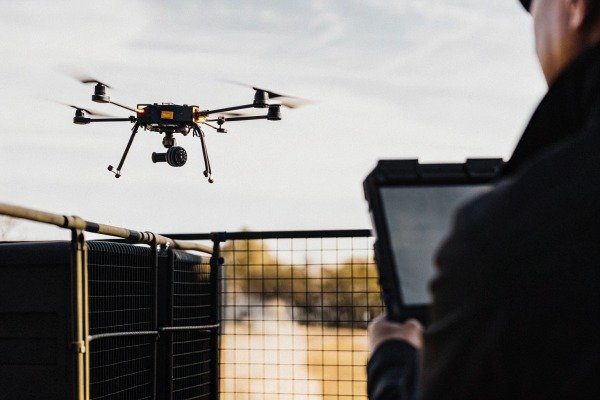
When you step out to the flight cage or the outdoor demo zone, you need to look past the spectacle. A good pilot can make a bad drone look decent in calm weather, but firefighting environments are chaotic. You need to assess the machine's "cognitive load" on the pilot and its raw physical capability.
Stability in Dirty Air
Fire scenes generate their own weather systems, including updrafts and turbulence. During the demo, watch how the drone behaves when it stops a fast movement. Does it drift? Does it wobble before stabilizing? We constantly tune our flight algorithms to ensure that when a pilot lets go of the sticks, the aircraft locks into position immediately. If you see the drone "toilet bowling" (swirling in circles) or drifting vertically, the flight controller gains are likely poorly tuned, or the propulsion system is underpowered.
The GPS-Denied Test
This is the most critical test for public safety operations. Thick smoke and tall buildings often block GPS signals blocks satellite signals 4. Ask the demonstrator to switch to "ATTI" (Attitude) mode or cover the GPS module.
- Good Performance: The drone maintains its altitude perfectly using barometric sensors and drifts only slightly with the wind.
- Bad Performance: The drone drops altitude rapidly or becomes uncontrollable.
If the drone relies 100% on GPS to stay in the air, it is dangerous for firefighting.
Payload Integration and Latency
Firefighters need instant data. Watch the video feed on the Ground Control Station (GCS) while the drone moves. If there is a noticeable lag (latency) between the drone moving and the video updating, it is unsafe for close-quarters flying. Furthermore, check the modularity. In our design process, we ensure payloads like thermal cameras or megaphones can be swapped in seconds without tools. thermal cameras and spotlights 5 If the demo team needs a screwdriver and five minutes to change a camera, that system is too slow for emergency response.
| Indicator | Waar moet je op letten? | Warning Sign (Red Flag) |
|---|---|---|
| Zweefstabiliteit | drone stays rock solid when sticks are released. | Drifts vertically or wanders horizontally > 1 meter. |
| Video Feed | Crisp, real-time image with minimal lag. | Stuttering video, pixelation, or >500ms delay. |
| Noise Level | Lower frequency "hum" is better for communication. | High-pitched "screaming" indicates inefficient props. |
| Braking | Stops instantly and levels out. | Overshoots the target area significantly. |
How can I assess the engineering team's capability to handle my custom design requirements face-to-face?
Sales reps often say "yes" to everything, but engineers know what is actually possible. In our R&D center, true customization requires deep understanding of firmware and aerodynamics, not just changing a logo.
Schedule a meeting with a lead technical engineer rather than a sales representative. Present a specific modification scenario, such as integrating a non-standard sensor or altering the battery housing, and evaluate their immediate technical feedback. A capable team will explain the aerodynamic or power implications rather than simply agreeing to the request.

Many suppliers at trade shows are purely trading companies. They buy white-label products and cannot change the core technology. If you need a partner who can develop specific features—like a custom dropping mechanism for fire retardant balls or integration with specific US-made radios—you must verify their engineering depth on the spot.
The "What If" Scenario Test
To test their capability, propose a hypothetical but realistic engineering challenge. For example, ask: "If we need to mount a third-party LiDAR sensor that weighs 800g on top of the frame, how will that affect the center of gravity and battery life?"
- The Sales Answer: "No problem, we can do that." (This is suspicious).
- The Engineer's Answer: "We would need to adjust the PID values in the flight controller to compensate for the top-heavy weight distribution. It might reduce flight time by 12%." (This shows they understand the physics).
Software SDK and Interoperability
Hardware is only half the battle. Modern fire departments use software like ATAK (Android Team Awareness Kit) for situational awareness. Android Team Awareness Kit 6 Ask the supplier if they provide an SDK (Software Development Kit) or API documentation. When we collaborate with clients in Europe and the US, we often provide access to our communication protocols so they can integrate our drones into their existing command centers. If the supplier refuses to share SDK data or says their system is "closed" for security, it often means they don't own the source code.
Evaluating the Design Process
Ask to see a timeline of a previous custom project. A real manufacturer will talk about:
- CAD Modeling: Initial structure design.
- Prototyping: 3D printed mockups.
- Flight Testing: Validating the new configuration.
- Mold Making: Creating the final production tools.
If they cannot explain these steps clearly, they are likely outsourcing the work, which means delays and quality risks for you.
What specific questions should I ask about their factory's quality control process and durability testing?
A drone might fly well once, but can it survive five years of service? We implemented rigorous rain and dust testing in our Chengdu facility because firefighting gear cannot fail when lives are at risk.
Ask to see documented evidence of Ingress Protection (IP) testing and specific heat-resistance protocols for the airframe. Inquire about their "burn-in" testing duration for motors and ESCs before shipment. Reliable suppliers should also provide mean-time-between-failure (MTBF) data for critical components like propellers and battery connectors.
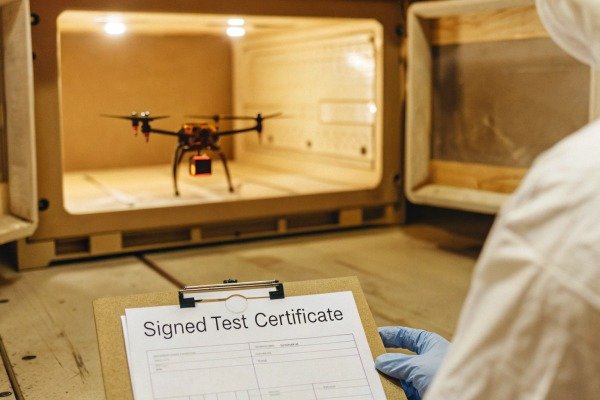
Firefighting drones face water spray, intense heat, and ash. A shiny plastic shell at a booth looks nice, but it might melt near a blaze. You must interrogate the supplier about what happens voor the drone leaves the factory.
Investigating Material Science
Ask specifically about the materials used in the airframe. Standard carbon fiber is strong, but the bonding agents (glues) can fail at high temperatures. We use high-temperature epoxy resins and aerospace-grade aluminum for arm joints to ensure structural integrity near fires. Ask the supplier: "What is the maximum operating temperature of the motor mounts?" If they don't know, they haven't tested it for fire scenarios.
The "Burn-In" Test
Electronics often fail within the first 48 hours of use if there are manufacturing defects. This is called "infant mortality." A responsible factory performs a "burn-in" test where the drone is powered on and run at load for a set period before packaging.
- Question: "Do you fly every single unit before shipping, or just a random sample?"
- Best Practice: Every single unit should be test-flown. We flight-test every SkyRover unit to verify GPS lock and motor balance. Random sampling is not acceptable for public safety equipment.
Supply Chain and Spare Parts
Durability also means maintainability. Ask about the supply chain for consumables. Fire departments cannot wait six weeks for a replacement propeller.
- Critical Question: "Are your motors and ESCs proprietary, or are they standard sizes?"
- Critical Question: "Do you have a list of recommended spare parts for 100 hours of flight time?"
| QC Component | Question to Ask | Desired Answer |
|---|---|---|
| Waterproofing | "How do you verify the IP rating?" | "We use a calibrated rain chamber test for every batch." |
| Motor Life | "What is the MTBF of your motors?" | "Rated for 500+ hours with sealed bearings." |
| Firmware | "How do you test new firmware updates?" | "We fly 50+ hours on beta units before releasing to clients." |
| Batterijen | "How do you cycle test your batteries?" | "We test charge/discharge cycles to ensure 300+ cycles." |
How do I verify a supplier's experience with international shipping and customs clearance while at the show?
Getting a purchase order is useless if the drone gets stuck in customs for months. We learned early on that shipping batteries and dual-use technology to the US requires precise paperwork and experienced logistics partners.
Request case studies or references from current clients in your specific region to verify successful delivery records. Ask specifically about their DDP (Delivered Duty Paid) capabilities and how they handle dangerous goods certification for high-capacity lithium batteries. An experienced exporter will know the exact HS codes and battery transport regulations.
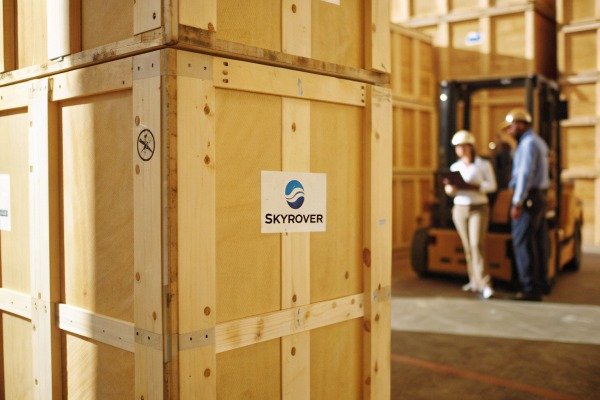
For buyers like Olivia, logistics is often the biggest headache. Drones are sensitive goods. They contain high-capacity Lithium Polymer (LiPo) batteries (Class 9 Dangerous Goods) and often fall under dual-use export regulations. Klasse 9 Gevaarlijke goederen 7 A supplier who says "shipping is easy" is lying or inexperienced.
The Battery Shipping Challenge
Shipping a drone without batteries is easy. Shipping it met batteries is hard. Batteries over 100Wh are heavily regulated by IATA (air) and IMDG (sea).
- Vraag: "Do you have MSDS (Material Safety Data Sheet) and UN38.3 test reports for your batteries?"
- Without these documents, the shipment will be seized by customs or rejected by the airline. We keep these certificates updated for all our battery models to ensure smooth passage.
Understanding DDP vs. CIF
Many Chinese suppliers quote "FOB" (Free on Board) or "CIF" (Cost, Insurance, and Freight). This dumps the responsibility of customs clearance and import taxes on jij, the buyer.
- De oplossing: Look for suppliers who offer DDP (Delivered Duty Paid).
- With DDP, the supplier handles the export from China, the ocean/air freight, the import customs in the US/Europe, and the final truck delivery to your warehouse. Delivered Duty Paid 8 This removes the risk of your goods getting stuck at the port because you filled out a form incorrectly.
Export Licenses and HS Codes
Drones require specific HS Codes (Harmonized System codes) for classification. Harmonized System codes 9 Using the wrong code to save on taxes is illegal and can lead to fines.
- Test Their Knowledge: Ask, "What HS code do you use for this drone?"
- A professional exporter will know the code immediately (usually starting with 8806 for unmanned aircraft). They should also be aware of any specific restrictions for your country. For example, exporting to the US requires careful navigation of Section 301 tariffs. Section 301 tariffs 10
| Incoterm | Who Handles Customs? | Who Pays Import Duty? | Risk Level for Buyer |
|---|---|---|---|
| EXW (Ex Works) | Buyer | Buyer | Hoog. You manage everything from the factory door. |
| FOB (Free on Board) | Buyer (at destination) | Buyer | Medium. Supplier only gets it to the ship. |
| CIF (Cost Ins Freight) | Buyer (at destination) | Buyer | Medium. Supplier pays freight, but you clear customs. |
| DDP (Delivered Duty Paid) | Leverancier | Leverancier | Laag. Supplier manages everything to your door. |
Conclusie
Validating a supplier requires checking flight metrics, engineering depth, durability data, and shipping logic. This rigorous vetting ensures your fleet arrives safely and performs when the alarm rings.
Voetnoten
1. Explains the reliability engineering concept of MTBF for critical components. ↩︎
2. Research on UAV aerodynamics and power systems from a leading engineering university. ↩︎
3. ISO 20653 specifies degrees of protection (IP code) for electrical equipment. ↩︎
4. Official FAA guidance on drone operations and safety in challenging environments. ↩︎
5. Example of industry-standard thermal and visual payloads for public safety drones. ↩︎
6. Product documentation for ATAK integration from a major defense technology provider. ↩︎
7. IATA regulations for the air transport of lithium batteries as dangerous goods. ↩︎
8. Definition of DDP and other Incoterms used in international shipping contracts. ↩︎
9. Official US Census Bureau information on HS codes for international trade classification. ↩︎
10. News coverage of recent US tariff changes affecting Chinese-made drones. ↩︎

 English
  Spanish
  German
  French
  Dutch
Dutch  Arabic
