
Standing on our testing ground in Chengdu, we see that a spec sheet never tells the full story of how a drone performs in a real fire. real fire 1
Mission criticality dictates that technical support and rapid repair turnaround times must take precedence over initial purchase price to minimize operational downtime during life-saving emergencies. While budget constraints are real, the long-term cost of unreliability in harsh fire conditions far outweighs upfront savings.
Let’s break down exactly why support infrastructure is the backbone of a successful drone program.
We frequently analyze returned units from other sources and find that cheap components often fail rapidly after just a few flights in high-heat environments.
The Total Cost of Ownership is the definitive financial metric, as ongoing maintenance, proprietary battery replacements, and software licensing fees often exceed the initial capital expenditure within two years. Cheap suppliers rarely cover crash replacements or offer loaner units, doubling your costs during downtime.
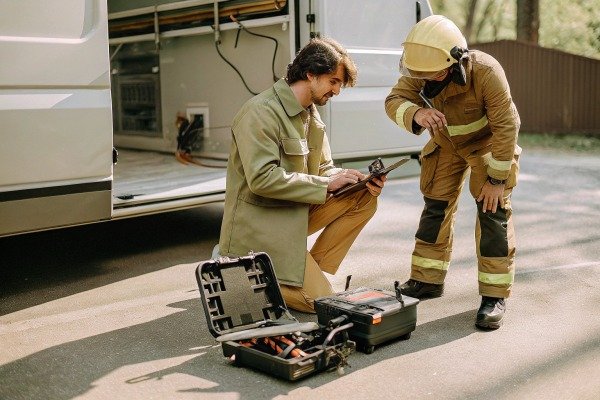
When you look at the price tag of a budget drone, you are only seeing the tip of the iceberg. In the industrial drone market, an exceptionally low price usually means industrial drone market 2 the manufacturer has cut costs in two critical areas: quality control and post-sales infrastructure. We have seen departments buy fleets of low-cost consumer-grade drones, only to find them grounded within six months because they could not handle the rigorous demands of daily operations.
The "Disposable" Drone Trap
The biggest financial risk is treating an industrial asset like a disposable toy. Firefighting drones face extreme conditions. They fly through smoke, deal with wind forces up to level 5, and often experience water spray. A cheap supplier relies on you buying a replacement drone when the first one breaks. They do not invest in repair centers or spare parts inventory. This model forces you to rebuy hardware constantly.
In contrast, a supplier focused on support builds a modular system. If a motor fails, you replace the arm, not the whole drone. If a camera gimbal snaps, it is a swappable part. The initial cost is higher because you are paying for a design that allows for repairs. Over three years, the "cheap" option often costs double because you end up buying the same drone three times.
Calculating Total Cost of Ownership (TCO)
To truly understand the financial impact, you must calculate the Total Cost of Ownership (TCO). Totale eigendomskosten 3 This includes the purchase price, but adds training, batteries, repairs, and the cost of lost operations. If your drone is down for three weeks because parts are shipping from a warehouse with no expedited service, your department loses its eye in the sky. That operational loss has a financial value.
High-value suppliers often provide grant writing assistance to help offset these initial costs. They understand that the funding cycle is slow, so they help you secure the money needed for a sustainable program, rather than a quick, cheap fix.
Cost Comparison: Budget vs. Supported Models
The table below illustrates a typical 3-year financial trajectory for a fire department.
| Kosten Categorie | Budget "Cheapest" Supplier ($) | Support-Oriented Supplier ($) | Opmerkingen |
|---|---|---|---|
| Eerste aankoop | $15,000 | $28,000 | Budget units look attractive initially. |
| Spare Parts & Repairs | $12,000 (Full replacements) | $4,000 (Modular repairs) | Cheap drones are often non-repairable. |
| Downtime Costs | $50,000 (Operational delays) | $5,000 (Loaner units available) | Value of lost situational awareness. |
| Software/Firmware | $0 (No updates) | $3,000 (Continuous improvements) | Updates prolong hardware relevance. |
| 3-Year Total | $77,000 | $40,000 | Support saves money long-term. |
How does strong technical support improve the lifespan and reliability of my industrial drones?
Our support team spends hours helping clients configure thermal sensors thermal sensors 4 because we know that accurate heat data is the only thing that matters on site.
Supplier-provided training ecosystems are essential, as complex thermal imaging and payload release systems require specialized pilot certification and continuous education to prevent operator error. Furthermore, reliable support ensures access to firmware updates that optimize battery health and motor efficiency over the drone’s lifespan.
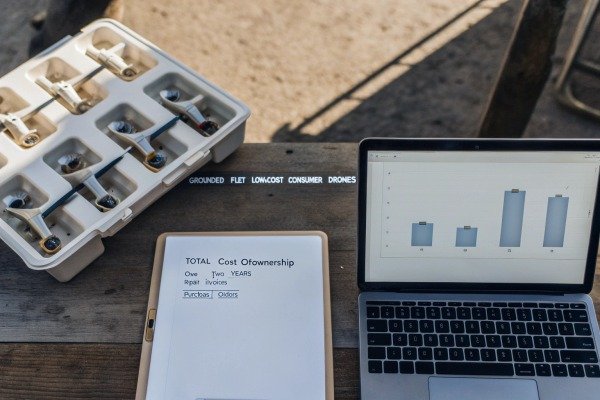
Reliability is not just about how well a drone is built; it is about how well it is maintained. Industrial drones are complex machines that require calibration and care. A supplier with strong technical support acts as a partner in your maintenance schedule, extending the life of your equipment significantly.
Predictive Maintenance vs. Reactive Repair
A key advantage of strong technical support is the shift from reactive to predictive maintenance. predictive maintenance 5 Low-tier suppliers wait for you to tell them something is broken. High-tier suppliers provide software that tracks battery cycles and motor hours. We can alert you when a component is reaching the end of its safe life cycle before it fails in the air.
For example, battery management is critical. Firefighting drones draw immense power. Poorly managed batteries swell and fail. A supplier with good support provides smart charging stations and firmware that balances cells automatically. This can double the lifespan of your battery fleet, which is a major recurring cost.
The Role of Specialized Training
User error is the number one cause of drone damage. Firefighting missions are high-stress environments. Without proper training, pilots can easily crash into obstacles or overheat the system. Strong technical support includes access to high-fidelity flight simulators. flight simulators 6
These simulators are not video games; they mirror the exact physics of your specific drone model. This allows your pilots to practice high-risk maneuvers, like flying indoors or near power lines, without risking the physical asset. A supplier who provides this training ecosystem is investing in the longevity of your drone. They want you to fly safely, not crash and buy another one.
Continuous Firmware Optimization
Hardware is static, but software is dynamic. A camera sensor purchased today can perform better next year with the right algorithms. Suppliers who prioritize support release regular firmware updates. These updates can improve image stabilization, increase transmission range, or refine thermal palettes for better fire detection.
When you buy from a price-focused vendor, the software on day one is often the software forever. When you prioritize support, your drone evolves. We have seen instances where a simple firmware update improved wind resistance by 10%, effectively giving the department a "new" drone without spending a dime on hardware.
Can a low-cost manufacturer really provide the software customization and engineering backing I need?
When we design custom mounting points for US fire departments, it becomes clear that off-the-shelf budget models cannot adapt to specific mission needs.
System integration capabilities are vital, requiring suppliers to demonstrate how their drones interface with existing incident command software, radio systems, and mobile command centers. Low-cost manufacturers typically lack the engineering resources to provide modular payload forward-compatibility or secure data sovereignty compliance.
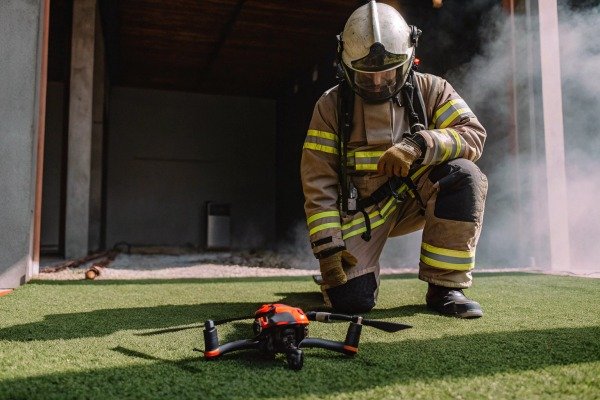
Firefighting is not a "one size fits all" operation. One day you might need a thermal camera to find a hotspot thermische camera 7 in a roof; the next day you might need a laser rangefinder or a spotlight. A low-cost manufacturer produces a rigid product. What you see is what you get. If you need it to talk to your specific command center software, they will likely say no.
Engineering Customization and Integration
Industrial drones must integrate with the wider ecosystem of public safety technology. This includes connecting to mobile command centers and sharing video feeds securely. Achieving this requires a supplier with an engineering team willing to work with you.
For example, many US agencies require drones to be NDAA (National Defense Authorization Act) compliant National Defense Authorization Act 8 to ensure data security. Achieving this compliance requires strict supply chain control and software auditing. A budget manufacturer focused solely on volume cannot afford the engineering overhead to guarantee this compliance. They might sell you a drone that works today but gets banned from government use tomorrow.
Modular Payload Forward-Compatibility
Technology moves fast. The thermal sensor that is top-of-the-line today will be average in two years. If you buy a cheap drone with a built-in camera, you have to throw the whole drone away to upgrade the sensor.
Suppliers with engineering backing design drones with modular ports. They build a chassis that can carry the payloads of the future. This is called "forward-compatibility." It ensures that the drone you buy today can accept a new gas detection sensor or a more advanced gas detection sensor 9 extinguishing agent release system developed three years from now. This engineering foresight prevents premature obsolescence.
Capabilities Checklist: Engineering vs. Assembly
The following table highlights the difference between a manufacturer that just assembles parts and one that provides engineering backing.
| Functie | Low-Cost Assembler | Engineering-Backed Manufacturer |
|---|---|---|
| SDK Availability | None or very limited. | Full SDK for custom app development. |
| Payload Interface | Fixed / Proprietary. | Open standard / Modular ports. |
| Gegevensbeveiliging | Unknown / Cloud-based only. | Local data mode / NDAA Compliant options. |
| Custom Modification | Not possible. | Can modify frame/software for specific needs. |
| Incident Command Sync | Standalone video feed only. | Integrates with ATAK or similar software. |
How do I evaluate a supplier's ability to provide remote technical assistance before I buy?
We prioritize stocking spare parts in our overseas warehouses because we understand that waiting weeks for a replacement prop is not an option during fire season.
You must verify if the supplier offers high-fidelity flight simulators that mirror the exact physics of the specific drone model for safe pilot training. Additionally, test their response time for spare parts availability, as domestic inventory prevents weeks of delays compared to overseas drop-shipping.
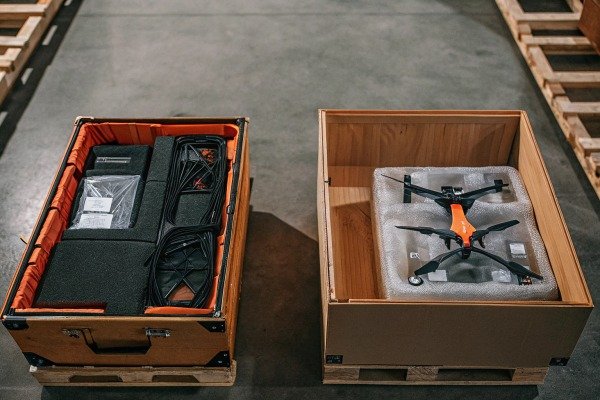
It is easy for a salesperson to promise "world-class support," but how do you verify that before you sign the contract? You need to test their systems. The evaluation phase is where you separate the reliable partners from the box-movers.
The "Mock Emergency" Test
Before you buy, run a test. Send a technical question to their support email or call their hotline. Do not ask a sales question; ask a technical one. Ask about a specific error code or a firmware compatibility issue.
Measure how long it takes for them to reply. Do they reply with a generic manual, or do they give you a specific engineering answer? If it takes them three days to answer a simple email during the sales process, imagine how long it will take when you have a grounded drone during a wildfire. grounded drone during a wildfire 10 You need a partner who responds within hours, not days.
Supply Chain and Spare Parts Logistics
Ask specifically where their spare parts are located. A low-cost supplier often drop-ships parts directly from a factory in Asia. This means a broken propeller arm could take 3 to 4 weeks to arrive.
A supplier with strong support capabilities will have local distributors or a warehouse in your region (like the US or Europe). They should be able to ship critical parts overnight. Ask them to prove their inventory. Ask, "If I crash today, can you get me a replacement motor by Tuesday?" Their answer will tell you everything you need to know about their logistical reliability.
Evaluating Documentation and Resources
Finally, look at their documentation. Is it a poorly translated pamphlet, or is it a comprehensive wiki with video tutorials? Industrial drones require detailed manuals for maintenance, battery care, and software setup.
A supplier who invests in high-quality video tutorials and detailed troubleshooting guides is saving you time. It means your technicians can solve small problems on-site without waiting for support. This "self-service" capability is a hallmark of a mature, support-oriented manufacturer.
Supplier Vetting Matrix
Use this checklist when interviewing potential drone suppliers.
| Evaluatiecriteria | Rode vlag (vermijden) | Green Light (Proceed) |
|---|---|---|
| Reactietijd | > 48 Hours or Automated Bot. | < 12 Hours, Human Engineer. |
| Spare Parts Location | "Ships from Factory" (Overseas). | "In Stock" (Domestic Warehouse). |
| Training Provided | PDF Manual only. | In-person or High-Fidelity Simulator. |
| Warranty Terms | 6 months, parts only. | 1 year+, includes "Crash Replacement". |
| Referentie controleren | Cannot provide fire dept references. | Connects you with active user agencies. |
Conclusie
Prioritizing support over price ensures your fleet remains operational when it matters most, protecting both your investment and the communities you serve.
Voetnoten
1. Official US Fire Administration statistics on fire incidents and technology use. ↩︎
2. General background on the commercial and industrial drone sector and market trends. ↩︎
3. ISO standard for life cycle costing, providing a framework for TCO calculations. ↩︎
4. NFPA standard for thermal imagers used by fire services to ensure performance. ↩︎
5. Research publication on the implementation of predictive maintenance for unmanned aerial vehicles. ↩︎
6. Example of professional drone flight simulation software used for pilot training. ↩︎
7. Leading manufacturer documentation on thermal imaging applications in firefighting and public safety. ↩︎
8. Official Department of Defense guidance on NDAA compliant drones for government agencies. ↩︎
9. Industry organization insights on drone-based gas detection for hazardous materials response. ↩︎
10. News report on the increasing role of drones in fighting wildfires in the US. ↩︎

 English
  Spanish
  German
  French
  Dutch
Dutch  Arabic
