
When we test our latest SkyRover prototypes in the fields just outside our Chengdu factory, we immediately see how critical instant technical feedback is for flight stability. For an importer facing a grounded drone thousands of miles away, the inability to reach a knowledgeable engineer is not just frustrating; it is a direct threat to your harvest timeline and business reputation. Navigating through layers of sales representatives to find someone who actually understands the flight controller logic flight controller logic 1 is a common pain point for many of our international partners.
To establish direct communication with supplier engineers, you must negotiate a “Technical Onboarding” clause in your initial contract that guarantees access to a private support group on WeChat. Prioritize suppliers who use collaborative platforms like DingTalk for file sharing and insist on a direct introduction to the lead engineer once your order volume meets their specific OEM thresholds.
Below, I will guide you through the specific steps to bypass the sales firewall and connect with the technical experts who build these machines.
How do I identify drone suppliers that provide dedicated engineering support teams?
During the busy production seasons at our facility in Xi’an, we often receive inquiries from buyers who were burned by trading companies posing as manufacturers. These buyers often struggle because their previous supplier lacked the internal technical depth to solve complex payload integration issues, leaving them stranded with expensive hardware that does not work.
You can identify capable suppliers by verifying their R&D headcount on platforms like Made-in-China or by requesting an organizational chart during your due diligence process. Look for manufacturers that offer access to internal technical wikis, provide detailed SDK documentation, and are willing to schedule a pre-sales video call with a technical lead to validate their engineering expertise.
Distinguishing Manufacturers from Traders
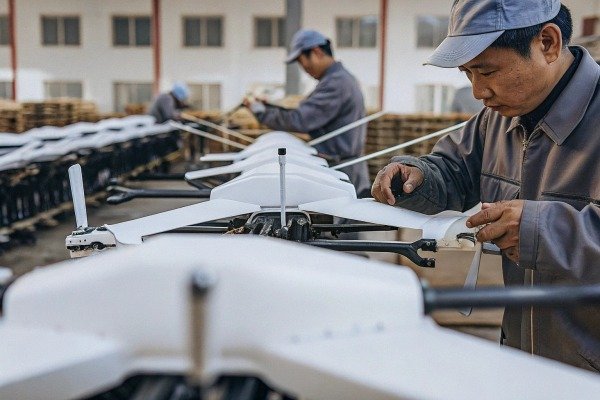
Finding a supplier with a real engineering team is the foundation of technical success. In China's drone hubs like Shenzhen and Guangzhou, many companies are purely trading entities. They buy white-label products and rebrand them. While they are good at sales, they cannot help you if a flight algorithm fails. flight algorithm 2
When vetting a supplier, we recommend looking beyond the marketing photos. Ask for a live video tour of the production line. Specifically, ask to see the R&D department. A trading company will hesitate or show you a warehouse. A real manufacturer like us will show you test benches, 3D printers, and engineers working on CAD models. 3D printers 3
The Importance of the "Green Channel"
Some regions, like Guangzhou, have established "green channels" for high-tech exports. high-tech exports 4 Suppliers on the "Trusted Exporter List" often have more robust internal structures. These companies are vetted by the government and are more likely to have dedicated support teams for international clients. Dealing with these verified entities often means a faster path to technical resolution because they have the resources to staff a proper after-sales engineering department.
Key Questions to Ask During RFQ
To filter out suppliers without engineering depth, include specific technical questions in your Request for Quotation (RFQ). Do not just ask about price. Ask about their firmware update frequency, their protocol for handling bug reports, and whether they can provide a dedicated technical account manager.
Supplier Type Comparison Table
| Functie | Trading Company | Small Assembly Workshop | Full-Scale Manufacturer (OEM/ODM) |
|---|---|---|---|
| Engineering Access | Almost Zero (Blocked by Sales) | Limited (Owner is often the engineer) | High (Structured teams, tiered support) |
| Response Speed | Fast for sales, Slow for tech | Varies, often overwhelmed | Structured, usually < 24 hours |
| Aanpassing | Logo only | Minor hardware tweaks | Full software/hardware development |
| Documentatie | Generic manuals | Basic PDF instructions | Comprehensive Wikis, SDKs, API docs |
Can I communicate directly with developers for custom software or hardware modifications?
When we collaborate with our partners in the US on developing specialized heavy-lift cargo drones, we know that standard email chains are too slow for iterative development. Innovation dies in the inbox, which is why we usually establish a direct line between the client’s product manager and our software architects to ensure the payload release mechanism triggers exactly when needed.
Yes, direct communication with developers is possible, but it typically requires paying a Non-Recurring Engineering (NRE) fee or meeting a Minimum Order Quantity (MOQ). You must ensure your contract clearly specifies intellectual property ownership and establishes a dedicated project management channel using professional tools like DingTalk or Lark to track firmware versions and hardware design iterations efficiently.

Breaking the "Sales Wall"
In Chinese business culture, sales representatives are protective of their clients. They worry that if you talk to an engineer, the engineer might say something that kills the deal or reveals trade secrets. To get direct access to developers, you need to frame it as a partnership rather than a transaction.
If you are buying a standard model off the shelf, direct developer access is rare. However, if you are engaging in an OEM project—like modifying the nozzle layout for a specific crop or altering the ground station software (QGC) for a unique flight path ground station software (QGC) 5—you are entitled to this access.
Tools for Collaborative Development
Once the door is open, email is not enough. We use tools like DingTalk (the enterprise version of Alibaba's communication tool) or Lark (ByteDance's suite). These tools have built-in translation and are what our internal teams use. Asking to be added to a Lark project group shows you understand their workflow. It allows you to chat directly with the developer coding your flight controller, bypassing the sales rep who might mistranslate "latency" as "delay".
Managing Intellectual Property (IP)
A major concern for manufacturers is IP leakage. IP leakage 6 Engineers are often instructed not to share source code. If you need deep customization, be prepared to sign a robust NDA. Furthermore, understanding the difference between "configuration" and "development" is key. Changing a parameter is configuration; rewriting the collision avoidance logic is development.
Engineering Involvement Levels
| Request Type | Engineering Access Level | Typical Cost Model | Communication Channel |
|---|---|---|---|
| Logo/Color Change | None (Handled by Designers) | Small Setup Fee | Email / Sales Rep |
| Payload Integration | Mid (Hardware Engineer) | NRE Fee (One-time) | WeChat Group / Video Call |
| Aangepaste firmware | High (Software Architect) | High NRE + MOQ | Private Git Repo / Lark |
| Full New Airframe | Full (Project Team) | Significant R&D Budget | Weekly Zoom/Teams Meetings |
What is the most efficient way to get remote technical guidance for drone repairs?
We understand the panic that sets in when a client’s drone malfunctions in the middle of a spraying job, especially knowing the 12-hour time difference between our office and their farm. In our experience, waiting for an email reply the next day is unacceptable when pests are destroying crops, so we have optimized our support flow for immediacy.
The most efficient method is to utilize instant messaging apps like WeChat for live video diagnostics and immediate file transfer of flight logs. You should utilize remote controllers with built-in video transmission, such as the H12 series, to stream error codes directly to the engineer, and always prepare a structured “Issue Report” containing logs and photos before the call.

The Power of WeChat for Real-Time Support
WeChat is the operating system of business in China. If you want fast support, you must have it. Email allows for too much delay. In a WeChat group, you can post a video of the motor making a strange noise, and our engineer can hear it and diagnose a bearing issue in seconds.
For agricultural drones, many modern remote controllers (like the Skydroid H12 or SIYI models) run on Android. You can actually install WeChat directly on the remote controller. This allows you to video call the engineer using the remote's front camera, showing them exactly what is happening on the screen and the drone simultaneously.
The "Issue Report" Protocol
Engineers hate vague complaints like "it doesn't work." To get a fast fix, you need to speak their language. We train our clients to submit a standard data package before asking for a call. This includes:
- Flight Logs: The black box data (usually stored on the SD card).
- Error Codes: A screenshot of the Ground Control Station (GCS) warning.
- Physical Evidence: High-res photos of wiring or damage.
Time Zone Strategy
China is roughly 12 to 15 hours ahead of the US. This means your morning is our night. However, many dedicated export manufacturers, including our team, implement split shifts. We often schedule "live troubleshooting sessions" between 8:00 PM and 11:00 PM EST (which is morning in China). Scheduling these slots in advance ensures the engineer is at their desk, not asleep.
Remote Diagnostics Checklist
| Step | Action Item | Tool/Method | Why it Helps |
|---|---|---|---|
| 1 | Capture Logs | Flight Controller SD Card | Provides mathematical proof of failure. |
| 2 | Record Video | Smartphone / GoPro | Shows physical behavior logs might miss. |
| 3 | Check Connections | Multimeter | Rule out simple wiring issues before calling. |
| 4 | Connect Remote | TeamViewer / AnyDesk | Allows engineer to take control of your GCS PC. |
| 5 | Live Call | WeChat Video | Instant feedback on repair technique. |
How do I overcome language barriers when discussing complex technical specifications with Chinese factories?
Even within our factory, translating terms like “gyroscope drift” or “PID tuning” into English PID tuning 7 gyroscope drift 8 PID tuning 9 for our manuals can be a challenge. We have seen many misunderstandings arise not from a lack of skill, but because a technical nuance was lost technical nuance 10 when a buyer relied solely on Google Translate to communicate with an engineer who speaks a different dialect of engineering.
You can overcome language barriers by using visual aids like annotated wiring diagrams and video demonstrations rather than relying solely on text. It is crucial to employ professional translation tools like DeepL for technical documents, consider hiring a bilingual sourcing agent with an engineering background, and strictly adhere to standardized industry terminology to ensure specifications are understood precisely.
Visual Communication is Universal
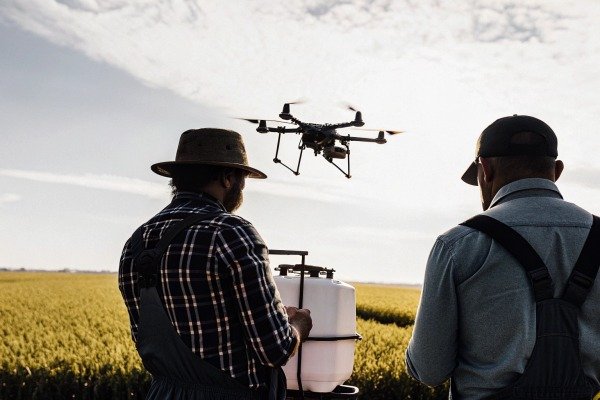
A schematic is the same in Chinese and English. When we communicate with clients who do not speak Mandarin, we rely heavily on screenshots with red circles and arrows. Do not write a paragraph describing which wire goes where. Draw it. Use tools like Canva or even MS Paint to overlay instructions on photos of the drone.
Send videos for everything. If an engineer tells you to "calibrate the compass," ask for a video of them doing it. If you have a problem, film it. Visuals bypass the translation layer entirely.
Choosing the Right Translation Tools
Standard translation apps often fail with technical jargon. They might translate "drone" as "male bee" (the biological term) rather than "UAV". We recommend using DeepL for emails and documents because it handles context better. Within WeChat, the built-in translate function is decent for casual chat, but always double-check critical numbers and specs.
The Role of a Technical Liaison
If your order volume supports it, hiring a bilingual sourcing agent or a "technical liaison" is a game changer. This person acts as a bridge. They don't just translate words; they translate intent. They can explain to the Chinese engineer why you need a specific fail-safe behavior, which ensures the engineer implements it correctly rather than just nodding along to save face.
Cultural Context: Face and "Guanxi"
In technical disputes, Chinese engineers may be reluctant to admit a mistake directly because of "face." If you accuse them of a design flaw, they may shut down. Instead, frame the issue as a "compatibility optimization" or a "joint improvement." This soft approach often yields faster technical results because it preserves the engineer's professional dignity while solving your problem.
Conclusie
Establishing direct communication with supplier engineers in China is not just about having the right contact info; it is about building a bridge of trust and technical clarity. By vetting suppliers for real R&D capability, negotiating direct access in your contracts, using the right tools like WeChat and logs, and overcoming language barriers with visuals, you transform a distant vendor into a close partner. At SkyRover, we believe that the best drone is one supported by a team you can talk to, ensuring that when you fly, you never fly alone.
Voetnoten
1. Research from ETH Zurich on flight control systems and the logic required for stable autonomous flight. ↩︎
2. Technical publication from IEEE regarding the development and failure analysis of flight algorithms in UAVs. ↩︎
3. Creality is a leading manufacturer of 3D printers, which are essential tools in modern drone R&D departments. ↩︎
4. Official US government resources for businesses navigating international trade and export solutions for high-tech products. ↩︎
5. Official website for the open-source ground control software mentioned. ↩︎
6. Official USPTO guidance on protecting intellectual property when manufacturing and sourcing technology from China. ↩︎
7. Authoritative resource explaining the control loop mechanism mentioned. ↩︎
8. General background on the physical principles of gyroscopes and the causes of sensor drift in flight electronics. ↩︎
9. Background information on PID controllers, which are fundamental to the flight stability of agricultural drones. ↩︎
10. ISO standards for unmanned aircraft systems provide standardized vocabulary to prevent technical misunderstandings in international trade. ↩︎

 English
  Spanish
  German
  French
  Dutch
Dutch  Arabic
