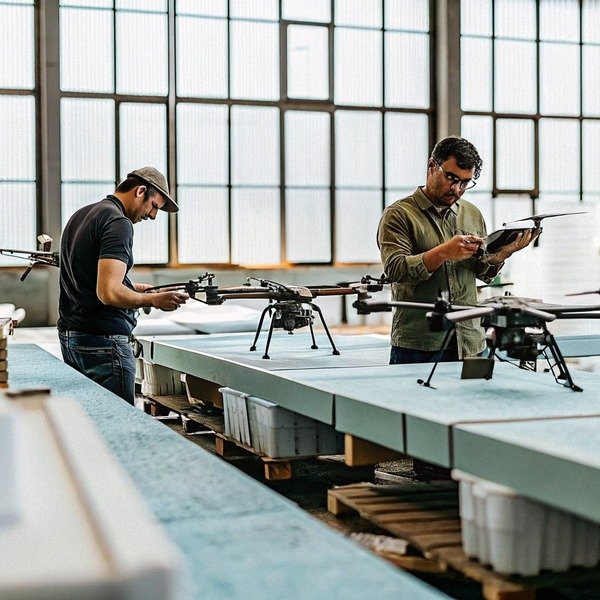
Investing heavily in agricultural fleets feels risky when you cannot verify the build quality firsthand. verify the build quality 1 We often guide clients through our manufacturing facility to show exactly where reliability starts, turning a simple factory tour into a critical step for securing your investment.
You should prioritize inspecting the rigorous quality control stations, specifically focusing on component traceability, automated propulsion testing, and environmental stress screening. Look for evidence of calibrated torque application on frames and real-time flow meter verification to ensure your agricultural drones can withstand harsh field conditions without premature failure.
Let’s break down the specific checkpoints that separate a reliable workhorse from a maintenance nightmare.
How do I evaluate the quality control checkpoints implemented on the agricultural drone assembly line?
Seeing a busy floor is not enough; you need to know if the technicians are catching defects before they reach your warehouse. In our experience exporting to the US, rigorous documentation is often the difference between a successful season and a recall.
To evaluate assembly line quality control, check for distinct inspection stages including incoming material verification (IQC), in-process assembly checks (IPQC), and final quality assurance (FQA). Ensure that every critical component has a unique serial number linked to a digital manufacturing execution system for full traceability.

When you walk through the doors of a factory, the sheer volume of parts can be overwhelming. However, the organization of these parts is your first clue regarding quality. We have found that the most critical aspect to evaluate is the existence of a digital "paper trail" for every single drone.
The Role of Incoming Quality Control (IQC)
Before a screwdriver ever touches a screw, the raw materials must be vetted. On our production floor, we do not simply trust the suppliers of our motors or carbon fiber sheets; we verify them. You should look for a designated IQC area where staff are using calipers, multimeters, and specialized jigs to test batches of incoming components. test batches of incoming components 2 If this area is missing or looks disorganized, it is a major red flag. It suggests that defective parts could be entering the assembly line, destined to fail in your customer’s field.
In-Process Quality Control (IPQC)
As you move down the line, observe the technicians. Are they self-checking their work? In high-end manufacturing, we utilize what is known as "In-Process Quality Control." This means inspections happen during assembly, not just at the end. Look for "Traveler Cards" or digital tablets at each station. These documents travel with the drone. The technician must sign off on specific tasks—like soldering a specific ESC (Electronic Speed Controller) wire—before the unit moves to the next station.
Digital Traceability and the MES
The gold standard you should look for is a Manufacturing Execution System (MES). Manufacturing Execution System (MES) 3 This is a software system that tracks the production history of every unit. When we ship a container to Europe, we know exactly which batch of batteries went into which serial number. This is crucial for you as a buyer. If a specific motor batch is found to be defective six months later, an MES allows you to identify exactly which drones in your inventory are affected, rather than recalling everything.
| Inspection Stage | Waar moet je op letten? | Why It Matters to You |
|---|---|---|
| Incoming Material (IQC) | Sampling plans (AQL standards), testing jigs for motors and batteries. | Prevents bad parts from being built into the drone, saving repair costs later. |
| Assembly (IPQC) | Standard Operating Procedure (SOP) sheets visible at every station; torque wrenches. | Ensures consistency. If SOPs are missing, workers are guessing, leading to variance. |
| Final QC (FQA) | Flight logs, visual inspection checklists, cosmetic checks. | The last line of defense. Ensures the drone flies perfectly out of the box. |
What specific stress tests should I observe to confirm the durability of the drone frame and propulsion system?
A drone that looks good on a shelf might crack under the vibration of a heavy payload. Field failures cost you thousands in downtime, so we simulate the harshest flight conditions right here on the factory floor.
Observe dynamic balancing tests for motors and propellers to minimize vibration, alongside static load testing on the frame arms. You must also verify that the factory uses vibration tables to simulate flight stresses, ensuring structural integrity and preventing micro-fractures in the carbon fiber during heavy-lift operations.
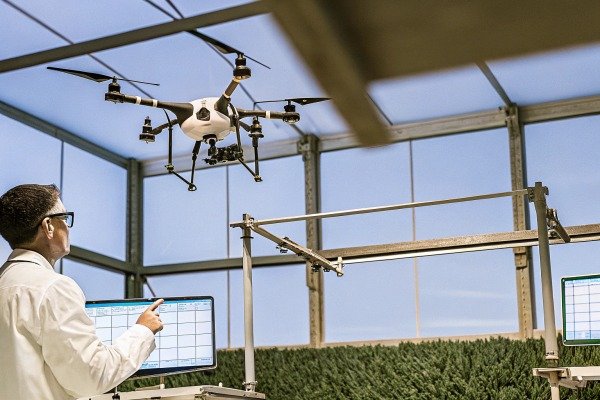
Agricultural drones face a brutal life. They carry heavy liquid loads, endure constant changes in center of gravity, and fly in turbulent winds. During your inspection, you need to see proof that the drone can handle this physical abuse. A simple hover test outside the factory is not enough.
The Motor Aging Room
Ask to see the "aging room" or "burn-in" area. In our facility, we run motors and ESCs at varying throttle levels for hours before they are even installed on a frame. This process weeds out "infant mortality"—electronic components that are destined to fail early. infant mortality 4 You should see rows of motors spinning or electronic boards powered on. If the factory ships fresh components without this burn-in period, those failures will happen in your customer's hands during the first week of operation.
Vibration Testing Tables
Vibration is the silent killer of drones. It loosens screws, cracks solder joints, and confuses IMU (Inertial Measurement Unit) sensors. Inertial Measurement Unit 5 You must look for an electromagnetic vibration table. This machine shakes the drone at specific frequencies to simulate engine resonance and wind buffeting. We use this to verify that our folding mechanisms and arm locks do not wiggle loose over time. If a factory does not have this equipment, they are guessing about durability.
Static and Dynamic Load Testing
Pay close attention to how they test the carbon fiber arms. Since these drones carry liquid tanks (often 30L to 50L), the arms are under immense tension.
- Static Testing: Look for weights hanging from the drone arms while it is fixed to a jig. This measures flex and strength.
- Dynamic Testing: Look for a rig that folds and unfolds the arms thousands of times. The folding joint is a common failure point. We automate this to ensure the latch remains tight after years of use.
Below is a breakdown of the critical stress tests and the risks they mitigate:
| Type test | Procedure | Risk Mitigated |
|---|---|---|
| Propulsion Burn-In | Running motors/ESCs at high load for 4-8 hours. | Identifies early electronic failure and overheating issues before assembly. |
| Vibration Table | Shaking the assembled drone at various Hz frequencies. | Prevents screws loosening, solder cracking, and IMU errors in flight. |
| Arm Fatigue Test | Repeatedly folding/unfolding arms (e.g., 5000 cycles). | Prevents the folding mechanism from becoming loose or snapping in the field. |
| Drop Simulation | Dropping the drone (or shipping box) from a set height. | Ensures the packaging protects the product during international shipping to your warehouse. |
How can I verify the calibration accuracy of the spraying and spreading systems during production?
Inconsistent spraying burns crops and angers farmers, damaging your reputation as a supplier. You cannot afford nozzles that drip or flow meters that lie about dosage, which is why we insist on wet testing every unit.
Verify calibration accuracy by observing wet-test stations where flow meters are benchmarked against standard weights and volumes. Look for automated test rigs that measure individual nozzle output and spray pattern consistency, ensuring the system logic correctly adjusts pump pressure according to simulated flight speeds.

The primary function of an agricultural drone is not just to fly; it is to apply chemicals precisely. If the drone over-sprays, it wastes money and hurts the environment. If it under-sprays, the pests survive. Therefore, the calibration station is perhaps the most vital part of the production line for this specific product category.
The Wet Test Station
You should see a dedicated area with water tanks and drainage. Every single spraying drone must pump liquid before it is packed. We have seen some manufacturers skip this to keep the drones "clean," but that is a mistake.
- What to watch: Watch a technician run the pump. Is the spray uniform across all nozzles? Are there leaks at the tube junctions?
- The Flow Meter Check: The flight controller relies on the flow meter to know how much liquid is left. flow meter 6 Ask the factory how they calibrate this. Ideally, they should pump a known volume (e.g., exactly 5 Liters) and check if the drone's software registers exactly 5 Liters. If the variance is more than 2-3%, the calibration is poor.
Spreading System Calibration
For solid particle spreaders (used for seeds or fertilizer), the inspection is different. The factory should have a rig that measures the rotational speed of the spinner disk and the opening width of the hopper gate.
- Granule Simulation: Since real fertilizer is corrosive and dusty, factories often use plastic pellets that mimic the weight of fertilizer for testing.
- Weight Scales: Look for digital scales at the end of the line. The system needs to accurately weigh the payload to prevent the drone from taking off overweight.
Software Integration
Hardware calibration means nothing if the software doesn't read it correctly. When we calibrate our systems, we connect the drone to a computer to flash the specific parameters for the installed pump type. During your tour, ask the technician to show you the "Pumping parameters" on their screen. Ensure they are not just using a default setting for every model, but tuning it for the specific hardware batch.
Common Calibration Issues to Spot
When observing the wet test, keep an eye out for these visual cues that indicate poor quality control:
| Visual Cue | Potential Issue | Result for End User |
|---|---|---|
| Dripping Nozzles | Check valves are faulty or pump pressure is not cutting off instantly. | Chemical burns on crops during takeoff/landing; wasted product. |
| Uneven Spray Cone | Poor quality nozzle tips or debris in the lines. | Streaky application; some crop rows get too much chemical, others too little. |
| Bubbles in Lines | Air leaks in the intake tubing. | Flow meter gives inaccurate readings; drone thinks tank is empty when it's not. |
What evidence of waterproofing and environmental protection standards should I look for during my factory tour?
Agriculture is dirty and wet work; if moisture penetrates the flight controller, the drone falls out of the sky. We apply specialized coatings to ensure our electronics survive the corrosive mix of fertilizer dust and morning dew.
Look for specific waterproofing evidence such as the application of conformal coating on printed circuit boards and vacuum-sealed testing for core modules. Check that the assembly process includes pressure decay testing on the main fuselage to validate the IP rating against dust and liquid ingress.
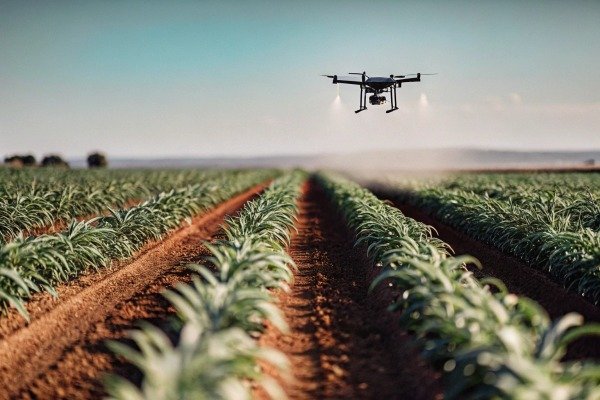
Agricultural drones operate in one of the toughest environments for electronics. They are constantly exposed to water, corrosive fertilizers, pesticides, and dust. An IP67 rating on a spec sheet is easy to write, but difficult to achieve. IP67 rating 7 IP67 rating 8 You need to see the physical processes that create this protection.
Conformal Coating Inspection
The most basic protection for internal electronics is conformal coating conformal coating 9—a thin chemical layer that protects the PCB (Printed Circuit Board) from moisture and corrosion.
- The UV Check: Many conformal coatings contain a UV tracer. Ask the factory to show you a PCB under a UV (black) light. The board should glow blue or purple. If you see dark spots, it means the coating was applied unevenly or missed entirely. We perform this check on every flight controller and ESC.
Pressure Decay Testing
Waterproofing is not just about coatings; it is about seals. How do you know the main body is sealed tight? You cannot dunk every drone in water. Instead, look for an air leak tester (often a machine with a digital pressure gauge).
- The Process: The factory connects a hose to the drone body and pumps air in to a specific pressure, then stops.
- The Result: The machine measures if the pressure drops over 10-20 seconds. If the pressure drops, air is escaping, which means water can get in. This is a non-destructive way to guarantee the IP rating. If you do not see this machine, the "IP Rating" is likely unverified.
Salt Spray and Corrosion Testing
While not done on every unit, the factory should have a lab for "Salt Spray Testing." Salt Spray Testing 10 This is a chamber that blasts components with salty mist for 48 to 96 hours. This simulates years of exposure to harsh environments. Ask to see the test reports or the chamber itself. This is particularly crucial for the metal connectors and screws. If they use cheap steel instead of stainless steel or properly treated alloys, they will rust within weeks in a humid farming environment.
Conclusie
A factory visit is not just a tour; it is your insurance policy. By verifying traceability, stress testing, calibration accuracy, and waterproofing protocols, you validate that the manufacturer values quality as much as you do. These details ensure that the drones you import will perform reliably, protecting your reputation and your bottom line.
Voetnoten
1. ISO 9001 is the international standard for quality management systems ensuring consistent build quality. ↩︎
2. ISO 2859 defines sampling procedures for inspection by attributes, relevant to batch testing. ↩︎
3. NIST provides the technical definition and standards for Manufacturing Execution Systems in production. ↩︎
4. Explains the reliability engineering concept of early-life component failures in the bathtub curve. ↩︎
5. Provides a comprehensive overview of IMU technology used for drone stabilization and navigation. ↩︎
6. NIST establishes the standards for fluid flow measurement and calibration accuracy. ↩︎
7. The IEC defines the international standards for Ingress Protection (IP) ratings for electronics. ↩︎
8. Official IEC standard explanation for Ingress Protection (IP) ratings for electronics. ↩︎
9. General background on chemical protection for electronic circuits in harsh environments. ↩︎
10. ISO 9227 is the authoritative standard for corrosion tests in artificial atmospheres. ↩︎

 English
  Spanish
  German
  French
  Dutch
Dutch  Arabic
