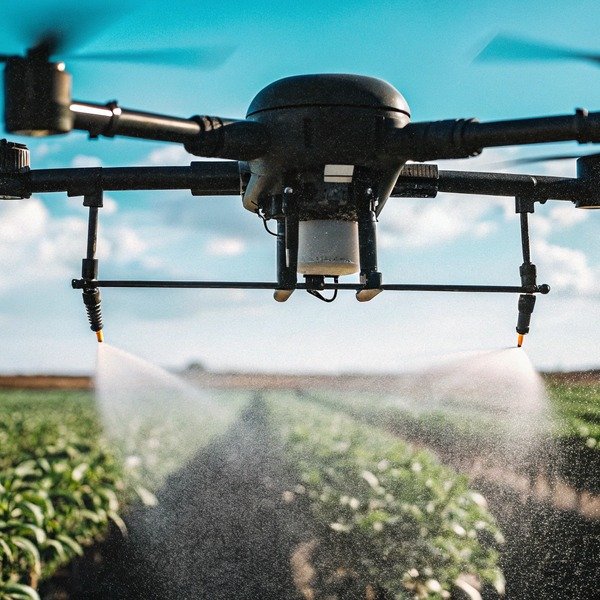
Waiting days for a simple reply halts your operations and breeds uncertainty. At our Xi’an headquarters, we know that delayed communication kills crop dusting windows faster than bad weather.
Evaluate communication efficiency by tracking response times to initial technical queries, verifying the team’s ability to explain complex flight controller logic in English, and testing their availability during your business hours. A reliable supplier typically responds within 24 hours and offers clear, non-machine-translated technical support.
Let’s examine the specific metrics and tests you need to apply before signing a contract.
How quickly should a reliable Chinese drone manufacturer respond to my initial inquiry emails?
If you send an urgent request and hear silence, your project stalls. Our sales team monitors inboxes constantly because we understand that speed builds trust and keeps your supply chain moving.
A professional manufacturer should acknowledge your initial inquiry within 12 to 24 hours, even if just to confirm receipt. For detailed technical proposals regarding agricultural agrarische drones 1 payloads or software customization, expect a comprehensive follow-up within 48 hours to ensure all engineering specs are accurate.
When you are sourcing complex machinery like agricultural drones, the speed of the first reply sets the tone for the entire relationship. We operate in a fast-paced industry where spraying seasons are short and strict. If a factory takes three or four days to reply to a simple "Hello," they will likely disappear when you have a technical emergency in the field. However, speed is not the only metric; the context of the delay matters.
The 24-Hour Rule in Cross-Border Trade
China and the United States have a significant time zone gap. time zone gap 2 When our team in Chengdu is finishing the day, you might just be starting yours in New York. Despite this, a 24-hour window is the standard for professional exporters. This window allows our staff to arrive at the office, review overnight inquiries from Western clients, consult with engineers if necessary, and draft a reply.
If you receive a reply in 10 minutes, be cautious. It is likely an auto-responder or a salesperson who has not actually read your technical requirements. A thoughtful reply that addresses your specific questions about payload capacity or battery endurance usually takes a few hours to prepare.
Analyzing Response Quality vs. Speed
It is easy to reply fast with a generic template. It is much harder to reply fast with value. You should evaluate what is being said, not just when. Did the supplier answer your specific question about the flight control system? Or did they just send a generic price list?
In our experience, the best way to test this is to ask a multi-part question. For example, ask about the price, the shipping dimensions, and the specific material of the spray nozzles. If the reply comes back fast but ignores the nozzle question, the supplier lacks attention to detail. This is a warning sign for future quality control issues.
Benchmark Response Times for Different Inquiry Types
Use the table below to gauge if a supplier is meeting industry standards.
| Inquiry Type | Excellent Response Time | Acceptable Response Time | Red Flag (Warning Sign) |
|---|---|---|---|
| Initial Contact | < 12 Hours | 12 - 24 uur | > 48 Hours |
| Technical Spec Request | 24 Hours | 48 Hours | > 4 Dagen |
| Pricing/Quotation | 24 Hours | 48 Hours | > 3 Days |
| Shipping/Logistics | < 12 Hours | 24 Hours | > 48 Hours |
| Emergency Tech Support | < 4 uur | < 12 Hours | > 24 Hours |
Can the supplier's team accurately interpret my technical specifications and customization needs in English?
Miscommunication leads to drones that crash or fail to spray correctly. We train our engineers to read English specs directly to prevent costly manufacturing errors and ensure precise flight performance.
You can verify interpretation accuracy by asking open-ended technical questions about flow rates, nozzle types, or SDK compatibility. A capable team will restate your requirements in their own words rather than just saying “yes,” ensuring they fully grasp the customization scope before production begins.
In the drone manufacturing industry, technical jargon is dense. Real-Time Kinematic (RTK) positioning 3 Terms like "Real-Time Kinematic (RTK) positioning," "ESC calibration," and "LiPo battery cycles" must be understood perfectly. A simple misunderstanding regarding the voltage input of a battery charger can lead to equipment fires. Therefore, the supplier's ability to understand English technical terms is a safety issue, not just a convenience issue.
The Danger of "Yes"
In many Asian business cultures, it is polite to say "yes" to avoid conflict or embarrassment, even if the request is not fully understood. This is dangerous for you. If you ask, "Can this drone support a third-party multispectral multispectral camera 4 camera?" and the supplier simply replies "Yes," you have learned nothing.
To test them, we recommend asking "How" instead of "Can." Ask them, "How would we mount a third-party camera to this frame, and how does it connect to the power distribution board?" A supplier who understands English and engineering will give you a technical explanation. A supplier who is bluffing will give you a vague answer.
Testing Engineering Vocabulary
You are likely buying from a salesperson, but you need to know if they can communicate with their engineers. We often see sales teams using translation software that confuses technical terms. For example, translating "propeller pitch" might result in a word related to "sound pitch" or "sales pitch."
When we work with clients on OEM projects, we use diagrams and annotated PDFs. OEM projects 5 We encourage you to send a technical drawing or a photo with a specific question. See if their reply uses the correct terminology for the parts highlighted. This validates that their internal communication chain—from your email to the sales rep, to the engineer, and back to you—is functioning correctly in English.
Common Language Pitfalls in Drone Manufacturing
Pay attention to how suppliers handle these specific terms.
| Technical Term | Common Translation Error | Correct Engineering Context |
|---|---|---|
| Nuttige lading | Cargo / Weight | The specific weight of the liquid or equipment the drone carries, excluding the drone itself. |
| Endurance | Lasting time | Flight time specifically under load vs. hovering with no load. |
| GCS (Ground Control Station) | Remote Controller | The software interface (usually on a tablet/laptop) used for mission planning, not just the handheld stick controller. |
| Obstakelvermijding | Stop radar | A system that actively detects and bypasses objects, distinct from simple collision warnings. |
What are the best communication channels to ensure smooth project management with a Chinese factory?
Email chains often get buried, causing you to miss critical production updates. We use a mix of instant messaging and formal emails to keep projects moving and ensure transparency.
For project management, combine email for formal documentation and contracts with instant messaging apps like WhatsApp or WeChat for quick daily updates. This hybrid approach creates a searchable paper trail while allowing for real-time Real-Time Kinematic (RTK) positioning 6 troubleshooting of production issues or shipping logistics during overlapping hours.

Managing a manufacturing project remotely requires the right tools. While you might prefer email for everything, the reality of Chinese business is that speed happens on mobile apps. If you force a supplier to use only email, you might miss out on the rapid-fire updates that happen on the factory floor.
The Role of WeChat and WhatsApp
Almost everyone in China uses WeChat for business. It is faster than email and allows for voice messages, video calls, and instant photo sharing. At our facility, production managers often snap a photo of a drone on the test bench and send it to the client immediately. This gives you "eyes" in the factory.
However, many Western companies prefer WhatsApp due to data privacy concerns or familiarity. Most export-focused sales teams, including ours, use WhatsApp fluently. We recommend establishing a group chat that includes your sales rep, a technical support engineer, and your own project manager. This reduces the "telephone game" where information gets lost between people.
Formalizing Decisions via Email
While chat apps are great for updates, they are terrible for contracts. You should never finalize a spec change or a price adjustment on WhatsApp. Always follow up a chat conversation with an email.
For example, if we agree on WeChat to switch from a 4-nozzle system to a 6-nozzle system, we will send you a formal email stating: "As discussed on WeChat, we are updating the order to the 6-nozzle configuration. Please confirm." This protects both parties. It ensures that the factory ERP system is updated and that there is a legal record of the change.
Video Calls for Relationship Building
Never underestimate the power of a face-to-face video call. It helps verify the supplier's identity and facilities. We often invite clients to a Zoom or Teams meeting to walk them through the showroom. Zoom or Teams 7 This confirms that the person you are emailing is real and that they actually work at the factory, not a middleman's home office.
Comparison of Communication Channels
| Channel | Beste gebruikscasus | Response Speed | Legal/Formal Weight |
|---|---|---|---|
| Contracts, invoices, complex technical specs, final approvals. | Slow (12-48 hours) | Hoog | |
| WeChat / WhatsApp | Daily updates, quick questions, photos/videos of production, shipping status. | Fast (Instant – 1 hour) | Laag |
| Videogesprek (Zoom/Teams) | Initial vetting, troubleshooting complex repairs, building rapport. | Gepland | Medium |
| Telefoongesprek | Urgent emergencies only (due to language barrier/accent issues). | Onmiddellijk | None (unless recorded) |
How do I verify if the supplier offers clear and effective technical support in English before I buy?
Buying a drone is easy; fixing it in the field is hard. Our support staff creates video tutorials because manual translation often fails during urgent repairs, ensuring you have visual guidance.
Test pre-sale support by simulating a technical failure, such as a GPS calibration error, and asking for a troubleshooting guide. A quality supplier will provide clear, step-by-step video instructions or a scheduled video call with an engineer, proving they can support you post-purchase.

Agricultural drones are workhorses. They fly in dust, moisture, and heat. They will eventually need maintenance. The worst time to find out your supplier speaks poor English is when you have a broken drone and a field of corn that needs spraying tomorrow. You must audit their support capability voor you pay the deposit.
The "Mock Failure" Test
Do not just ask, "Do you have support?" Everyone says yes. Instead, present a specific scenario. Send an email saying: "I am worried about calibration. If the drone's compass fails to calibrate in the field, what is the exact procedure to fix it?"
Watch what they send back.
- Bad Result: A text reply saying "We help you fix it, don't worry."
- Okay Result: A PDF manual in broken English.
- Good Result: A link to a private YouTube video or a clear, step-by-step guide with screenshots showing the software interface in English.
We invest heavily in video content because we know that reading a manual in the sun is difficult. Visuals transcend language barriers. If a supplier cannot show you a support video before the sale, they likely do not have one.
Evaluating Manuals and Documentation
Ask for a sample of the user manual and the maintenance log. battery safety 8 Read the section on battery safety or firmware updates. Is it understandable? Many Chinese manuals are machine-translated and make no sense (e.g., "Please careful the power fire").
If the manual is confusing, your team will make mistakes. We employ technical writers to ensure our documentation uses standard aviation terminology. aviation terminology 9 You need to verify that the supplier cares enough to do the same. If the documentation is sloppy, the engineering quality control is often sloppy too.
Mogelijkheden voor ondersteuning op afstand
Finally, ask if they support remote diagnostics. Modern agricultural drones often generate flight logs. Ask the supplier: "If I send you the flight log file, can your engineers analyze why a crash happened?" flight log file 10
A supplier with real R&D capability will say yes and explain which file format (.log, .dat, .bin) they need. Trading companies or low-end assemblers will often say no because they do not have the software engineers to read the data. This ability to analyze data remotely is crucial for resolving disputes about warranty claims and pilot error.
Conclusie
Efficient communication predicts product quality. By testing response times, technical clarity, and support readiness now, you ensure your fleet remains airborne and profitable for years to come.
Voetnoten
1. Provides general background on the technology being discussed. ↩︎
2. Links to the official US time authority for time zone reference. ↩︎
3. References the international standard for high-precision satellite positioning. ↩︎
4. Links to a leading manufacturer of specialized agricultural sensors. ↩︎
5. Explains the business model of manufacturing products for other brands. ↩︎
6. Provides technical background on the specific positioning technology mentioned. ↩︎
7. Official site for the video conferencing platform used for factory walk-throughs. ↩︎
8. Links to industry standards for safe lithium battery storage and use. ↩︎
9. Official government resource for standardized aviation terms and manuals. ↩︎
10. Official documentation on analyzing drone flight data logs. ↩︎

 English
  Spanish
  German
  French
  Dutch
Dutch  Arabic
