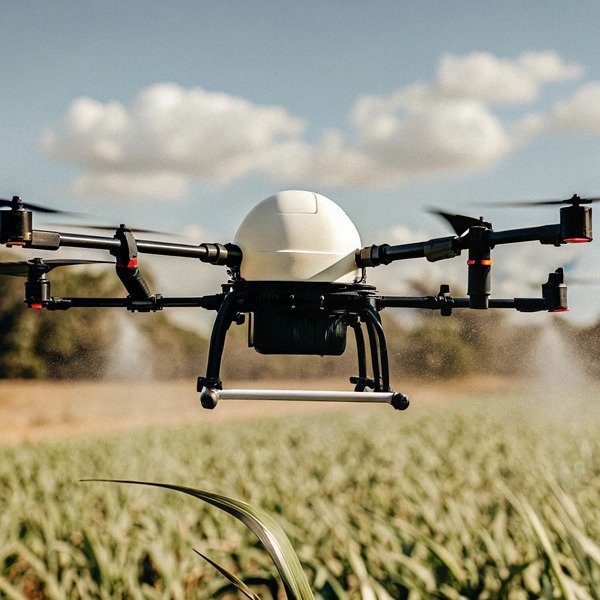
When we collaborate with international partners to develop custom drone solutions, the fear of seeing their unique designs copied is a primary concern we address immediately.
To protect your drone designs during OEM purchasing, sign a comprehensive NNN agreement (Non-Use, Non-Disclosure, Non-Circumvention) before sharing files. Register trademarks and design patents in both your home country and the manufacturing country, and enforce strict contract penalties to deter any unauthorized production or sales.
Securing your intellectual property requires a mix of legal strategy intellectual property 1 and smart manufacturing choices.
What legal agreements should I sign with a Chinese manufacturer to secure my intellectual property?
Before our engineering team opens a client’s CAD file or reviews a spec sheet, we insist on establishing a clear legal framework to build mutual trust.
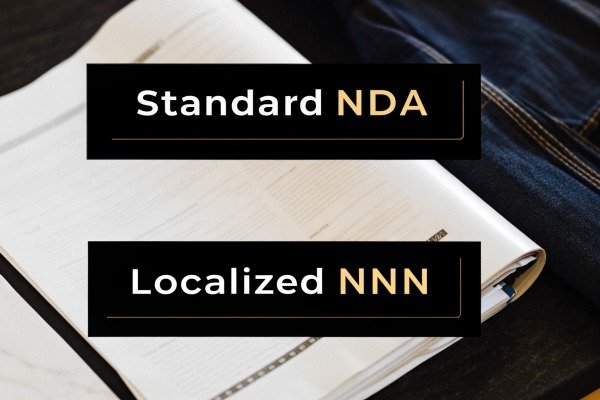
You must sign a localized NNN agreement enforceable in Chinese courts, rather than a standard Western NDA. Additionally, execute a Manufacturing Agreement that explicitly assigns all IP rights, molds, and tooling ownership to you, preventing the factory from claiming “work for hire” privileges over your product.
Why a Standard NDA is Not Enough
In the world of drone manufacturing, relying on a standard US or European Non-Disclosure Agreement (NDA) is often a critical mistake Non-Disclosure Agreement 2. In our experience, these documents hold little weight in local courts where production actually happens. A standard NDA usually prevents the disclosure of secrets to the public, but it often fails to stop a manufacturer from using your design for their own benefit.
Instead, you need an NNN Agreement. This stands for Non-Use, Non-Disclosure, and Non-Circumvention.
- Non-Use: Prevents the factory from using your idea or product.
- Non-Disclosure: Prevents them from sharing your secrets with others.
- Non-Circumvention: Prevents them from selling directly to your customers, effectively cutting you out of the deal.
The Importance of Jurisdiction
When we draft contracts with our partners, we ensure the governing law is Chinese law, and the jurisdiction is a Chinese court. This might sound counterintuitive to a US buyer, but a judgment from a US court is nearly impossible to enforce in China. If you want to seize molds or freeze assets of an infringing factory, you need a contract that local authorities respect and understand.
Ownership of Molds and Tooling
Agricultural drones often require custom injection molds for tanks or carbon fiber frame layouts carbon fiber frame 3. These molds are expensive. Your contract must explicitly state that you own the molds, even if the factory stores them. Without this, a supplier might refuse to release your molds if you decide to switch manufacturers, effectively holding your production hostage.
Essential Clauses for Your Agreement
Below is a breakdown of specific clauses we recommend including to ensure your interests are fully covered.
| Clausule Type | Doel | Critical Detail to Include |
|---|---|---|
| Liquidated Damages | Sets a specific fine for every breach. | Set a high fixed amount (e.g., $50,000 per breach) so you don't have to prove exact damages in court. |
| Mold Ownership | Confirms you own the tools. | State that molds must be returned within 5 days of request and cannot be used for other clients. |
| No Subcontracting | Prevents unauthorized outsourcing. | Require written approval before the factory outsources any part of production to a third party. |
| Product Exclusivity | Stops gray market sales. | Explicitly ban the sale of "overrun" or "quality reject" units on platforms like Alibaba. |
How can I verify that a drone factory has a strong track record of respecting client confidentiality?
When potential clients visit our facilities in Xi’an and Chengdu, the most experienced buyers look beyond the assembly line to scrutinize our information security protocols information security protocols 4 information security protocols 5.
Verify a factory’s reputation by conducting on-site audits to check for physical segregation of production lines and secure data handling. Request references from non-competing clients in different markets and search legal databases for past IP litigation or contract disputes involving the manufacturer.

The Value of On-Site Audits
You cannot rely solely on a website or a sales pitch. We always encourage our partners to perform a physical audit or hire a third-party agency to do it. When you walk through a factory, you should look for specific signs of IP hygiene. Are the production lines for different clients physically separated? Do workers on the assembly line have access to the full engineering blueprints, or just the instructions for their specific task?
In high-quality facilities, we often use "cells" for assembly. This means the team assembling Brand A does not interact with the team assembling Brand B. If a factory has products from multiple competitors lying openly on the same table, that is a major red flag.
Digital Security Measures
Hardware is easy to see, but data is harder to track. You need to ask how the factory stores your CAD files and bill of materials (BOM).
- Access Control: Only the lead engineer and project manager should have access to full design files.
- Data Isolation: Your data should be stored on a secure server, not on personal laptops or USB drives that leave the building.
We have seen cases in the industry where designs were leaked because a sales representative had full access to engineering files. Ensuring strict internal permissions is a sign of a mature OEM partner.
Checking the Legal Track Record
Before you sign, do your homework. In China, you can check public court records to see if a company has been sued for IP infringement. If a manufacturer has a history of contract disputes regarding design theft, stay away. A clean legal record is one of the best indicators of future behavior.
Warning Signs During Due Diligence
Here is a checklist of "Red Flags" that we advise our clients to watch for during their verification process.
| Area of Concern | Red Flag Indicator | What It Means for You |
|---|---|---|
| Showroom Samples | You see other clients' branded products on display. | They will likely show your product to future customers to prove their capability. |
| Open Access | Random employees can access server rooms or design labs. | High risk of data theft by employees selling designs to competitors. |
| Vague Answers | They cannot explain their IP protection policy clearly. | They likely have no formal process and handle IP casually. |
| Alibaba Presence | They sell unbranded "clones" of famous models. | They actively participate in copycat culture and may clone your design next. |
Is it possible to keep my proprietary software code safe while outsourcing hardware production?
Our software engineers understand that while the carbon fiber frame provides structure, the flight control algorithms and source code are the true soul of the drone.
Yes, you can protect code by flashing firmware domestically after receiving the hardware or using encrypted bootloaders that prevent unauthorized reading. Alternatively, provide the manufacturer with pre-compiled binary files rather than source code, ensuring they can test function without accessing the core logic.
The Hardware-Software Split
One of the most effective strategies we see current US clients using is the "Hardware-Software Split." In this model, we manufacture the physical drone body, motors, and wiring, but the client installs the "brain" (the flight controller software) after the goods arrive in their warehouse.
With the current FCC regulations and data security concerns FCC regulations 6 in the US, this approach is becoming the standard. By keeping the software loading process in your own facility, you ensure that the manufacturer never has access to your source code. We simply provide the hardware "shell," and you breathe life into it.
Using Binary Files for Testing
If you need the manufacturer to test the drone before shipment (which we highly recommend for quality control), you do not need to send the source code quality control 7. You can send a pre-compiled binary file.
- Source Code: Human-readable logic. (Do not share this).
- Binary File: Machine-readable 0s and 1s. (Safe to share).
The factory can flash the binary file onto the drone to verify that the motors spin and the sensors work. However, reverse-engineering a binary file back into source code is extremely difficult and time-consuming. This allows us to perform flight tests without compromising your intellectual property.
Encryption and ID Chips
For higher security, we can integrate secure element chips into the circuit board. These chips act like a digital lock. You can program your software to run only if it detects this specific encrypted chip. If a counterfeiter tries to copy your hardware design, the software will refuse to run because the unique security key is missing.
Levels of Software Protection
Depending on your resources, you can choose different levels of protection.
| Protection Level | Methode | Pros | Cons |
|---|---|---|---|
| Basic | Binary Files | Easy to implement; allows factory testing. | Sophisticated hackers can potentially reverse-engineer it. |
| Intermediate | Domestic Flashing | Zero code access for the factory. | You must do the final labor (flashing) yourself; factory cannot full-flight test. |
| Advanced | Secure Elements | Hardware-locked software; impossible to clone. | Higher hardware cost; requires complex engineering integration. |
| Strategic | Modular GCS | Use US-made Ground Control Software (e.g., American Autonomy). | Complies with US NDAA/FCC rules; separates hardware entirely from data handling. |
We have witnessed unfortunate situations where a client’s brand was legally registered by a third party before their first shipment even left the port.
You absolutely need to register your trademark in the manufacturing country because China follows a “first-to-file” system. If you do not register it, squatters or even the factory itself could legally register your brand, allowing customs Customs Recordal 8 to seize your own goods as counterfeit exports.
The "First-to-File" Trap
Many of our Western clients operate under "first-to-use" laws, where using a brand name gives you rights to it. However, China uses a "first-to-file" system. first-to-file 9 This means whoever submits the paperwork to the trademark office first owns the brand, regardless of who created it.
If you do not register your brand (e.g., "SkyGuard Drones") in China, a "trademark squatter" can register it. When we try to export your drones, this squatter can report us to Customs, claiming we are shipping counterfeit goods. Customs will seize your genuine products, and you will have to pay the squatter a huge ransom to get your trademark back.
Customs Recordal: The Shield at the Border
Once you have your trademark registered in China trademark registered in China 10, you should file a Customs Recordal. This puts your brand in the customs database.
- Offense: It stops competitors from exporting fake versions of your drone.
- Defense: It proves that the goods we are shipping to you are authorized.
This is a powerful tool. It effectively turns customs agents into your private IP police force. They will check outgoing shipments to ensure no one else is using your brand name on agricultural equipment.
Cost vs. Risk
Registering a trademark in China is relatively inexpensive compared to the cost of a blocked shipment. It typically takes 12-18 months to fully process, so you must start this immediately—ideally before you even finalize your OEM contract.
Strategic Branding for OEMs
If you are just starting and cannot afford global patents, at least protect the brand name.
- Logo on Molds: We can emboss your logo directly into the plastic or carbon fiber molds. This makes it much harder for a factory to use your leftover parts for other customers, as they would have to physically grind off the logo, ruining the finish.
- Unique Color Schemes: While harder to trademark, using a custom pantone color for your tanks or arms makes your product visually distinct and harder to mix with generic stock.
Conclusie
Protecting your agricultural drone business involves more than just good engineering; it requires a defensive legal and operational strategy. By using NNN agreements, controlling your software, and registering trademarks in the country of manufacture, you secure your future. We are ready to be the partner that respects and protects your innovation.
Voetnoten
1. Global authority on protecting intellectual property rights across international borders. ↩︎
2. General background on the legal purpose and structure of non-disclosure agreements. ↩︎
3. Technical specifications for high-performance carbon fiber materials used in drone manufacturing. ↩︎
4. International standard for establishing and maintaining robust information security management systems. ↩︎
5. ISO 27001 is the international standard for information security management systems. ↩︎
6. Official US government guidance on drone operation and regulatory compliance. ↩︎
7. Example of quality control and service policies from a major drone manufacturer. ↩︎
8. Trade body guidance on protecting intellectual property through customs registration in China. ↩︎
9. WIPO explains the difference between first-to-file and first-to-use trademark systems. ↩︎
10. Official US government resource explaining the basics and legal protections of trademarks. ↩︎

 English
  Spanish
  German
  French
  Dutch
Dutch  Arabic
