
Every week, our engineering team receives calls from fire departments confused about FAA rules 1. They bought drones overseas, then discovered registration was more complex than expected. The payload they added pushed them into a different weight category Section 44807 Exemption 2. Suddenly, their simple purchase became a compliance nightmare.
Weight directly determines your FAA registration pathway. Drones under 0.55 pounds avoid registration for recreational use only. Drones between 0.55 and 55 pounds require simple online registration through FAA DroneZone. Drones over 55 pounds need complex paper-based registration through the FAA Aircraft Registration Branch.
Understanding these weight thresholds before you purchase saves time, money, and legal headaches. Let me walk you through exactly what you need to know.
How does the takeoff weight of my firefighting drone determine my FAA registration requirements?
When we ship drones to US fire departments, the first question we ask is about their intended total takeoff weight. This single number determines everything about their registration process. Many buyers focus only on the base drone weight and forget about payloads.
Your drone's takeoff weight places it into one of three FAA categories: under 0.55 pounds (no registration for recreational use), 0.55 to 55 pounds (online registration via FAA DroneZone for $5), or over 55 pounds (paper-based registration through FAA Aircraft Registration Branch under 14 CFR Part 47).
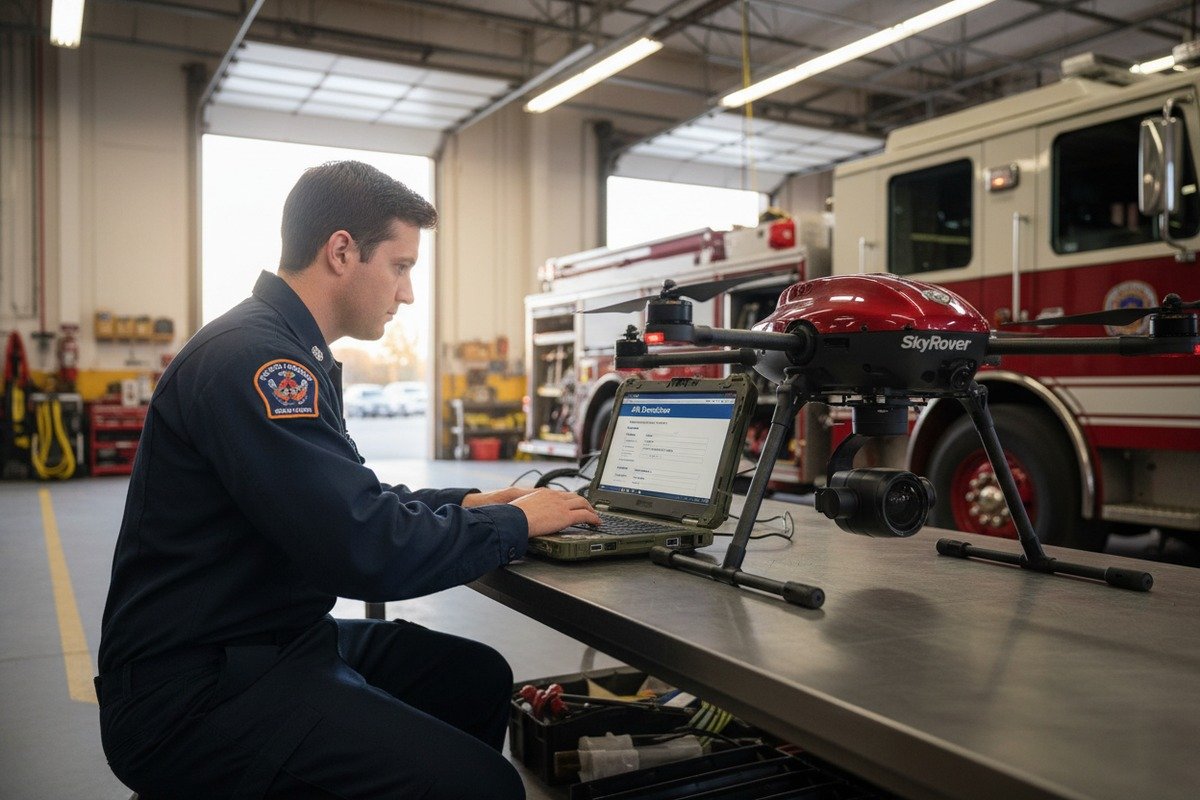
Understanding the Three Weight Categories
The FAA uses a simple weight-based system. But simplicity ends there. Each category brings different requirements, timelines, and costs.
| Weight Category | Registration Method | Cost | Processing Time | Validity Period |
|---|---|---|---|---|
| Under 0.55 lbs (250g) | Not required (recreational only) | $0 | N/A | N/A |
| 0.55 lbs to 55 lbs | Online via FAA DroneZone 3 | $5 | Minutes | 3 years |
| Over 55 lbs | Mail-in via FAA Aircraft Registration Branch 4 | Higher | Weeks to months | 3 years |
The Critical Concept of All-Up Weight
Here is where many buyers make mistakes. The FAA does not care about your drone's base weight. They care about "All-Up Weight 5" or AUW. This includes everything that leaves the ground.
Our production team always calculates AUW before quoting. This includes:
- Base airframe weight
- Battery weight (often 20-30% of total)
- Thermal imaging cameras
- Communication equipment
- Water or retardant tanks
- Mounting brackets and accessories
A drone that weighs 40 pounds empty can easily exceed 55 pounds with firefighting equipment. That pushes you into the complex paper registration category.
Why Firefighting Drones Cannot Use the Sub-250 Gram Exemption
Some buyers ask us about lightweight drones to avoid registration. This does not work for firefighting. The sub-250 gram exemption applies only to recreational use. Fire departments operate drones for governmental purposes. This means Part 107 rules 6 apply regardless of weight.
Even a tiny 200-gram drone used for fire reconnaissance requires:
- FAA registration
- Part 107 remote pilot certificate
- Compliance with all operational restrictions
The weight exemption is a trap for the uninformed. Do not fall into it.
Will the heavy payload of my industrial drone impact the complexity of my FAA documentation?
In our experience exporting firefighting drones to US buyers, payload decisions create the most registration complications. A customer orders a 35-pound drone, then adds a thermal camera and water tank. Suddenly they are dealing with a 60-pound aircraft and months of paperwork.
Yes, heavy payloads directly increase FAA documentation complexity. Adding equipment that pushes your drone over 55 pounds requires paper-based registration under 14 CFR Part 47 instead of simple online registration. Additionally, specialized payloads like water-dropping systems may require separate safety waivers beyond standard Part 107 authorization.
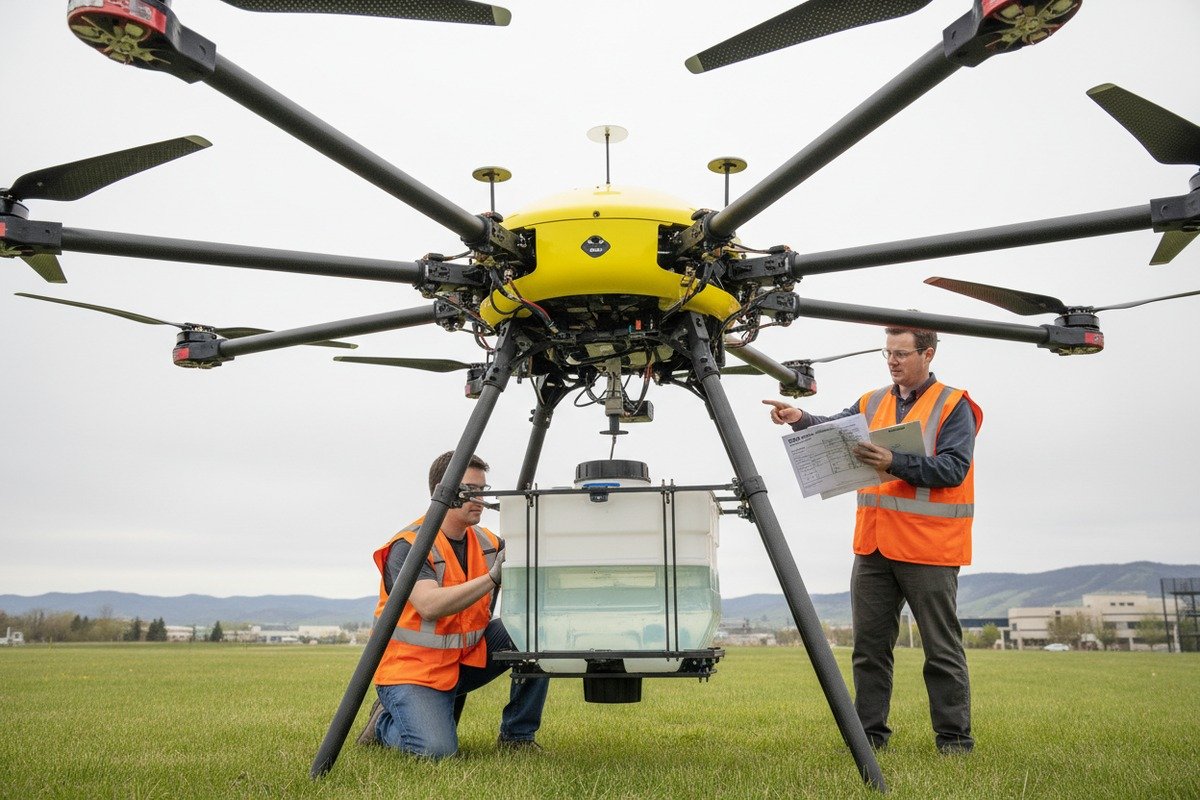
How Payload Additions Affect Registration Pathways
When we design drones at our facility, we think carefully about the 55-pound threshold. Crossing it changes everything for our customers.
| Payload Type | Typical Weight | Registration Impact |
|---|---|---|
| HD Camera | 0.5 – 2 lbs | Usually stays under 55 lbs |
| Thermal Imaging System | 2 – 5 lbs | May approach threshold |
| Communication Relay | 3 – 8 lbs | Often pushes over threshold |
| Small Water Tank | 10 – 20 lbs | Frequently exceeds 55 lbs |
| Retardant Dispenser | 15 – 30 lbs | Almost always exceeds 55 lbs |
The Paper Registration Process Explained
Once your drone exceeds 55 pounds, online registration is no longer available. You must submit paper documentation to the FAA Aircraft Registration Branch. Our customers report this process takes significantly longer.
The paper process requires:
- Aircraft Registration Application (AC Form 8050-1)
- Evidence of ownership
- Registration fee payment
- Physical mailing of documents
- Waiting for manual processing
Processing times vary from weeks to months. For fire departments needing rapid deployment, this delay can be critical.
Beyond Weight: Payload-Specific Waivers
Heavy payloads create additional regulatory concerns. A drone carrying water or retardant chemicals faces scrutiny beyond weight limits. The FAA may require:
- Proof of payload containment systems
- Risk assessments for payload release mechanisms
- Environmental impact documentation
- Additional pilot training certifications
Our engineering team helps customers navigate these requirements. We design payload systems with compliance in mind.
Strategic Payload Planning
Smart buyers plan payload configurations before purchasing. We recommend creating a payload matrix showing all possible equipment combinations.
| Configuration | Base Drone | Payload A | Payload B | Total AUW | Registration Type |
|---|---|---|---|---|---|
| Reconnaissance | 25 lbs | 4K Camera (2 lbs) | None | 27 lbs | Online |
| Thermal Survey | 25 lbs | Thermal (4 lbs) | GPS (1 lb) | 30 lbs | Online |
| Light Suppression | 35 lbs | Water Tank (15 lbs) | Thermal (4 lbs) | 54 lbs | Online |
| Heavy Suppression | 35 lbs | Water Tank (25 lbs) | Retardant (10 lbs) | 70 lbs | Paper |
This planning prevents surprises after purchase.
What weight thresholds must I meet to ensure my imported firefighting drones are FAA compliant?
Our export documentation team handles hundreds of US shipments yearly. The most common compliance failures involve weight miscalculations. Customers receive drones that technically meet specifications but fail real-world weight tests when fully equipped.
To ensure FAA compliance for imported firefighting drones, your total equipped weight must stay under 55 pounds for standard Part 107 operations. This includes batteries, cameras, sensors, and all firefighting payloads. Exceeding 55 pounds requires Section 44807 exemptions or Special Airworthiness Certificates, significantly complicating your import process.

Critical Weight Measurements for Import Compliance
When we prepare export documentation, we include multiple weight measurements. US customs and FAA requirements demand precision.
| Measurement Type | What It Includes | Why It Matters |
|---|---|---|
| Dry Weight | Airframe only | Manufacturing baseline |
| Ready-to-Fly Weight | Airframe + standard battery | Minimum operational weight |
| Mission Weight | RTF + standard payload | Typical operational scenario |
| Maximum Takeoff Weight | Airframe + largest battery + heaviest payload | Determines FAA category |
Import Documentation Requirements
US importers must provide accurate weight documentation. Our shipping team prepares:
- Manufacturer weight certificates
- Component weight breakdown sheets
- Maximum payload specifications
- Battery weight variations by capacity
These documents help customs officials and FAA inspectors verify compliance. Incomplete documentation delays shipments.
Special Authorizations for Over-55-Pound Imports
If your firefighting mission requires drones over 55 pounds, you need special FAA authorization before importing. Options include:
Section 44807 Exemption: This allows operation of drones that do not meet standard certification requirements. Applications take months and require detailed safety analyses.
Special Airworthiness Certificate: This treats your drone like a manned aircraft for certification purposes. The process is extensive and expensive.
Public Certificate of Authorization (COA): Government agencies can apply for COAs that allow operation of non-standard aircraft for specific public purposes. Public Certificate of Authorization 8
Working with Your Supplier on Compliance
We always recommend buyers communicate weight requirements clearly before ordering. Our standard process includes:
- Pre-order weight consultation
- Design review for weight optimization
- Pre-shipment weight verification
- Documentation package preparation
- Post-delivery support for registration
This process prevents the costly situation of receiving non-compliant equipment.
How can I verify that my custom-built firefighting drone stays within manageable FAA weight categories?
When we collaborate with fire departments on custom drone development, weight management starts at the design phase. Retrofitting a too-heavy drone is expensive and often impossible. Planning prevents problems.
Verify your custom firefighting drone's weight category by calculating total All-Up Weight before finalizing design specifications. Create a detailed component weight budget including airframe, motors, batteries, and all intended payloads. Target a maximum AUW of 50 pounds to maintain buffer room below the 55-pound threshold for standard Part 107 operation.

Creating a Component Weight Budget
Our engineering team uses weight budgets for every custom project. This document allocates weight to each system before design begins.
| System | Weight Budget | Actual Weight | Margin |
|---|---|---|---|
| Airframe | 12 lbs | 11.5 lbs | +0.5 lbs |
| Motors (8x) | 8 lbs | 7.8 lbs | +0.2 lbs |
| Battery System | 10 lbs | 10.2 lbs | -0.2 lbs |
| Flight Controller | 1 lb | 0.8 lbs | +0.2 lbs |
| Thermal Camera | 4 lbs | 3.9 lbs | +0.1 lbs |
| Water Tank | 12 lbs | 12 lbs | 0 lbs |
| Contingency | 3 lbs | N/A | Reserve |
| Total Budget | 50 lbs | 46.2 lbs | +3.8 lbs |
This approach ensures you never accidentally exceed thresholds.
Weight Verification Testing Protocols
Before final delivery, we conduct multiple weight tests. Customers should request similar verification from any supplier.
Empty Weight Test: Weigh the airframe with no removable components. This establishes your baseline.
Component Addition Test: Add each component individually and record cumulative weight. This identifies unexpectedly heavy items.
Full Mission Configuration Test: Weigh the drone exactly as it will fly during firefighting operations. Include water, retardant, and all accessories.
Battery Variation Test: Test with different battery capacities. Larger batteries for longer flight times add significant weight.
Design Strategies for Weight Optimization
Our design engineers use several strategies to keep custom drones under 55 pounds:
Carbon Fiber Construction: Our airframes use woven carbon fiber for maximum strength-to-weight ratio. This saves 30-40% compared to aluminum alternatives.
Modular Payload Systems: Instead of permanently mounted heavy equipment, we design quick-release payload bays. Operators can swap between light reconnaissance payloads and heavier suppression systems.
Efficient Motor Selection: Modern brushless motors provide excellent thrust-to-weight ratios. Selecting optimized motors reduces overall weight while maintaining performance.
Smart Battery Management: Rather than one massive battery, we design systems for multiple smaller batteries. This provides flexibility in weight management.
Documentation for Custom Builds
Custom-built drones require extra documentation for FAA registration. We prepare:
- Detailed weight calculation worksheets
- Component manufacturer specifications
- Assembly weight verification reports
- Maximum configuration weight certificates
This documentation package simplifies your registration process.
Conclusion
Weight determines your FAA registration pathway, operational flexibility, and compliance burden. Plan carefully before purchasing. Stay under 55 pounds when possible. Document everything. Your firefighting drone program will operate smoothly when weight management starts at the purchase decision.
Footnotes
1. Provides comprehensive information on FAA regulations for unmanned aircraft systems. ↩︎
2. Provides information on special FAA authority for operating certain unmanned aircraft systems. ↩︎
3. Official portal for online drone registration and managing FAA drone services. ↩︎
4. Found current FAA Aircraft Registration page. ↩︎
5. Found authoritative definition of ‘All-Up Weight’ on Wikipedia. ↩︎
6. Official FAA regulations for commercial and governmental small unmanned aircraft operations. ↩︎
7. Direct link to the federal regulation governing aircraft registration procedures. ↩︎
8. Describes the FAA authorization process for public entities operating unmanned aircraft. ↩︎

 English
  Español de México
  Deutsch
  Français
  Русский
  العربية
