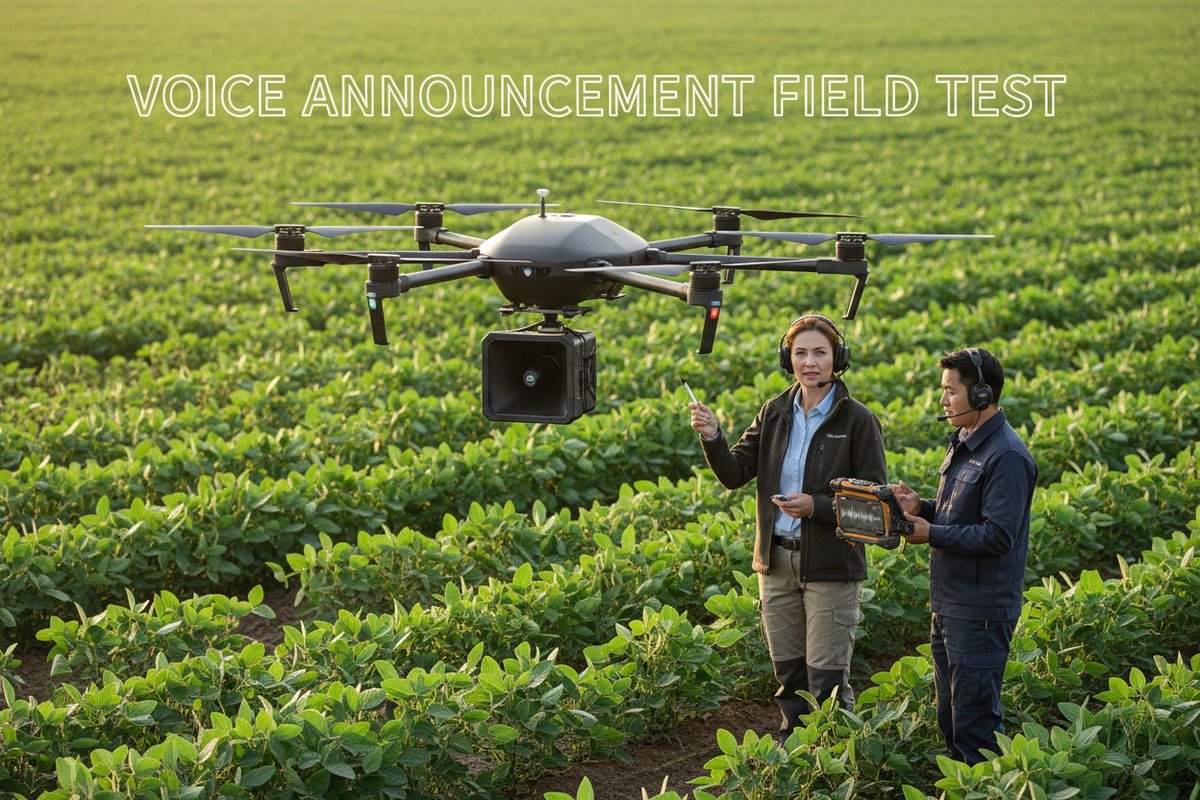
When our engineering team first integrated voice announcement systems into agricultural drones 1, we quickly realized one truth: a misheard command in the field can lead to wasted chemicals, damaged crops, or even accidents. You need voice systems that work flawlessly across languages.
To verify multilingual voice announcements when sourcing agricultural drones, test clarity with native speakers in real field conditions, request technical documentation confirming language support, evaluate dialect customization options, and inspect hardware durability certifications. These steps prevent costly operational errors and ensure safe, effective communication.
This guide walks you through each verification step. We will cover testing methods, documentation requirements, customization possibilities, and hardware durability checks. Let us dive into the details.
How can I test the clarity and accuracy of the pre-installed voice alerts in my local language?
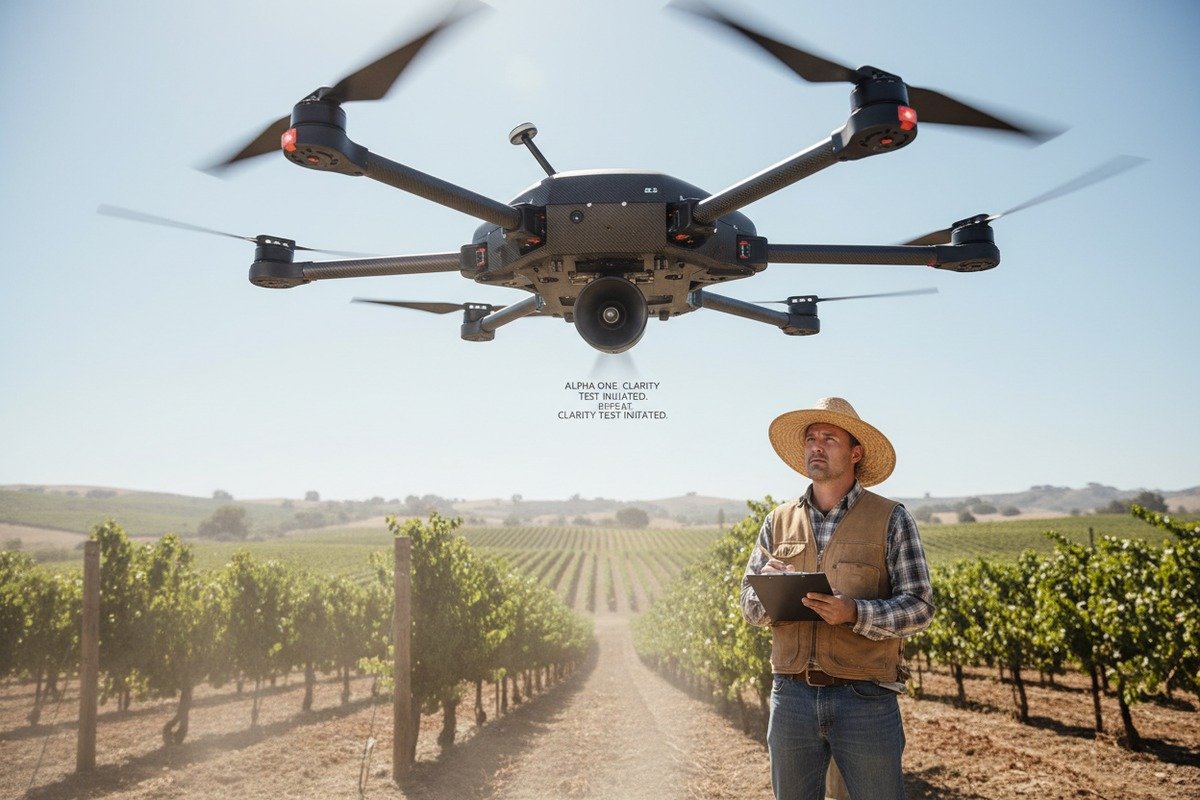
Testing voice clarity sounds simple, but our experience shipping drones to farms across the US and Europe has shown us otherwise. Background noise from rotors, wind, and tractors creates a challenging audio environment that most buyers underestimate.
To test voice alert clarity, play announcements in actual agricultural settings with native speakers rating intelligibility. Check pronunciation accuracy for technical terms, measure audio volume at operational distances, and verify timing synchronization with drone actions. Document results using standardized scoring rubrics.
Why Field Testing Matters More Than Lab Results
Laboratory tests cannot replicate the acoustic chaos of a working farm. Drone propellers generate 70-85 decibels of noise. Add tractors, irrigation pumps, and wind, and you understand why we always recommend on-site verification.
When we calibrate our speaker systems, we test at three distances: 10 meters, 30 meters, and 50 meters. Each distance reveals different clarity issues. Close range may have distortion. Far range may lose critical consonants.
Native Speaker Evaluation Protocol
Involve at least three native speakers 2 from your target region. They should represent different age groups and education levels. Farm workers vary widely in their familiarity with technical vocabulary.
| Test Parameter | Measurement Method | Acceptable Score |
|---|---|---|
| Word Recognition Rate | Count correctly identified words out of 20 test phrases | ≥95% |
| Response Time | Measure seconds between alert and worker reaction | ≤2 seconds |
| Volume Adequacy | Rate from 1-5 at 30m distance | ≥4 |
| Pronunciation Accuracy | Native speaker rating 1-10 | ≥8 |
| Technical Term Clarity | Identify 15 agriculture-specific terms | ≥13 correct |
Agricultural Vocabulary Testing
Generic voice systems often fail with farming terms. Words like "fertigation 3," "row spacing," or "application rate" may be mispronounced or unclear. We compile domain-specific word lists for each market we serve.
Create a test list of 50 agricultural terms common in your operations. Include crop names, chemical names, equipment parts, and action commands. Record which terms the voice system handles well and which cause confusion.
Noise Interference Testing
Run voice alerts while the drone operates at full throttle. Then test with simulated background noise from tractors and other equipment. Note any words that become unintelligible under noise stress.
Our quality control process includes testing with recorded ambient farm sounds at 75 decibels. This simulates real working conditions better than silent test rooms.
Can my supplier customize the drone's voice announcement system to match my specific regional dialect?
Dialect customization questions come up frequently when we discuss export projects with our partners. A drone speaking standard Mandarin may confuse farmers in Sichuan. regional dialect 4 American English differs from British English in pronunciation and vocabulary.
Yes, reputable suppliers can customize voice systems for regional dialects. Request dialect-specific voice packs, verify the supplier has native speaker linguists for your region, confirm whether customization requires hardware or software changes only, and establish update procedures for adding new phrases post-purchase.

Understanding Dialect Customization Levels
Not all customization is equal. Some suppliers offer basic language switching. Others provide deep dialect adaptation. Understanding these levels helps you set realistic expectations.
| Customization Level | What It Includes | Typical Lead Time | Cost Impact |
|---|---|---|---|
| Basic Language Pack | Standard language with generic accent | Pre-installed | Included |
| Regional Accent Adaptation | Adjusted pronunciation for specific regions | 2-4 weeks | Low |
| Full Dialect Customization | Local vocabulary, idioms, speech patterns | 4-8 weeks | Medium |
| Custom Voice Recording | Native speaker recordings for all alerts | 8-12 weeks | High |
| AI-Based Dialect Learning | System learns from local speech samples | Ongoing | Premium |
Key Questions for Your Supplier
When our team works with distributors, we walk through a customization checklist. You should ask your supplier these questions:
First, does the voice system use text-to-speech synthesis 5 or pre-recorded audio files? Synthesis systems adapt more easily to new phrases. Pre-recorded systems sound more natural but require new recordings for changes.
Second, how many regional variants does the supplier currently support? A supplier with experience in multiple dialects has established workflows for customization.
Third, what is the process for requesting new phrases after purchase? Farms evolve. You may need alerts for new crops, chemicals, or procedures.
Technical Requirements for Dialect Support
Dialect customization affects multiple system components. The voice synthesis engine needs appropriate phonetic rules. The vocabulary database needs local terms. The audio output system needs proper equalization for different sound characteristics.
Our engineering team has found that proper dialect support requires collaboration between linguistics experts and audio engineers. Ask your supplier if they have both resources available.
Post-Purchase Update Capabilities
Remote firmware updates enable ongoing dialect improvements. Without this capability, you face costly manual updates or outdated voice systems.
Verify that your supplier's drones support over-the-air updates for voice packs. Confirm the update frequency and whether updates carry additional charges.
What technical documentation should I request to confirm the drone supports seamless multilingual switching?
Documentation requests sometimes feel bureaucratic, but they protect your investment. Our export team in Xi'an prepares comprehensive documentation packages because we know professional buyers like yourself need verification, not just promises.
Request these documents: multilingual feature specifications listing all supported languages, API documentation for language switching protocols, audio subsystem technical sheets, firmware update procedures, and compliance certifications for your import market. Complete documentation indicates mature product development and reliable supplier capability.
Essential Documentation Checklist
Professional procurement requires proper paperwork. We have organized the key documents you should request into categories.
| Document Category | Specific Documents | Why You Need It |
|---|---|---|
| Language Support | Supported languages list, dialect variants, voice pack specifications | Confirms current capabilities match your needs |
| Technical Specs | Audio system specs, speaker wattage, frequency response, volume range | Verifies hardware can deliver clear announcements |
| Integration | API documentation, SDK access, third-party compatibility | Enables custom integrations and future expansions |
| Updates | Firmware update procedures, voice pack update process, version history | Ensures long-term maintainability |
| Compliance | FCC certification, CE marking, local import documentation | Required for legal import and operation |
Evaluating Language Switching Architecture
Seamless switching means no delays, no glitches, no mid-sentence language changes. The technical implementation determines switching quality.
Ask for documentation showing how the drone handles language transitions. Does switching require a reboot? Can users change languages mid-flight? How does the system handle mixed-language commands?
Our drones use a modular language architecture. Each language pack loads independently. Users switch languages through the control app without interrupting operations. This design prevents the freezing issues common in poorly designed systems.
API and Integration Documentation
If you plan to integrate the drone with farm management software, you need API documentation. This shows how external systems can trigger voice announcements and control language settings.
Quality API documentation includes endpoint descriptions, authentication methods, sample code, and error handling procedures. Incomplete API documentation suggests immature software development.
Compliance Documentation for Import
Different markets have different requirements. The US requires FCC certification for radio-frequency devices. Europe requires CE marking. Some countries have specific noise level or audio content regulations.
Request all relevant compliance certificates before placing orders. Missing documentation creates customs delays and potential legal issues.
Version Control and Update History
A documented update history shows ongoing product development. It reveals how the supplier has addressed past issues and improved the system over time.
Ask for changelog documentation covering at least the past two years. Look for voice system improvements, bug fixes related to audio, and new language additions.
How do I verify that the voice broadcast hardware is durable enough for harsh agricultural environments?
Durability concerns drive many conversations with our distributors. Agricultural drones face dust, moisture, temperature extremes, and vibration. Voice hardware that fails leaves operators without critical safety alerts.
Verify hardware durability by checking IP ratings (minimum IP54 for agriculture), reviewing operating temperature ranges, requesting vibration resistance test reports, examining speaker and microphone material specifications, and asking for field failure rate data from existing deployments. These metrics predict real-world longevity.

IP Rating Requirements for Agricultural Use
IP ratings 7 indicate protection against dust and water. Agricultural drones need adequate protection for their operating environment.
| IP Rating | Dust Protection | Water Protection | Agricultural Suitability |
|---|---|---|---|
| IP44 | Protected from objects >1mm | Splash resistant | Minimal – dry conditions only |
| IP54 | Dust protected | Splash resistant from any direction | Adequate – light duty |
| IP55 | Dust protected | Low-pressure water jets | Good – general agriculture |
| IP65 | Dust tight | Low-pressure water jets | Excellent – spraying operations |
| IP67 | Dust tight | Temporary immersion | Premium – all conditions |
Our speaker enclosures are rated IP65. This rating handles the chemical spray drift, morning dew, and dust common in agricultural operations.
Temperature and Humidity Testing
Voice electronics must function across temperature extremes. Summer fields may exceed 40°C. Winter operations may drop below -10°C. Humidity varies from desert conditions to tropical moisture.
Request test reports showing voice system performance at temperature extremes. The documentation should specify operating range and storage range separately.
Vibration and Shock Resistance
Drone vibration can loosen connections, crack solder joints, and damage speakers. Agricultural drones experience constant vibration during flight plus occasional impact shocks during transport.
Quality voice hardware undergoes vibration testing according to standards like MIL-STD-810 or equivalent. Ask for vibration frequency ranges tested and duration of testing.
Material Specifications for Longevity
Speaker cones, microphone membranes, and housing materials determine long-term durability. UV-resistant plastics prevent sun damage. Corrosion-resistant metals survive chemical exposure.
When our engineers select components for agricultural drones, we specify UV-stabilized polymers and stainless steel fasteners. These details appear in material specification documents.
Field Failure Rate Data
The most convincing durability evidence comes from actual field performance. Experienced suppliers track failure rates across their installed base.
Ask for mean time between failures (MTBF) 8 data for voice components. Request information about common failure modes and warranty claim rates related to audio systems.
Maintenance and Replacement Procedures
Even durable hardware eventually needs maintenance or replacement. Verify that spare speakers, microphones, and audio modules are available. Confirm replacement procedures are documented and feasible for field technicians.
Our distribution partners receive maintenance manuals and spare parts lists. We stock audio components for rapid replacement when needed.
Conclusion
Verifying multilingual voice announcements requires systematic testing, proper documentation, and durability validation. Follow the steps in this guide to ensure your agricultural drone investment delivers clear, reliable communication. Contact your supplier with specific questions based on these criteria, and request demonstration units for field testing before committing to large orders.
Footnotes
1. Provides an overview of agricultural drone technology and applications. ↩︎
2. Defines the term ‘native speaker’ in a linguistic context. ↩︎
3. Replaced 403 link with an authoritative Wikipedia entry on fertigation. ↩︎
4. Explains the concept of regional dialects and their impact on communication. ↩︎
5. Describes a core technology used for generating voice announcements. ↩︎
6. Explains the importance and types of documentation for product verification. ↩︎
7. Replaced 403 link with an authoritative Wikipedia entry on IP codes, which are defined by IEC 60529. ↩︎
8. Replaced 404 link with an authoritative Wikipedia entry on Mean Time Between Failures (MTBF). ↩︎

 English
  Español de México
  Deutsch
  Français
  Русский
  العربية
