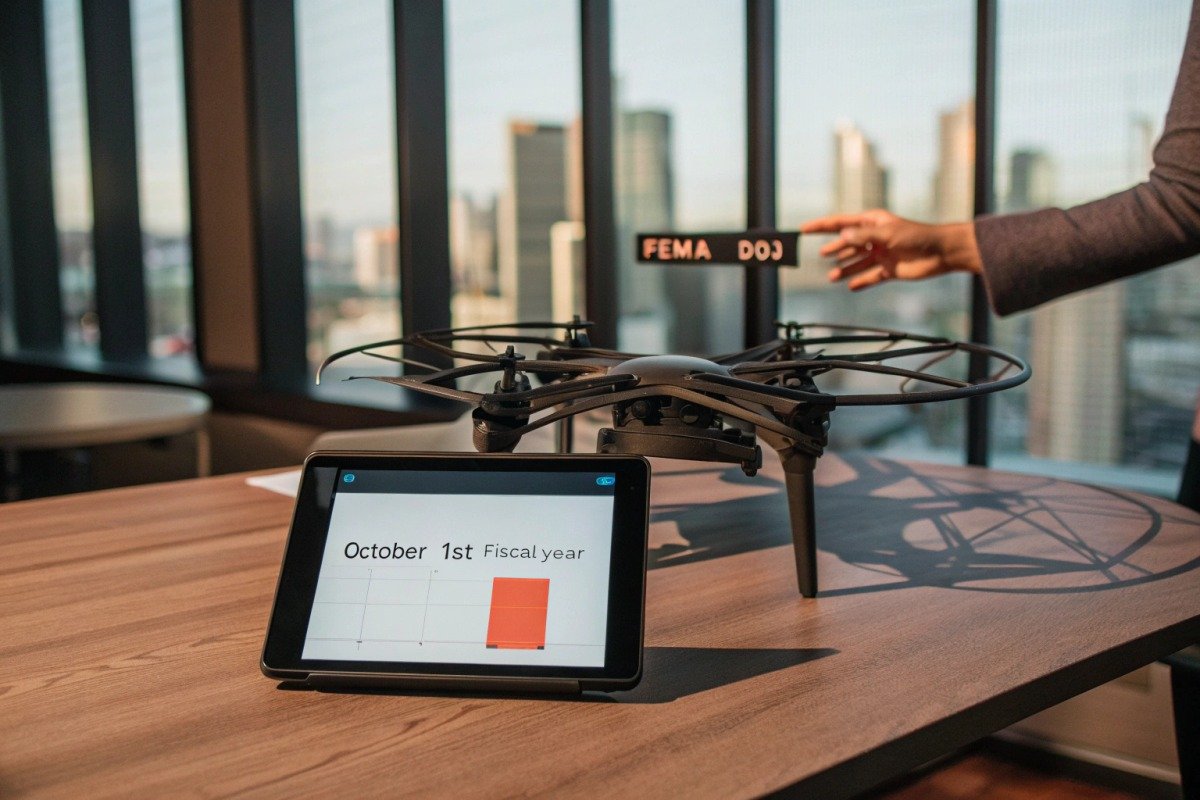
Every quarter, our export team fields calls from frustrated US fire departments DOJ COPS 1. They found the perfect drone. They tested it. They loved it. Then their budget window closed, and they lost their funding allocation for another full year.
To verify if your firefighting drone supplier understands US public safety budget cycles, ask them directly about federal fiscal year timelines, grant application windows, and their experience delivering to agencies using FEMA AFG, DOJ COPS, or Byrne JAG funding. Request case studies showing successful deliveries aligned with October 1 fiscal year starts.
This guide walks you through the exact questions to ask, the documents to request, and the red flags that expose suppliers who will waste your procurement cycle Byrne JAG funding 2. Let us dive into the verification process step by step.
How can I confirm my supplier understands the specific timing of US municipal and state fiscal years?
When we ship firefighting drones to US distributors, timing is everything. A supplier who misses your fiscal year deadline does not just delay your purchase. They can cost you an entire year of operational capability.
Confirm your supplier's knowledge by asking them to explain the federal fiscal year (October 1 to September 30), your state's specific fiscal calendar, and the typical 6-12 month procurement lead times. Suppliers who understand these cycles will proactively discuss May budget releases and September funding deadlines.
Why Fiscal Year Knowledge Matters
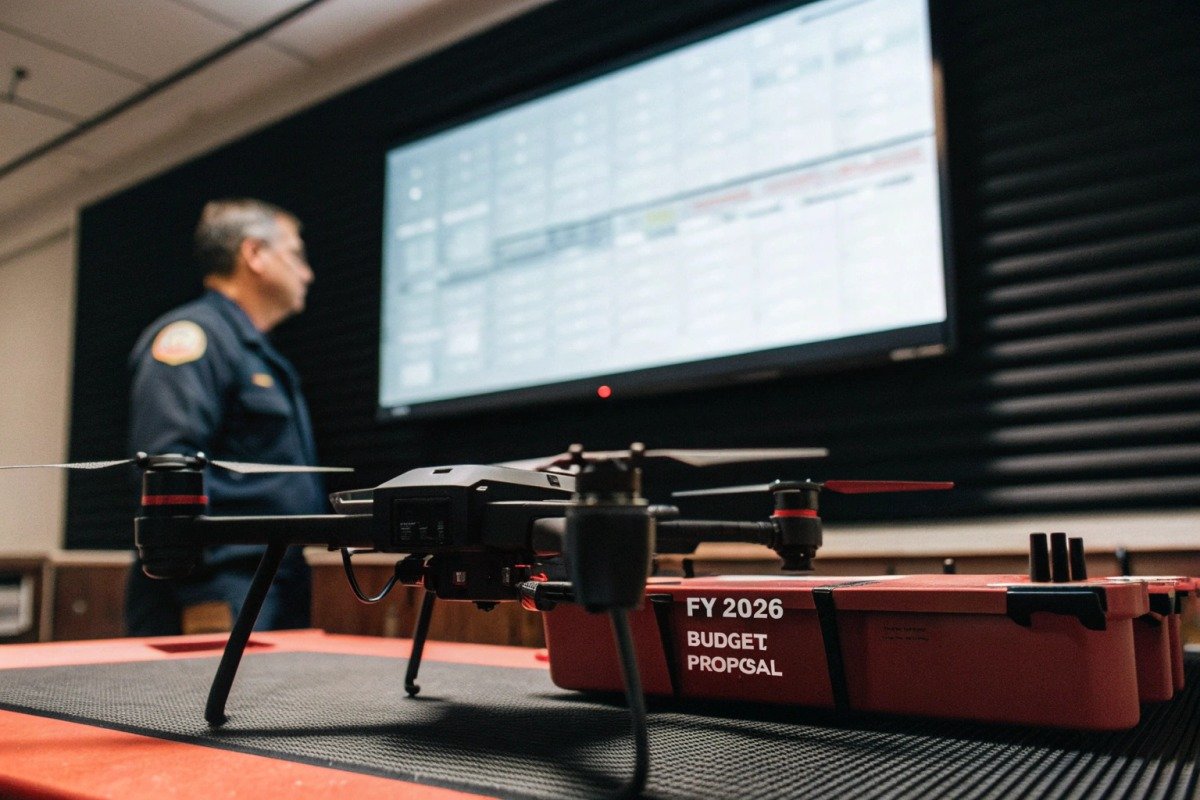
The US federal government operates on a fiscal year running from October 1 to September 30. Budget proposals typically release in spring. For example, the FY2026 proposals came out in May 2025. Congressional negotiations run through summer and fall. Final appropriations must pass by September 30, or agencies operate under continuing resolutions.
Your supplier must understand this rhythm. If they push for a sale in August without discussing your funding timeline, they are not thinking about your success. They are thinking about their quarterly numbers.
State and Municipal Variations
Not all US jurisdictions follow the federal calendar. Many states run July 1 to June 30 fiscal years. Some municipalities have their own unique cycles. A knowledgeable supplier will ask about YOUR specific timeline rather than assuming one-size-fits-all.
| Fiscal Year Type | Start Date | End Date | Budget Planning Begins |
|---|---|---|---|
| Federal | October 1 | September 30 | Spring (May) |
| Most States | July 1 | June 30 | January-February |
| Texas | September 1 | August 31 | Winter |
| New York | April 1 | March 31 | Fall |
| Municipal (Varies) | Varies | Varies | 3-6 months prior |
Questions to Ask Your Supplier
Start with direct questions. Ask them: "When does the federal fiscal year 3 begin and end?" If they cannot answer October 1 to September 30 without hesitation, that is your first red flag.
Then go deeper. Ask about their experience with agencies that missed funding windows. Ask how they structure payment terms to accommodate government procurement timelines. Our team at the factory has learned to offer flexible milestone payments specifically because US agencies often cannot pay upfront before budget approval.
Red Flags to Watch For
Generic sales pitches are dangerous. If a supplier talks only about drone features without asking about your procurement timeline, they do not understand your world. Watch for suppliers who pressure you into quick decisions without considering your budget cycle. Watch for those who cannot explain the difference between appropriated funds and continuing resolution limitations.
What documentation should I request to ensure the drones meet federal grant and public safety funding requirements?
Our engineering team spends considerable time preparing compliance documentation. This is not extra work for us. It is essential work that determines whether our drones can actually be purchased with grant funds.
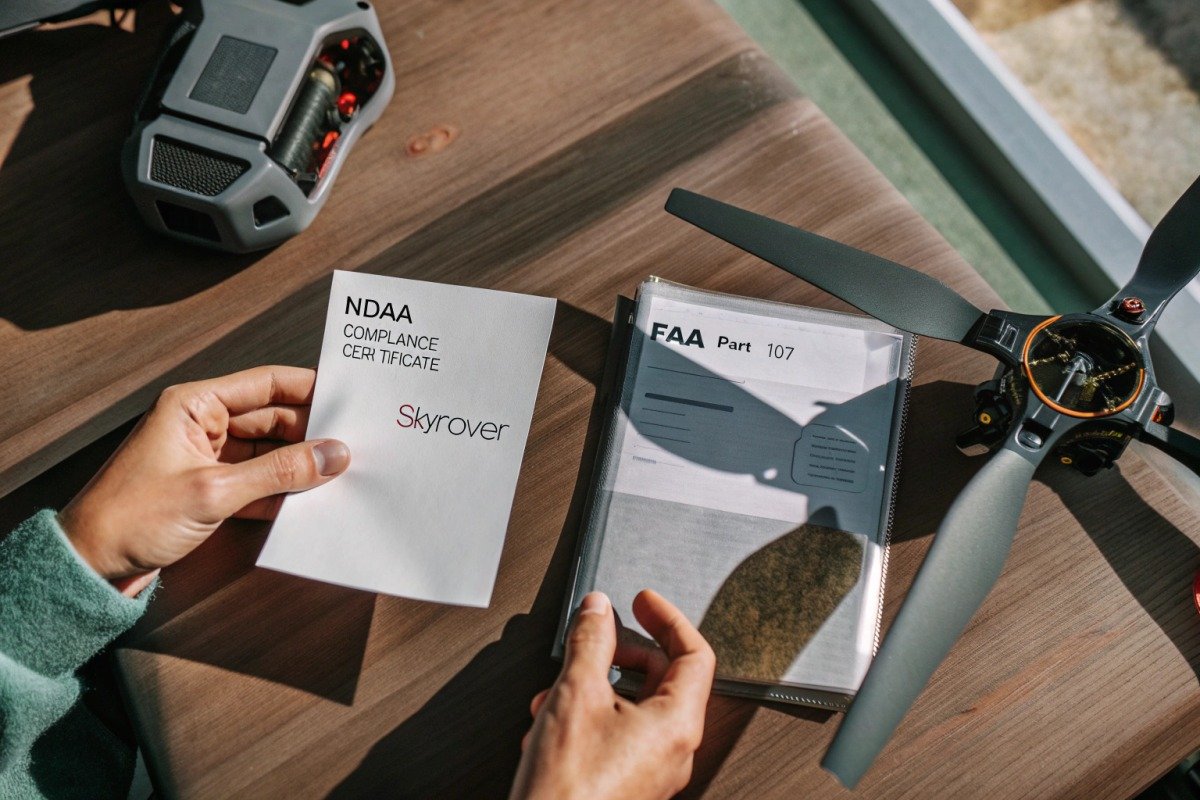
Request NDAA compliance certificates, FAA Part 107 operation documentation, Blue sUAS eligibility verification, and detailed specifications matching grant program requirements. For FEMA AFG or DOJ COPS funding, ask for previous successful procurement documentation from similar agencies.
Understanding Grant Program Requirements
Federal grants come with strings attached. The American Security Drone Act 4 (ASDA) and NDAA Section 848 restrict purchases of drones from certain countries. Your supplier must prove their drones meet these requirements. This is not optional. It is the difference between approved and rejected funding.
The FY2026 budget shows significant shifts. DOJ grantmaking faces $850 million in cuts, a 15% reduction from FY2025. State and local law enforcement assistance drops $485 million to $1.514 billion. Your documentation must be airtight to compete for shrinking funds.
Essential Documentation Checklist
| Document Type | Purpose | Who Provides It |
|---|---|---|
| NDAA Compliance Certificate | Proves drone meets federal security standards | Manufacturer |
| FAA Part 107 5 Compliance | Confirms operational legality | Manufacturer + Operator |
| Blue sUAS Listing Proof | Validates DOD-approved status | Manufacturer |
| Total Cost of Ownership Breakdown | Supports budget justification | Manufacturer |
| Training Certification Records | Meets grant training requirements | Manufacturer + Operator |
| Maintenance Schedule Documentation | Proves long-term cost planning | Manufacturer |
| Previous Agency Purchase Records | Demonstrates grant funding success | Manufacturer |
Grant-Specific Requirements
Different grants have different rules. The COPS Office operates with $344 million for FY2026. Byrne Justice Assistance Grants offer $446 million including Project Safe Neighborhoods funding. FEMA's Assistance to Firefighters Grant program has its own separate requirements.
When we prepare documentation packages, we tailor them to specific grant programs. A FEMA AFG 6 application needs different emphasis than a DHS homeland security technology procurement. Ask your supplier if they can customize their documentation to your specific funding source.
The DHS Technology Opportunity
The FY2026 budget proposes $175 billion for DHS, including significant technology procurement funding. This represents a major opportunity for firefighting drones, especially those with dual-use capabilities for border security and wildfire response. Your supplier should be aware of this emerging funding stream and able to position their documentation accordingly.
Can my drone manufacturer provide the engineering data I need to justify a high-end investment to my budget committee?
When our production team builds a firefighting drone, we track every specification. We do this because we know you need hard numbers to convince your budget committee that this investment makes sense.
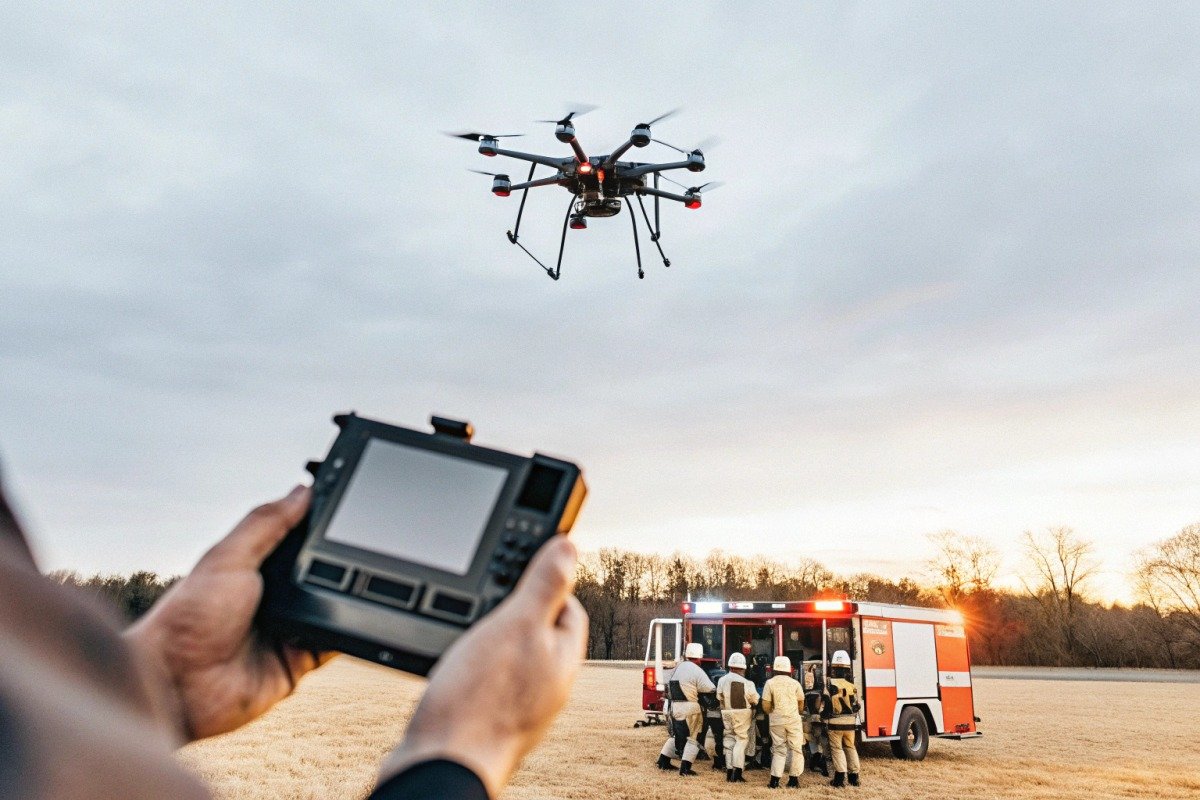
Yes, qualified manufacturers provide comprehensive engineering data including flight endurance specifications, payload capacities, thermal imaging resolution, water deployment rates, battery cycle documentation, maintenance cost projections, and ROI calculations comparing drone deployment costs to traditional firefighting methods.
What Budget Committees Actually Need
Budget committees do not care about drone technology. They care about value for taxpayer money. Your engineering data must translate technical specifications into operational benefits and cost savings.
Flight endurance means faster fire assessment. Payload capacity means more water or suppressant per deployment. Thermal imaging resolution means finding hotspots before they spread. Every specification should connect to an operational outcome that saves money or improves safety.
Critical Engineering Specifications
| Specification | What It Means for Operations | Budget Committee Impact |
|---|---|---|
| Flight Endurance (60+ min) | Extended reconnaissance without battery swap | Reduced operational costs per mission |
| Payload Capacity (50+ kg) | Meaningful fire suppressant delivery | Fewer aircraft deployments needed |
| Thermal Resolution (640×512) | Accurate hotspot identification | Faster containment, less property damage |
| Wind Resistance (Level 6+) | Operations in adverse conditions | Higher deployment reliability |
| Operating Temperature Range | Year-round capability | No seasonal equipment limitations |
| IP Rating (IP54+) | Weather-resistant operations | Lower maintenance and replacement costs |
ROI Calculations That Work
Budget committees respond to numbers. When we prepare specifications for US agencies, we include comparative cost analysis. How much does helicopter deployment cost per hour versus drone deployment? What is the personnel requirement difference? What training costs can you avoid?
The FY2026 budget environment makes ROI critical. With DOJ research and evaluation funding dropping $10 million, agencies must justify every technology purchase. Your supplier should provide data showing clear cost-benefit analysis, not just impressive specifications.
Supporting Your Presentation
Ask your supplier for presentation-ready materials. Can they provide case studies from similar agencies? Can they offer side-by-side comparisons with competitor solutions? Our team maintains a library of deployment scenarios specifically for budget committee presentations.
A supplier who understands US public safety procurement will anticipate these needs. They will not wait for you to ask. They will proactively offer materials that help you make your case internally.
The Maricopa County Lesson
Recent budget examples show important trends. Maricopa County's FY2026 budget prioritizes sheriff personnel and facilities over technology purchases. This means your engineering data must demonstrate how drones reduce personnel burden rather than add to it. Show how one drone can provide capabilities that would otherwise require multiple personnel deployments.
How do I verify if a supplier can guarantee delivery windows that align with my strictly timed procurement cycles?
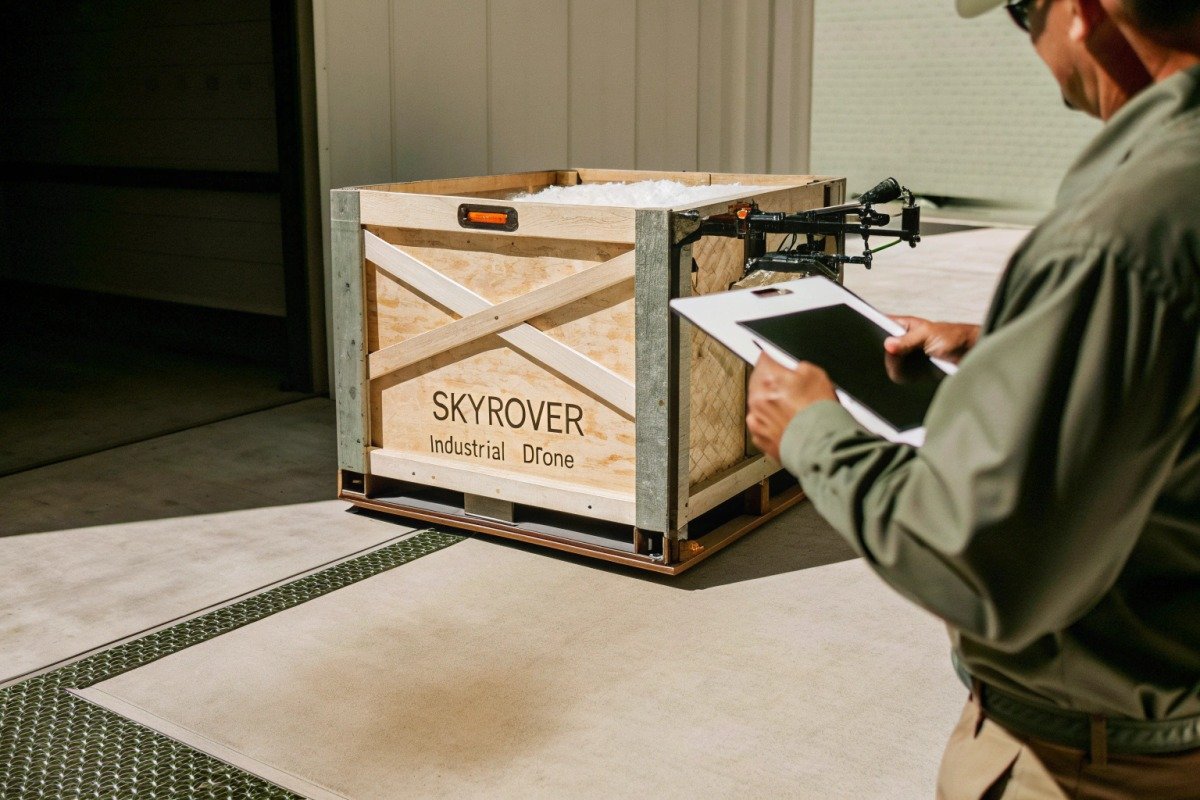
Our logistics team tracks every shipment from our Xi'an facility to its final destination. We do this because we have seen too many agencies lose funding when deliveries arrive one week after their fiscal year closes.
Verify delivery capability by requesting documented lead times, manufacturing capacity evidence, shipping route options, customs clearance track records, and penalty clauses for missed deadlines. Ask for references from agencies who received deliveries within specific procurement windows.
Understanding Lead Time Components
Delivery timing involves multiple steps. Manufacturing time depends on current production schedules and component availability. Shipping time varies by method and route. Customs clearance adds unpredictable delays. Final delivery logistics require coordination with your receiving facilities.
A knowledgeable supplier breaks down each component. They do not give you a single number without explanation. When our team quotes delivery windows, we specify manufacturing time separately from shipping and customs estimates.
Shipping Options and Tradeoffs
| Shipping Method | Typical Transit Time | Cost Level | Reliability |
|---|---|---|---|
| Air Freight | 5-7 days | High | Very High |
| Sea Freight | 25-35 days | Low | Moderate |
| Rail (China to Europe) | 18-22 days | Medium | High |
| Express Courier | 3-5 days | Very High | Very High |
| Hybrid (Sea + Air) | 15-20 days | Medium | High |
Customs Clearance Reality
Customs delays destroy procurement timelines. Your supplier must have experience navigating US import requirements for drone technology. This includes proper classification, documentation, and relationships with customs brokers who understand sensitive technology imports.
Ask for specific examples. How many shipments has your supplier cleared through US customs in the past year? What was their average clearance time? What percentage experienced delays, and why?
Contract Protections That Matter
Verbal guarantees mean nothing. Your purchase agreement should include specific delivery window commitments with consequences for delays. Penalty clauses should be proportional to the impact of missed deadlines. A one-week delay that costs you a full year of funding justifies significant penalties.
Our contracts include milestone-based delivery tracking. You receive updates at manufacturing completion, shipping departure, customs submission, and final delivery. This transparency lets you identify problems early enough to potentially solve them.
Building Buffer Time
Smart procurement professionals build buffer time into their schedules. If your fiscal year ends September 30, do not accept a September 15 delivery estimate as safe. Work backward from your deadline. Add buffer for customs delays, shipping complications, and final inspection requirements.
We recommend starting conversations at least 6-8 months before your funding deadline. This gives time for specification discussions, quote preparation, internal approvals, and comfortable delivery windows.
Conclusion
Verifying supplier knowledge of US public safety budget cycles protects your agency from wasted procurement efforts. Ask direct questions about fiscal year timing, request comprehensive compliance documentation, demand engineering data that supports budget justification, and verify delivery capabilities with documented track records. The right supplier understands that your success depends on timing as much as technology.
Footnotes
1. Official website for the Department of Justice’s Community Oriented Policing Services program. ↩︎
2. Official overview of the Edward Byrne Memorial Justice Assistance Grant program. ↩︎
3. Official U.S. Treasury data on federal spending, including fiscal year information. ↩︎
4. Wikipedia provides a comprehensive overview of the American Security Drone Act. ↩︎
5. Official FAA regulations for small unmanned aircraft systems (drones) operations. ↩︎
6. Official FEMA page for the Assistance to Firefighters Grant program. ↩︎
7. CISA guidance on complying with NDAA Section 848 regarding unmanned aircraft systems. ↩︎
8. Official Defense Innovation Unit (DIU) page for the Blue sUAS program. ↩︎

 English
  Español de México
  Deutsch
  Français
  Русский
  العربية
