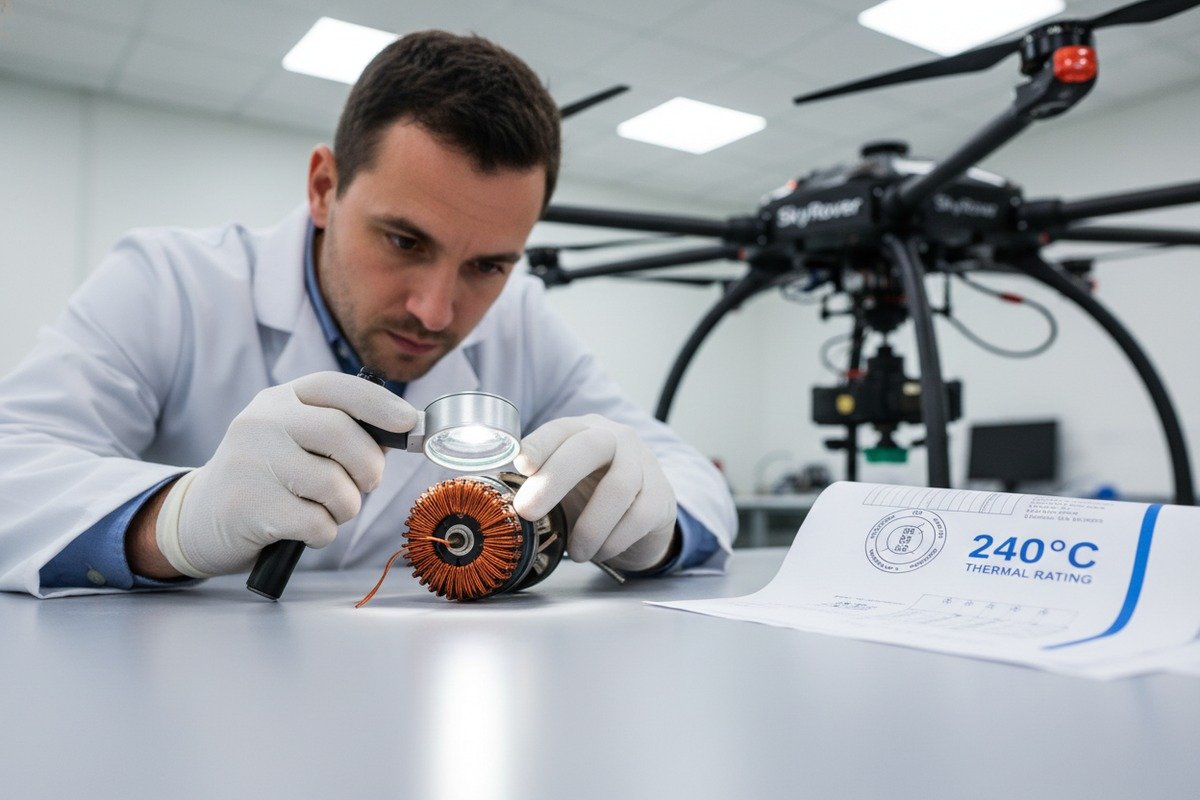
Last year, our engineering team dissected a returned motor from a customer’s failed agricultural drone mandrel wrap tests 1. The windings had melted during a routine pesticide spraying operation. This single component failure grounded an entire fleet and cost the operator thousands in lost productivity.
To verify high-temperature resistant enameled wire when sourcing agricultural drone motors, request IEC 60317 or UL certifications, confirm thermal class ratings (180°C–240°C minimum), conduct sample thermal shock tests, and audit the supplier’s coating process documentation to ensure genuine high-grade polyimide or polyamideimide insulation materials.
This guide walks you through every verification step Differential Scanning Calorimetry (DSC) 2. We cover documentation, visual checks, in-house tests, and red flags. By the end, you will know exactly how to protect your investment and your reputation.
How can I verify that the enameled wire in my drone motors actually meets high-temperature specifications?
When we test incoming motor samples at our facility, we often find a gap between claimed specs and actual performance. Some suppliers cut corners on insulation materials. Others use outdated coating processes. Both lead to premature motor failures in the field.
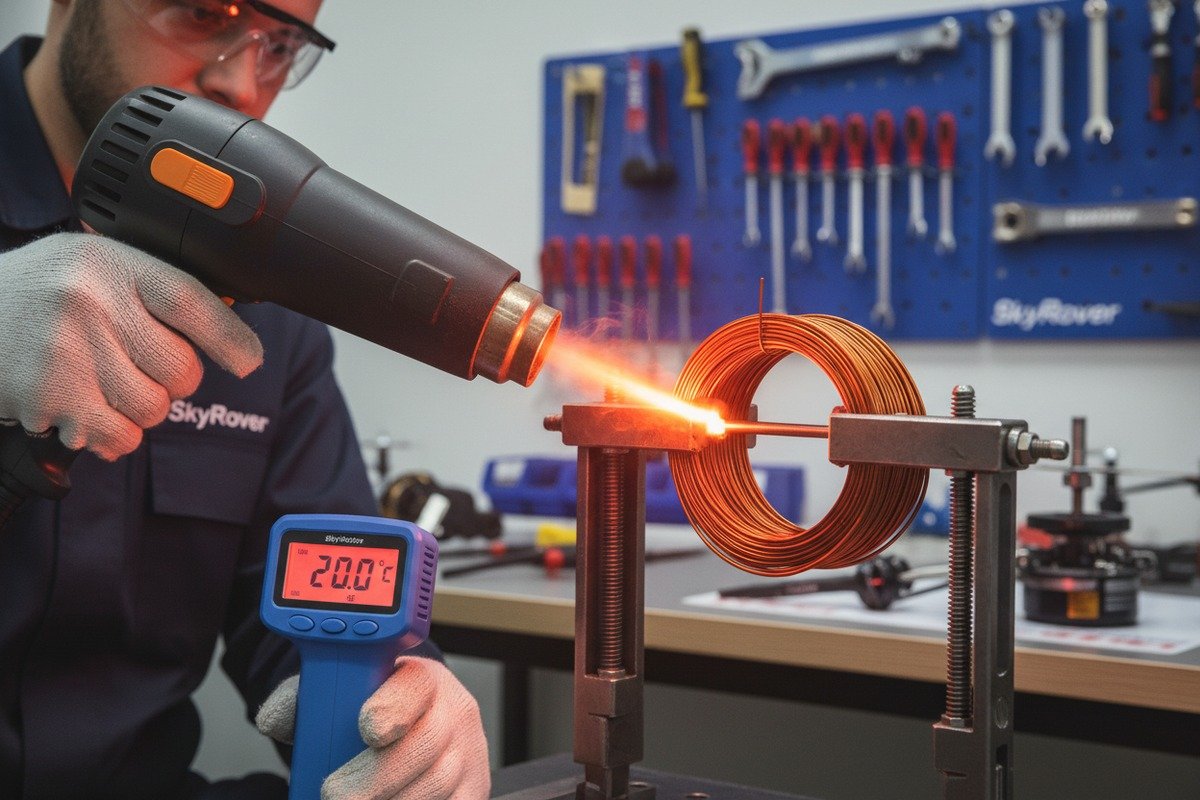
Verify high-temperature enameled wire by combining documentation review, visual inspection, and hands-on testing. Request thermal class certificates per IEC 60317 or NEMA MW 35-C. Conduct mandrel wrap tests for flexibility. Use a heat gun at rated temperature for one hour. No cracking or breakdown means genuine high-temp wire.
Start with Documentation
Before you touch a single wire, ask for paperwork. Legitimate suppliers provide thermal class data sheets. These sheets list the wire's continuous operating temperature, typically expressed in classes like 180°C (Class H), 200°C (Class N), 220°C (Class R), or 240°C (Class HC). thermal class ratings 3
Look for certifications from UL, IEC, or NEMA. UL certifications 4 These third-party validations confirm the wire passed standardized aging and breakdown tests. If a supplier cannot produce these documents, walk away.
Visual and Physical Inspection
Good enameled wire has a uniform, glossy coating. Under magnification, you should see no pinholes, bubbles, or bare spots. The color should be consistent throughout the spool.
Measure the wire diameter. The enamel adds 0.0003–0.006 inches to the bare conductor. Inconsistent thickness signals poor quality control.
Hands-On Tests You Can Do In-House
| Test Type | Method | Pass Criteria |
|---|---|---|
| Mandrel Wrap | Wrap wire around rod 5× its diameter | No cracks or flaking |
| Continuity Check | Multimeter across wire length | Continuous signal |
| Heat Gun Test | Apply rated temp for 60 minutes | No softening or breakdown |
| Abrasion Rub | Scratch with fingernail | Coating stays intact |
| Solder Iron Test | Touch 220°C iron to wire | Coating should not melt |
These basic tests catch the worst counterfeits. For deeper verification, send samples to a third-party lab for thermal index testing and dielectric breakdown analysis 5.
Advanced Lab Methods
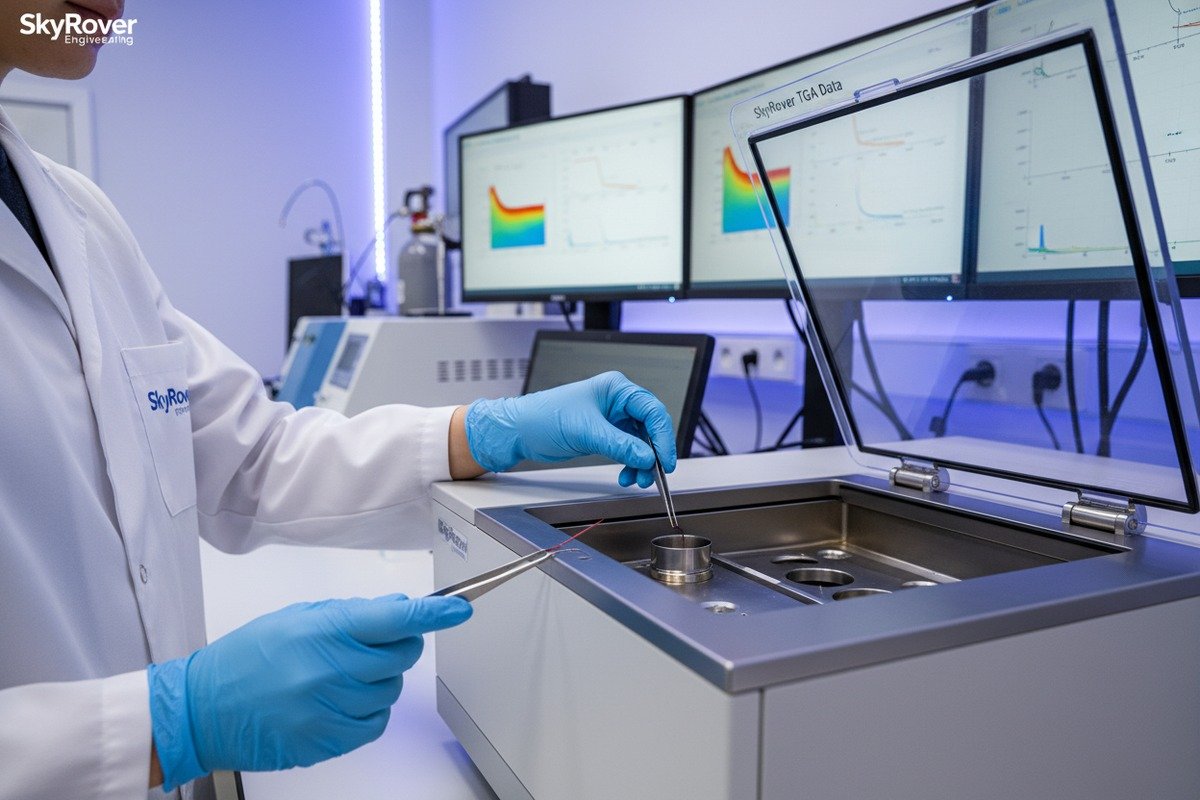
Differential Scanning Calorimetry (DSC) measures the glass transition temperature. Thermogravimetric Analysis (TGA) shows decomposition onset. Both confirm whether the wire uses genuine polyimide or cheaper polyester. polyimide or polyamideimide 6
What documentation should I request from a manufacturer to prove the quality of their motor windings?
Our export team has learned that US and European buyers demand more than just a product photo. They need traceable quality evidence. Without proper documentation, customs may hold shipments. Worse, your customers may reject the entire order.
Request IEC 60317 or NEMA MW 35-C compliance certificates, UL recognition files, thermal class data sheets specifying continuous operating temperature, enamel coating recipes with curing parameters, factory quality control reports, and third-party lab test results for dielectric strength and thermal shock resistance.

Essential Certificates and Standards
International standards ensure consistency. IEC 60317 covers most wire types. NEMA MW 35-C 8 applies to North American markets. JIS C3202 serves Japanese buyers. GB/T6109 is the Chinese national standard.
Ask specifically for:
- Thermal class certificate (180°C, 200°C, 220°C, or 240°C)
- Dielectric strength test report (minimum 150–200V DC)
- Thermal shock test results (cryogenic to rated temp cycles)
- Pinhole count test (salt bath method)
What Each Document Tells You
| Document | What It Proves | Red Flag If Missing |
|---|---|---|
| IEC 60317 Certificate | Wire meets international thermal standards | Unverified thermal claims |
| UL Recognition File | Third-party safety validation | Cannot sell in US/EU markets |
| Coating Recipe Sheet | Proper curing temps (420–500°C) and passes (5–15) | Inconsistent quality batch to batch |
| QC Inspection Report | In-line testing catches defects | High defect rate in final product |
| Third-Party Lab Report | Independent verification of specs | Relying solely on supplier's word |
Factory Audit Checklist
When possible, visit the factory or request a video tour. Check for:
- Calibrated coating ovens (360–500°C range)
- Inline pinhole detection systems
- Climate-controlled wire storage
- Trained technicians with documented procedures
Our quality team audits suppliers annually. We verify their equipment matches their claimed processes. Mismatches often explain why some motors fail while others run for years.
How to Spot Fake Documents
Counterfeit certificates exist. Cross-reference certificate numbers with the issuing body's database. UL maintains an online file. IEC certificates can be verified through accredited certification bodies. If a supplier hesitates to provide verification contacts, consider that a warning sign.
Why is high-temperature resistant wire essential for the reliability of my agricultural drone fleet?
When we designed our latest 50-liter spraying drone, our engineers calculated motor temperatures during worst-case scenarios. On a hot summer day, with maximum payload and continuous operation, internal motor temps can exceed 200°C. Standard wire rated at 155°C would fail within minutes.
High-temperature resistant enameled wire prevents insulation breakdown during prolonged high-power flights, overload conditions, and exposure to hot climates. Agricultural drones face continuous 180–260°C motor temperatures. Wire rated below this threshold cracks, shorts, and causes motor failure, grounding your fleet and destroying profitability.

The Thermal Reality of Agricultural Drones
Agricultural drones work hard. They carry heavy payloads—sometimes 50 to 100 liters of liquid pesticide. They fly multiple sorties per day. They operate in summer heat, often in ambient temperatures exceeding 40°C.
Motor heat comes from multiple sources:
- Electrical resistance in windings (I²R losses)
- Magnetic core losses
- Bearing friction
- Poor airflow when hovering
These factors combine. A motor rated for 180°C continuous operation may spike to 250°C during takeoff with full payload.
What Happens When Wire Fails
Enameled wire failure follows a predictable pattern:
- Thermal softening: Insulation becomes pliable
- Micro-cracking: Vibration creates tiny fractures
- Turn-to-turn shorts: Adjacent wires make contact
- Current spike: Short circuit draws excessive current
- Catastrophic failure: Motor burns out mid-flight
We have seen this sequence destroy motors in under 100 flight hours. The drone crashes. The payload is lost. The field remains unsprayed. The operator loses money and trust.
Comparing Wire Classes for Drone Applications
| Thermal Class | Max Continuous Temp | Typical Material | Suitable for Ag-Drones? |
|---|---|---|---|
| Class F (155°C) | 155°C | Polyester | No—fails under load |
| Class H (180°C) | 180°C | Polyesterimide | Marginal—risky in hot climates |
| Class N (200°C) | 200°C | PAI | Yes—standard choice |
| Class R (220°C) | 220°C | PAI/PI blend | Yes—recommended |
| Class HC (240°C) | 240°C | Polyimide | Yes—premium durability |
Our engineers specify Class R or Class HC for all agricultural drone motors. The extra cost is negligible compared to the cost of a single motor failure.
Environmental Stressors Unique to Agriculture
Beyond heat, agricultural drones face:
- Chemical exposure: Pesticides and fertilizers attack some coatings
- Dust infiltration: Soil particles cause abrasion
- Moisture: Morning dew and spray mist penetrate seals
- Vibration: High-frequency motor oscillation stresses windings
Polyimide and polyamideimide coatings resist these stressors. Cheaper polyester does not. The choice directly impacts fleet uptime and total cost of ownership.
How do I identify signs of inferior enameled wire when evaluating a potential motor supplier?
Over the years, our sourcing team has developed a sharp eye for warning signs. We have rejected suppliers who passed initial inspections but failed deeper scrutiny. These lessons cost us time but saved our customers from disaster.
Identify inferior enameled wire by checking for inconsistent enamel thickness, visible pinholes or bare spots, missing or unverifiable certifications, unusually low pricing, reluctance to provide sample motors for destructive testing, and lack of documented curing parameters for the coating process.
Visual Red Flags
Train your eye to spot these issues:
- Uneven gloss: Good wire has uniform shine. Dull patches indicate thin coating.
- Color variations: Consistent color means consistent process. Streaks suggest temperature fluctuations during curing.
- Visible conductor: Any copper or aluminum showing through the enamel is an immediate reject.
- Rough texture: The surface should be smooth. Bumps or grit indicate contamination.
Measurement Red Flags
Use a micrometer to check wire diameter at multiple points. The enamel should add consistent thickness. Variations greater than 10% suggest poor process control.
Request the supplier's specification sheet. Compare their claimed enamel buildup to your measurements. Significant discrepancies reveal either dishonesty or incompetence.
Documentation Red Flags
| Red Flag | What It Suggests | Your Action |
|---|---|---|
| No thermal class certification | Wire may not meet temperature claims | Request cert or reject supplier |
| Generic certificate without serial number | Possibly a shared or fake document | Verify with issuing body |
| Refusal to share coating recipe | Hiding substandard process | Consider alternative supplier |
| No third-party test reports | Relying on unverified self-testing | Request independent lab analysis |
| Inconsistent specs across documents | Poor quality management system | High risk of batch variability |
Behavioral Red Flags
Pay attention to how suppliers respond to your questions:
- Delayed responses: May indicate scrambling to fabricate documents
- Vague answers: "High quality" without specifics is meaningless
- Price too low: Genuine polyimide costs more than polyester
- No factory visit option: What are they hiding?
- Pressure to order quickly: Legitimate suppliers welcome due diligence
Sample Testing Protocol
Never commit to a large order without testing samples. Our protocol:
- Order sample motors (minimum 3 units)
- Run at 150% rated load in a 50°C chamber
- Monitor temperature with thermocouple probes
- Continue for 100 hours or until failure
- Disassemble and inspect winding condition
Motors that survive this test will likely perform in the field. Motors that fail reveal the supplier's true quality level.
The True Cost of Inferior Wire
Cheap wire creates expensive problems:
- Warranty claims: You pay for repairs or replacements
- Reputation damage: Customers tell others about failures
- Fleet downtime: Grounded drones mean lost revenue
- Safety liability: Motor fires can cause injuries or property damage
Investing in proper verification protects your business. The cost of testing is always less than the cost of failure.
Conclusion
Verifying high-temperature enameled wire protects your investment and your customers. Request proper certifications, conduct hands-on tests, and watch for red flags. The time spent on verification pays dividends in fleet reliability and business reputation.
Footnotes
1. Describes the adherence and flexibility test, including the mandrel wrap method for magnet wire. ↩︎
2. Explains how DSC is used to characterize polymer thermal properties and transitions. ↩︎
3. Explains how thermal classes define the maximum continuous operating temperature for enamel insulation. ↩︎
4. Provides access to UL’s database for verifying product certifications. ↩︎
5. Explains the dielectric breakdown test method for evaluating magnet wire insulation. ↩︎
6. Provides a general overview of polyimide, a high-performance polymer used in insulation. ↩︎
7. Explains the international standard for enamelled wire dimensions and properties. ↩︎
8. Details the NEMA standard for magnet wire, including insulation and temperature rating. ↩︎

 English
  Español de México
  Deutsch
  Français
  Русский
  العربية
