
When our engineering team develops drone software, we often hear from distributors struggling with API integration failures. These setbacks cause delayed rollouts, frustrated clients, and lost revenue.
To verify API interfaces when sourcing firefighting drones, distributors should check standardized protocol compliance, request comprehensive SDK documentation, test real-time data stability in simulated fire scenarios, and confirm the supplier provides dedicated remote technical support for integration challenges.
This guide walks you through each critical verification step. We will cover compatibility checks, documentation requirements, data stability testing, and support expectations. Let us dive in.
How can I ensure the drone's API is fully compatible with my existing emergency response software?
Our factory receives compatibility questions weekly from procurement managers. They worry about expensive software rewrites. They fear deployment failures in the field.
Ensure API compatibility by verifying adherence to standardized protocols like RESTful APIs, MQTT, and MISB ST 0601. Request integration test reports, confirm data format alignment with your emergency systems, and run sandbox simulations before committing to large orders.

Understanding Protocol Standards
Protocol standards form the backbone of seamless integration. Your existing emergency response software likely uses specific communication methods. The drone API must speak the same language.
RESTful APIs 1 remain the most common standard. They use HTTP requests for data exchange. Most command and dispatch systems already support REST. MQTT 2 handles real-time messaging efficiently. It works well for telemetry streams and status updates.
For video and sensor data, MISB ST 0601 3 is critical. This standard ensures metadata travels correctly with video feeds. Fire departments need accurate GPS coordinates embedded in footage. Without proper MISB compliance, your operators cannot pinpoint fire locations.
Key Compatibility Checkpoints
| Checkpoint | What to Verify | Why It Matters |
|---|---|---|
| Data Format | JSON/XML alignment with your systems | Prevents parsing errors during operations |
| Authentication | OAuth 2.0 or API key support | Ensures secure access to drone controls |
| Endpoint Structure | Matches your software architecture | Reduces custom development costs |
| Rate Limiting | Supports your fleet size requirements | Avoids throttling during multi-drone ops |
| Error Handling | Standard HTTP status codes | Simplifies troubleshooting |
Running Sandbox Simulations
Before signing any purchase agreement, demand sandbox access. At our facility, we provide virtual drone environments for testing. These simulations let you verify API calls without risking hardware.
Test basic commands first. Send takeoff, hover, and landing instructions. Check response times. Then test firefighting-specific functions. Trigger payload deployment commands. Request thermal camera feeds. Verify water cannon controls respond correctly.
Document every test result. Note latency figures. Record any error messages. This data protects you during contract negotiations.
Integration Testing at Scale
Large distributors need APIs that handle fleet operations. A single drone API might work perfectly. But can it manage fifty drones simultaneously?
Ask your supplier for load testing results. Request documentation showing concurrent connection limits. Our systems support up to 200 simultaneous drone connections per server instance. This scalability matters for wildfire scenarios requiring multiple aircraft.
What documentation should I request to verify the manufacturer's SDK and custom development capabilities?
In our experience exporting to US distributors, documentation quality separates reliable suppliers from problematic ones. Missing docs cause integration headaches. Incomplete SDKs waste developer time.
Request comprehensive API reference guides, SDK source code with sample applications, change logs showing version history, integration tutorials, and technical support contact protocols. Complete documentation reduces development time by up to 60% and prevents costly integration failures.
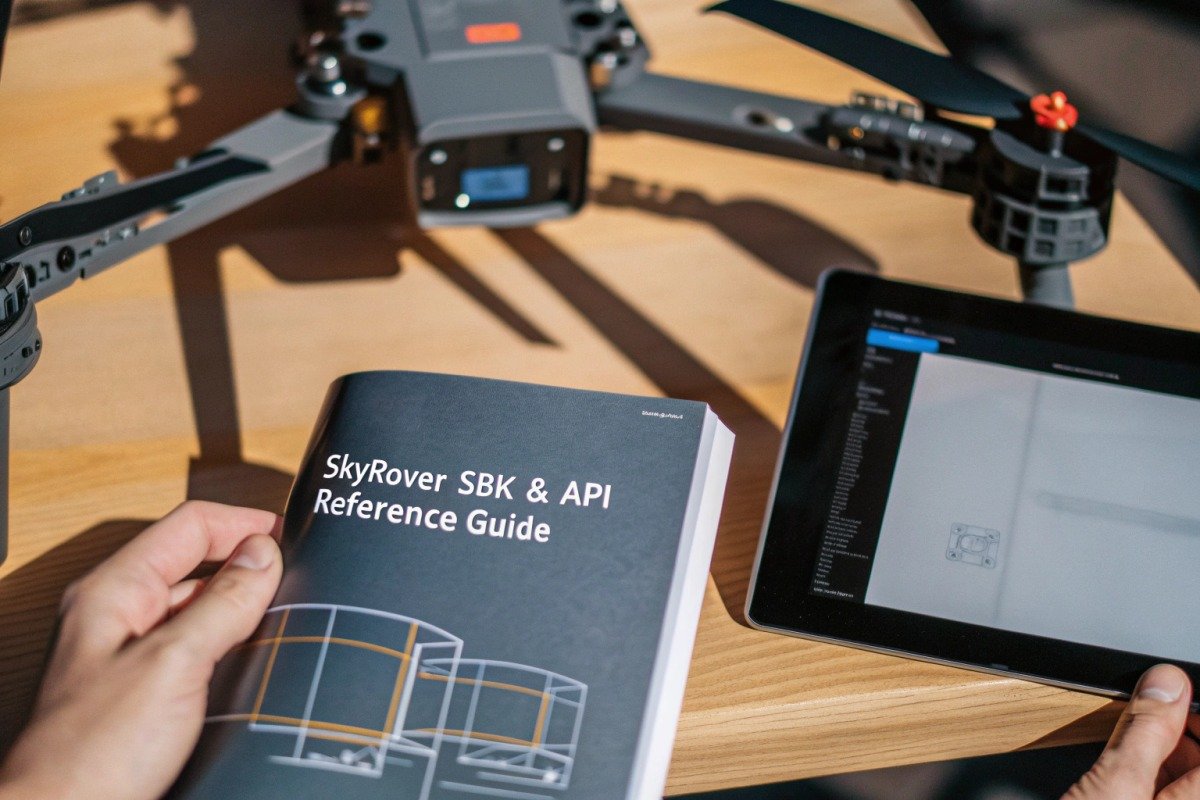
Essential Documentation Package
Every serious manufacturer provides a documentation package. This package should include multiple components. Each serves a specific purpose in your development workflow.
The API reference guide 4 lists every available endpoint. It describes request parameters and response formats. Good references include code examples in multiple languages. Python, Java, and JavaScript samples help your developers start quickly.
SDK source code enables deep customization. Open-source SDKs let your team modify functions. Proprietary SDKs with sample applications still provide value. They demonstrate proper implementation patterns.
Documentation Quality Checklist
| Document Type | Must Include | Red Flags |
|---|---|---|
| API Reference | All endpoints, parameters, examples | Missing error codes, no versioning |
| SDK Package | Source code, dependencies list, build instructions | Binary-only distribution, no samples |
| Change Log | Version history, breaking changes, deprecations | No update history, missing dates |
| Integration Guide | Step-by-step tutorials, use cases | Generic instructions, no firefighting examples |
| Support Protocol | Contact methods, response time SLAs | No dedicated technical contacts |
Evaluating Custom Development Capabilities
Large distributors often need custom features. Perhaps your clients require specific data exports. Maybe you need proprietary control interfaces. The manufacturer must demonstrate development flexibility.
Our engineering team maintains a custom development process. We document it clearly. Clients receive development timelines, milestone definitions, and testing protocols. Request similar documentation from any supplier.
Check for development environment support. Good manufacturers provide Docker containers for local testing. They offer staging servers for integration verification. These resources accelerate your custom development projects.
Version Control and Updates
API versions change over time. New features arrive. Old endpoints get deprecated. Your documentation package must address version management 5.
Request the change log for at least two years. Look for patterns. Does the manufacturer release breaking changes frequently? Do they provide migration guides? Our policy maintains backward compatibility for eighteen months minimum. This gives distributors time to update their integrations.
How do I evaluate if the API interface provides the real-time data stability required for firefighting operations?
When we calibrate our flight controllers, we test under extreme conditions. Firefighting environments push equipment to limits. Heat, smoke, and interference threaten data connections.
Evaluate real-time data stability by testing latency under simulated fire conditions, verifying redundant communication pathways, checking edge computing capabilities for offline operation, and confirming the API maintains sub-second response times for critical commands during network degradation.

Critical Latency Requirements
Firefighting drones cannot tolerate delays. A two-second lag in video feed could mean missing a spreading fire front. Command delays endanger equipment and personnel.
Define your latency requirements clearly. Video streaming should maintain under 200 milliseconds delay. Command responses need sub-100 millisecond acknowledgment. Telemetry updates should arrive at least ten times per second.
Request latency test results from suppliers. We conduct standardized tests at our facility. Results show performance across various network conditions. Ask for similar documentation.
Data Stability Testing Framework
| Test Scenario | Acceptable Performance | Testing Method |
|---|---|---|
| Clear Conditions | <100ms command latency | Controlled environment simulation |
| Network Congestion | <300ms with packet prioritization | Bandwidth throttling tests |
| Intermittent Connection | Auto-reconnect within 5 seconds | Connection drop simulations |
| High Heat Environment | No thermal throttling impact | Temperature chamber testing |
| Multi-drone Operations | Linear scaling to 50+ units | Load testing with virtual drones |
Edge Computing Capabilities
Network connections fail during fires. Cellular towers may be damaged. Satellite links face interference. Your drones must continue operating.
Edge computing 6 solves this problem. Critical processing happens onboard the drone. Local AI detects fire spread patterns. Autonomous navigation continues without ground station input.
Our drones include edge processing modules. They handle real-time thermal analysis locally. They store flight data during connection losses. They sync automatically when connections restore.
Ask potential suppliers about their edge computing architecture. Request specifications for onboard processing power. Verify local data storage capacity. These features determine operational reliability in disaster scenarios.
Redundant Communication Pathways
Single-point failures cause mission failures. Professional firefighting drones need backup communication channels.
Primary links typically use cellular networks. LTE and 5G provide good bandwidth for video streams. Backup links might use mesh networking between drones. Emergency links could utilize satellite connections.
The API must support seamless switching between pathways. Your software should not crash when the drone changes communication modes. Test this thoroughly before deployment.
Sensor Fusion for Reliability
Modern firefighting drones combine multiple sensors. Thermal cameras detect heat signatures. LiDAR maps terrain through smoke. GPS provides positioning. IMU sensors track orientation.
The API must expose all sensor data consistently. Sensor fusion 7 algorithms combine inputs for accurate situational awareness. Our engineering team implemented data verification layers. They cross-check sensor readings to detect anomalies.
Request sensor fusion documentation from suppliers. Understand how conflicting sensor data gets resolved. This matters when GPS signals weaken near metal structures or dense forests.
What level of remote technical support will my supplier provide if I face integration challenges during the rollout?
Our support team handles integration calls from distributors worldwide. We know rollout problems rarely occur at convenient times. Support availability determines deployment success.
Expect suppliers to provide 24/7 emergency technical support, dedicated integration engineers, response time guarantees under four hours, remote diagnostic capabilities, and documented escalation procedures. Verify these commitments in writing before purchase.

Support Tier Definitions
Not all support requests carry equal urgency. Suppliers should define clear support tiers. Each tier carries different response commitments.
Critical issues affect live firefighting operations. These require immediate response. Your drones are grounded during an active fire. Someone must answer within thirty minutes.
High priority issues impact deployment schedules. Integration failures blocking rollout fall here. Response within four hours is reasonable.
Standard issues involve documentation questions or feature requests. Next business day response works fine.
Support Level Comparison
| Support Aspect | Minimum Acceptable | Preferred Standard |
|---|---|---|
| Emergency Response | 4-hour maximum | 30-minute callback |
| Regular Hours | Business hours in your timezone | 24/7 availability |
| Communication Channels | Email and ticket system | Phone, video call, screen sharing |
| Integration Engineer Access | On request | Dedicated contact assigned |
| Remote Diagnostics | Manual log review | Live system access capability |
| Escalation Path | Documented procedure | Named senior contacts |
Remote Diagnostic Capabilities
Modern support goes beyond phone calls. Your supplier should offer remote diagnostic tools.
API monitoring dashboards let support engineers see your integration status. Log aggregation tools collect error data automatically. Some suppliers can access your staging environment directly for troubleshooting.
At our company, we provide secure remote access options. With client permission, our engineers connect to development systems. We debug issues in real-time. This approach resolves problems faster than email exchanges.
Service Level Agreements
Verbal promises mean nothing during emergencies. Get support commitments in writing. Service Level Agreements 8 specify response times, escalation paths, and penalties for failures.
Review SLA documents carefully. Look for specific time commitments, not vague language. Understand what "response" means. Does it mean acknowledgment or actual engineer engagement?
Our standard SLA guarantees two-hour response for critical issues. It includes monthly support reports. It defines compensation for SLA breaches. Request similar commitments from your suppliers.
Building Long-term Support Relationships
Initial integration is just the beginning. Ongoing support matters throughout product lifecycle.
Ask about software update support. Will the supplier help you test new API versions? What happens when breaking changes arrive?
Discuss training options. Can your technical team receive advanced API training? Our company offers quarterly webinars for distributor engineering teams. We cover new features and best practices.
Consider the supplier's time zone alignment. Support availability during your business hours matters. A supplier twelve hours ahead may struggle to provide timely assistance.
Conclusion
API verification protects your investment and ensures successful firefighting drone deployments. Check compatibility with standardized protocols. Demand comprehensive documentation. Test real-time data stability thoroughly. Secure strong technical support commitments in writing before purchasing.
Footnotes
1. Explains the definition and principles of RESTful APIs. ↩︎
2. Provides the official standard and definition of the MQTT protocol. ↩︎
3. Defines the MISB ST 0601 standard for motion imagery metadata in UAS. ↩︎
4. Details the components and purpose of an API reference guide for developers. ↩︎
5. Replaced with an article from Postman, a highly authoritative source in API development, which comprehensively covers API versioning best practices and strategies. ↩︎
6. Defines edge computing and its role in processing data near its source. ↩︎
7. Explains the concept of sensor fusion and its benefits for environmental understanding. ↩︎
8. Explains what a Service Level Agreement is and its contractual nature. ↩︎

 English
  Español de México
  Deutsch
  Français
  Русский
  العربية
