Every week, our engineering team reviews ROI projections 1 from fire departments worldwide. Many arrive with inflated supplier claims that fall apart under scrutiny.
To validate a supplier’s ROI model for firefighting drones, you must independently verify cost assumptions, demand performance data from real deployments, calculate hidden import and maintenance expenses, and benchmark claims against industry standards. Request thermal imaging efficiency data, pilot training costs, and documented case studies from comparable fire departments.
This guide walks you through a practical validation framework thermal imaging efficiency data 2. We will cover durability verification, performance benchmarks, software value assessment, and hidden logistics costs. Let us start with the fundamentals.
How can I verify that the drone's durability and maintenance costs align with my long-term ROI projections?
When we stress-test our flight controllers 3 at the factory, we see firsthand how environmental conditions affect component lifespan. Many suppliers underestimate these real-world impacts in their projections.
Verify durability by requesting documented flight hour data, component replacement schedules, and warranty terms. Cross-reference supplier maintenance cost estimates with third-party repair records. A reliable firefighting drone should maintain operational status for 500+ flight hours before major overhauls, with annual maintenance costs between 8-15% of purchase price.
Understanding True Maintenance Costs
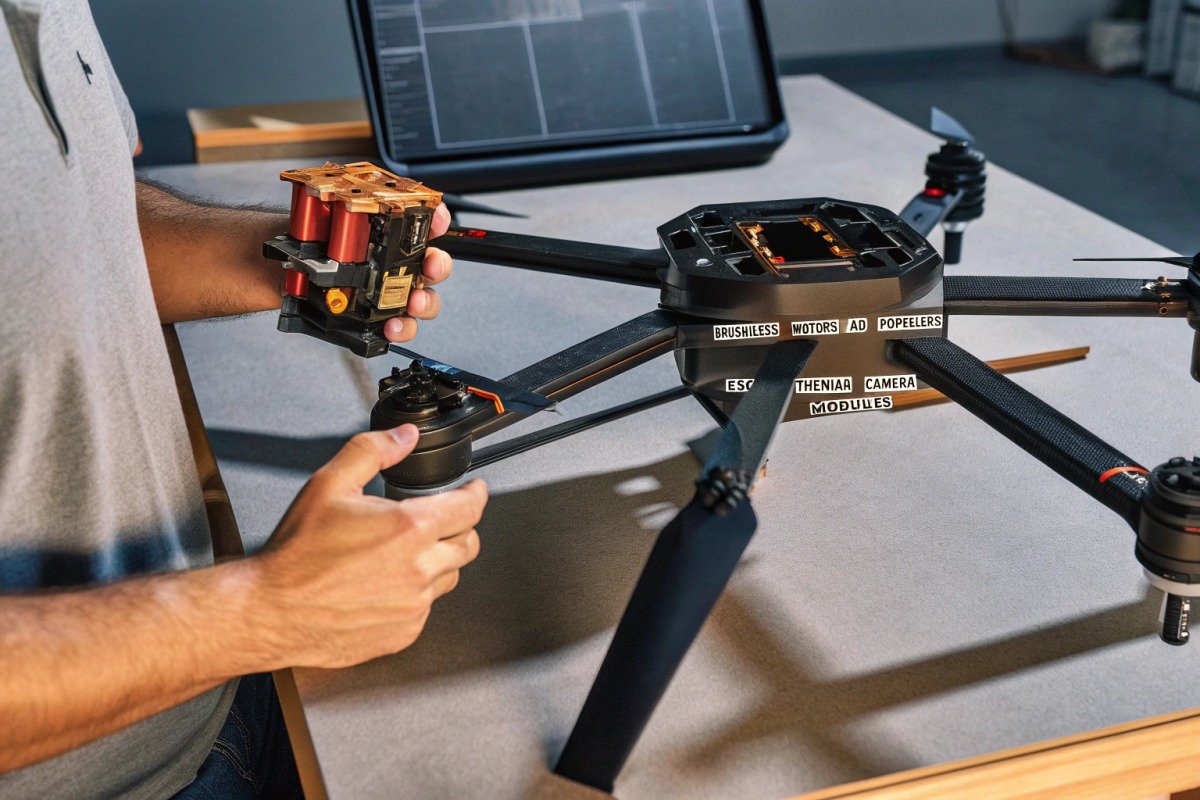
Suppliers often present maintenance as a simple percentage. Reality is more complex. Our production data shows that firefighting drones face unique stressors. Heat exposure from active fires degrades sensors faster. Smoke particles infiltrate motor bearings. Water-resistant seals wear down with each deployment.
Ask suppliers for component-level breakdown data. Motors, ESCs, propellers, cameras, and flight controllers all have different replacement cycles. A motor might last 300 hours in normal conditions but only 150 hours in high-heat firefighting scenarios.
Key Durability Metrics to Request
| Component | Expected Lifespan | Replacement Cost Range | Red Flag Threshold |
|---|---|---|---|
| Brushless Motors 4 | 400-600 flight hours | $150-400 each | Under 200 hours |
| Thermal Camera 5 | 2,000+ hours | $3,000-8,000 | Under 1,000 hours |
| Flight Controller | 1,500+ hours | $500-1,200 | Under 800 hours |
| Battery Cells | 300-500 cycles | $800-2,500 per pack | Under 200 cycles |
| Propellers | 100-200 hours | $50-150 per set | Under 50 hours |
Calculating Long-Term Maintenance ROI
Do not accept supplier estimates without verification. Calculate your own projections using this approach. First, identify your expected annual flight hours. Fire departments typically log 50-200 drone flight hours yearly. Multiply component replacement frequency by cost. Add labor for maintenance technicians.
Our customers in the US market report average annual maintenance costs of $4,000-8,000 for mid-range firefighting drones. High-end units with redundant systems cost more to maintain but offer longer service intervals.
Request maintenance logs from existing customers in similar operational environments. Desert climates differ from coastal regions. High-humidity areas accelerate corrosion. These factors directly impact your ROI timeline.
Warranty and Support Considerations
A strong warranty indicates supplier confidence in durability. Look for minimum two-year coverage on major components. Verify that warranty terms cover firefighting-specific damage. Some warranties exclude heat exposure or water intrusion.
Our export experience shows that US customers benefit most from suppliers offering stateside repair facilities or fast international parts shipping. A drone grounded for three weeks waiting for parts destroys ROI calculations.
What specific performance data should I request to validate the operational efficiency gains promised by the supplier?
In our development lab, we run hundreds of thermal imaging tests before shipping. But lab conditions never match active fire scenes. This gap is where supplier ROI models often fail.
Request flight endurance data under payload conditions, thermal camera detection ranges at various temperatures, response time comparisons with traditional methods, and documented case studies from fire departments with similar call volumes. Demand raw performance numbers, not marketing percentages.

Critical Performance Metrics for Firefighting
Suppliers love quoting maximum specifications. Maximum flight time. Maximum range. Maximum resolution. These numbers rarely apply to real operations. A drone rated for 45 minutes flight time might deliver only 25 minutes when carrying a thermal camera in windy conditions.
Ask for realistic operational specifications. What is the flight time at 70% payload capacity? How does wind speed affect stability? What is the effective thermal detection range in smoky conditions?
Essential Data Points to Demand
| Performance Metric | Marketing Claim vs Reality | What to Request |
|---|---|---|
| Flight Time | Often 30-40% shorter in field | Time with full payload, wind, temperature extremes |
| Thermal Range | Lab conditions only | Detection accuracy at 500m, 1km in smoke |
| Response Deployment | Assumes perfect conditions | Time from alert to airborne with trained crew |
| Data Transmission | Maximum theoretical | Actual bandwidth in interference zones |
| GPS Accuracy | Clear sky baseline | Performance in urban canyons, near structures |
Validating Efficiency Gain Claims
Suppliers often cite impressive statistics. Drone as First Responder programs show 24% of calls resolved without officer dispatch. The Department of Interior saved $14.8 million annually. These numbers are real but may not apply to your situation.
Break down efficiency claims into measurable components. How many of your annual incidents would benefit from aerial reconnaissance? What percentage of structure fires require roof assessment? How many wildland incidents need perimeter mapping?
Our thermal camera specifications show 640×512 resolution sensors detect hotspots at 800 meters in clear conditions. In smoke, effective range drops to 200-400 meters. Suppliers who do not acknowledge these limitations are not being transparent.
Comparing Against Traditional Methods
Build your own comparison matrix. Document current costs for helicopter support, ground reconnaissance teams, and manual inspections. Calculate time savings for each operation type.
Fire departments using our equipment report 15-30 minute time savings per incident for initial assessment. At an average of 200 fire incidents per year, this totals 50-100 hours saved annually. Multiply by your personnel costs for actual dollar value.
Do not accept supplier claims of "faster response" without specific time measurements from comparable departments. A rural department with 50 annual calls has different ROI dynamics than an urban department with 500 calls.
Real-World Validation Steps
Contact reference customers directly. Suppliers provide their best references, so ask pointed questions. What broke first? What features do you never use? Would you purchase again? What would you change?
Request video footage from actual firefighting deployments. Thermal imaging quality varies dramatically between marketing materials and smoke-filled environments. Real footage reveals true capabilities.
How do I factor the value of custom software development and engineering support into my ROI calculation?
When we collaborate with US fire departments on software customization, the development process reveals hidden value that standard ROI models miss. Integration with existing systems often delivers more benefit than the drone hardware itself.
Factor software value by calculating integration cost savings with existing dispatch systems, quantifying training time reductions from intuitive interfaces, and assessing long-term flexibility for feature additions. Engineering support value equals avoided downtime multiplied by operational cost per hour plus emergency response capability preservation.

Software Integration Value Assessment
Fire departments operate complex technology ecosystems. CAD systems 6. GIS platforms. Radio networks. MDT terminals. A drone that does not integrate creates data silos and operational friction.
Calculate the cost of manual data transfer. If operators must re-enter drone coordinates into dispatch systems, multiply time per incident by annual call volume. Our customers report 5-15 minutes of manual data handling per incident without integration. At 200 incidents yearly, that equals 17-50 hours of avoidable labor.
Quantifying Engineering Support Benefits
Engineering support prevents revenue loss from downtime. When a drone fails during a critical incident, the cost extends beyond repair bills. Calculate this using your operational metrics.
| Support Level | Response Time | Annual Cost | Downtime Cost Avoided |
|---|---|---|---|
| Basic Email | 24-48 hours | $500-1,000 | Low – extended outages |
| Priority Phone | 4-8 hours | $2,000-4,000 | Medium – reduced delays |
| 24/7 Technical | Under 2 hours | $5,000-10,000 | High – minimal disruption |
| On-Site Support | Same day | $15,000+ | Maximum – immediate resolution |
Custom Development ROI Factors
Generic drone software serves generic purposes. Fire departments have specific needs. Automated hotspot marking. Integration with NFIRS reporting. Custom flight patterns for structure assessments.
Our development team has built custom features for departments including automated perimeter mapping routines, integration with county GIS databases, and thermal overlay exports compatible with specific CAD platforms. Each customization has quantifiable value.
Assess custom development by identifying your top five operational pain points. How much time does each consume annually? What would resolution be worth? Compare this against custom development costs, typically $5,000-50,000 depending on complexity.
Long-Term Software Considerations
Vendor lock-in erodes ROI over time. If proprietary software prevents future upgrades or supplier changes, factor this risk into calculations. Ask about data export capabilities. Can you migrate thermal imagery archives to another platform? Are flight logs in standard formats?
Open-architecture systems cost more initially but provide flexibility. Closed systems offer lower entry prices but create dependency. Our approach supports standard protocols for exactly this reason. Customers should own their operational data.
Calculate the cost of switching suppliers at year three or five. If migration requires complete software replacement, add this to total cost of ownership calculations.
Training and Support Documentation
Quality documentation reduces training costs. Comprehensive manuals, video tutorials, and certification programs have measurable value. Calculate training hours required for pilot certification. Multiply by trainer and trainee hourly costs.
Suppliers offering FAA Part 107 preparation 7, manufacturer certification, and ongoing proficiency training provide quantifiable ROI benefits. Our training programs typically save departments 20-40 hours compared to self-directed learning approaches.
Our export team processes shipments to the US weekly. We see the same surprise costs catch procurement managers repeatedly. Duties, compliance testing, and customs delays add up faster than most ROI models anticipate.
Include customs duties (typically 0-6% for drones), Section 301 tariff assessments, FCC/FAA compliance certification costs, freight insurance, customs broker fees, and potential port storage charges. Budget 15-25% above FOB price for total landed cost in US market.

Understanding Import Cost Components
The purchase price is just the beginning. International procurement involves multiple cost layers that suppliers may not clearly disclose. Our door-to-door delivery service addresses many of these, but understanding each component helps validate any supplier's pricing.
Customs duties 8 depend on HTS classification. Drones may classify under different codes depending on configuration. Civilian drones for photography typically face lower rates than specialized equipment. Verify classification with your customs broker before finalizing ROI calculations.
Complete Landed Cost Breakdown
| Cost Category | Typical Range | Frequency | ROI Impact |
|---|---|---|---|
| Customs Duty | 0-6% of value | Per shipment | Direct addition |
| Section 301 Tariff | 7.5-25% | Per shipment | Significant addition |
| Ocean Freight | $500-2,000 | Per shipment | Fixed cost |
| Air Freight | $2,000-8,000 | Per shipment | Higher but faster |
| Customs Broker | $150-400 | Per shipment | Fixed cost |
| Freight Insurance | 0.5-1% of value | Per shipment | Risk mitigation |
| FDA/FCC Testing | $500-3,000 | One-time | Compliance requirement |
Tariff and Compliance Considerations
Trade policy affects drone imports significantly. Section 301 tariffs on Chinese goods have fluctuated. Current rates may differ from supplier quotes created months earlier. Verify current tariff status before finalizing purchases.
FCC certification 9 is mandatory for radio-transmitting devices in the US. Drones contain multiple transmitters. If the supplier has not obtained FCC authorization, you face delays and additional costs. Our products carry FCC certification specifically because we understand US market requirements.
FAA registration and airworthiness standards may apply depending on drone weight and use case. Commercial operations require Part 107 compliance. Emergency operations may qualify for Certificate of Authorization exemptions. These regulatory costs belong in your ROI model.
Logistics Timeline and Cash Flow Impact
Shipping time affects ROI calculations through cash flow timing. Sea freight takes 25-35 days from China to US ports. Air freight takes 5-10 days. The difference in time is also a difference in when you can begin generating returns.
Factor inventory carrying costs for longer shipping times. If you order three months of spare parts inventory to avoid stockouts, calculate the capital tied up in that inventory. At 5% annual cost of capital, $20,000 in parts inventory costs $1,000 yearly in carrying costs.
Hidden Administrative Costs
Procurement involves internal costs beyond the purchase price. Staff time for vendor evaluation, contract negotiation, and order management has real value. International purchases typically require more administrative effort than domestic alternatives.
Document review for import compliance consumes hours. Certificate of Origin. Commercial invoices. Packing lists. Bill of lading review. Customs entry preparation. These tasks require skilled staff time that should appear in total cost calculations.
Quality inspection upon arrival protects against shipping damage and substitution. Professional inspection services cost $200-500 per shipment but prevent costly disputes and returns. Our quality control processes reduce these risks, but verification remains prudent.
Conclusion
Validating supplier ROI models requires independent verification of durability data, performance metrics, software value, and hidden import costs. Do not accept projections without documented evidence from comparable operations. Your procurement decision deserves rigorous analysis.
Footnotes
1. Explains Return on Investment (ROI) definition, formula, and importance as a financial metric. ↩︎
2. Provides key specifications and metrics for evaluating thermal camera performance and efficiency. ↩︎
3. Details how drone flight controllers work, their components, and core functions for stability and movement. ↩︎
4. Explains the components and working principles of brushless motors commonly used in drones. ↩︎
5. Replaced HTTP 404 with an authoritative guide on thermal camera specifications from a leading manufacturer (Flir). ↩︎
6. Defines Computer-Aided Dispatch (CAD) systems and their use in emergency services for managing calls and resources. ↩︎
7. Outlines the steps and requirements to become an FAA-certified commercial drone pilot under Part 107. ↩︎
8. Explains what customs duty is, how it’s determined, and its purpose in regulating international trade. ↩︎
9. Details the FCC’s equipment authorization program for radio frequency devices to prevent harmful interference. ↩︎

 English
  Español de México
  Deutsch
  Français
  Русский
  العربية
