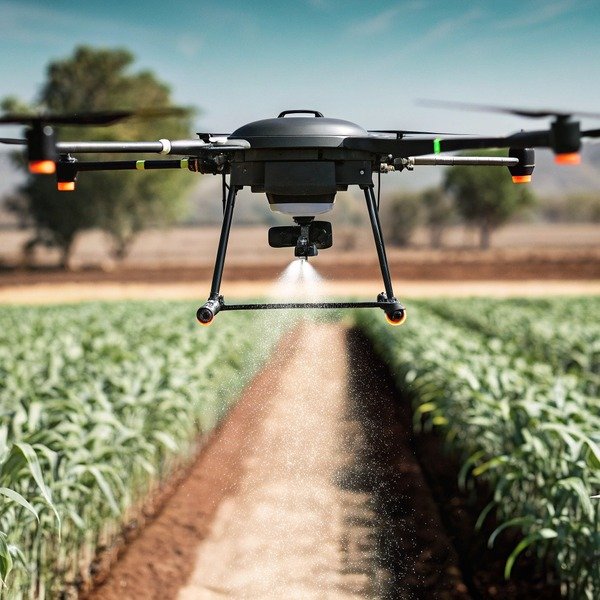
Buying industrial drones involves huge capital expenditure. industrial drones 1 In our Chengdu facility, we frequently see clients struggle when technology outpaces their fixed hardware too quickly.
Planning a drone upgrade roadmap requires selecting modular hardware with swappable payloads and tanks to allow incremental updates. You must prioritize cross-compatible battery systems and ensure the manufacturer offers an open API for software integration, ensuring your fleet adapts to future regulations without requiring complete replacement.
Let’s explore how to future-proof your investment by analyzing hardware modularity, software collaboration, and long-term engineering support.
How do I ensure the drone hardware is modular enough to support future technology upgrades?
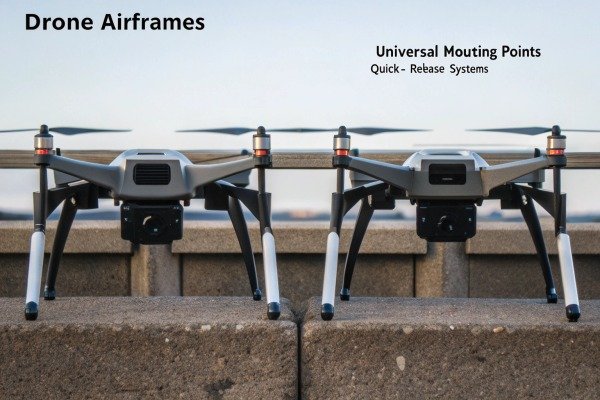
Locked ecosystems often frustrate farm managers who want flexibility. When we design SkyRover airframes, we prioritize universal mounting points to prevent early obsolescence for our clients.
Ensure hardware modularity by choosing platforms with quick-release payloads and universal mounts for tanks or spreaders. Verify that the airframe supports interchangeable sensors, such as switching from RGB to multispectral cameras, allowing you to adapt to new agricultural tasks without purchasing an entirely new aircraft.

Understanding the Platform Approach
When you buy an agricultural drone, you should not view it as a single tool. You must view it as a platform. The agricultural industry moves fast. A drone that only sprays liquids today might need to spread granular fertilizer or map a field tomorrow. If the hardware is fixed, you lose money.
At our factory, we advise clients to look for "The Lego Approach." This means the core components of the drone should be separate from the functional payloads. The flight platform—the motors, arms, and flight controller—is the most expensive part. It should last for years. The tank, the spray nozzles, and the cameras are the parts that change.
Key Hardware Modularity Checkpoints
You need to inspect specific physical features before you sign a purchase order. Do not just look at the spec sheet. Look at the connection points.
- Swappable Tanks and Spreaders: Can you remove the liquid tank and replace it with a seed spreader in under five minutes? Some older designs require tools and rewiring to change these systems. This wastes time in the field.
- Universal Payload Ports: Does the drone use proprietary connectors? Ideally, the drone should have standard data ports. This allows you to attach third-party sensors multispectral camera for crop health 2, like a thermal camera for irrigation checking or a multispectral camera for crop health analysis. multispectral camera 3
- Arm and Motor Replacement: Accidents happen. If a motor fails, do you have to replace the whole arm or even the main body? A modular design allows you to unbolt one arm and replace it. This reduces repair costs significantly.
Battery Infrastructure Compatibility
The most overlooked part of hardware upgrades is the power system. Batteries and chargers often cost as much as the drone itself.
If a manufacturer releases a new drone next year, will your old batteries work with it? We see many buyers stuck with "dead" batteries because the new model changed the connector shape. You must ask the supplier if they maintain backward compatibility for their energy systems.
Comparison of Fixed vs. Modular Drone Architectures
The following table highlights why modularity saves money over time.
| Feature | Fixed Architecture (Avoid) | Modular Architecture (Recommended) |
|---|---|---|
| Payload Swapping | Requires tools; often restricted to one brand. | Tool-free quick release; supports multiple brands. |
| Repair Process | Must ship the whole unit back to the factory. | User can replace specific modules (arms, pumps) on-site. |
| Battery Life Cycle | Batteries only fit one specific model generation. | Batteries fit multiple generations (e.g., V1, V2, V3). |
| Upgrade Path | Must buy a new drone for new features. | Upgrade only the sensor or spray system; keep the frame. |
| Resale Value | Low, as the tech becomes outdated quickly. | High, as buyers can retrofit new tech onto the frame. |
Can I collaborate with the manufacturer to develop custom software features as my needs evolve?
Generic software rarely fits every large-scale operation perfectly. Our engineering team frequently modifies flight algorithms for clients who need specific crop-dusting patterns or data outputs.
Yes, you can collaborate with manufacturers who offer OEM services and open API access to develop custom features. Look for suppliers willing to co-develop flight algorithms or integrate with third-party farm management systems, ensuring your software ecosystem evolves alongside your specific operational data requirements.
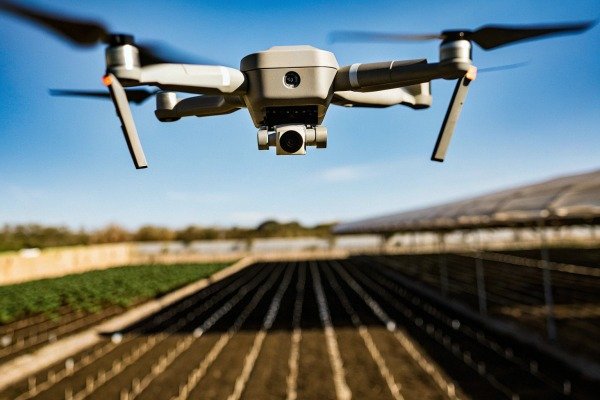
The Importance of Open APIs
In the past, drone software was a "walled garden." You used what the manufacturer gave you, and nothing else. Today, professional operations need data flow. You might use a specific farm management software (FMS) to track yields. Your drone needs to talk to that software.
When we speak with procurement managers, we emphasize the API (Application Programming Interface). Application Programming Interface 4 An open API allows your developers—or the manufacturer's engineers—to write custom code. This code can automate tasks. For example, you can automatically send flight logs to your central server. Or, you can generate a variable-rate spray map on your computer and upload it directly to the drone without using a USB stick.
Custom Flight Algorithms for Special Crops
Standard drones fly in simple grid patterns. This works for corn or wheat fields that are flat and square. But what if you manage hillside vineyards or irregular orchards?
You may need a custom flight mode. This could be "terrain following" that is more aggressive than standard settings. Or it could be "spot spraying" where the drone hovers over a specific tree. If you work with a manufacturer that supports collaborative development, you can request these changes. We often tweak the PID (Proportional-Integral-Derivative) controllers PID (Proportional-Integral-Derivative) controllers 5 for clients to make the drone fly smoother in high winds or carry heavier, unstable loads.
Data Ownership and Security
Another critical aspect of software collaboration is data ownership. Some large consumer drone companies store your flight data on their cloud servers. This can be a security risk for government contractors or large agricultural enterprises.
When planning your roadmap, ensure you can host the data yourself. Collaborative software development often means the manufacturer builds a "Private Deployment" version of the control software for you. This keeps your field data on your local servers, not in a foreign cloud.
Levels of Software Customization
| Level | Description | Implementation Time | Engineering Cost |
|---|---|---|---|
| Basic Integration | Connecting the drone to existing Farm Management Software via API. | 1-2 Weeks | Low |
| Custom UI/UX | Re-branding the control app or changing the button layout for pilots. | 1-2 Months | Medium |
| Algorithm Tuning | Modifying flight behavior for specific crops, winds, or payloads. | 2-4 Months | High |
| Full Automation | Developing autonomous swarming or docking station logic. | 6+ Months | Very High |
What questions should I ask about the supplier's long-term engineering support capabilities?
A drone is only as good as the technical support behind it. We advise potential partners to visit the factory or schedule video calls to verify the R&D team’s depth.
Ask about their history of firmware updates, availability of spare parts for discontinued models, and access to remote engineering support. You must confirm they have a dedicated R&D team capable of troubleshooting complex integration issues and providing security patches for flight controllers over a five-year horizon.
Verifying the "Bus Factor"
You need to know who is actually building the technology. In the drone industry, many "manufacturers" are actually just assemblers. They buy parts off the shelf and put them together. If a flight controller has a bug, they cannot fix it because they did not write the code.
You should ask: "Do you have in-house software engineers?" and "Do you design your own flight control boards?" If the answer is no, that supplier cannot support a long-term roadmap. If the one supplier they buy from stops making the part, your fleet becomes unfixable. At SkyRover, we maintain a team of 70 people to ensure we own the technology we sell.
The Spare Parts Guarantee
Nothing kills a product roadmap faster than a lack of parts. A durable industrial drone should last 3 to 5 years. However, many consumer drone models are discontinued after 18 months.
You must demand a written guarantee on spare parts availability. A good standard is "End of Production + 5 Years." This means even after they stop selling the drone, they promise to sell you propellers, motors, and arms for another five years. This protects your capital investment.
Remote Troubleshooting Capabilities
Agriculture happens in remote areas. When a drone fails during the harvest season, you cannot wait two weeks to ship it back to China or the US distributor for repairs.
Ask the supplier about their remote support tools.
- Can they log into the drone remotely to read the "black box" flight logs?
- Do they offer video call support with an actual engineer, not just a chatbot?
- Do they provide detailed repair manuals and schematics so your local technicians can fix simple hardware issues?
Checklist for Supplier Engineering Assessment
Use this checklist when interviewing potential suppliers:
- Firmware History: Ask to see the release notes for their previous model. Did they update it regularly?
- SDK Availability: Do they have a Software Development Kit available for clients?
- Customization willingness: Will they modify the frame size or motor kv rating for your specific needs?
- Team Structure: How many people are in R&D versus Sales? (A healthy ratio for a tech company is at least 30-40% R&D).
- Testing Protocols: How do they test new updates before releasing them to you?
How does a clear product roadmap help me avoid obsolescence and reduce replacement costs?
Replacing an entire fleet destroys profit margins and disrupts operations. We help our distributors map out three-year cycles so they do not buy “dead-end” technology that cannot adapt.
A clear roadmap prevents obsolescence by aligning hardware purchases with future regulatory shifts, such as remote ID or swarming allowances. It reduces replacement costs by enabling component-level upgrades rather than full system swaps, improving your total cost of ownership through extended service life and higher resale value.

Lowering Total Cost of Ownership (TCO)
The purchase price is just the tip of the iceberg. The Total Cost of Ownership includes maintenance Total Cost of Ownership 6, upgrades, and depreciation. Total Cost of Ownership 7 A clear roadmap helps you flatten these costs.
If you buy a non-modular drone, your depreciation is steep. It becomes worthless as soon as a better sensor comes out. With a roadmap-based approach, you plan to keep the airframe for 1,000 flight hours. You only budget to replace the camera or the spray system in Year 2 or Year 3. This spreads your capital expense over a longer period.
Regulatory Future-Proofing
Aviation regulations are changing fast. Aviation regulations are changing fast 8 In the US, the FAA is moving toward allowing swarming (one pilot controlling multiple drones) and BVLOS (Beyond Beyond Visual Line of Sight 9 Visual Line of Sight).
If you buy a drone today that does not have the hardware capability for these features, you will have to throw it away when the law changes.
- Swarming: Requires specific communication radios that can talk to each other, not just the remote.
- Remote ID: New laws require drones to broadcast their location. Remote ID 10 Does your drone have a module for this, or a port to add one?
A roadmap ensures you ask these questions now. You buy hardware that is "Swarm Ready" even if you don't use it yet.
Avoiding the "Beta Tester" Trap
A roadmap also protects you from buying unproven tech. Sometimes, manufacturers release "revolutionary" new features that are not ready. They want you to pay to be a beta tester.
By sticking to a planned roadmap, you can decide to skip the "Version 1.0" of a new sensor. You can wait for "Version 1.5" while keeping your current reliable hardware running. This risk mitigation strategy is crucial for commercial operations where downtime means lost crops.
Sample 5-Year Roadmap Strategy
Here is a template we often see successful distributors use to plan their procurement.
| Timeline | Hardware Action | Software/Feature Upgrade | Goal |
|---|---|---|---|
| Year 1 | Purchase modular heavy-lift airframe (Platform A). | Basic manual flight & semi-auto spray patterns. | Establish baseline operations. |
| Year 2 | No new airframe. Purchase specialized nozzle kit. | Integrate API with farm management software. | Increase data efficiency. |
| Year 3 | Retrofit Platform A with new battery tech (if compatible). | Upgrade to AI weed recognition (spot spraying). | Reduce chemical costs by 30%. |
| Year 4 | Buy Platform B (next gen) for expansion only. | Begin swarming tests (1 pilot, 3 drones). | Scale up acreage per pilot. |
| Year 5 | Retire Platform A to backup status. | Full autonomous fleet management. | Maximize labor efficiency. |
Conclusion
Future-proofing requires modular hardware and a responsive manufacturing partner. By verifying engineering support and ensuring component interoperability, you can plan a roadmap that maximizes ROI and operational longevity.
Footnotes
1. Official government source defining regulations and operations for commercial and industrial drones. ↩︎
2. Example of specialized agricultural sensors from a major manufacturer. ↩︎
3. USGS is a primary authority on multispectral imaging technology and its applications. ↩︎
4. IBM provides a standard, authoritative technical definition of an API. ↩︎
5. Technical background on the control loops mentioned in the text. ↩︎
6. Financial concept explanation for capital expenditure planning. ↩︎
7. Gartner is a leading research and advisory company defining business metrics like TCO. ↩︎
8. Official source for US drone regulations and safety standards. ↩︎
9. Official FAA information regarding waivers and regulations for BVLOS operations. ↩︎
10. Official UK guidance on drone identification requirements. ↩︎

 English
  Español de México
  Deutsch
  Français
  Русский
  العربية
