
At SkyRover, we see buyers worry about upfront costs. High-value firefighting drone orders carry financial risks, but the right negotiation strategy secures your investment and ensures timely delivery.
To minimize financial risk, negotiate a milestone-based payment structure: typically a 30% deposit, with the remaining balance due only after a successful third-party pre-shipment inspection. Avoid paying 100% upfront. For larger orders, utilize Letters of Credit or escrow services to ensure funds are released only upon verified delivery and compliance.
Let's explore the specific tactics to protect your capital while securing top-tier equipment.
What is a reasonable deposit percentage for a custom drone order?
When we customize flight controllers for clients, upfront costs are real. However, paying too much initially exposes you to unnecessary delays and production risks, so leverage is key.
flight controllers 1
A reasonable deposit for custom industrial drones typically ranges from 30% to 50%. Manufacturers often request higher amounts, but you should negotiate for a lower 30% initial payment to maintain leverage. Ensure the remaining balance is tied strictly to production milestones and successful quality verification rather than arbitrary dates.

Understanding the Manufacturer's Perspective
In the industrial drone sector, particularly for specialized firefighting units, the cost of materials is high. We have to procure thermal sensors, high-capacity batteries, and carbon fiber frames before assembly begins. This is why suppliers ask for deposits. However, as a buyer, you must distinguish between a factory's actual need for capital and a trading company's desire to lock you in.
Trading companies often demand higher deposits (50% or more) because they need your money to pay the actual manufacturer. In contrast, a direct manufacturer like us usually has better cash flow and can accept a 30% deposit. This lower entry point significantly reduces your risk exposure if the supplier fails to deliver.
Net 30 2
The 30-70 Split Strategy
The "30% Deposit, 70% Balance" model is the gold standard for minimizing risk. By keeping 70% of the capital in your pocket until the goods are ready, you maintain control. If a supplier insists on 50% or 100% upfront, it is often a red flag regarding their cash flow stability.
Critical Thinking: Factory vs. Trading Company Terms
It is crucial to identify who you are dealing with. Trading companies might offer "easier" communication but often have stricter payment terms because they are middlemen. Factories might be more flexible on the deposit percentage if they see the potential for a long-term OEM partnership.
Comparison of Deposit Risks
The following table outlines how different deposit levels impact your financial risk and leverage during the production phase.
| Deposit Percentage | Buyer Risk Level | Supplier Motivation | Recommended For |
|---|---|---|---|
| 100% Upfront | Extreme | Low (Money is already received) | Samples or spare parts only (<$1,000) |
| 50% Deposit | High | Moderate | Highly customized, one-off prototypes |
| 30% Deposit | Low to Moderate | High (Needs balance to profit) | Standard bulk orders and OEM production |
| 0% (Net Terms) | None | Very High | Long-term partners with credit history |
By pushing for 30%, you ensure the manufacturer remains motivated to finish production quickly and accurately to receive the bulk of their payment.
Bill of Lading 3
Can I negotiate to pay the balance only after a successful pre-shipment inspection?
In our testing grounds, we perform rigorous thermal checks. You should never settle for a supplier's word; verification is your strongest financial safeguard against defects and shipping delays.
Letter of Credit 4
Yes, you absolutely can and should negotiate to pay the balance only after a successful pre-shipment inspection. This clause is standard in international trade and protects you from receiving substandard goods. Specify in your contract that final payment is contingent upon a third-party agency validating the drone's flight performance.
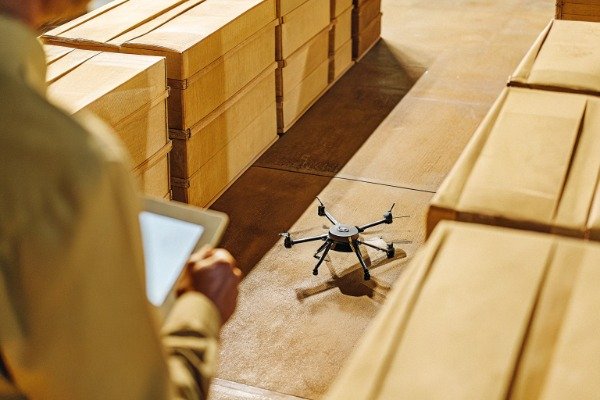
The Importance of the "Subject to Inspection" Clause
Never release the final payment based solely on photos or videos sent by the supplier. Photos can be staged, and videos can be edited. In our export history to the US and Europe, professional buyers always insist on a "Subject to Inspection" clause. This means the 70% balance is not due when production finishes, but only after an inspection report confirms the goods meet all specifications.
Defining "Successful" Inspection for Firefighting Drones
For firefighting drones, a visual check is not enough. You are buying a tool that saves lives, so the inspection must be functional. You need to define what "pass" means in your contract. If the drone cannot hold a stable hover for 30 minutes or if the thermal camera resolution is lower than promised, the inspection fails, and you do not pay.
Third-Party Verification
While we have our own quality control teams, we encourage buyers to hire independent agencies like SGS, Intertek, or specialized drone inspectors. They will visit the factory and perform a randomized check.
Inspection Checklist vs. Payment Triggers
You should structure your payment release based on specific technical validations. Below is a breakdown of critical inspection points for firefighting drones.
| Inspection Category | Specific Metric to Verify | Consequence of Failure |
|---|---|---|
| Flight Stability | Hover accuracy within ±0.5m in wind | Supplier must recalibrate flight controller; payment withheld. |
| Thermal Imaging | Sensor detects heat source at 500m | Unit rejected; sensor replacement required before payment. |
| Battery Endurance | Minimum 45 mins flight time with payload | Battery batch rejected; new cells required. |
| Waterproofing | IP Rating test (e.g., IP54/IP67) | Sealant rework required; re-inspection at supplier cost. |
Handling Failed Inspections
Your contract must state that if the goods fail inspection, the supplier pays for the re-inspection. This prevents the supplier from rushing production and hoping you won't notice defects. It keeps the financial burden of quality on the manufacturer, not on you.
Is it possible to use an escrow service for the initial transaction?
We often work with new partners who feel uneasy sending funds overseas. Using secure financial intermediaries builds trust and ensures neither party faces total exposure during the first deal.
IP Rating 6
Using an escrow service is highly effective for initial transactions, especially with new suppliers. It holds your funds securely until specific delivery or performance conditions are met. While some manufacturers prefer direct transfers for cash flow, reputable exporters will accept escrow or Letters of Credit to demonstrate reliability and financial stability.
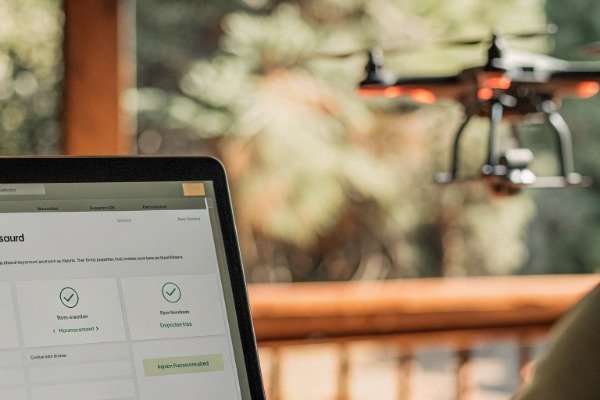
independent agencies like SGS 7
How Escrow Protects Your Capital
Escrow services act as a neutral third party. You send the money to the escrow agent, not the supplier. The supplier sees the funds are there, which gives them the confidence to start manufacturing. However, they cannot touch the money until they fulfill the contract terms (e.g., shipping the goods). This eliminates the risk of a supplier taking your deposit and disappearing.
Letters of Credit (LC) as an Alternative
For larger orders (typically over $50,000), a Letter of Credit (LC) is the professional standard. It is essentially a bank-backed escrow. Your bank guarantees payment to our bank, but only if we present strict shipping documents (Bill of Lading, Commercial Invoice, Packing List). If we don't ship, we don't get paid. This is very common in international trade and is safer than a standard wire transfer (T/T).
The Cost of Security
Escrow and LCs come with fees. Escrow platforms might charge 3-5%, while LCs have bank fees. You need to decide if this cost is worth the peace of mind. Often, you can negotiate to split these fees with the supplier.
Payment Method Comparison
Choosing the right channel depends on your trust level and order size.
| Payment Method | Buyer Security | Supplier Preference | Typical Fees | Best For |
|---|---|---|---|---|
| T/T (Wire Transfer) | Low (if paid upfront) | High | Low ($20-$50) | Established relationships |
| Escrow (e.g., Alibaba) | High | Moderate | Moderate (2-3%) | First-time small/medium orders |
| Letter of Credit (LC) | Very High | Moderate | High (1-2% + admin) | Large orders (>$50k) |
| PayPal/Credit Card | High (Chargeback option) | Low | Very High (3-5%) | Samples only |
Overcoming Supplier Resistance
Some factories resist escrow because it delays their cash flow. To negotiate this, you might offer to cover the transaction fees. This shows you are serious about the purchase but firm on security. If a supplier flatly refuses any secure payment method and insists on a personal bank transfer, walk away.
How do payment terms change as we build a long-term relationship?
After years of shipping to repeat clients in Europe, we naturally offer better terms. Trust reduces risk, allowing for more flexible payment schedules and improved cash flow for your business.
OEM partnership 8
As you establish a long-term relationship with a supplier, payment terms should evolve from strict deposits to credit arrangements like Net 30 or Net 60. Consistent order volume and reliable payment history give you leverage to negotiate lower upfront costs, warranty holdbacks, and rolling credit lines to support your inventory needs.

The "Trust Ladder" of Payment Terms
You should not expect to stay on "30% deposit" terms forever. As you place more orders, your capital is tied up in deposits. Your goal is to move up the ladder to "Open Account" (O/A) terms. This means the supplier ships the goods, and you pay 30 or 60 days later. This is a massive advantage for your cash flow, as you can sell the drones before you pay for them.
Negotiating Warranty Holdbacks
For long-term contracts, you can negotiate a "Warranty Holdback." This allows you to retain 5-10% of the total contract value for a set period (e.g., 6 months) to cover potential warranty claims. If a drone malfunctions, you use these funds for repairs. This incentivizes the supplier to maintain high quality consistently.
Service-Level Credits
In our experience with distributors, we sometimes set up service-level credits. Instead of sending money back and forth for spare parts, we provide a credit balance based on purchase volume. This simplifies accounting and speeds up the supply of replacement parts, which is critical for firefighting operations where downtime is not an option.
Moving to Net Terms: A Strategic Approach
Suppliers won't offer Net terms automatically; you have to ask.
- Start Small: After 3 successful orders, ask for "10% deposit, 90% before shipment."
- Request Credit: After 1 year, ask for "Net 30" on smaller orders.
- Show Financials: Be prepared to show your company's financial health to prove you can pay.
Critical Thinking: The Cost of Credit
Remember that "Net 60" terms often come with a slightly higher unit price. The supplier is essentially lending you money for 60 days. Calculate if the cash flow benefit outweighs the potential 2-3% price increase. In high-interest environments, supplier credit is often cheaper than a bank loan.
Conclusion
Effective negotiation balances risk and partnership. Start with low deposits and strict inspections, then evolve toward credit terms as trust grows, ensuring your capital works for you while securing reliable equipment.
thermal sensors 10
Footnotes
1. Definition of the core electronic component controlling drone stability. ↩︎
2. Financial definition of this common trade credit term. ↩︎
3. Legal definition of this essential shipping document. ↩︎
4. US Government guide to using Letters of Credit in international trade. ↩︎
5. SEC explanation of how escrow accounts protect funds. ↩︎
6. Official International Electrotechnical Commission definition of Ingress Protection ratings. ↩︎
7. Official site of SGS, a major global inspection company. ↩︎
8. Standard definition of Original Equipment Manufacturer relationships. ↩︎
9. Department of Energy overview of carbon fiber material properties. ↩︎
10. Explanation of thermographic technology used in firefighting drones. ↩︎

 English
  Español de México
  Deutsch
  Français
  Русский
  العربية
