
At SkyRover, we often see international buyers hesitate when facing the high upfront costs of equipping a fire department. It is a stressful financial balancing act.
Standard negotiation often starts with a 30% to 50% deposit, with the balance due upon pre-shipment inspection. To secure better terms, propose retaining 10-20% as a quality guarantee paid after delivery, or link payments to specific production milestones like flight testing videos.
Understanding the financial mechanics behind these transactions is crucial for securing your fleet without jeopardizing your budget.
What Are the Standard Deposit and Balance Ratios for B2B Drone Orders?
When we export to the United States, new clients frequently worry about risking large sums of capital before production even begins. We understand this hesitation completely.
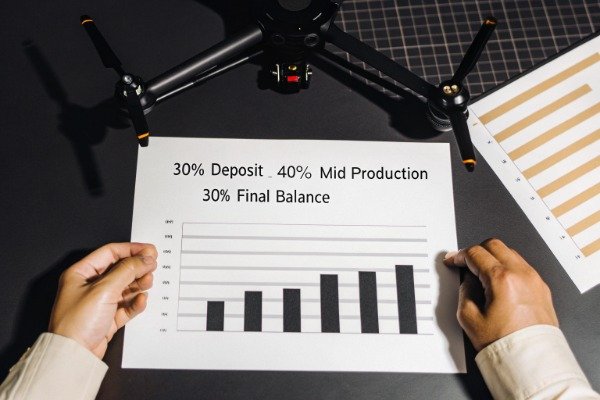
Most industrial drone manufacturers initially request a 50% T/T advance payment to cover raw materials, with the remaining 50% due before shipping. However, established partners often negotiate a 30% deposit, 40% mid-production payment, and 30% final balance to improve cash flow.
Understanding the Manufacturer's Cost Structure
To negotiate effectively, you must understand why suppliers like us ask for high deposits. Unlike consumer electronics sitting on a shelf, industrial firefighting drones—especially heavy-lift models capable of carrying 100kg payloads—are often built to order.
The initial deposit is not just profit; it is working capital. We use it to procure expensive components such as high-capacity lithium batteries, thermal imaging sensors, and carbon fiber frames. For a heavy-lift unit costing between $63,000 and $83,000, the raw material cost is significant. If a buyer cancels halfway through, the factory is left with specialized inventory that is hard to liquidate.
high-capacity lithium batteries 1
The "30-40-30" Golden Ratio
While the "50% Advance / 50% Before Shipment" model is standard for small orders (1-5 units) or new clients via Alibaba, it is not the only option. For larger procurements, we often accept a milestone-based structure.
- 30% Down Payment: Triggers the order and secures the production slot.
- 40% Production Milestone: Paid when the drones are assembled but not yet tested.
- 30% Final Balance: Paid after the Factory Acceptance Test (FAT) but before the goods leave the loading dock.
This structure protects your cash flow. You are not paying the bulk of the money until you see physical progress.
Comparing Supplier Tiers
Different suppliers have different risk appetites. A large, state-backed manufacturer might demand rigid terms, while agile private factories (like ours) might offer flexibility to win a long-term contract.
Table 1: Common Payment Structures by Order Volume
| Order Type | Typical Deposit | Mid-Term Payment | Final Balance | Leverage Required |
|---|---|---|---|---|
| Sample / Single Unit | 100% Upfront | N/A | 0% | None (Standard Retail) |
| Small Batch (2-10 Units) | 50% Upfront | N/A | 50% Before Ship | Low |
| Medium Fleet (11-50 Units) | 30% Upfront | 40% (Assembly) | 30% Before Ship | Medium (Volume Negotiation) |
| Large Tender (50+ Units) | 20% Upfront | 30% (Milestones) | 50% L/C or Net Terms | High (Government Contract) |
By positioning your company as a repeat buyer, you can move from the first row of this table to the third, significantly easing your financial burden.
Can I Link Payment Milestones to Pre-Shipment Inspection Results?
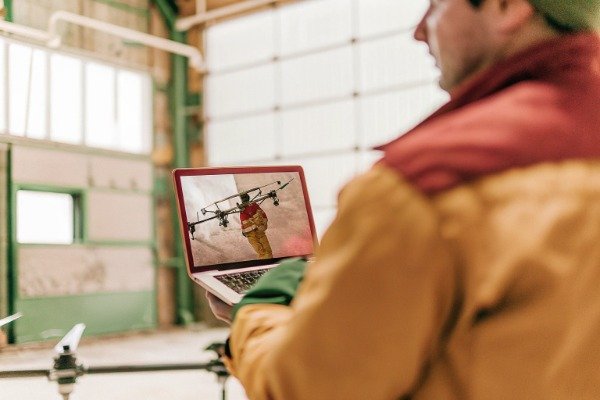
Our engineers frequently host video calls for remote inspections, knowing that trust is built on verification, not just promises.
Linking payments to inspections is highly recommended and widely accepted. You should condition the second major installment on a successful Factory Acceptance Test (FAT), where specific capabilities like thermal imaging and payload release are verified via live video or third-party audit.
The Power of the Factory Acceptance Test (FAT)
Never pay the final balance based solely on a "Ready for Shipment" email. In the industrial drone sector, the definition of "ready" can vary. You must insist on a Factory Acceptance Test (FAT).
A FAT is a scheduled event where the manufacturer demonstrates that the specific drones you ordered meet the agreed-upon specifications. For firefighting drones, this is critical. A malfunction in a fire suppression payload during a real emergency is not just a product failure; it is a safety hazard.
What to Inspect Before Paying
When negotiating your contract, specify that the second or final installment is triggered only after a successful FAT. This test should cover:
- Flight Stability: Hovering accuracy in wind (simulated or real).
- Payload Function: Triggering the fire extinguishing balls or liquid release mechanism.
- Endurance: Verifying flight time with a full load.
- Data Link: Testing the range and clarity of the video transmission.
Third-Party Verification
If you cannot visit the factory in Chengdu or Xi'an personally, you can hire third-party inspection agencies. Services like SGS or specialized drone consultants can visit the factory for a fee (typically $500–$1,000). They act as your eyes on the ground.
SGS 2
If a third-party audit is too expensive for your budget, a live video call is a valid alternative. We often set up Zoom calls where we fly the drone according to the client's commands in real-time.
Table 2: Inspection Checklist for Payment Release
| Inspection Category | Specific Test | Success Criteria for Payment Release |
|---|---|---|
| Physical Build | Visual Check | No scratches, correct branding, secure wiring. |
| Avionics | Power-on Self Test | IMU, GPS, and Compass calibrate successfully. |
| Performance | Hover & Load Test | Drone holds position with max payload for 10 mins. |
| Mission Systems | Thermal Camera | Clear heat signature detection at 50m height. |
| Safety Features | Return-to-Home | Drone automatically returns when signal is cut. |
By embedding this checklist into your purchase agreement, you ensure that your money only leaves your account when the product is proven to work.
Is It Common to Retain a Small Percentage Until After Successful Delivery?
We have agreed to retention clauses with long-term partners, though it requires building significant mutual trust first.
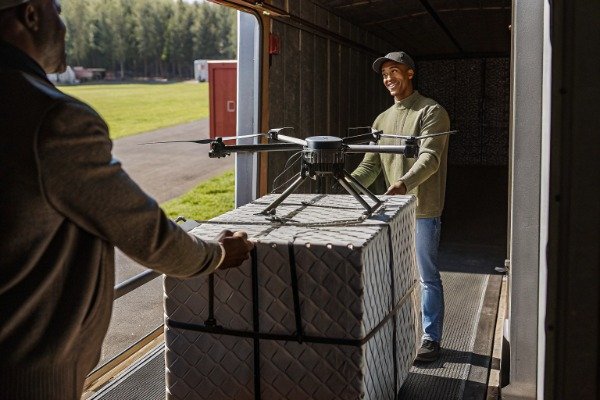
Retaining 5% to 10% until after delivery is less common for new buyers but negotiable for bulk orders. This "quality assurance" balance protects you against shipping damage or "dead on arrival" units, ensuring the supplier remains engaged during the logistics process.
The "Quality Retention" Strategy
In construction and engineering, it is standard to hold back a percentage of the fee until the project is fully signed off. In international trade, this is harder to negotiate because the seller fears the buyer will simply disappear with the last 10% once they have the goods.
However, for high-value items like firefighting drones ($40,000+ per unit), you have leverage. You can argue that complex electronics can be damaged during transit or may have "Day 1" firmware bugs that only appear after unboxing.
How to Negotiate Retention
If a supplier refuses a post-delivery payment, do not give up. Try these alternative approaches:
- Escrow Services: Use a platform like Alibaba Trade Assurance. You pay the full amount, but the funds are held by a third party. The supplier sees the money is there, but they cannot access the final 10% until you confirm the goods have arrived and work correctly.
- Warranty Bonds: Instead of holding cash, ask for a bank guarantee or a performance bond. This is more complex but works for very large orders.
- Spare Parts Credit: If they won't lower the cash payment, ask for the equivalent value in spare parts (propellers, motors, batteries) to be shipped with the order as a "buffer" against potential defects.
The "Regulatory Compliance Holdback"
Another angle is to link the final small payment to paperwork rather than hardware. You can negotiate a "Regulatory Compliance Holdback," where the final 5% is withheld until the supplier provides all necessary CE, FCC, or MSDS documents required for your local customs clearance.
MSDS documents 3
This ensures the supplier does not ghost you the moment the container leaves the port. We have seen many buyers stuck with drones at customs because the manufacturer was too slow to provide a battery certification document. Holding back 5% keeps the supplier motivated to help you clear customs.
Table 3: Risk Mitigation Strategies (Buyer vs. Supplier)
| Strategy | Buyer Benefit | Supplier Concern | Compromise Solution |
|---|---|---|---|
| 100% Post-Delivery | Zero Risk | High Risk (Non-payment) | Not Recommended |
| Retention (10%) | Quality Assurance | Buyer might default | Escrow / Trade Assurance |
| Bank Guarantee | Financial Safety | High Admin Fees | Use for orders >$100k |
| Spare Parts Buffer | Immediate Fixes | Cost of Goods | Include 5% spares value |
How Do I Propose a Letter of Credit for Larger Bulk Orders?
Handling large government tenders often involves complex financing; we assist clients by accepting secure banking instruments for volume orders.
For orders exceeding $50,000, proposing an Irrevocable Letter of Credit (L/C) is a strong strategy. It guarantees payment to the supplier only after they present compliant shipping documents, significantly reducing your risk of non-delivery while assuring the manufacturer of your solvency.

Why Use a Letter of Credit (L/C)?
When you are buying a fleet of agricultural or firefighting drones, the total invoice can easily surpass $100,000. Sending that amount via T/T (wire transfer) to a foreign bank account is nerve-wracking.
An Irrevocable Letter of Credit shifts the trust from the buyer and seller to their respective banks. Your bank guarantees that the money will be paid, but only if our bank presents strict proof that the goods have been shipped exactly as described.
Bill of Lading 4
The Mechanics of an L/C for Drones
To make this work, the L/C must be detailed. You cannot just say "Firefighting Drones." You must specify:
Irrevocable Letter of Credit 5
- Latest Shipment Date: To prevent delays.
- Port of Discharge: To ensure it comes to the right place.
- Required Documents: Bill of Lading, Commercial Invoice, Packing List, Certificate of Origin, and the FAT Report signed by your inspector.
If we miss the shipment date by even one day, or if a document is missing, the bank will not release the funds. This gives you immense protection.
performance bond 6
Overcoming Supplier Resistance
Many Chinese suppliers dislike L/Cs because they are paperwork-heavy and bank fees can be high (often 1-2% of the value).
IMU 7
To persuade a supplier to accept an L/C:
- Cover the Fees: Offer to pay the banking charges. It is a small price for the security of your capital.
- Keep it Simple: Do not add impossible clauses. Stick to standard shipping documents.
- Combine with T/T: Propose a 30% T/T deposit (to give them working capital) and 70% by L/C at sight. This is a very attractive "hybrid" model that balances their need for cash with your need for security.
Financing Alternatives: Leasing
If an L/C is too complex, or if you lack the capital for a full purchase, consider asking about leasing partners. While we as a manufacturer typically sell directly, many of our distributors in the US and Europe offer "Drone-as-a-Service" or leasing models.
Factory Acceptance Test (FAT) 8
This allows you to pay a monthly fee rather than a lump sum. However, be aware that over 2-3 years, you will likely pay 1.5x to 2x the retail price of the drone. For strict budget cycles, however, this operational expenditure (OpEx) model is often easier to approve than a large capital expenditure (CapEx).
thermal imaging sensors 9
Conclusion
Negotiating smart payment terms secures your capital and ensures we deliver top-tier firefighting drones. Start with small milestones and build trust for better flexibility.
T/T advance payment 10
Footnotes
1. Explains the expensive component technology driving the deposit requirement. ↩︎
2. Links to the official website of the specific inspection agency mentioned. ↩︎
3. Official government explanation of safety data documentation required for shipping. ↩︎
4. Defines the essential shipping document required for the L/C. ↩︎
5. Official US government trade guide explaining this payment method. ↩︎
6. Defines the financial instrument suggested as an alternative to retention. ↩︎
7. Explains the avionics component being tested in the checklist. ↩︎
8. Defines the critical engineering milestone for quality verification. ↩︎
9. Provides technical background on the specialized sensors used in firefighting. ↩︎
10. Defines the standard international banking payment method mentioned. ↩︎

 English
  Español de México
  Deutsch
  Français
  Русский
  العربية
