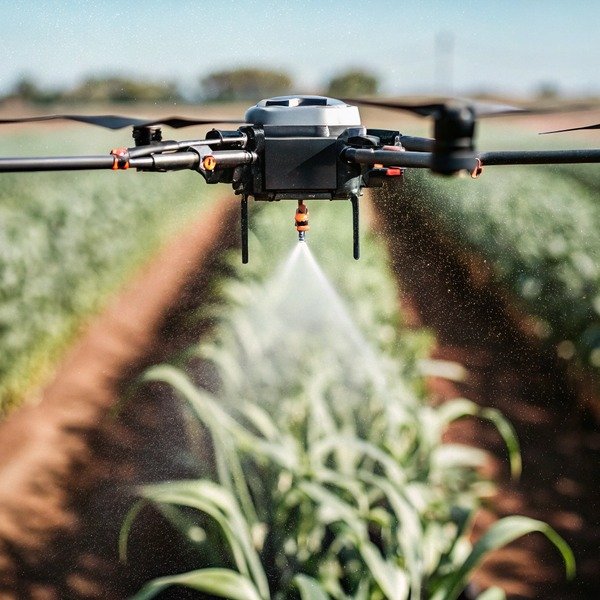
When we review competitor quotes sent by our potential partners, we often see confusion caused by vast price differences for seemingly identical products. A cheap sticker price rarely reflects the true investment needed for a functional, long-term fleet, leaving buyers frustrated when costs escalate later.
To effectively compare agricultural drone prices, calculate the Total Cost of Ownership (TCO) rather than just the base unit cost. Factor in essential accessories like high-capacity batteries, charging stations, shipping fees, and mandatory training, while verifying that warranty terms cover critical components for long-term operational stability.
Let’s break down the specific elements that inflate or deflate these quotes so you can make an informed decision.
We frequently receive distress calls from buyers who chose the lowest bidder, only to face expensive surprises when their equipment arrives. Those “bargain” drones often lack the essentials required for actual fieldwork, forcing operators to spend thousands more just to get airborne.
Low-priced quotes often exclude critical operational necessities such as extra battery packs, fast-charging hubs, and field mapping software licenses. Additionally, beware of hidden expenses like mandatory pilot certification training, ongoing maintenance kits, and high insurance premiums associated with less reliable or unverified drone models.

The "Bare Bones" Quote Trap
In our experience manufacturing these units, the biggest discrepancy between quotes usually lies in what is left out. A supplier might offer a drone airframe for $5,000, while another quotes $12,000. Often, the lower price is for the "aircraft only." An agricultural drone is useless without a power system, and this is where costs hide.
To operate continuously, you typically need at least three to four batteries and a fast charger per drone. One battery powers a flight, one is charging, and one is cooling down. High-capacity smart batteries are expensive components, often costing between $500 and $2,000 each depending on capacity. If a quote does not include these, you are looking at an immediate 40% to 50% price increase post-purchase.
Software and Licensing Fees
Another area where we see clients get caught off guard is software. Some manufacturers charge a one-time fee for the drone but require an annual subscription for the flight app or the RTK (Real-Time Real-Time Kinematic 1 Kinematic) positioning service Real-Time Kinematic 2. Without RTK, your spraying precision drops significantly. When comparing quotes, always ask if the software license is perpetual or subscription-based.
Essential Field Kits
We also recommend checking for field maintenance kits. A low quote often skips the "boring" items: a robust transport case, extra propellers, and basic repair tools. If you are working in a remote field and break a propeller, having no spare means your operation stops. Buying these separately later is always more expensive than bundling them.
Cost Breakdown Example
The following table illustrates how a "cheap" quote can become expensive.
| Component | "Budget" Quote (Hidden Costs) | "All-Inclusive" Quote (Transparent) |
|---|---|---|
| Base Drone Airframe | $5,000 | $5,500 |
| Batteries (4 units) | Not Included (Add ~$4,000) | Included |
| Fast Charger | Not Included (Add ~$800) | Included |
| RTK Module/Station | Not Included (Add ~$1,200) | Included |
| Transport Case | Cardboard Box | Hard Shell Case |
| Total Real Cost | $11,000 | $11,500 |
How do technical specifications and payload capacity impact the final price I pay?
Designing our heavy-lift models taught us that every kilogram of payload adds exponential cost to the motors and frame structure. Higher capacity demands significantly more robust, expensive components, which is why a simple comparison of tank size often fails to explain the price gap.
Payload capacity directly dictates price because heavier loads require stronger motors, larger batteries, and durable carbon fiber frames. A 40-liter drone costs significantly more than a 10-liter model due to these hardware requirements, along with advanced radar systems needed to safely maneuver larger airframes over complex terrain.
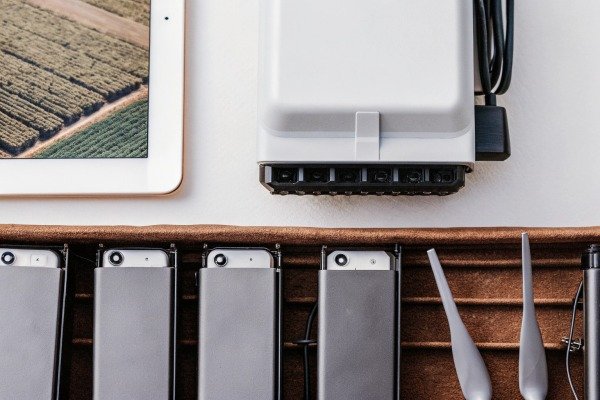
Payload versus Flight Time efficiency
Price scales aggressively with payload capacity. A 10-liter drone is relatively simple to build and power. However, as we scale up to 40-liter or 50-liter tanks, the engineering challenges multiply. We must use high-grade carbon fiber to ensure the frame does not flex high-grade carbon fiber 3 under load, and the motors must be industrial-grade to lift nearly 100 kg (drone + payload).
However, bigger is not always better for your budget. A massive 50-liter drone might cost $25,000, but if your fields are small or irregular, you are paying for capacity you cannot use. Conversely, a cheaper 10-liter model ($8,000) might seem like a deal, but if you have 500 acres to cover, the labor cost of constant refilling will exceed the drone's savings. You are paying for efficiency, not just plastic and metal.
The Cost of Precision Sensors
Another major price driver is the sensor suite. Entry-level drones might use basic GPS and a simple height radar. High-end models integrate spherical radar systems and binocular vision sensors spherical radar systems 4.
These advanced sensors allow the drone to:
- Avoid thin obstacles like power lines and tree branches.
- Follow the terrain of a hill accurately (Terrain Following).
- Operate in dusty or low-light conditions.
If a supplier's quote is significantly lower, check the obstacle avoidance specs. obstacle avoidance specs 5 A crash caused by poor sensors will cost you far more than the price difference between a basic and a pro model.
Spraying Systems Technology
The type of nozzle also affects the price. Standard pressure nozzles are cheap but can clog and produce inconsistent droplet sizes. Rotary atomizing nozzles (Centrifugal nozzles) are more expensive to manufacture Rotary atomizing nozzles 6 but offer better coverage and allow you to control droplet size via software. When we build our high-end units, we use rotary nozzles, which adds to the cost but saves the user money on pesticide use in the long run.
Price to Performance Ratio
| Drone Tier | Typical Tank Size | Estimated Price Range | Best Use Case |
|---|---|---|---|
| Entry Level | 10L – 16L | $5,000 – $9,000 | Small farms, difficult terrain, spot spraying |
| Mid-Range | 20L – 30L | $10,000 – $18,000 | Medium farms, orchards, balanced efficiency |
| Heavy Lift | 40L – 60L+ | $20,000 – $40,000+ | Large scale flat crops, industrial applications |
Does the supplier's quote include essential after-sales support and warranty services?
Our support team often assists customers who cannot get spare parts from their original “box-mover” suppliers. A cheap drone becomes a useless pile of plastic if you cannot reach an engineer when technical issues arise during the critical harvest season.
Most budget quotes exclude comprehensive after-sales support, leaving you vulnerable to downtime. You must verify if the price includes a defined warranty period, access to a responsive technical team, and guaranteed availability of spare parts, or if these critical services require an expensive, separate service contract.

The Difference Between Manufacturers and Resellers
When you see a low quote, it often comes from a reseller who does not hold inventory of spare parts. They simply ship the box. As a manufacturer, we know that agricultural drones take a beating. They operate in humid, dusty, and corrosive environments. Parts will wear out.
A higher quote often includes the infrastructure of support. This means:
- English-speaking technical support: Can you video call an engineer when the drone won't calibrate?
- Service manuals: Are they included and legible?
- Firmware updates: Will the supplier provide bug fixes?
Analyzing Warranty Terms
Read the fine print in the quote. Many low-cost suppliers offer a "1-year warranty," but exclude "wear and tear parts." in the fine print. In our industry, propellers, motors, and even pumps can be classified as wear and tear.
A robust quote should explicitly state what is covered. For example:
- Flight Controller & Radar: usually 12 months.
- Batteries: usually a specific number of cycles (e.g., 1,000 cycles) or 12 months.
- Frame: usually 12 months.
If the warranty terms are vague, the lower price is a gamble.
Spare Parts Availability
Ask the supplier for a price list of common spare parts (propellers, landing gear, nozzles) along with the drone quote.
- Cost: Some suppliers sell the drone cheap but mark up parts by 300%.
- Lead Time: If a part ships from China via sea freight, you could be down for weeks. A good supplier offers express shipping options or has local dealers.
Support Tier Comparison
| Feature | Standard Support (Low Cost) | Premium Support (Value Add) |
|---|---|---|
| Response Time | Email only (24-48 hours) | Video/Phone (< 4 hours) |
| Warranty Scope | Main board only | Comprehensive (excluding crash damage) |
| Repair Training | PDF Manuals | Online or On-site Training Courses |
| Parts Stock | Order on demand | In-stock guarantee |
How should I factor shipping fees and customs duties into my total procurement budget?
When shipping our units to the US or Europe, we see logistics costs fluctuate wildly based on the method chosen. Ignoring Incoterms or international battery transport regulations can easily double your delivery expenses if you are not prepared.
Shipping heavy agricultural drones involves dangerous goods surcharges for lithium batteries and volumetric weight costs. You must factor in customs duties, VAT, and local clearance fees, which can add 20% to 30% to the invoice. Always clarify if the quote is FOB, CIF, or DDP to understand your liability.

Understanding Incoterms
The most common reason for price confusion is the "Incoterm" (International Commercial Term) used in the quote. International Commercial Term 7 A quote of $10,000 EXW (Ex Works) is very different from $10,000 DDP (Delivered Duty Paid).
- EXW (Ex Works): The price is just for the goods at the factory door. You must arrange pickup, export declaration, shipping, and import. This looks cheapest but carries the most risk and hidden cost for you.
- FOB (Free on Board): The supplier covers costs to get it to the port/airport in China. You pay for the ocean/air freight and everything on your side.
- DDP (Delivered Duty Paid): The supplier handles everything right to your door, including taxes. This price will look 20-30% higher, but it is the final price you pay.
The Battery Shipping Challenge
Agricultural drones run on massive Lithium Polymer (LiPo) batteries Lithium Polymer (LiPo) batteries 8. These are classified as Class 9 Dangerous Goods (DG). You cannot simply put them in a standard FedEx box.
- Air Freight: Extremely expensive for DG. Batteries often must be shipped on cargo-only aircraft.
- Sea Freight: Much cheaper but slower (30-45 days).
If a supplier quotes you a very low shipping rate, ensure they are declaring the batteries correctly. If they misdeclare them to save money, customs can seize your shipment, and you will lose the entire investment.
Calculating the Landed Cost
To get a true comparison, you must calculate the "Landed Cost."
Formula: Product Price + Shipping + Insurance + Import Duty + Taxes + Local Handling.
For example, importing to the US involves Section 301 tariffs on Chinese technology. Importing to Europe involves VAT (often 20%+). Importing to Europe involves VAT 9 A supplier offering DDP usually aggregates these costs for you, which simplifies the comparison. If you choose a supplier offering FOB, make sure you have a customs broker ready to calculate these fees so you aren't surprised by a bill from the tax authority.
Logistics Cost Matrix
| Cost Factor | Air Freight (Fast) | Sea Freight (Economical) |
|---|---|---|
| Transit Time | 5 – 10 Days | 30 – 50 Days |
| Battery Handling | Strict / High Surcharge | Moderate Surcharge |
| Cost Efficiency | Good for samples/parts | Essential for volume orders |
| Customs Risk | Lower (Courier clears it) | Higher (Broker needed) |
Conclusion
Comparing quotes requires looking far beyond the sticker price. By focusing on the Total Cost of Ownership—including batteries, support, and landed logistics costs Total Cost of Ownership 10—you ensure your investment delivers reliable, long-term value for your operations.
Footnotes
1. Technical background on the positioning technique used to enhance GPS precision in drones. ↩︎
2. Official US government information explaining GNSS and precision positioning technology. ↩︎
3. Department of Energy page explaining the properties and manufacturing of carbon fiber. ↩︎
4. Official manufacturer documentation detailing spherical radar capabilities in agricultural drones. ↩︎
5. Example of professional-grade technical specifications for agricultural drone sensor suites. ↩︎
6. University extension publication comparing different drone spray nozzle technologies. ↩︎
7. Official International Chamber of Commerce rules for global trade and shipping terms. ↩︎
8. Official IATA guidelines for classifying and shipping lithium batteries safely. ↩︎
9. Official government guidance on value-added tax and customs duties for international imports. ↩︎
10. Provides a comprehensive definition of TCO for financial decision-making in procurement. ↩︎

 English
  Español de México
  Deutsch
  Français
  Русский
  العربية
