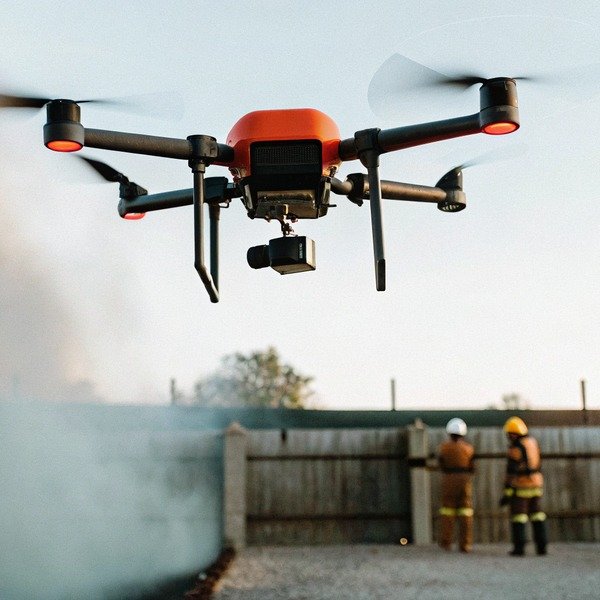
Seeing a drone fail mid-mission over a blaze is a nightmare scenario we work tirelessly to prevent during our rigorous factory testing phases.
To accurately assess motor lifespan, you must ask suppliers for Mean Time Between Failures (MTBF) data specifically tested under high-temperature and maximum payload conditions. Additionally, verify the specific bearing ratings for dust ingress and inquire about the magnet’s demagnetization threshold to ensure reliability in extreme heat.
Here is how you can dig deeper into the technical specifications to ensure you are buying a reliable tool.
What specific testing data should I request to verify the motor's durability claims?
When we compile technical documentation for our export clients, we often notice that standard datasheets fail to capture the reality of fireground operations. fireground operations 1
You should request raw validation reports showing continuous operation logs at maximum throttle while exposed to temperatures above 50°C. Also, ask for comparative charts demonstrating efficiency losses over time to identify potential early-onset fatigue in the windings or bearings before total failure occurs.

Moving Beyond the Marketing Brochure
In the industrial drone market, a simple "lifespan" number, such as 10,000 hours, is often misleading. industrial drone market 2 This figure usually represents ideal conditions in a clean, room-temperature laboratory with no payload. However, firefighting requires carrying heavy retardant or hoses, which pushes motors to their limits.
To get the truth, you need to ask for the "Derating Curve." This document shows how the motor performs as conditions get worse. A motor that is 90% efficient at 25°C might drop to 60% efficiency at 60°C. This drop means the motor has to work harder to keep the drone in the air, which drastically shortens its life.
The Importance of Load Testing Data
Firefighting drones are rarely empty. They carry heavy payloads like cameras, water tanks, or drop mechanisms. Weight creates stress. When we test motors, we apply a "torque load" that simulates these heavy weights.
You should ask the supplier for "Full-Load Endurance Data." If they only provide hover data with no payload, it is a red flag. A motor might spin freely for years, but burn out in minutes when lifting a 10kg payload near a heat source.
Analyzing the Ingress Protection (IP) Reports
Fire scenes are dirty. Soot, ash, and water spray are everywhere. An IP rating on a sticker is not enough. IP rating 3 You need to see the test report. Specifically, look for the "Solid Particle Protection" test results.
If a motor claims IP55, it means it is protected against dust and low-pressure water jets. However, ash is finer and more abrasive than standard test dust. Ask if they have tested the motor with conductive particles. Carbon fiber dust or conductive soot can enter the motor and cause short circuits if the internal windings are not properly coated.
Key Data Requests Table
Use this table to guide your conversation with the supplier’s engineering team.
| Data Type | What to Ask For | The "Red Flag" Answer |
|---|---|---|
| MTBF Source | "Is this MTBF calculated under full payload at 40°C+?" | "It is the standard industry rating for this bearing size." |
| Thermal Efficiency | "Can I see the efficiency curve graph at 60°C operating temp?" | "The motor is rated for up to 80°C." (Without data). |
| Ingress Testing | "Do you have a test report for fine particulate ingress?" | "It is sealed, don't worry." |
| Vibration Analysis | "Show me the dynamic balance logs after 100 hours of use." | "We balance them at the factory." |
By demanding these specific documents, you signal that you understand the engineering behind the product. This often motivates suppliers to be more transparent about the true capabilities of their systems.
How do high-temperature environments impact the expected lifespan of the motors?
Our thermal chambers frequently reveal weaknesses in standard components that simply cannot withstand the intense radiant heat of a wildfire or structural fire.
High temperatures drastically reduce lubricant viscosity in bearings and can permanently demagnetize standard rotor magnets, leading to sudden loss of lift. You need to confirm the motors use high-temperature N52H or N54H magnets and heat-resistant bearing grease to prevent catastrophic failure mid-flight.

The Physics of Heat and Motor Failure
Heat is the enemy of electronics, but for motors, it is a physical destroyer. In our R&D center, we see three main failure points when the ambient temperature rises.
First, the bearings. Inside the bearing, there is grease that keeps the metal balls rolling smoothly. At high temperatures (often found near fires), standard grease becomes liquid and leaks out. standard grease 4 Once the grease is gone, metal rubs against metal. This creates friction, which creates more heat, leading to a seized motor.
Second, the insulation. The copper wires inside the motor are coated with a thin layer of varnish/enamel to prevent short circuits. If the motor gets too hot, this varnish melts or becomes brittle and cracks. Once the copper touches the steel core (stator), the motor shorts out and stops instantly.
Magnet Demagnetization: The Silent Killer
This is a critical technical detail many buyers miss. Motors use strong magnets to spin. Every magnet has a "Curie Temperature." This is the point where the magnet loses its magnetic force permanently. Curie Temperature 5
For standard magnets, this can happen at around 80°C (176°F). Near a fire, the air temperature plus the internal heat of the working motor can easily reach this limit. If the magnets lose strength, the motor loses power. The flight controller will try to compensate by spinning the motor faster, which creates even more heat, causing a rapid downward spiral until the drone crashes.
Selecting the Right Materials
When negotiating, specific material codes matter. You do not just want "good motors." You want specific grades.
- Magnets: Ask for "H" series magnets (like N52H or N45SH). N52H or N45SH 6 The 'H' stands for high temperature, often rated up to 120°C or higher.
- Wire Insulation: Ask for Class H or Class C insulation. Class H or Class C 7 Class H is rated for 180°C. Standard consumer drones often use Class B (130°C), which is risky for firefighting.
Temperature Impact Table
Here is how heat directly correlates to component risk.
| Temperature (Internal) | Effect on Standard Motor | Effect on Firefighting Motor (High Spec) |
|---|---|---|
| 40°C – 60°C | Efficiency drops slightly. | Operates at peak efficiency. |
| 60°C – 80°C | Grease thins; risk of magnet weakening. | No noticeable degradation. |
| 80°C – 100°C | CRITICAL: Permanent demagnetization likely. Varnish softens. | Efficiency drops, but flight remains stable. |
| 100°C+ | Catastrophic failure (Short circuit or seizure). | Limit of safe operation; requires cool down. |
Understanding these thresholds helps you set safe operational limits for your team and ensures you buy hardware that survives the job.
What are the recommended maintenance intervals for heavy-duty firefighting drone motors?
We always advise our partners that purchasing the drone is merely the beginning of the operational lifecycle, especially given the harsh conditions of fire scenes.
For firefighting drones, you should check bearing smoothness and shaft play every 50 flight hours and plan for complete motor replacement every 300 to 500 hours. The ingestion of abrasive ash and corrosive chemicals significantly shortens the lifespan compared to the standard 1,000-hour industrial benchmark.

The "Sandpaper Effect" of Ash
In agricultural or delivery drones, dust is a nuisance. In firefighting, ash is an abrasive weapon. Ash particles are jagged and hard. When they get inside a motor bell, they act like sandpaper.
Even if a motor is sealed, the microscopic gap between the rotating bell and the stationary base can allow fine particles in. Over time, this grinds down the protective coating on the stator and wears out the bearings much faster than normal dust. This is why the "factory standard" maintenance schedule is useless for you. You need a "severe duty" schedule.
Essential Pre-Flight and Post-Flight Checks
You cannot rely on annual service. Your team needs to perform checks after every major fire operation.
- The Spin Test: With the drone off, flick the propeller. It should spin silently and come to a gradual stop. If it stops abruptly or makes a "gritty" sound, the bearings are contaminated.
- The Wiggle Test: Grab the motor bell and try to wiggle it side-to-side. There should be zero play. If it clicks or moves, the shaft or bearings are worn.
- Visual Inspection: Look for discoloration on the copper windings. Dark or black spots indicate overheating (burnt varnish).
Chemical Corrosion Risks
Firefighting often involves chemicals, such as ammonium phosphate found in fire retardants or various foam concentrates. ammonium phosphate 8 These substances are highly corrosive to aluminum and copper.
If your drone flies through a mist of retardant, that chemical settles on the motor. If not cleaned immediately, it will eat through the motor casing and wiring insulation. We recommend asking suppliers if their motors have an additional anti-corrosion coating (like conformal coating) on the PCB and stator. conformal coating 9
Maintenance Schedule Comparison
This table highlights the difference between standard use and fire use.
| Maintenance Task | Standard Industrial Use | Firefighting / Severe Duty |
|---|---|---|
| Visual Inspection | Every 20 Flight Hours | Pre-flight & Post-flight |
| Bearing Check | Every 100 Flight Hours | Every 50 Flight Hours |
| Deep Cleaning | Every 200 Flight Hours | After every exposure to smoke/chemicals |
| Motor Replacement | 1,000 – 2,000 Hours | 300 – 500 Hours (Preventative) |
By sticking to the Severe Duty schedule, you prevent mid-air failures that could endanger firefighters on the ground or result in the loss of expensive equipment.
Which warranty terms should I negotiate to cover potential motor failures?
Drafting contracts with our distributors has taught us that ambiguity in warranty clauses is the primary cause of disputes after a sale.
Negotiate a warranty that explicitly covers “operational hazards” including heat exposure and particulate ingress, rather than standard terms that void coverage for environmental damage. Ensure the agreement includes a rapid replacement guarantee for parts, preventing your fleet from being grounded during critical fire seasons.

The "Act of God" Trap
Most standard electronics warranties have an exclusion clause for "environmental damage" or "misuse." If you fly a drone into a smoke plume and the motor fails, a standard supplier might say, "You flew it into a fire; that is misuse."
You are buying a firefighting drone. Flying near fire is "normal use," not misuse. You must clarify this in the purchase contract. The warranty should explicitly state that operation within the rated temperature range (e.g., up to 60°C ambient) and in smoky conditions is covered. If they refuse, they do not trust their own product.
Negotiating Spare Parts Availability
A warranty is useless if the replacement part takes six weeks to arrive from China. Fire seasons do not wait for shipping. fire seasons 10
Instead of just asking for a repair warranty, negotiate for a "Service Parts Kit" to be included with the purchase. This kit should contain spare motors and arms. If a failure occurs, your team can swap the part immediately, and the warranty process can handle the reimbursement or replacement of the spare part later. This keeps your drone flying.
Modular Design Provisions
Ask the supplier if the warranty covers self-repair. Many consumer drone companies void the warranty if you unscrew the casing. For professional industrial drones, this is unacceptable.
You need the "Right to Repair." The terms should allow your certified technicians to replace a motor without voiding the warranty on the flight controller or battery. This is vital for maintaining a fleet efficiently.
Questions for the Legal/Sales Team
Before signing, ask these direct questions to lock in your protection:
- Definition of Abuse: "Does flying through thick smoke constitute 'abuse' under your terms?"
- Turnaround Time: "If a motor fails under warranty, do you guarantee shipment of a replacement within 48 hours?"
- Labor Costs: "Does the warranty cover only the part, or also the labor required to install it?" (Usually, it is just the part, but it is worth asking).
- Batch Failures: "If three motors fail in one month, do you replace the entire set?"
Securing these terms upfront turns a supplier into a partner, rather than just a vendor. It ensures they are financially invested in the reliability of your equipment.
Conclusion
Asking the right questions about testing data, heat resistance, maintenance intervals, and warranty terms is the only way to ensure your firefighting drones are mission-ready. Do not settle for generic specs; demand proof of durability to protect your investment and your team.
Footnotes
1. NIST conducts research on fireground operations and the performance of technology in extreme fire environments. ↩︎
2. FAA oversight of the industrial drone market ensures safety and operational standards for commercial unmanned aircraft. ↩︎
3. The IEC defines the IP ratings used to measure protection against dust and water ingress in electronics. ↩︎
4. General background on how temperature affects the viscosity of lubricants in mechanical bearing systems. ↩︎
5. Educational explanation of the Curie Temperature and its effect on magnetic properties in high-heat environments. ↩︎
6. Technical specifications for high-temperature neodymium magnet grades used in industrial-grade drone motors. ↩︎
7. IEEE standards cover electrical insulation classes for motors and electronic components in industrial applications. ↩︎
8. Information on the chemical properties and corrosive nature of ammonium phosphate used in firefighting retardants. ↩︎
9. Background on how conformal coating protects electronic circuits from moisture, dust, and chemical corrosion. ↩︎
10. News coverage of intensifying global fire seasons and the increasing demand for advanced firefighting technology. ↩︎

 English
  Español de México
  Deutsch
  Français
  Русский
  العربية
