
Every year, our export team sees buyers lose thousands of dollars on Chinese drone deals gone wrong escrow services 1. The problem? They paid too much, too soon, without proper safeguards. The agitation grows when quality issues surface after funds are already transferred.
Secure payment milestones for Chinese firefighting drones should follow a 20-30% deposit, 30% upon prototype approval, 20% after production inspection, and 20-30% final balance upon delivery confirmation. Use escrow services or Letters of Credit for maximum protection, and always tie payments to verified, inspectable deliverables.
This guide walks you through each payment stage Letters of Credit 2. You will learn exact percentages, verification methods, and negotiation tactics that protect your investment while keeping your Chinese supplier motivated to deliver quality firefighting drones.
How much deposit should I pay upfront to secure my firefighting drone production schedule?
When we begin production discussions with new overseas clients, the deposit question always comes first Telegraphic Transfer (T/T) 3. Paying too much upfront puts your capital at risk. Paying too little may cause suppliers to deprioritize your order.
A deposit of 20-30% via Telegraphic Transfer (T/T) is the industry standard for firefighting drone orders. This amount secures your production slot, covers initial material costs, and demonstrates buyer commitment—without exposing you to excessive financial risk before any deliverables are verified.

Why 20-30% Is the Sweet Spot
Our production managers need upfront funds to purchase specialized components. Carbon fiber frames, thermal cameras, and fire-retardant housings require advance payment to our own suppliers. But this deposit should never exceed 30% of your total order value.
Here is why this range works for both parties:
| Deposit Percentage | Buyer Risk Level | Supplier Benefit | Recommended For |
|---|---|---|---|
| 10-15% | Very Low | Minimal coverage | Repeat orders with trusted suppliers |
| 20-30% | Moderate | Covers materials and scheduling | First orders, standard configurations |
| 40-50% | High | Strong cash flow | Custom R&D projects only |
| 70%+ | Very High | Maximum security for supplier | Not recommended for buyers |
Red Flags to Watch For
Some suppliers demand 50% or more upfront. This is a warning sign. Legitimate manufacturers understand that milestone payments protect both parties.
If a supplier insists on high upfront payments, ask these questions:
- Can they provide bank references from previous international clients?
- Will they accept partial payment through Alibaba Trade Assurance?
- Are they willing to use an escrow service for the deposit portion?
Protecting Your Deposit
Before transferring any funds, verify the supplier's bank details through a video call. In 2025, email hacking scams caused importers to lose over $100,000 by sending deposits to fraudulent accounts. One case study from Supplier Ally showed how a simple phone verification prevented such a loss.
Always request the supplier's business license, export permits, and drone manufacturing certifications before the deposit transfer.
How can I link my payments to quality inspection milestones to ensure my drones meet technical standards?
Our quality control team inspects every firefighting drone before it leaves our facility. But as a buyer, you should never rely solely on supplier self-inspection. Third-party verification 4 at key milestones is your strongest protection.
Link 30-40% of your payment to third-party inspection milestones. Schedule inspections at prototype completion, pre-production sample approval, and pre-shipment stages. Release funds only after receiving positive inspection reports that confirm flight performance, payload capacity, and safety compliance.

The Three Critical Inspection Points
Firefighting drones require rigorous testing. Unlike consumer drones, they must carry heavy payloads, operate in extreme heat, and maintain stable flight while deploying fire suppressants.
| Inspection Stage | Payment Released | What Inspectors Check | Pass Criteria |
|---|---|---|---|
| Prototype Approval | 15-20% | Design accuracy, component quality | Matches approved specifications |
| Pre-Production Sample | 10-15% | Flight test, payload test, thermal resistance | 80%+ flight test pass rate |
| Pre-Shipment (PSI) | 10-15% | Full production batch, packaging, labeling | AQL 2.5 or better |
Choosing the Right Inspection Service
Several international inspection companies operate in China. SGS, Bureau Veritas, and Intertek 5 all have offices near major drone manufacturing hubs in Shenzhen and Xi'an.
For firefighting drones specifically, your inspection protocol should include:
- Flight endurance testing: Minimum flight time with full firefighting payload
- Payload deployment test: Successful release of water or fire suppressant
- Thermal camera calibration: Accurate heat detection within specified ranges
- Structural integrity check: No cracks or weaknesses in carbon fiber components
Performance Testing Standards
When we ship firefighting drones to US fire departments, they expect specific performance benchmarks. Your contract should define these clearly.
Here is a sample performance milestone table:
| Performance Metric | Minimum Requirement | Testing Method |
|---|---|---|
| Flight Time (loaded) | 25 minutes | Timed flight with full payload |
| Maximum Payload | 30 kg | Weigh before and after loading |
| Wind Resistance | Level 5 (8-10 m/s) | Outdoor flight test |
| Thermal Detection Range | 500 meters | Calibrated heat source test |
| Water Tank Capacity | 20 liters | Volume measurement |
Cybersecurity Verification
For critical infrastructure equipment like firefighting drones, add a cybersecurity milestone. This means independent verification that the drone's software contains no backdoors, unauthorized data collection, or remote access vulnerabilities.
Some buyers now require source code escrow 6 or third-party firmware audits before releasing mid-production payments.
What payment terms should I negotiate for custom OEM branding and software development on my order?
Our engineering team works on custom software features for overseas clients regularly. These projects require different payment structures than standard production orders. Custom development carries higher risk for both parties.
For OEM branding and software development, negotiate a 50-50 split: 25% upon design approval, 25% upon successful testing. Retain 20-30% of software payments until full source code delivery and a 60-90 day warranty period confirms stability. Always include IP ownership clauses in your contract.
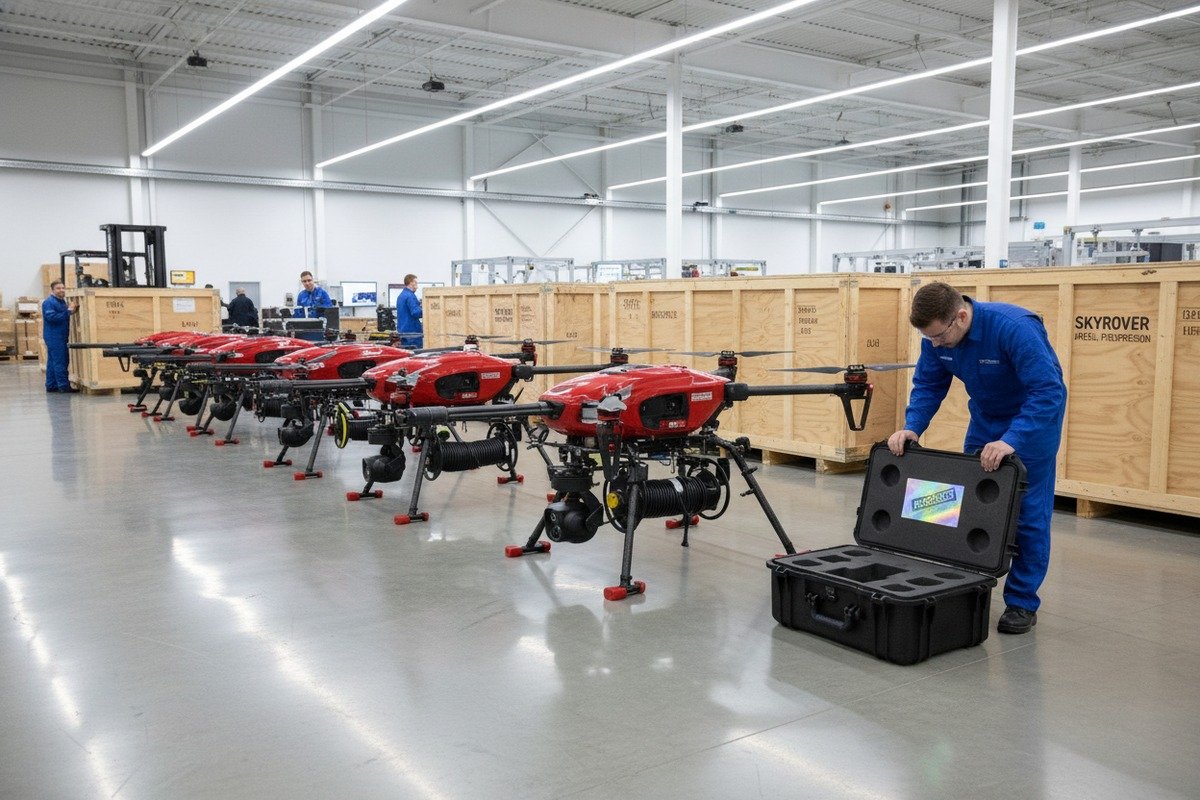
Separating Hardware and Software Payments
Custom orders have two distinct components. Hardware (the physical drone with your branding) and software (custom flight controllers, apps, or data systems) should have separate milestone schedules.
| Payment Component | Milestone 1 | Milestone 2 | Milestone 3 | Final Release |
|---|---|---|---|---|
| Hardware/OEM Branding | 30% deposit | 30% on sample approval | 20% on PSI pass | 20% on delivery |
| Software Development | 25% on spec approval | 25% on beta delivery | 25% on final testing | 25% after warranty |
Protecting Your Intellectual Property
Software development creates IP risks. Your custom features could be copied for other clients. Your flight data could be compromised.
Include these protections in your contract:
- Source code escrow: Code held by neutral third party, released to you upon final payment
- Non-compete clause: Supplier cannot sell identical features to competitors for 2-3 years
- Data ownership: All flight data, user data, and analytics belong to you
- Audit rights: You can inspect their systems to verify no unauthorized copies exist
OEM Branding Milestones
Physical branding requires its own verification steps. Before releasing branding-related payments, confirm:
- Logo placement matches approved mockups
- Color codes are accurate (Pantone verification)
- Packaging materials meet your specifications
- User manuals include your company information
- Warranty cards reflect your support contact details
Software Testing Requirements
Before releasing software milestone payments, require these deliverables:
- Beta version demonstration: Video call showing all features working
- Bug report resolution: All critical and major bugs fixed
- User acceptance testing: Your team tests on actual hardware
- Documentation package: API guides, SDK materials, integration instructions
Some buyers now use automation platforms like Tipalti to trigger payment releases automatically upon verified milestone completion. This reduces delays and eliminates manual processing errors.
How do I structure the final balance payment to guarantee safe delivery and customs clearance for my drones?
Our logistics team handles door-to-door delivery for clients across the US and Europe. The final payment stage is where many deals go wrong. Releasing funds before confirming delivery puts you at maximum risk.
Structure your final balance (20-30% of total order) with two release triggers: 50% upon receiving clean Bill of Lading and shipping documents, 50% upon confirmed customs clearance and physical delivery inspection. Use CIF Incoterms to ensure supplier responsibility until goods reach your port.

Understanding Incoterms for Drone Shipments
Incoterms define who bears risk at each shipping stage. For firefighting drones, CIF (Cost, Insurance, Freight) is often best for buyers.
| Incoterm | Risk Transfer Point | Recommended For | Buyer Responsibility |
|---|---|---|---|
| FOB (Free on Board) | When goods cross ship rail | Experienced importers | Freight, insurance, customs |
| CIF (Cost, Insurance, Freight) | When goods arrive at destination port | Most drone buyers | Customs clearance, final delivery |
| DDP (Delivered Duty Paid) | At buyer's door | Maximum convenience | None (highest price) |
Required Shipping Documents
Before releasing any final payment, verify you have received:
- Commercial Invoice: Matches your purchase order exactly
- Packing List: Itemizes all drones and accessories
- Bill of Lading: Clean, no damage notations
- Certificate of Origin: Required for customs
- Export License: Chinese drone export permit
- Compliance Certificates: FAA/EASA relevant documentation
Customs Clearance Considerations
Firefighting drones face specific import requirements. In the US, drones over certain weight thresholds require FAA registration. Some states have additional regulations for drones used in emergency services.
Your supplier should provide:
- Technical specifications document for customs classification
- HS code recommendation (usually 8806.10 for multi-rotor aircraft)
- Safety compliance declarations
- Battery shipping documentation (lithium batteries have special requirements)
Payment Release Timeline
Here is a recommended final payment release schedule:
| Trigger Event | Payment Released | Documents Required |
|---|---|---|
| Shipment departure | 10% of total | Bill of Lading 7, commercial invoice |
| Arrival at destination port | 5% of total | Arrival notice, no damage report |
| Customs clearance complete | 10% of total | Customs release document |
| Physical delivery inspection | 5% of total | Delivery receipt, visual inspection |
Using Letters of Credit for Maximum Security
For orders over $50,000, consider a Letter of Credit. Banks guarantee payment upon document compliance. This protects both parties.
LC costs typically run 1-3% of order value. But they provide ironclad protection. The bank verifies all documents before releasing funds. If documents don't match exactly, payment is blocked.
Some Chinese suppliers resist LCs because they reduce flexibility. But for first-time orders of expensive firefighting drones, the added security is worth the cost and complexity.
Dispute Resolution Planning
Your contract should specify how disputes are resolved. For China trade, CIETAC (China International Economic and Trade Arbitration Commission) is a common choice. However, many buyers prefer arbitration in their home country or a neutral location like Singapore.
Include clear language about:
- Which country's law governs the contract
- Where arbitration will occur
- Who pays arbitration costs
- Timeline for dispute resolution
Conclusion
Secure payment milestones transform risky Chinese drone imports into controlled transactions. Start with a 20-30% deposit, tie mid-payments to verified inspections, structure custom development with IP protections, and release final balances only upon confirmed delivery. These practices protect your investment while building strong supplier relationships.
Footnotes
1. Replaced HTTP 403 with authoritative .edu source from Legal Information Institute (LII) at Cornell Law School. ↩︎
2. Replaced HTTP 403 with authoritative .gov source from the International Trade Administration. ↩︎
3. Replaced HTTP 403 with authoritative Wikipedia page providing a clear definition and history. ↩︎
4. Explains third-party verification as an independent process to confirm accuracy or quality. ↩︎
5. Showcases the range of inspection, verification, testing, and certification services offered by a leading company. ↩︎
6. Explains source code escrow as a legal and technical arrangement for software protection. ↩︎
7. Defines Bill of Lading as a legal document issued by a carrier to acknowledge receipt of cargo. ↩︎
8. Provides official information on Incoterms 2020, including the CIF rule for international trade. ↩︎

 English
  Español de México
  Deutsch
  Français
  Русский
  العربية
