
When our engineering team designed the training modules for our agricultural hexacopters 1, we discovered a common frustration among buyers. Many procurement managers 2 struggle to get proper technical support after purchasing drones from overseas suppliers. This creates costly downtime and operational failures in the field.
To request supplier training for your agricultural drone team, contact manufacturers directly with a detailed training requirements document specifying your team size, skill levels, preferred format (online or on-site), and specific modules needed such as maintenance, software configuration, and regulatory compliance certifications.
This guide walks you through exactly how to structure your training request, what modules to prioritize, and how to evaluate whether a manufacturer can truly support your team long-term.
How can I request a customized technical training plan for my agricultural drone team?
Our support team receives training requests weekly from distributors across the US and Europe preventive maintenance procedures 3. Most requests lack the details we need to build an effective program. Without clear information about your team's current skills and operational goals, even the best supplier cannot deliver useful training vegetation indices like NDVI 4.
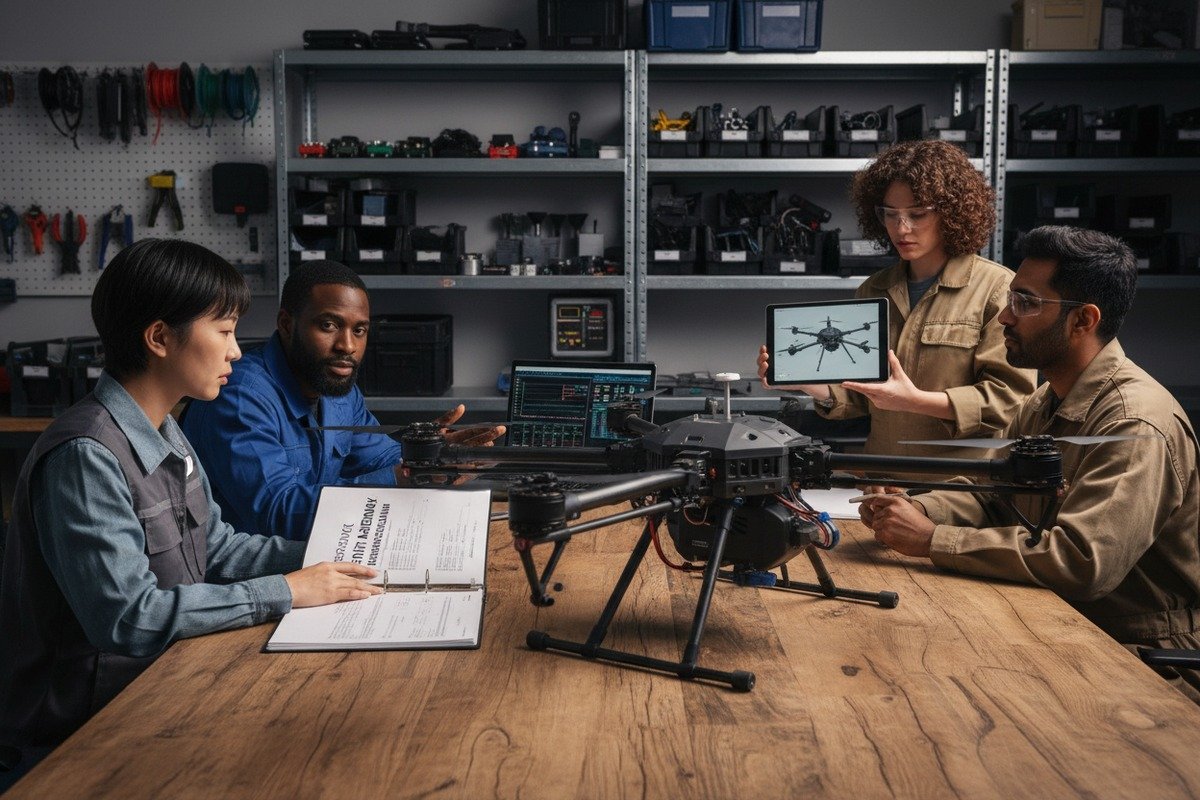
Request a customized training plan by submitting a formal document to your supplier that includes team profiles, current certification status, target applications, equipment inventory, preferred training timeline, and specific learning objectives for each team member.
Start with a Team Assessment
Before contacting any supplier, conduct an internal skills audit. Identify which team members hold FAA Part 107 certification 5. Note who has experience with mission planning software. Record any previous drone maintenance training.
This information helps suppliers design training that matches your actual needs. Generic training wastes time and money.
Build Your Training Requirements Document
A strong request document includes these sections:
| Section | What to Include | Why It Matters |
|---|---|---|
| Team Profile | Number of technicians, current certifications, experience levels | Helps supplier size the program correctly |
| Equipment List | Drone models owned or planned, software platforms used | Ensures training covers your actual hardware |
| Application Focus | Crop types, spray operations, mapping missions | Allows customization for your use cases |
| Timeline | Preferred dates, duration limits, seasonal constraints | Prevents scheduling conflicts with field operations |
| Budget Range | Maximum investment, cost breakdown needs | Sets realistic expectations for both parties |
| Success Metrics | Skills to demonstrate, certification goals | Creates measurable training outcomes |
Choose Your Communication Channel
Email remains the preferred method for formal training requests. Include your requirements document as an attachment. Follow up with a video call to discuss details.
At our facility, we typically schedule a discovery call within 48 hours of receiving a detailed request. This call clarifies any ambiguities before we draft a custom training proposal.
Request a Sample Curriculum
Ask suppliers to provide a draft curriculum before committing. A reputable manufacturer will share learning objectives, session outlines, and assessment criteria. This transparency indicates they have established training processes.
Compare sample curricula from multiple suppliers. Look for specificity rather than vague promises.
What specific maintenance and software modules should I include in my supplier training request?
When we ship our hexacopter units to distributors, we always emphasize that proper maintenance training reduces warranty claims by over 60 percent. Yet many buyers focus only on flight operations and neglect the technical knowledge that prevents expensive failures.
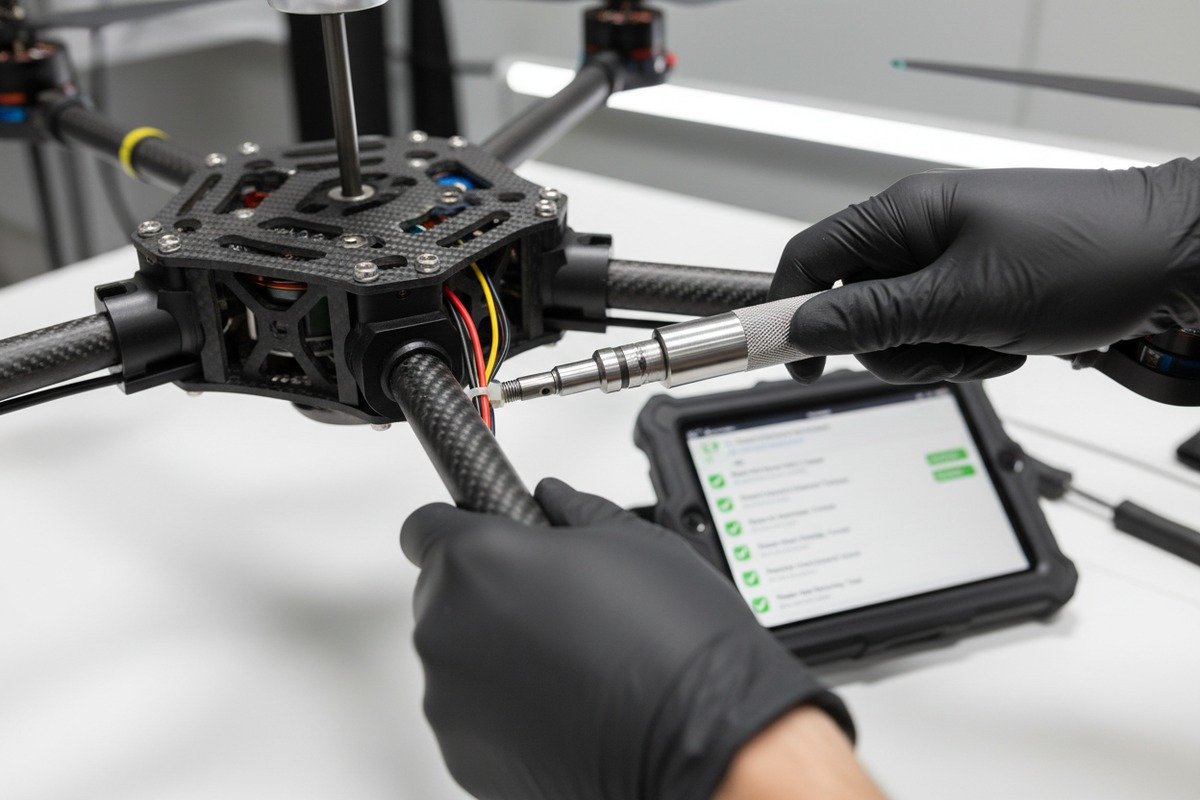
Include these core modules in your training request: preventive maintenance procedures, battery management and safety, motor and propeller inspection, flight controller calibration, mission planning software operation, data interpretation basics, and firmware update protocols.
Essential Maintenance Modules
Your maintenance training should cover daily, weekly, and seasonal procedures. Technicians must know what to inspect before every flight. They need skills to identify wear patterns that predict failures.
| Maintenance Module | Skills Covered | Recommended Duration |
|---|---|---|
| Daily Pre-flight Checks | Visual inspection, connection verification, sensor calibration | 2 hours |
| Battery Management | Charging protocols, storage procedures, health monitoring, safety handling | 4 hours |
| Motor and Propeller Service | Balance testing, bearing inspection, replacement procedures | 3 hours |
| Frame and Wiring | Structural integrity checks, connector maintenance, vibration analysis | 2 hours |
| Spray System Maintenance | Nozzle cleaning, pump inspection, tank flushing, calibration | 4 hours |
| Troubleshooting Protocols | Diagnostic procedures, error code interpretation, component isolation | 4 hours |
Critical Software Training Components
Modern agricultural drones rely heavily on software for effective operation. Your team needs competency across multiple platforms.
Mission planning software 6 training should cover route optimization, terrain following configuration, and boundary mapping. Technicians must understand how to adjust parameters for different crop types and field shapes.
Flight controller software requires attention too. Our engineering team has found that many field failures trace back to incorrect parameter settings. Training should include calibration procedures, failsafe configuration, and log analysis.
Data Interpretation Skills
Agricultural drones generate massive amounts of data. Without interpretation skills, this data provides no value.
Request training on multispectral imagery analysis 7. Your team should understand vegetation indices like NDVI. They need to know how drone data integrates with farm management platforms.
Firmware and Updates
Suppliers release firmware updates to fix bugs and add features. firmware update protocols 8 Your team needs protocols for safe update procedures. They should understand how to verify update success and rollback if problems occur.
Include cybersecurity basics in your request. Drone systems store sensitive operational data that requires protection.
Should I prioritize on-site factory training or remote video sessions for my drone technicians?
Our training center in Xi'an hosts distributor teams several times each year. We also conduct remote sessions weekly for teams who cannot travel. Both approaches have clear advantages and limitations that depend on your specific situation.
Prioritize on-site factory training for initial certification and hands-on maintenance skills. Use remote video sessions for software updates, refresher courses, and ongoing troubleshooting support. A hybrid approach combining both formats delivers the best results for most technical teams.

On-Site Factory Training Advantages
Nothing replaces hands-on practice with actual equipment. At our production facility, trainees work with the same drone models they will operate in the field. They access specialized tools and diagnostic equipment.
Factory training allows direct interaction with engineering staff. Technicians can ask detailed questions about design decisions. They see quality control processes firsthand.
On-site programs typically include these unique elements:
- Live disassembly and reassembly practice
- Access to engineering documentation
- Real-time troubleshooting with expert guidance
- Exposure to latest product developments
- Networking with other distributor teams
Remote Training Advantages
Remote sessions eliminate travel costs and scheduling complexity. Your team stays productive between sessions. Training can spread across multiple short sessions rather than intensive multi-day blocks.
Video-based training works well for theoretical content. Software demonstrations translate effectively to remote formats. Screen sharing enables precise instruction on configuration procedures.
Decision Framework
Use this comparison to guide your decision:
| Factor | On-Site Recommended | Remote Recommended |
|---|---|---|
| Team Experience | New to agricultural drones | Some prior drone experience |
| Training Focus | Maintenance and repair | Software and operations |
| Team Size | 3+ technicians | 1-2 technicians |
| Budget | Higher training budget available | Limited training budget |
| Timeline | Can plan 2-3 months ahead | Immediate training need |
| Equipment Status | Before major equipment purchase | Already operating drones |
The Hybrid Model
Most successful distributor teams use both formats strategically. They send key personnel to factory training initially. These trained individuals then lead local sessions for expanded teams.
Remote sessions provide ongoing support. When new firmware releases, a quick video call ensures proper deployment. When field problems arise, screen sharing enables rapid diagnosis.
Our recommended sequence: Start with 3-5 day on-site intensive training. Follow with monthly remote check-ins during the first operational season. Schedule annual on-site refresher training to cover equipment updates.
Practical Considerations
When planning on-site training, factor in visa requirements, travel time, and accommodation costs. Training at our Xi'an facility typically requires 7-10 days including travel for US-based teams.
For remote sessions, verify technology requirements. Stable internet connections are essential. Teams need access to the equipment being discussed during live sessions.
How do I verify if a manufacturer can provide the long-term engineering support my team needs?
Our export team has worked with distributors who previously suffered from suppliers disappearing after the sale. These buyers learned hard lessons about verifying support capabilities before committing. The damage from inadequate support includes stranded equipment, lost customers, and damaged reputations.
Verify long-term engineering support by requesting documented support procedures, checking references from existing customers, confirming response time commitments in writing, evaluating spare parts availability, and testing the support system with technical questions before purchasing.

Key Verification Steps
Start by requesting the supplier's support documentation. Legitimate manufacturers maintain detailed procedures for handling technical issues. They have ticketing systems, escalation paths, and defined response times.
Ask for customer references specifically regarding support experiences. Contact these references and ask pointed questions about actual support interactions. How quickly did the supplier respond? Did they resolve issues effectively?
Support Capability Indicators
Look for these signs of robust support infrastructure:
| Indicator | What to Look For | Red Flag |
|---|---|---|
| Response Time | Documented SLA with specific hours | Vague promises without commitments |
| Communication Channels | Multiple options (email, phone, video, messaging) | Single contact method only |
| Technical Staff | Dedicated support engineers with product expertise | Sales staff handling technical questions |
| Documentation | Comprehensive manuals, troubleshooting guides, training videos | Minimal or outdated materials |
| Spare Parts | In-stock inventory with documented lead times | Parts only available on special order |
| Firmware Updates | Regular releases with clear changelogs | No updates after initial release |
| Language Capability | Support available in your language | Communication barriers |
Test Before You Commit
Send technical questions to the supplier before purchasing. Evaluate how they respond. Do they answer promptly and accurately? Do they escalate to appropriate experts when needed?
Request a support demonstration. Ask them to walk you through their troubleshooting process for a hypothetical issue. This reveals their actual capabilities.
Contractual Protections
Negotiate support commitments in your purchase agreement. Specify response times for different issue severities. Define what constitutes adequate resolution.
Include provisions for ongoing training access. Technology evolves rapidly. Your team needs access to updated training materials as products change.
Evaluate Spare Parts Systems
Support means nothing without available parts. Verify the supplier maintains inventory of critical components. Request lead time estimates for common replacement items.
Ask about regional parts stocking. Suppliers serious about international markets often maintain parts inventory in destination countries or regions.
Long-Term Partnership Signals
The best suppliers view distributors as partners rather than transactions. They invest in your success because it drives their growth.
Look for suppliers who offer regular technical updates without additional fees. Check if they provide advance notice of product changes. Evaluate whether they seek your feedback on product improvements.
At our company, we schedule quarterly technical reviews with key distributors. These sessions cover upcoming changes, address accumulated questions, and gather field feedback. This investment strengthens relationships and improves our products.
Conclusion
Securing proper training and support for your agricultural drone team requires deliberate planning and supplier evaluation. Submit detailed requirements documents, include both maintenance and software modules, combine on-site and remote training formats, and verify long-term support capabilities before committing to any supplier relationship.
Footnotes
1. Provides a technical overview of agricultural hexacopter drone design and applications. ↩︎
2. Explains the role, responsibilities, and strategic importance of procurement managers. ↩︎
3. Defines maintenance procedures and outlines steps for creating standard preventive maintenance. ↩︎
4. Provides a comprehensive explanation of the Normalized Difference Vegetation Index (NDVI). ↩︎
5. Official FAA guidance on obtaining and maintaining a Remote Pilot Certificate. ↩︎
6. Provides an overview of drone flight planning software and its capabilities for various missions. ↩︎
7. Explains multispectral imaging and its application in agricultural analysis and crop monitoring. ↩︎
8. Discusses the importance of firmware upgrades, best practices, and over-the-air (OTA) methods, which relate to update protocols. ↩︎

 English
  Español de México
  Deutsch
  Français
  Русский
  العربية
