
Every year, our production lines face the same challenge Chinese New Year shutdown 1. Procurement managers scramble at the last minute, then wonder why their firefighting drones 2 arrive months late. The Chinese New Year shutdown creates chaos for unprepared buyers. This disruption costs time, money, and sometimes lives when fire departments lack critical equipment during peak wildfire season.
To successfully procure firefighting drones from China around Chinese New Year 2026, start planning 3-6 months ahead. Place orders by October-November 2025, confirm shipping by mid-January, and build safety stock to cover the 4-8 week disruption period. Early coordination with suppliers prevents costly delays and quality issues.
In this guide, we will walk through the exact steps to navigate this annual procurement challenge thermal camera calibration 3. You will learn when to order, how to protect quality, and what backup plans to have ready.
When should I place my firefighting drone order to avoid the Chinese New Year production shutdown?
Our factory floor transforms completely in the weeks before Spring Festival Section 301 Tariffs 4. Workers prepare to travel home, production schedules compress, and every manufacturer rushes to fulfill year-end orders. Miss the window, and your firefighting drone order sits idle for over a month FAA Registration 5.
Place your firefighting drone order by late October to early November 2025 to avoid Chinese New Year disruptions. This gives suppliers 8-12 weeks for production, quality testing, and shipping before factories close around February 9, 2026. Orders placed after December often face significant delays extending into April.
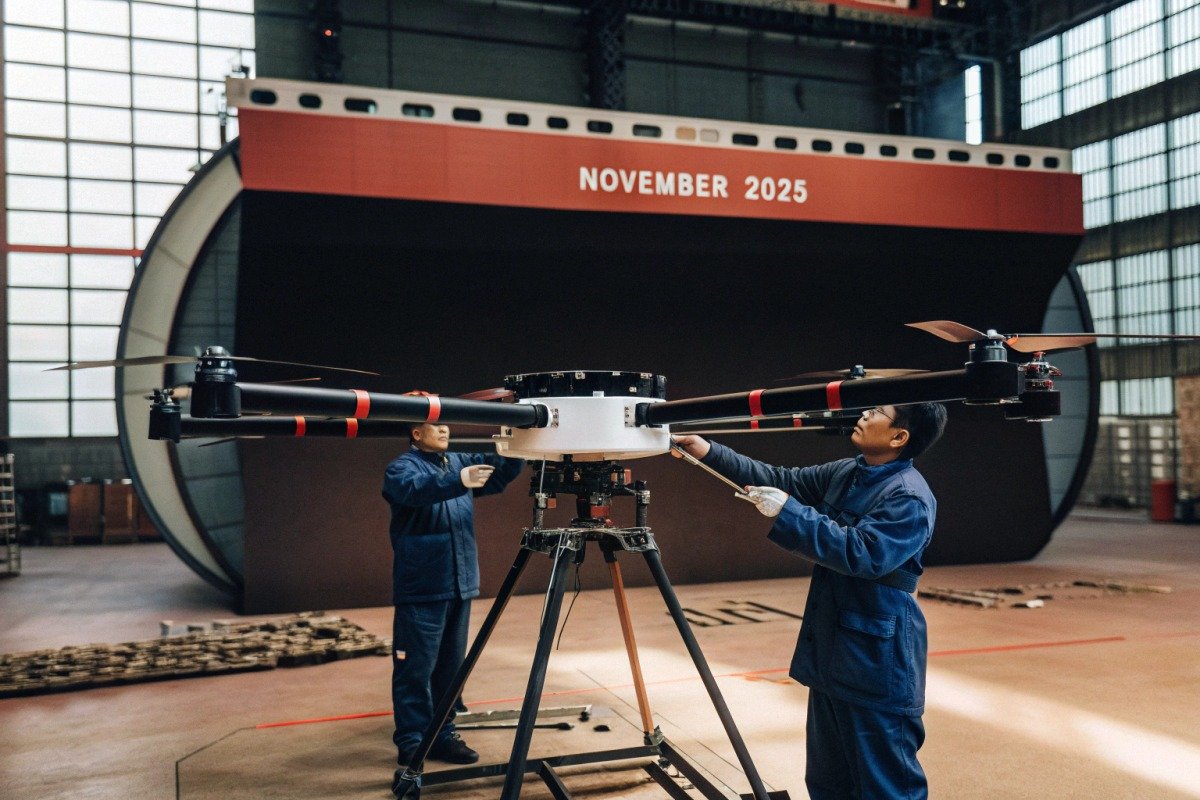
Understanding the 2026 CNY Timeline
Chinese New Year 2026 begins on February 17, which is a Tuesday CE Marking 6. But the real impact starts much earlier and lasts longer than most buyers expect.
The shutdown follows this pattern:
- February 9: Many workers begin leaving factories
- February 17: Official holiday starts (new moon day)
- February 17-23: Government public holiday period
- March 3: Lantern Festival 7 marks the cultural end
- March 10-15: Full production typically resumes
This means a total disruption window of 4-6 weeks when you count reduced output before and ramp-up delays after spare parts inventory 8.
Critical Order Deadlines
| Order Stage | Recommended Deadline | Risk Level if Missed |
|---|---|---|
| Supplier selection | September 2025 | Medium – fewer options available |
| Sample approval | October 15, 2025 | High – no time for revisions |
| Bulk order placement | November 15, 2025 | Critical – production slots fill |
| 30% deposit payment | November 30, 2025 | Critical – order won't start |
| Final payment & shipping | January 15, 2026 | Critical – misses pre-CNY window |
| Latest air freight cutoff | February 5, 2026 | Emergency option only |
Why Earlier Is Always Better
When we review our export records, a clear pattern emerges. Customers who order in Q4 receive priority production slots. They also benefit from year-end pricing incentives of 10-20% off standard rates. Suppliers want to clear inventory and meet annual targets.
Orders placed in December face different conditions. Production lines are crowded. Quality inspectors work overtime. Shipping lanes fill quickly. A customer might secure a production slot, but expedited timelines increase error risks.
The Post-CNY Reality
Many buyers think they can simply wait until March. This strategy fails for several reasons.
First, workers return slowly. Some change jobs. Training new staff takes time. Our experience shows full production capacity returns only by mid-March at earliest.
Second, a massive order backlog forms. Every delayed order from January and February competes for the same slots. Lead times stretch to 8-12 weeks for custom firefighting modifications.
Third, shipping costs spike. Vessels that sat idle must catch up. Port congestion at Shanghai and Shenzhen creates additional delays. What normally takes 30-45 days by sea can extend to 60-70 days.
How can I ensure my drone's durability and performance aren't compromised by the pre-holiday rush?
Our quality control team faces intense pressure every December and January. Orders flood in, production accelerates, and the temptation to cut corners grows. We have seen competitors ship substandard units that fail during critical firefighting operations. Your procurement strategy must include quality safeguards.
Protect firefighting drone quality during pre-CNY rushes by scheduling third-party inspections, requesting factory test reports, and building extra time for revisions. Specify quality standards in your contract, including thermal camera calibration, payload capacity testing, and flight endurance verification before shipment approval.
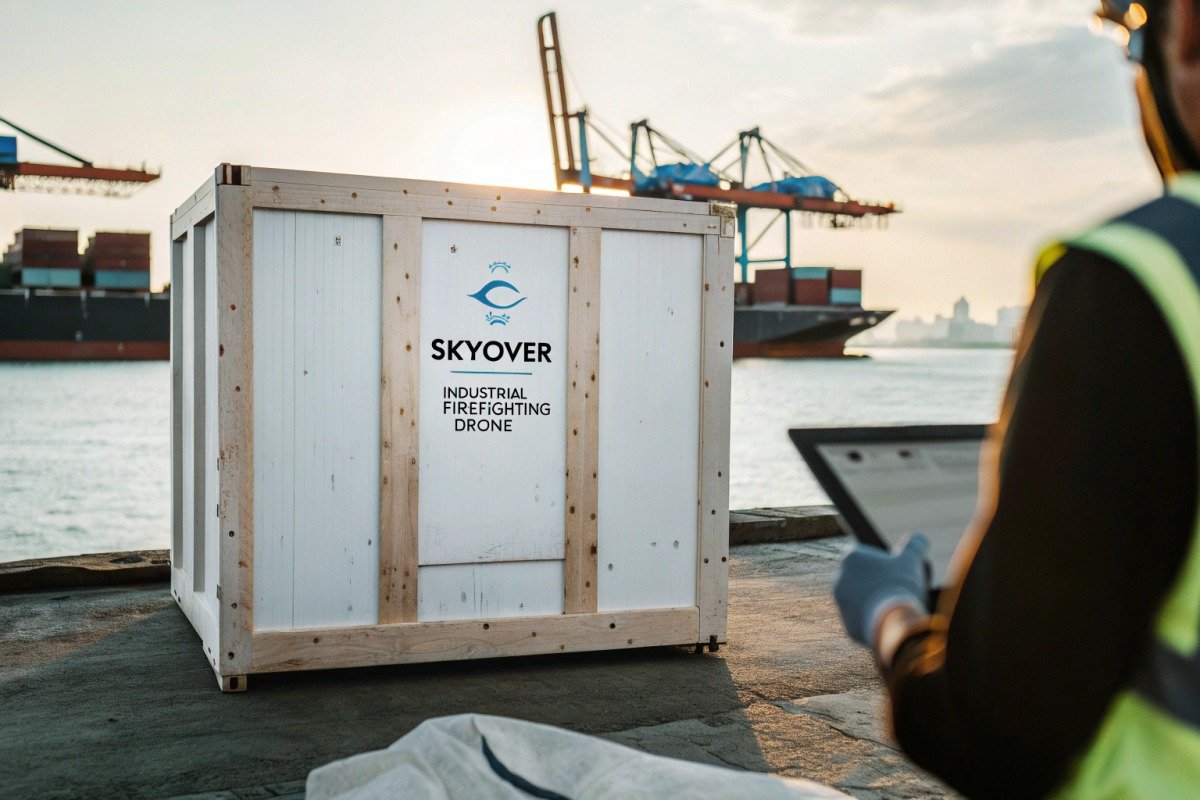
Common Quality Issues During Rush Periods
The pre-holiday period introduces specific risks that affect firefighting drone performance:
Component Substitutions: When primary suppliers run low on parts, some factories substitute lower-grade alternatives. Motor bearings, battery cells, and flight controller chips may differ from specifications.
Reduced Testing Time: Full flight testing normally takes 3-5 days per batch. Under time pressure, this shrinks to cursory checks. Problems with thermal imaging calibration or water payload release mechanisms go undetected.
Assembly Errors: Fatigued workers make mistakes. Wiring connections may be loose. Propeller mounting bolts may lack proper torque. These issues cause failures exactly when firefighters need reliability most.
Building Quality Into Your Contract
Your purchase agreement should specify inspection rights and acceptance criteria:
| Quality Checkpoint | Specification | Verification Method |
|---|---|---|
| Flight endurance | Minimum 45 minutes with payload | Logged test flight |
| Thermal camera accuracy | ±2°C at 100m distance | Calibration certificate |
| Water tank capacity | 20L minimum, leak-free | Filled weight test |
| Motor performance | 6000 RPM sustained | Bench test report |
| Controller response | <50ms latency | System diagnostic |
| Battery cycles | 500+ charge cycles rated | Manufacturer datasheet |
Third-Party Inspection Options
When our engineers finish production, we welcome external verification. Reputable inspection agencies include:
- SGS: Global leader with offices throughout China
- Bureau Veritas: Strong in industrial equipment certification
- Intertek: Good for electronics and battery testing
- TÜV Rheinland: Excellent for EU-bound equipment
Budget approximately $300-800 per inspection visit. Schedule at least two inspections: one during production (40% completion) and one before shipping (100% completion).
Pre-Shipment Testing Protocol
Request these specific tests before approving shipment:
- Hover stability test: 10-minute hover with full payload
- Thermal imaging verification: Detect 50°C heat source at 200m
- Payload release function: Multiple cycles of water/foam discharge
- Return-to-home accuracy: Landing within 2m of takeoff point
- Battery stress test: Full discharge cycle with data logging
- Communication range: Maintain control link at maximum rated distance
Handling Defects Discovered Late
Even with precautions, problems sometimes appear during final inspection. Build contingency plans:
Option 1: Accept units with minor issues at reduced price, repair locally after arrival.
Option 2: Ship compliant units immediately, hold defective units for post-CNY repair.
Option 3: Reject entire batch if systemic problems exist, source from backup supplier.
Having a secondary supplier relationship protects you from being forced to accept substandard equipment.
What steps can I take to prevent shipping delays and secure customs clearance before the holiday?
Our shipping department coordinates with freight forwarders year-round, but January tests everyone's limits. Containers become scarce. Vessel schedules shift daily. Customs offices close for extended periods. Without careful logistics planning, your firefighting drones might reach port just as everything shuts down.
Prevent CNY shipping delays by booking freight no later than early January, using air freight for critical orders, and preparing all customs documentation in advance. Work with experienced forwarders who specialize in Chinese exports, and have backup routing options through alternative ports like Ningbo or Qingdao.

Shipping Mode Comparison
Your choice between sea and air freight depends on timing, budget, and order size:
| Factor | Sea Freight | Air Freight |
|---|---|---|
| Transit time (US West Coast) | 18-25 days normal, 30-45 CNY | 5-8 days normal, 7-14 CNY |
| Transit time (EU) | 30-40 days normal, 45-60 CNY | 7-10 days normal, 10-18 CNY |
| Cost per unit (20 drones) | ~$250/unit | ~$800-1200/unit |
| Booking lead time needed | 3-4 weeks pre-CNY | 1-2 weeks pre-CNY |
| Delay risk level | High | Medium |
| Container availability | Scarce in January | Better availability |
Critical Documentation Checklist
Missing paperwork causes customs holds that extend delays by weeks. Prepare these documents before shipping:
Commercial Invoice: Include accurate unit values, HS codes for drones (typically 8806.10), and buyer/seller details.
Packing List: Itemize every component, serial numbers, and package weights/dimensions.
Certificate of Origin: Required for tariff calculations; some buyers need Form A for preferential rates.
Export License: Chinese CAAC registration may be required for certain drone categories.
Battery Safety Documents: UN38.3 test report 9 mandatory for lithium batteries; MSDS sheets recommended.
Technical Specifications: Include for customs classification verification.
Insurance Certificate: Protects against loss/damage during extended transit periods.
US Import Considerations
American buyers face additional requirements:
Section 301 Tariffs: 25% duty applies to most Chinese-origin drones. Budget accordingly or explore legal duty mitigation strategies.
FAA Registration: Commercial drones over 0.55 lbs require registration before operation.
FCC Certification: Radio equipment must meet US emissions standards.
ITAR/EAR Compliance: Certain advanced components may face export control restrictions.
Work with a customs broker experienced in drone imports. They understand classification nuances that affect duty rates and clearance speed.
EU Import Considerations
European buyers navigate different requirements:
CE Marking: Mandatory for EU market; verify manufacturer compliance.
EU Drone Regulations: Class identification labels required under new 2024 rules.
VAT: Typically 19-25% depending on member state.
EASA Certification: May be required for certain commercial operations.
Backup Routing Strategies
When Shanghai and Shenzhen become congested, alternative options include:
- Ningbo Port: Less congested, good for Zhejiang-manufactured goods
- Qingdao Port: Northern option, connects well to Europe
- Hong Kong Transshipment: Adds 2-3 days but may have vessel availability
- Guangzhou Baiyun Airport: Alternative air hub to Shenzhen
Discuss routing flexibility with your forwarder before booking. Having pre-approved alternatives prevents scrambling when primary routes clog.
How do I manage my inventory and technical support requirements while my Chinese supplier is on break?
Our support team receives urgent calls every February from customers who failed to plan ahead. A drone malfunctions during a wildfire response. A critical firmware update is needed. A spare motor fails. But our engineers are celebrating with family, thousands of miles away. Your organization cannot afford these gaps during fire season.
Manage CNY support gaps by stockpiling 3-4 months of spare parts inventory, downloading all technical documentation before the holiday, establishing local service partnerships, and scheduling comprehensive training sessions with your supplier in January. Create emergency contact protocols for truly critical issues.
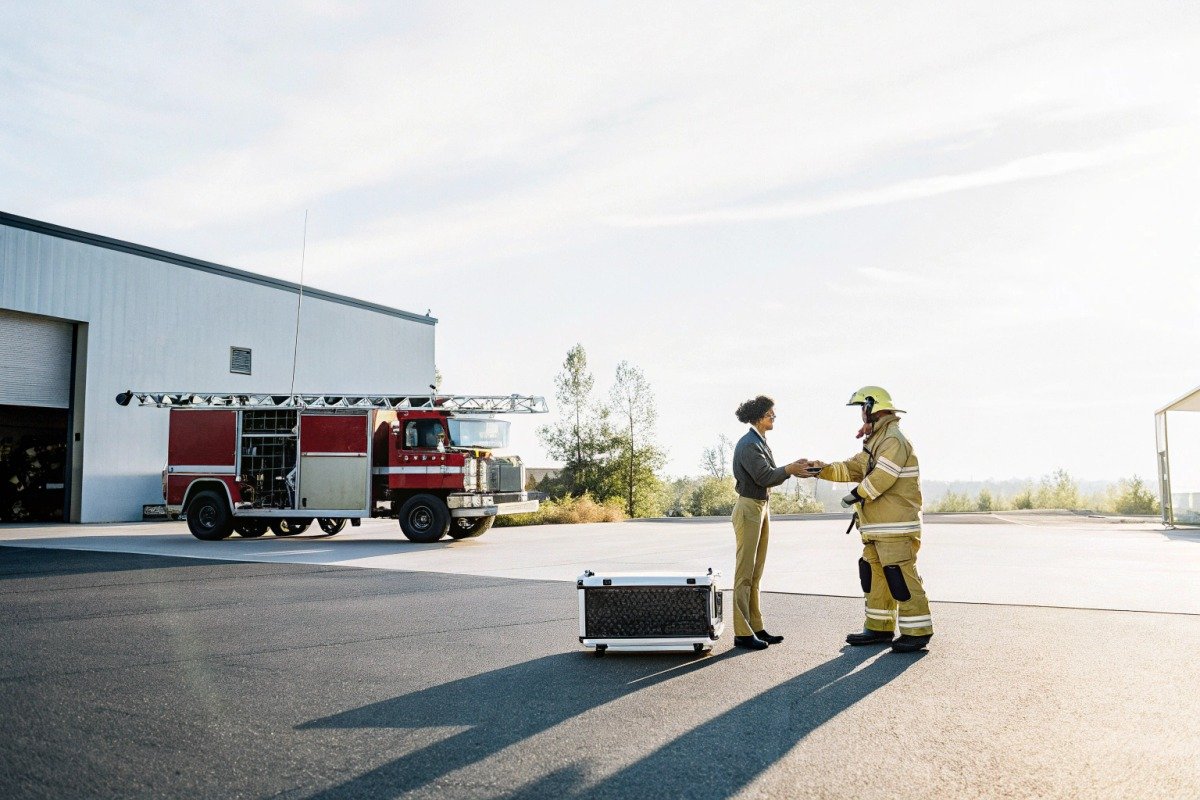
Building Your Safety Stock
Calculate your inventory needs based on usage patterns and acceptable risk levels:
Flight Batteries: High wear item. Stock 2-3 spare sets per drone unit.
Propellers: Frequent replacement during hard use. Stock 10+ sets per drone.
Motors: Occasional failure under heavy payload. Stock 1-2 spares per fleet.
Camera Gimbals: Sensitive to impact damage. Stock 1 spare per 3-5 units.
Flight Controllers: Rare failure but critical. Stock 1-2 per fleet.
Thermal Cameras: Expensive but essential. Consider repair relationship with local service center.
Recommended Spare Parts Inventory
| Component | Minimum Stock Level | Storage Requirements | Typical Lead Time |
|---|---|---|---|
| Batteries | 200% of active fleet | Cool, dry, 40% charge | 4-6 weeks |
| Propeller sets | 500% of active fleet | Any dry storage | 2-3 weeks |
| Motors | 20% of active fleet | Original packaging | 6-8 weeks |
| ESCs | 10% of active fleet | Anti-static bags | 6-8 weeks |
| Landing gear | 30% of active fleet | Protect from UV | 3-4 weeks |
| GPS modules | 10% of active fleet | Moisture protection | 8-10 weeks |
Technical Documentation Archive
Before CNY begins, compile a complete technical library:
- User manuals: All current versions in English
- Maintenance guides: Step-by-step repair procedures
- Wiring diagrams: Electrical system schematics
- Software tools: Firmware update utilities, calibration apps
- Troubleshooting flowcharts: Common issue diagnosis
- Video tutorials: Assembly, repair, and calibration procedures
- Part numbers list: Cross-reference for reordering
Store copies locally. Cloud access may work, but physical backups ensure availability.
Establishing Local Support Networks
Your supplier cannot help during CNY, but others can:
Authorized Service Centers: Some manufacturers maintain US/EU service partners. Identify locations and establish relationships before needing emergency help.
Independent Drone Repair Shops: Many exist in major cities. Vet their capabilities with non-critical repairs first.
Internal Training: Send your technicians for factory training in January. They return with skills to handle common issues independently.
Peer Networks: Connect with other firefighting drone operators. Share experiences and solutions.
Emergency Communication Protocols
For truly critical issues during CNY, establish backup contacts:
Primary: Your main sales contact may check email occasionally
Secondary: Technical manager personal contact (ask permission)
Tertiary: Company WeChat official account for urgent messages
Quaternary: Agent/distributor who may have local staff working
Set expectations clearly. True emergencies may get responses. Routine questions must wait.
Planning for Post-CNY Catch-Up
When suppliers return, they face massive backlogs. Prioritize your needs:
Week 1 post-CNY: Critical safety issues only
Week 2-3: Urgent orders and quality claims
Week 4+: Normal business resumption
Queue your requests by priority. Patient, organized buyers get better service than those who demand everything immediately.
Conclusion
Planning firefighting drone procurement around Chinese New Year requires foresight, organization, and clear communication with suppliers. Start early, protect quality, secure logistics, and prepare for self-sufficiency. Your fire department and the communities they protect deserve reliable equipment, regardless of holiday schedules.
Footnotes
1. Provides a general overview of the Chinese New Year holiday and its duration. ↩︎
2. Replaced HTTP 429 with an authoritative Wikipedia page on drones in wildfire management, which covers firefighting applications. ↩︎
3. Explains the process and importance of calibrating thermal imaging cameras for accuracy. ↩︎
4. Replaced HTTP 404 with the general Section 301 Investigations page on the official USTR website. ↩︎
5. Official FAA guidelines for registering unmanned aircraft systems (drones) in the US. ↩︎
6. Official European Commission page explaining the mandatory CE conformity marking. ↩︎
7. Details the cultural significance and timing of the Lantern Festival. ↩︎
8. Replaced HTTP 404 with a comprehensive guide on spare parts management from SafetyCulture. ↩︎
9. Links to the official UN manual outlining the safety standards for lithium battery transport. ↩︎

 English
  Español de México
  Deutsch
  Français
  Русский
  العربية
