
When we started exporting our agricultural drones 1 five years ago, warranty disputes were our biggest headache. Buyers demanded longer coverage. We worried about unknown field conditions. Both sides lost trust and money.
To negotiate longer warranties with agricultural drone suppliers, leverage your purchase volume commitment, request documented quality control data, propose performance-based warranty tiers, and include specific service level agreements covering spare parts availability, response times, and priority technical support for your downstream clients.
The following sections break down exactly how to approach each negotiation angle purchase volume commitment 2. You will learn specific tactics our procurement partners use successfully.
How can I leverage my long-term purchase commitment to get a 2-year warranty on my agricultural drones?
Every season, our sales team fields calls from distributors asking for extended warranties quality control data 3. The ones who succeed share one trait. They come prepared with concrete purchase projections and commitment letters.
To secure a 2-year warranty, present suppliers with a documented multi-year purchase plan showing volume growth, request tiered warranty structures that reward loyalty, and propose performance guarantees that reduce supplier risk while extending your coverage period significantly.

Why Suppliers Hesitate on Extended Warranties
Suppliers face real risks when extending warranty periods incoming quality control 4. Agricultural drones operate in harsh conditions. Dust, humidity, and chemical exposure accelerate wear battery formation testing 5. From our production floor, we see return units with damage patterns that reflect extreme field use.
A standard 1-year warranty already covers the manufacturer's risk window. Extending to 2 years doubles potential claims. Suppliers need confidence that the added risk is manageable.
Building Your Commitment Case
Your negotiation power comes from predictable revenue. Suppliers value certainty over one-time sales. Here is what works:
| Commitment Element | What to Provide | Why It Matters |
|---|---|---|
| Volume Projection | Written forecast for 12-24 months | Shows you are a serious partner |
| Payment Terms | Willingness to pay deposits or advance | Reduces supplier cash flow risk |
| Growth Trajectory | Historical purchase data if available | Demonstrates track record |
| Exclusivity Offer | First-right-of-refusal on new models | Creates partnership incentive |
When our team reviews warranty extension requests, we first check if the buyer has skin in the game. A letter of intent for 50 units over two years speaks louder than verbal promises.
Structuring the Warranty Tier
Propose a tiered structure that links warranty length to cumulative purchases. For example:
- Tier 1: 10-20 units annually = 14-month warranty
- Tier 2: 21-50 units annually = 18-month warranty
- Tier 3: 51+ units annually = 24-month warranty
This approach reduces supplier anxiety. They know that higher warranty exposure correlates with higher revenue. Both parties win.
Sample Negotiation Language
When approaching your supplier, try this framing: "We plan to purchase 40 units this year and grow to 60 next year. If you can extend warranty coverage to 24 months, we will commit to a minimum annual order of 35 units with a 30% deposit on each batch."
This language shows commitment while giving the supplier concrete numbers to evaluate.
What technical benchmarks should I require from my supplier to ensure their drones deserve an extended warranty?
Our engineers spend months testing each drone model before release. Yet many buyers never ask to see our quality data. This is a missed opportunity. Suppliers with strong quality programs should prove it.
Require suppliers to provide incoming quality control pass rates, battery formation testing data, failure pattern analysis reports, and statistical batch testing results. Suppliers demonstrating 95%+ first-pass quality rates and documented continuous improvement programs warrant extended warranty consideration.

Key Quality Metrics to Request
Not all quality data is equal. Focus on metrics that predict field reliability:
| Metric | What It Measures | Target Benchmark |
|---|---|---|
| Incoming QC Pass Rate | Component quality before assembly | ≥95% |
| Formation Testing Yield | Battery cell matching quality | ≥98% |
| End-of-Line Test Pass Rate | Finished drone functionality | ≥97% |
| Field Failure Rate (Year 1) | Actual warranty claims | ≤3% |
| Mean Time Between Failures 6 | Operational reliability | ≥500 flight hours |
When we share this data with serious buyers, they immediately understand our confidence level. Suppliers who refuse to share such metrics may have something to hide.
Battery Performance Documentation
Batteries drive most warranty claims in agricultural drones. They degrade with use, temperature exposure, and charge cycles. Ask your supplier for:
- Formation testing data showing cell-to-cell consistency
- Expected capacity retention curves (e.g., 85% capacity at 300 cycles)
- Temperature operating ranges and degradation rates
- Replacement criteria and warranty coverage thresholds
At our facility, we track every battery pack through formation testing. This data predicts which packs will fail early. Suppliers with this capability can confidently extend battery warranties because they know their products.
Component-Specific Coverage
Generic warranties often exclude critical components. Your negotiation should explicitly address:
- Flight controllers: The drone's brain. Failures are catastrophic.
- GPS modules: Essential for precision agriculture.
- Radar sensors: Critical for obstacle avoidance.
- Spraying systems: Pumps, nozzles, and tanks wear quickly.
- Motors and ESCs: High-stress components in agricultural use.
Request written confirmation that each component is covered. If a supplier excludes flight controllers from warranty, that signals quality concerns.
Using Quality Data in Negotiation
Once you have supplier quality data, use it strategically. If their field failure rate is 2%, propose this: "Your data shows 2% annual failure rate. A 2-year warranty would mean approximately 4% cumulative exposure. We will accept responsibility for damage caused by operator error if you extend coverage for manufacturing defects."
This shows you understand their risk and are willing to share it fairly.
How do I negotiate a warranty that includes free spare parts and priority technical support for my clients?
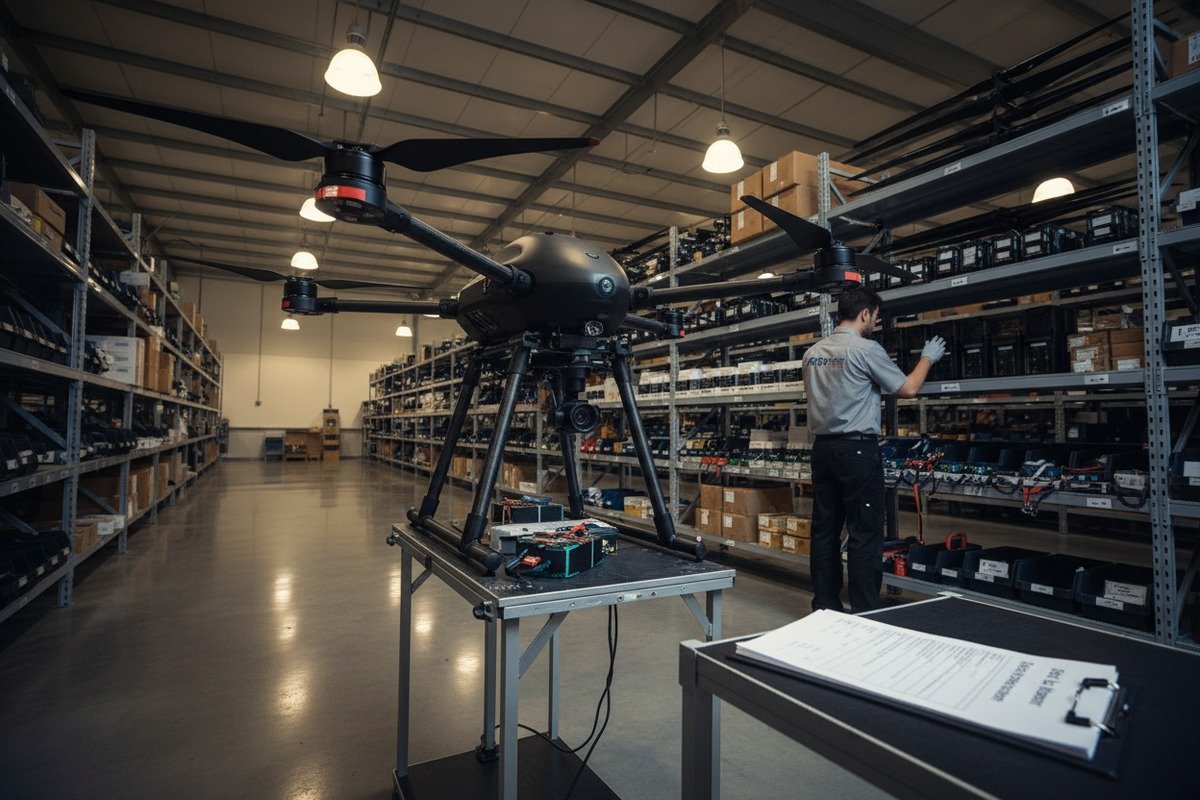
Last month, a distributor in Texas called us frustrated. His customer's drone was grounded during fungicide season. Parts were three weeks away. He lost the sale and the relationship. This happens when warranty terms ignore operational realities.
Negotiate warranties that specify free replacement parts for covered failures, guaranteed domestic parts inventory or expedited international shipping under 5 business days, 24/7 technical support availability during peak agricultural seasons, and dedicated support channels for your company separate from general customer queues.
Why Parts Availability Matters More Than Warranty Length
A 2-year warranty means nothing if parts take three weeks to arrive. Agricultural operations are time-sensitive. Fungicide applications have narrow windows. A grounded drone during peak season costs operators thousands in lost revenue.
Current industry data shows parts shipped from overseas can take up to two weeks. For your clients, that is unacceptable. Your warranty negotiation must address logistics.
Service Level Agreement Components
Push for written SLAs covering these elements:
| SLA Element | Standard Terms | Target Terms |
|---|---|---|
| Parts Shipping Time | 10-14 business days | 3-5 business days |
| Technical Support Response | 48 hours | 4 hours during season |
| Support Availability | Business hours (supplier timezone) | 24/7 during peak months |
| Loaner Equipment | Not included | Available for critical failures |
| On-Site Support | Not included | Available at additional cost |
These terms should be written into your purchase agreement, not just discussed verbally.
Domestic Parts Inventory Options
The best solution is domestic parts stocking. Ask your supplier if they can:
- Ship common spare parts to your warehouse in advance
- Partner with a US-based fulfillment center
- Provide a critical spares kit with each drone purchase
- Guarantee air freight for urgent warranty parts at no extra cost
We work with several distributors who maintain consignment inventory. They pay for parts only when used. This model keeps parts close to end users while managing supplier cash flow.
Priority Support for Resellers
As a distributor, you need dedicated support channels. Your supplier's general support queue is not sufficient. Negotiate for:
- Direct contact with engineering support (not just frontline agents)
- Escalation paths for critical issues
- Multi-channel access (phone, email, WhatsApp, video call)
- Time-zone appropriate coverage for your market
Explain to your supplier that your success drives their sales. Priority support for you means better end-user experiences, which means repeat purchases and referrals.
Quantifying Downtime Costs
Support your negotiation with hard numbers. Agricultural drone operations require two-person teams. When a drone is down:
- Two operators are idle (labor cost: $400-600/day)
- Application revenue is lost ($500-1500/day depending on acreage)
- Client relationships suffer (long-term revenue impact)
Present these costs to your supplier. Explain that $100 in expedited shipping saves $1000 in customer losses. Smart suppliers understand this math.
Can I trade a slightly higher unit price for a more comprehensive and longer drone warranty?
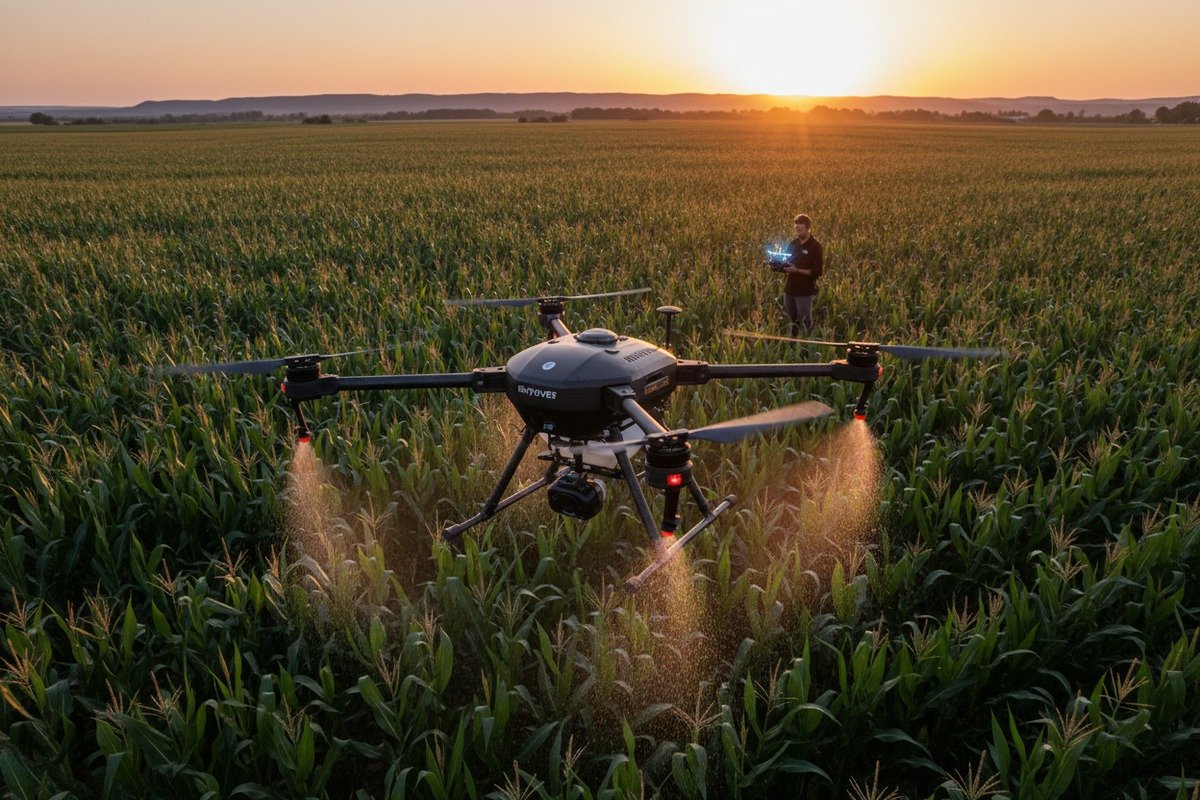
In our experience working with US distributors, the smartest buyers do not chase the lowest price. They calculate total cost of ownership 8. A drone that costs $500 more but includes a 2-year warranty with parts often costs less over its lifecycle.
Yes, trading a 5-15% higher unit price for comprehensive warranty coverage typically delivers positive ROI. Extended warranties reduce unexpected repair costs, improve client satisfaction, lower your support burden, and differentiate your offering in competitive markets where price-focused competitors offer minimal coverage.
The Total Cost of Ownership Calculation
Most buyers focus only on purchase price. This is a mistake. Total cost includes:
- Initial purchase price
- Expected repair costs outside warranty
- Downtime costs during repairs
- Support time spent troubleshooting
- Client relationship damage from failures
- Reputation impact from unreliable equipment
When you add these factors, a slightly higher upfront cost often delivers the lowest total cost.
Warranty Premium Structures
Here is how warranty premiums typically work:
| Warranty Package | Price Premium | Coverage Includes |
|---|---|---|
| Standard (12 months) | Baseline | Manufacturing defects only |
| Extended (18 months) | +5-8% | Defects + battery degradation |
| Comprehensive (24 months) | +10-15% | Defects + batteries + priority support + parts |
| Premium (24 months + SLA) | +15-20% | All above + guaranteed response times + loaner units |
These percentages are negotiable based on volume and relationship length.
Calculating Your Breakeven Point
Let us do the math. Assume a drone costs $10,000 with standard warranty. A comprehensive 2-year warranty adds $1,500 (15% premium).
Without extended warranty, you might face:
- One major repair in year 2: $800-1,200
- Shipping costs for parts: $150-300
- Downtime costs: $500-1,000
- Support time: 5-10 hours at $50/hour = $250-500
Total potential year-2 costs: $1,700-3,000
The $1,500 premium is almost certainly cheaper than unwarrantied exposure.
Positioning Premium Warranties to Your Clients
A comprehensive warranty becomes a sales tool. When competing against price-focused resellers, emphasize:
- "Our drones include 2-year coverage. Theirs include 12 months."
- "Free parts replacement for any covered failure."
- "24/7 support during your busy season."
- "We stand behind our products because our supplier stands behind us."
This differentiation justifies your pricing and attracts quality-focused buyers.
Negotiating the Premium Structure
When proposing a price-for-warranty trade, be specific:
"We are willing to pay $1,200 per unit above your quoted price if you provide: 24-month warranty on all components, free replacement parts shipped within 5 business days, and a dedicated support contact for our company. This represents a $48,000 annual premium on our 40-unit order. In exchange, we expect written SLA commitments."
Specific numbers and clear expectations lead to productive negotiations.
Conclusion
Warranty negotiation is a skill that separates successful drone distributors from struggling ones. Focus on documented commitments, quality data, service level agreements, and total cost of ownership. Your supplier relationships and your clients will both benefit.
Footnotes
1. Provides a comprehensive overview of agricultural drones and their uses. ↩︎
2. Explains the concept of contractual obligations for purchasing minimum quantities. ↩︎
3. Details how data is used in manufacturing quality control programs. ↩︎
4. Explains the process of inspecting raw materials and components before production. ↩︎
5. Describes the critical process of activating and testing battery cells. ↩︎
6. Defines a key reliability metric for repairable systems. ↩︎
7. Defines service level agreements and their typical components. ↩︎
8. Explains the financial estimate of direct and indirect costs over a product’s lifecycle. ↩︎

 English
  Español de México
  Deutsch
  Français
  Русский
  العربية
