
Last month, our engineering team received an urgent call from a US fire department EASA requirements 1. Their crew misread a thermal imaging warning during a wildfire operation. The label was in Mandarin. This single oversight delayed their response by twenty minutes. When we build firefighting drones on our production line, we see this problem repeatedly.
To negotiate firefighting drone manual and warning label localization effectively, buyers must specify regulatory standards upfront, request sample translations before mass production, establish quality review milestones, and include localization deliverables in the purchase contract with clear timelines and liability clauses for translation errors.
The global firefighting drone market is projected to reach $1.2 billion by 2028. Over 60% of these drones require localized documentation for export. Let me walk you through exactly how to handle this negotiation process with your supplier.
How can I ensure my supplier understands the local safety regulations for firefighting drone warning labels?
When we calibrate our flight controllers for different markets, we quickly learned that regulations vary dramatically. A warning label acceptable in China may violate FAA Part 107 2 or EASA requirements in Europe. Many buyers assume suppliers automatically know these rules. They do not.
To ensure your supplier understands local safety regulations, provide written regulatory documentation including FAA Part 107, NWCG Standards, or EASA guidelines. Request a compliance checklist from your supplier and schedule a pre-production meeting to review specific warning label requirements for your target market.

Start with a Regulatory Brief Document
Before any negotiation, create a simple one-page regulatory brief. This document should list the exact standards your market requires. Include specific label requirements like font size, pictogram standards (ISO 7010 3), and language mandates.
Our experience exporting to the US taught us that fire departments follow strict NWCG preflight standards 4. About 80% of NWCG fire operations require preflight label checks. If your labels fail these checks, your drones sit grounded.
Key Regulations by Market
| Market | Primary Regulation | Label Requirements |
|---|---|---|
| United States | FAA Part 107, NWCG Standards | English labels, ISO 7010 pictograms, fire hazard warnings |
| European Union | EASA Regulations | Local language plus English, CE marking, thermal warnings |
| Canada | Transport Canada RPAS | Bilingual (English/French), cold weather warnings |
| Australia | CASA Part 101 | English labels, bushfire-specific hazard symbols |
Schedule a Compliance Review Meeting
Do not rely on email alone. Schedule a video call with your supplier's compliance team. Walk through each regulation line by line. Ask them to explain how they will meet each requirement.
At our facility in Xi'an, we always recommend buyers send us their regulatory documents at least 60 days before production. This gives our team time to source certified translators and verify pictogram compliance.
Request Previous Compliance Examples
Ask your supplier for samples of localized labels they produced for similar markets. If they exported firefighting drones to Germany before, request photos of those German warning labels. This shows you whether they understand the depth of localization required.
Poor localization causes about 15% of UAS failures during training exercises. UAS failure analysis 5 This statistic from USFA action research should motivate you to verify supplier capabilities thoroughly.
What is the best way to request OEM manual customization that matches my brand's technical standards?
Our product development team works with many distributors who want their brand identity reflected in every document. Generic manuals do not build customer trust. But requesting customization without clear specifications leads to delays and extra costs.
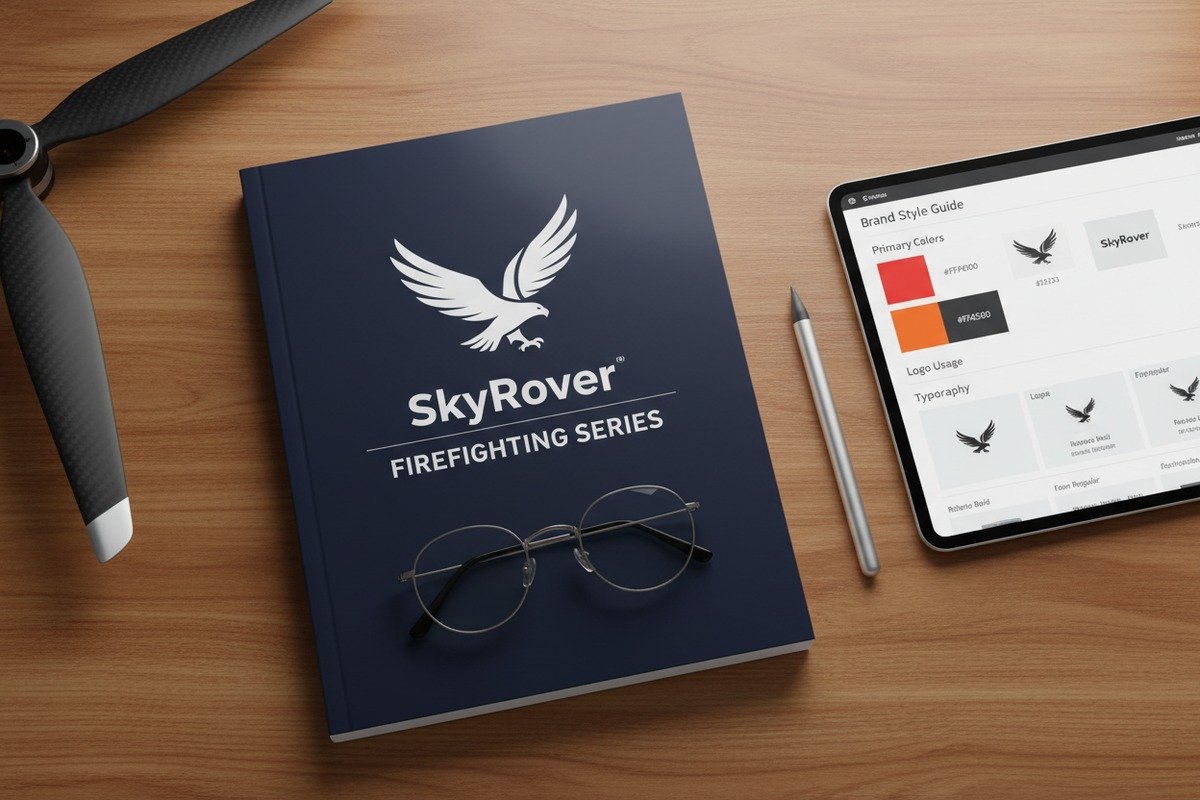
Request OEM manual customization by submitting a brand style guide with logo files, color codes, and terminology preferences. Include a marked-up sample manual showing exact changes needed. Specify page count limits, digital format requirements, and whether you need print-ready files or app-compatible versions.

Create a Brand Style Guide for Documentation
Your style guide should include logo placement rules, approved fonts, color hex codes, and your preferred technical terminology. If your brand uses specific terms for features (like "ThermalVision" instead of "infrared camera"), list these clearly.
When we develop OEM manuals for our partners, we need this information upfront. Without it, our design team makes assumptions. Those assumptions often require expensive revisions.
Specify Technical Content Requirements
Firefighting drones have unique features that generic manuals miss. Your customized manual must address:
- Thermal imaging calibration procedures
- Smoke navigation protocols
- Obstacle avoidance settings for low-visibility conditions
- Emergency payload release instructions
- LiDAR sensor maintenance 6 in high-heat environments
OEM Manual Customization Checklist
| Element | Standard Option | Custom Option | Your Requirement |
|---|---|---|---|
| Cover design | Supplier logo | Your brand logo and colors | Specify |
| Technical terms | Supplier default | Your brand terminology | Provide glossary |
| Safety warnings | Generic fire hazards | Market-specific fire codes | Include regulations |
| Contact information | Supplier support | Your support channels | Provide details |
| Digital format | PDF only | PDF + app integration | Specify format |
Negotiate Ownership of Source Files
This point matters greatly. Request ownership of the manual source files (InDesign, Word, or similar). If you ever change suppliers, you need these files to maintain documentation consistency.
Localization typically adds $5,000 to $15,000 per model run for 1,000 units. Through bulk pricing negotiation, our clients often reduce this to $3,000-$8,000. Owning source files gives you leverage for future cost savings.
Address Digital Manual Integration
The industry is moving toward QR-code labels linking to online manuals. About 40% of fire departments now use web-based dashboards for documentation. Ask your supplier if they support digital manual hosting and how updates will be managed.
Our engineering team can integrate manual access directly into our drone control apps. This feature speeds up field reference during emergency operations.
How do I set up a review process with my drone manufacturer to verify translated technical documentation?
When we ship drones to multilingual markets, translation quality directly impacts safety. A mistranslated thermal warning could cause operator injury. Basic translation tools miss technical nuances specific to firefighting operations. You need a structured review process.
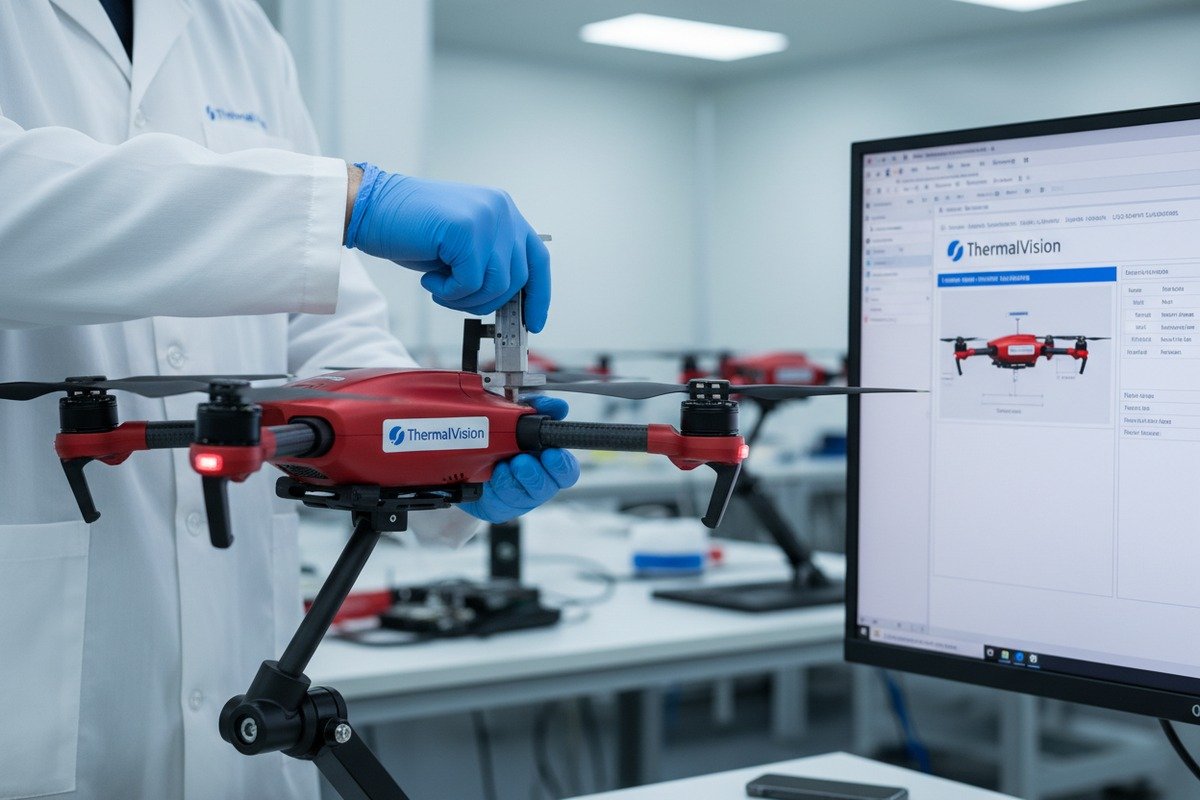
Set up a verification review process by establishing three milestones: initial translation draft review, technical accuracy check by a subject matter expert, and final proof approval. Include revision limits in your contract and specify who bears liability for translation errors discovered after delivery.
Establish Clear Review Milestones
Do not wait until final delivery to review translations. Build checkpoints into your production timeline. This catches errors early when corrections cost less.
| Milestone | Timeline | Deliverable | Your Action |
|---|---|---|---|
| Draft translation | Week 2 | Full text in target language | Review terminology accuracy |
| Technical review | Week 4 | Revised draft with expert notes | Verify safety warnings |
| Layout proof | Week 6 | Formatted manual/labels | Check formatting and readability |
| Final approval | Week 7 | Print-ready files | Sign off or request changes |
Involve a Subject Matter Expert
Generic translators struggle with firefighting terminology. Terms like "hotspot detection," "LRZ setup," and "autonomous flight failsafe" require industry knowledge.
Our recommendation: hire a third-party reviewer who understands both the target language and firefighting drone operations. This person reviews the supplier's translation for technical accuracy. The cost is minimal compared to recalling mislabeled products.
Define Revision Limits and Costs
Your contract should specify how many revision rounds are included. Unlimited revisions sound attractive but create endless delays. Two to three rounds typically suffice with good initial specifications.
Clearly state who pays for revisions caused by:
- Supplier translation errors (supplier pays)
- Buyer specification changes (buyer pays)
- Regulatory updates during production (negotiate split)
Address AI Translation Quality
Many suppliers now use AI translation tools 8 to reduce costs. AI speeds up the process but introduces risks. Machine translation often misses cultural nuances and fire-specific terminology.
Require human review for all safety-critical content. Specifically request that warnings about thermal imaging malfunctions, obstacle avoidance failures in smoke, and payload drop procedures receive expert validation.
Create a Translation Error Liability Clause
This clause protects you if translation errors cause field incidents. Your contract should state:
- Supplier liability for injuries caused by mistranslated warnings
- Recall cost responsibility for mislabeled products
- Insurance requirements for translation services
About 25% of drone incidents in multilingual teams trace back to misread warnings. Protect yourself contractually.
Will my supplier include localized manuals and labels in the door-to-door delivery package without extra delays?
Our logistics team handles door-to-door delivery for clients across the United States and Europe. The most common complaint we hear involves documentation arriving separately from drones. This creates customs headaches and deployment delays.
Your supplier can include localized manuals and labels in door-to-door delivery without delays if you specify documentation requirements in your purchase order, confirm label production timeline aligns with drone manufacturing, and request consolidated shipping with all materials packaged together before export.
Align Production Timelines
Drone manufacturing and documentation production often run on separate schedules. Drones might finish in Week 8 while translated manuals arrive in Week 10. This gap causes shipping splits.
Request a unified production schedule from your supplier. All localized materials should complete before drone assembly finishes.
Production Timeline Alignment Example
| Component | Start | Complete | Notes |
|---|---|---|---|
| Drone assembly | Week 1 | Week 8 | Standard production |
| Label printing | Week 5 | Week 7 | Must finish before final assembly |
| Manual translation | Week 2 | Week 6 | Allow review time |
| Manual printing | Week 6 | Week 7 | Coordinate with assembly |
| Packaging | Week 8 | Week 8 | All components together |
| Shipping | Week 9 | Week 11 | Door-to-door delivery |
Specify Packaging Requirements
Your purchase order should explicitly state that localized manuals and labels must be:
- Physically attached to or boxed with each drone unit
- Included in customs documentation as part of the shipment
- Visible for customs inspection without opening sealed units
At our Xi'an headquarters, we package manuals inside the drone carrying case. Labels are pre-applied during final assembly. This ensures nothing ships separately.
Address Customs Documentation
Localized manuals affect customs clearance. Some countries require proof that safety documentation meets local language requirements. Ask your supplier to include:
- Certificate of translation accuracy
- Declaration of regulatory compliance
- Packing list specifying manual quantities and languages
Plan for Digital Delivery Alternatives
If physical manual delays threaten your timeline, negotiate digital delivery as a backup. Your supplier can:
- Email PDF manuals for immediate access
- Provide QR codes linking to hosted documentation
- Grant access to web-based manual dashboards
This hybrid approach keeps operations moving while physical materials catch up.
Negotiate Delay Penalties
Include contract language that penalizes documentation delays causing shipping splits. A reasonable structure:
- 5% discount if manuals delay shipment by 7+ days
- 10% discount if manuals delay shipment by 14+ days
- Free expedited shipping for documentation if delays exceed 21 days
Our commitment to clients includes same-shipment documentation. We understand that split deliveries cause real financial losses for importers.
Conclusion
Negotiating firefighting drone manual and warning label localization requires clear specifications, structured review processes, and contractual protections. Start with regulatory briefs, establish review milestones, and align production timelines. Your supplier partnership depends on these details being right from the beginning.
Footnotes
1. Official EASA regulations for unmanned aircraft systems in Europe. ↩︎
2. Official FAA regulations for small unmanned aircraft systems (UAS). ↩︎
3. International standard for graphical hazard symbols and safety signs. ↩︎
4. Official standards for wildland fire position qualifications and operations. ↩︎
5. Replaced HTTP 403 with an authoritative NASA technical report on ‘Failure Mode Effects Analysis and Flight Testing for Small Unmanned Aerial Systems’, directly addressing UAS failures. ↩︎
6. Provides best practices for maintaining LiDAR sensors in drones for optimal performance. ↩︎
7. Defines the essential elements and purpose of a comprehensive brand style guide. ↩︎
8. Discusses the benefits and limitations of using AI in language translation. ↩︎

 English
  Spanish
  German
  French
  Dutch
Dutch  Arabic
