
At SkyRover, we frequently see clients surprised by the final landed cost of their orders. Importing industrial hardware involves hidden financial layers that can disrupt your procurement budget if you fail to calculate them early in the planning phase.
For Chinese-manufactured firefighting drones, importers must reserve at least 170% to 200% of the base cost for tariffs due to recent cumulative duties. Additionally, allocate 15% to 40% for logistics, insurance, and hazardous material handling, resulting in a total landed cost buffer of 200% to 250% over the invoice value.
Let’s break down these expenses in detail so you can plan your procurement strategy effectively and avoid unexpected financial strain.
How do I determine the correct HS code and current tariff rates for industrial drones from China?
When we export our SkyRover units, we help clients navigate complex codes to prevent customs holds. Misclassification leads to severe penalties, so understanding the specific Harmonized System codes is critical for your compliance and accurate cost estimation.
Harmonized System codes 1
You should primarily use HS code 8806.21 for unmanned aircraft weighing more than 250g. Currently, Chinese drones face a cumulative tariff burden of approximately 170%, including Section 301 duties and specific executive order penalties. Always verify the latest rates with the U.S. Customs and Border Protection before shipping.

Understanding the Tariff Stack
Navigating the tariff landscape for industrial drones has become increasingly difficult for our partners in the United States. As a manufacturer, we have witnessed a dramatic shift in the cost structure due to geopolitical trade policies. It is no longer sufficient to look up a simple duty rate; you must now calculate a "stack" of tariffs that accumulate on top of the base invoice price.
The primary Harmonized Tariff Schedule (HTS) code for the type of industrial drones we manufacture—such as those used for firefighting or agriculture—is 8806.21 (Unmanned aircraft with a maximum take-off weight of more than 250g but not more than 25kg). While the standard Most Favored Nation (MFN) duty rate might appear low or even zero in some contexts, the reality for Chinese-origin products is vastly different.
The 170% Cumulative Duty Explained
The figure of 170% is not an exaggeration; it is a mathematical reality derived from several layers of trade enforcement actions. If you are importing a $10,000 thermal imaging drone, you are not just paying $10,000. You are potentially paying an additional $17,000 in duties alone.
Here is how the costs accumulate:
- Section 301 Tariffs: These are the foundational punitive tariffs on Chinese goods.
- Executive Order 14195 (Feb 2025): Added a 10% layer.
- Fentanyl-related Penalties (March 2025): Added another 10% layer.
- Reciprocal Tariffs (April 2025): This massive 125% hike was a game-changer for the industry.
Tariff Impact Calculation Table
To help you visualize the financial impact, we have prepared a breakdown of how these tariffs transform the cost of a single unit.
Table 1: Estimated Landed Cost Impact of Tariffs (Per Unit)
| Cost Component | Rate / Calculation | Estimated Value (USD) |
|---|---|---|
| Base Invoice Price (FOB) | Manufacturer Price | $10,000 |
| Standard Duty | ~0% (varies by exact weight) | $0 |
| Section 301 & EO Penalties | ~45% combined | $4,500 |
| Reciprocal Tariff | 125% | $12,500 |
| Total Duty Payable | Sum of all tariffs | $17,000 |
| Total Cost Before Logistics | Base Price + Duty | $27,000 |
Critical Compliance Risks
Beyond the financial cost, there is a compliance risk. The FCC’s "Covered List" and the FY2025 National Defense Authorization Act (NDAA) have effectively placed a ban on importing new equipment from specific entities deemed national security risks. While SkyRover works hard to ensure our components meet strict standards, importers must be aware that products from major competitors like DJI or Autel are facing de facto import bans.
National Defense Authorization Act 2
If you attempt to import drones that are on the Covered List, you risk not only paying the tariffs but having the entire shipment seized and destroyed by Customs and Border Protection (CBP). Therefore, determining the correct HS code is only half the battle; ensuring the manufacturer is not on a restricted entity list is equally vital.
Customs and Border Protection 3
What are the cost differences between air freight and sea freight for shipping heavy firefighting drones?
Our logistics team constantly monitors freight rates to ensure timely delivery for our global partners. Choosing between air and sea transport significantly impacts both your budget and your operational readiness during the critical fire season.
Air freight typically costs $5 to $15 per kilogram, amounting to 20-30% of the cargo value, but delivers within 3-7 days. Ocean freight is cheaper, costing 10-20% of the value, but takes 4-6 weeks. For urgent firefighting needs, air freight is often necessary despite the higher premium.
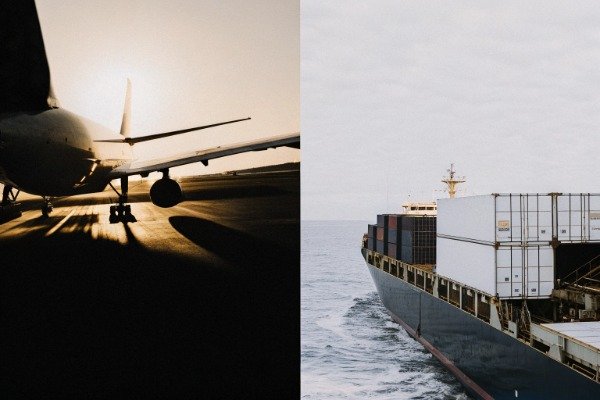
The Logistics of Speed vs. Cost
When we coordinate shipments from our factory in Chengdu to destinations like Los Angeles or New York, the choice of transport mode is usually dictated by urgency. Firefighting drones are mission-critical assets. If a fire department needs a fleet replacement before the summer wildfire season peaks, waiting six weeks for ocean freight is often not an option.
However, industrial drones are not standard cargo. They are bulky, high-value, and contain hazardous materials (large lithium polymer batteries). This changes the math significantly compared to shipping general consumer electronics.
Air Freight: The Premium Option
Air freight is calculated based on the greater of actual weight or volumetric weight. Firefighting drones have large frames, landing gear, and protective cases. Even if the drone weighs 20kg, the box might take up the volume of a 50kg shipment.
- Cost: Expect to pay between $5 and $15 per kg. For a shipment worth $10,000, air freight can easily add $2,000 to $3,000 (20-30%).
- Speed: 3 to 7 days door-to-door.
- Hazmat Surcharges: High-capacity batteries are classified as Class 9 Dangerous Goods (UN3480). Air cargo regulations (IATA) are extremely strict, requiring specialized packaging, labeling, and dangerous goods declarations. This adds surcharges that standard freight quotes often miss.
Ocean Freight: The Budget Option
Ocean freight is significantly cheaper but introduces lead time risks.
- Cost: Generally 10-20% of the cargo value when you factor in insurance and drayage.
- Speed: 30 to 45 days (China to US West Coast) or longer to the East Coast.
- Stability: Ocean freight prices are generally more stable, but port congestion can cause unpredictable delays.
Table 2: Air vs. Ocean Freight Comparison for Industrial Drones
| Feature | Air Freight | Ocean Freight (LCL/FCL) |
|---|---|---|
| Typical Cost (% of Value) | 20% – 35% | 10% – 20% |
| Transit Time | 3 – 7 Days | 30 – 60 Days |
| Hazmat Handling | Strict / Expensive (IATA) | Moderate / Standard (IMDG) |
| Volumetric Impact | High (Chargeable weight rules) | Low (Per CBM pricing) |
| Best Use Case | Urgent replacement, samples | Bulk fleet orders, planned stock |
The "Hidden" Logistics Costs
Regardless of the mode, you must account for inland haulage. Once the goods arrive at the US port (e.g., Long Beach), they must be trucked to your warehouse.
- Drayage/Trucking: $300 – $1,000 depending on distance.
- Insurance: Cargo insurance is non-negotiable for high-value tech. It typically costs 0.6% to 1% of the CIF value (Cost + Insurance + Freight).
- Warehousing: If your customs clearance is delayed due to the complex tariff codes mentioned earlier, you will incur daily storage fees at the port, which can escalate rapidly.
At SkyRover, we advise clients to budget for the "worst-case" logistics scenario—air freight—during the budgeting phase. If you end up having enough time to ship via ocean, the savings become a surplus in your budget.
Should I look for suppliers offering DDP shipping to simplify my budgeting for duties and logistics?
We often arrange door-to-door delivery for our busy clients to save them time and administrative headaches. Using specific Incoterms can shift the complex burden of customs clearance and risk away from your internal procurement team.
Yes, choosing Delivered Duty Paid (DDP) shipping is highly recommended for simplifying budgets. Under DDP, the supplier assumes all risks, shipping costs, and tariff payments until delivery. This eliminates surprise fees for you, though suppliers may add a 5-10% margin to cover their potential liability and administrative efforts.
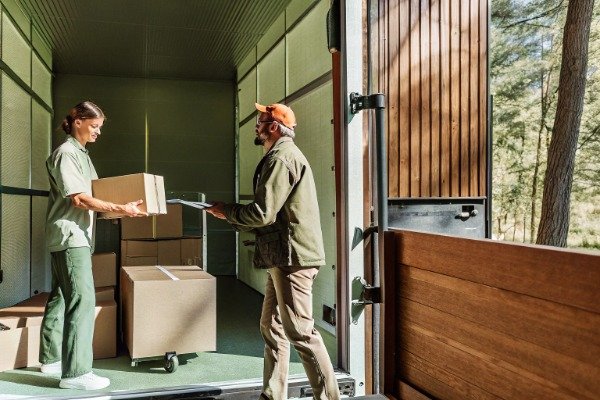
Why DDP is a Safety Net for Importers
In international trade, Incoterms (International Commercial Terms) define who pays for what and when the risk transfers from seller to buyer. For a Procurement Manager like Olivia Smith, who values efficiency and predictability, DDP (Delivered Duty Paid) is often the gold standard.
When we quote a DDP price, it means SkyRover takes responsibility for:
- Export clearance in China.
- International freight (Air or Sea).
- Import clearance in the US.
- Paying all import duties and taxes.
- Final delivery to your warehouse door.
The Financial Trade-off
While DDP simplifies your life, it is not "free." As the manufacturer, if we take on the risk of fluctuating shipping rates and uncertain tariff classifications, we must build a safety margin into the price.
- The Buyer’s Benefit: You get a single, final price. You write one check. You do not need to hire a customs broker or purchase a customs bond.
- The Cost: The unit price will be higher than an EXW (Ex Works) or FOB (Free on Board) price. We typically add a buffer to cover potential inspection fees or tariff spikes.
Table 3: Incoterms Responsibility Matrix
| Incoterm | Export Duties | Int’l Freight | Import Duties | Risk Transfer Point | Buyer Effort Level |
|---|---|---|---|---|---|
| EXW (Ex Works) | Buyer | Buyer | Buyer | Factory Floor | High |
| FOB (Free on Board) | Seller | Buyer | Buyer | Port of Origin | Medium |
| CIF (Cost, Ins, Freight) | Seller | Seller | Buyer | Port of Destination | Medium |
| DDP (Delivered Duty Paid) | Seller | Seller | Seller | Buyer’s Doorstep | Low (Best for ease) |
Strategic Considerations for 2025
Given the volatility of US-China trade relations, DDP offers a unique strategic advantage: Risk Transfer.
If a new tariff is announced while the goods are on the water:
- Under FOB/CIF, you (the buyer) are liable for the new cost upon arrival.
- Under DDP, the seller is technically liable to deliver the goods at the agreed price (though contracts often have force majeure clauses, it provides a stronger negotiating position for the buyer).
However, be cautious. Some suppliers claim "DDP" but actually use "gray market" shipping channels to evade taxes. This puts you at legal risk. At SkyRover, we ensure our DDP services are fully compliant, providing you with documentation that duties were legally paid. This transparency is vital for government contractors who may be audited.
Part 87 or Part 90 authorization 5
What additional customs fees or bond requirements do I need to factor into my total landed cost?
Beyond tariffs, we remind partners about the smaller fees that accumulate quickly and affect the bottom line. Ignoring bonds, processing fees, and compliance charges can cause unexpected delays at the port of entry and inflate costs.
customs bond 6
You must factor in the Merchandise Processing Fee (MPF), Harbor Maintenance Fee (HMF), and a continuous customs bond, which typically cost 0.5% to 1% of the cargo value combined. Additionally, budget for customs brokerage fees of $300-$1,000 and specific FCC authorization fees for radio frequency compliance.

International Commercial Terms 7
The "Nickel and Dime" Costs of Importing
When calculating the Total Landed Cost, many importers stop at Freight + Duty. This is a mistake. There is a layer of administrative fees that, while individually small, collectively add up to a significant percentage of the budget.
Class 9 Dangerous Goods 8
1. Customs Bonds
Because the tariff liability on industrial drones is so high (due to the 170% rate), CBP requires a guarantee that they will get paid.
- Single Entry Bond: Good for one shipment. Cost is usually based on the value of the goods plus duties. With high duties, this bond becomes expensive.
- Continuous Bond: A flat annual fee (approx. $400-$600) that covers all shipments. If you import more than once a year, this is mandatory for efficiency.
2. Port Fees (MPF and HMF)
These are mandatory government fees for using US ports of entry.
- Merchandise Processing Fee (MPF):
- Ad Valorem: 0.3464% of the cargo value.
- Caps: For formal entries, there is a minimum (~$31) and a maximum (~$614).
- Harbor Maintenance Fee (HMF):
- Applies only to ocean freight arriving at US ports.
- Rate: 0.125% of the cargo value. There is no cap on this fee.
3. Compliance and Authorization Fees
Industrial drones use radio frequencies for control and video transmission.
- FCC Fees: If the equipment requires specific Part 87 or Part 90 authorization (common for public safety bands), budget an additional 3% of the project cost for certification handling if not already covered by the manufacturer.
- NDAA Compliance Buffer: If you are selling to government entities, you may need to pay for third-party validation to prove the drone does not contain prohibited components. We recommend setting aside 5-10% of funds for this technical validation and thermal sensor calibration to meet NFPA 2400 standards.
Summary of Additional Fees
To wrap up your budget planning, let’s look at a hypothetical $50,000 shipment of firefighting drones via Ocean Freight.
Covered List 9
- Customs Brokerage: $150 – $300
- Continuous Bond: $500 (annual pro-rated)
- MPF (Capped): ~$614
- HMF (0.125%): $62.50
- Cargo Insurance (0.8%): $400
- Trucking: $500
Total "Hidden" Fees: ~$2,300+ (approx 4-5% of base value).
When you combine these fees with the massive tariff burden and logistics costs, the importance of accurate budgeting becomes clear. You are not just buying a product; you are funding a complex international logistics operation.
Harmonized Tariff Schedule 10
Conclusion
Importing firefighting drones now requires a budget buffer of 200-250% over the invoice price to cover tariffs and logistics. We recommend using DDP shipping and strictly verifying HS codes to mitigate risks.
Footnotes
- Explains the global classification system for traded products. ↩︎
- Federal legislation that includes prohibitions on certain foreign drones. ↩︎
- The federal agency responsible for enforcing import laws. ↩︎
- Standard for Small Unmanned Aircraft Systems used in public safety. ↩︎
- FCC licensing rules for aviation and public safety radio frequencies. ↩︎
- A financial guarantee required by CBP for import entries. ↩︎
- Global standards defining responsibilities for buyers and sellers. ↩︎
- Classification for hazardous materials like lithium batteries in air cargo. ↩︎
- Official FCC list of communications equipment deemed national security risks. ↩︎
- Official US government tool for determining duty rates. ↩︎

 English
  Español de México
  Deutsch
  Français
  Русский
  العربية
