
When our engineering team first designed charging systems for heavy-lift firefighting drones 1, we quickly learned that downtime kills operations. A single wildfire incident can drain eight batteries in hours. Without rapid cyclic charging 2, your fleet sits idle while flames spread.
To inquire about multi-battery cyclic charging stations for firefighting drones, contact manufacturers directly via their product pages or email. Specify your drone model, battery type, required charge cycles, mission environment, and budget. Request technical specifications, safety certifications, OEM options, and demo units before placing bulk orders.
This guide walks you through every question you need to ask. We cover technical specs, custom branding, import certifications, and long-term durability. Let’s make sure your next charging station investment pays off.
What technical specifications should I prioritize when inquiring about a multi-battery charging station for my firefighting drones?
Our production line handles dozens of charging station models each year. We see procurement managers struggle with spec sheets full of jargon. The truth is simple: wrong specs mean dead batteries at the worst moment.
Prioritize charging speed (45-65 minutes per cycle), simultaneous battery capacity (4+ slots), intelligent Battery Management Systems with real-time monitoring, IP65 or higher ruggedness ratings, and compatibility with your specific drone battery voltage and chemistry. These five factors determine field performance.
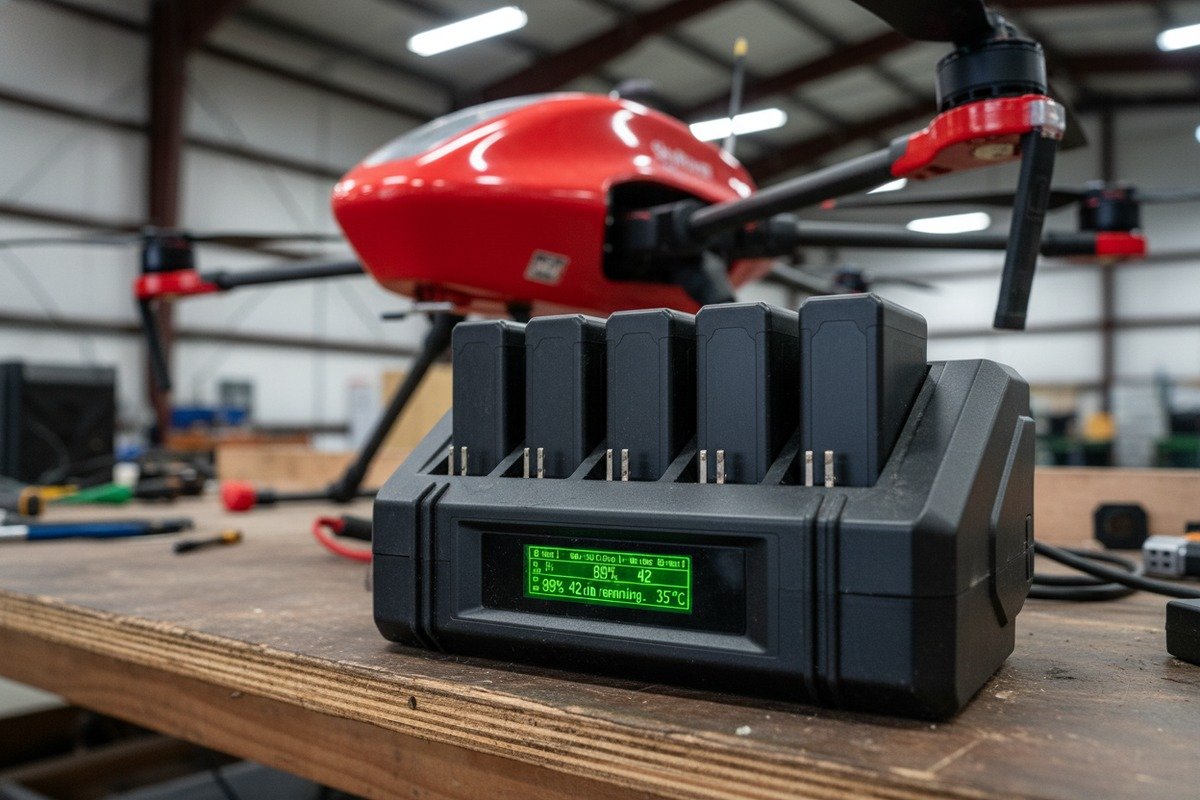
Understanding Charge Time and Cycle Efficiency
Charge time directly impacts your redeployment speed. Most firefighting operations need drones back in the air within one hour. Look for stations that achieve 80-90% charge in 45 minutes. Full charge should complete within 60-65 minutes.
Cyclic charging means the station rotates through batteries in sequence. This keeps a constant supply of ready batteries. Ask suppliers for specific cycle times with your exact battery model. Generic claims do not help.
Battery Slot Capacity and Simultaneous Charging
A four-battery minimum is standard for small teams. Larger operations need eight or more slots. Our clients running wildfire suppression typically request six-slot configurations. This balances portability with capacity.
Simultaneous charging differs from sequential charging. Simultaneous means all batteries charge at once. Sequential means they charge one after another. Simultaneous cuts total wait time significantly.
| Specification | Minimum Requirement | Recommended for Firefighting |
|---|---|---|
| Battery Slots | 4 | 6-8 |
| Charge Time (80%) | 60 minutes | 45 minutes |
| Charge Time (100%) | 90 minutes | 60-65 minutes |
| Cooling System | Passive | Active multi-fan |
| Ruggedness Rating | IP54 | IP65 or higher |
| Power Input Compatibility | AC only | AC + Generator (pure sine wave 3) |
Intelligent Battery Management Systems
Modern charging stations include smart BMS features. Intelligent Battery Management Systems 4 These monitor voltage, temperature, and cell balance in real time. Predictive analytics warn you before failures occur. Cloud-synced tracking logs every cycle for maintenance planning.
Ask your supplier these questions about BMS:
- Does the system auto-identify battery models?
- Does it stop charging at full capacity automatically?
- Can I access cycle history via mobile app?
- Does it alert me to thermal anomalies?
Ruggedness and Environmental Tolerance
Firefighting scenes expose equipment to smoke, dust, extreme heat, and water spray. IP65 rating 5 means complete dust protection and water jet resistance. Anything below IP54 will fail in real conditions.
Check operating temperature range. Quality stations work from -10°C to 50°C. Some premium units handle up to 60°C ambient temperature with active cooling.
Power Source Compatibility
Field operations often rely on generators or vehicle power. Your station must accept both pure sine wave and modified sine wave input. Some cheaper units only work with pure sine wave, limiting your flexibility.
Voltage compatibility matters too. North American operations need 110V input. European operations need 220V. Multi-voltage stations simplify international deployment.
Can I request custom OEM branding and software integration for my bulk charging station order?
When we work with distributors in the US and Europe, branding requests come up in nearly every conversation. Your customers want to see your logo, not ours. Software integration connects charging data to your existing systems.
Yes, most established manufacturers offer OEM branding including custom logos, color schemes, and packaging for bulk orders. Software integration options include API access for fleet management systems, white-label mobile apps, and custom firmware. Minimum order quantities typically range from 10-50 units for full customization.
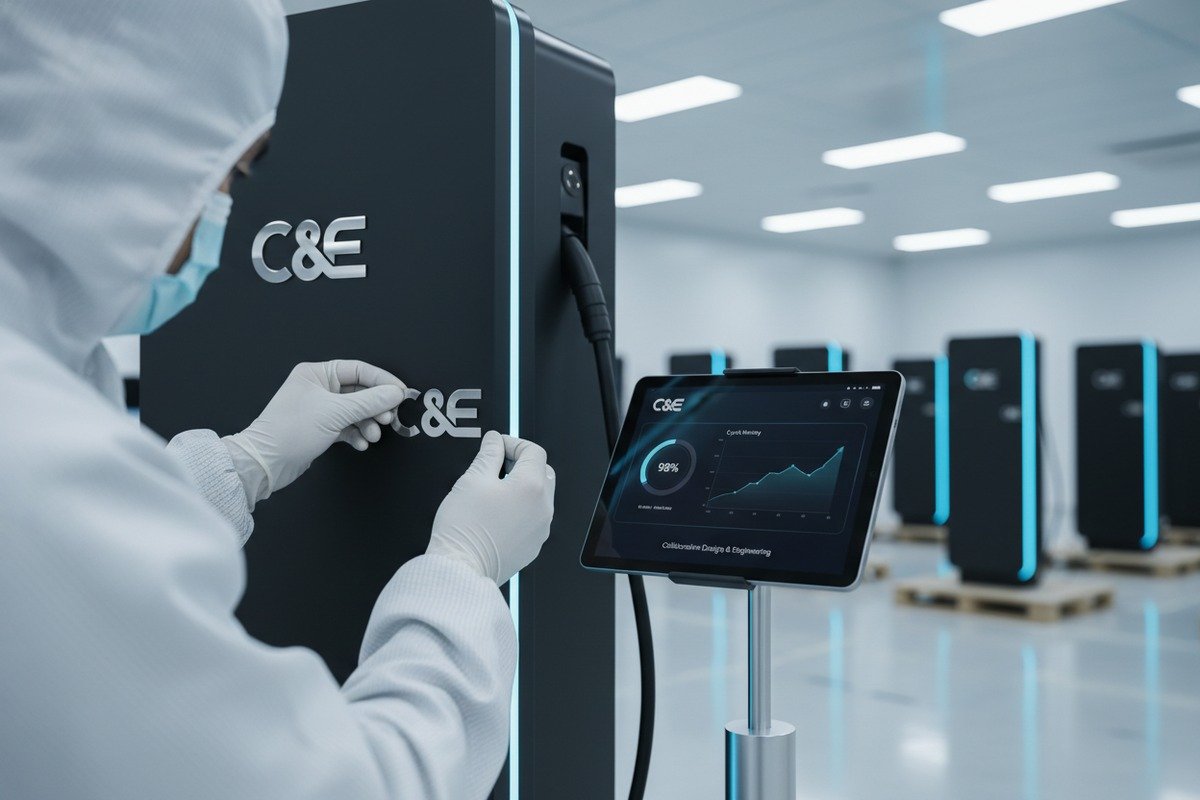
OEM Branding Options and Requirements
Full OEM branding 6 covers several elements. You can customize the housing color, logo placement, control panel graphics, and product labels. Packaging can display your company information exclusively.
Minimum order quantities vary by manufacturer. Simple logo changes may require only 10 units. Full color customization and custom packaging often need 30-50 units. Ask for exact MOQ thresholds during your inquiry.
| Customization Level | Typical MOQ | Lead Time | Additional Cost |
|---|---|---|---|
| Logo sticker only | 5-10 units | 1-2 weeks | Low |
| Logo + control panel branding | 10-20 units | 2-3 weeks | Medium |
| Full color housing + logo | 30-50 units | 4-6 weeks | Medium-High |
| Custom packaging + documentation | 30-50 units | 4-6 weeks | Medium |
| Complete white-label product | 50+ units | 6-8 weeks | High |
Software Integration Possibilities
Software integration connects your charging station to broader fleet management. Real-time battery status feeds into incident command dashboards. Maintenance alerts route to your service team automatically.
Key integration options include:
- API access for custom software connections
- White-label mobile apps with your branding
- Cloud dashboard for multi-site battery monitoring
- Integration with DJI FlightHub or similar platforms
Ask suppliers whether their software supports your existing systems. Request API documentation before committing. Some manufacturers charge ongoing fees for cloud services.
Firmware Customization
Beyond branding, firmware changes can adapt station behavior. You might need custom charge profiles for specialized batteries. Or you may want modified safety thresholds for specific operating conditions.
Firmware customization requires engineering collaboration. Expect longer lead times and development fees. This level of customization suits large fleet operators with unique requirements.
Protecting Your Brand Investment
Request written agreements covering your branding rights. Ensure the manufacturer will not sell identical branded products to your competitors. Clarify whether tooling costs are one-time or recurring.
Quality control becomes more important with OEM products. Your brand reputation depends on consistent performance. Discuss inspection procedures and defect handling before production begins.
How do I verify that the supplier provides the necessary import certifications and door-to-door delivery for my region?
In our experience exporting to the US and Europe, certification gaps cause the most painful delays. Your shipment sits in customs while paperwork gets sorted. Meanwhile, your customer waits and your reputation suffers.
Verify import certifications by requesting specific documentation: FCC certification for US radio frequency compliance, CE marking for European markets, UN38.3 for lithium battery transport, and UL or TUV safety certifications. Confirm door-to-door delivery by asking for DDP (Delivered Duty Paid) Incoterms, customs brokerage experience, and references from previous shipments to your region.

Essential Certifications by Region
Different markets require different certifications. Missing even one can block your import entirely. Request copies of actual certificates, not just claims of compliance.
| Market | Required Certifications | Purpose |
|---|---|---|
| United States | FCC Part 15, UL Listed, UN38.3 | Radio emissions, electrical safety, battery transport |
| European Union | CE Marking, RoHS, WEEE | Product safety, hazardous materials, disposal |
| United Kingdom | UKCA, RoHS | Post-Brexit UK compliance |
| Canada | ISED (formerly IC), CSA | Radio emissions, electrical safety |
| Australia | RCM, SAA | Electromagnetic compatibility, safety |
Understanding UN38.3 for Battery Equipment
UN38.3 certification 7 covers lithium battery transport safety. This is mandatory for shipping charging stations with battery packs included. Without it, freight carriers will refuse your shipment.
The certification involves eight tests: altitude simulation, thermal testing, vibration, shock, short circuit, impact, overcharge, and forced discharge. Ask for the complete test report, not just a summary certificate.
Verifying Delivery Capabilities
Door-to-door delivery means the supplier handles everything from their factory to your warehouse. This includes export customs, ocean or air freight, import customs clearance, and final delivery.
Ask these specific questions:
- Do you offer DDP (Delivered Duty Paid) terms?
- Which freight forwarders do you work with?
- How do you handle customs documentation?
- What is your experience with US Customs and Border Protection?
- Can you provide tracking throughout the shipment?
Checking Supplier Track Record
Request references from previous shipments to your country. A supplier with ten successful US deliveries is far safer than one with zero. Ask for contact information so you can verify their claims.
Look for suppliers who understand your specific import challenges. Firefighting equipment may face additional scrutiny. Some drone components have dual-use restrictions requiring export licenses from China.
Red Flags to Watch For
Avoid suppliers who cannot produce original certification documents. Copies of copies suggest borrowed or fraudulent certificates. Legitimate manufacturers keep organized certification files.
Be cautious if the supplier only offers EXW (Ex Works) terms. This puts all shipping risk on you. Experienced exporters offer CIF (Cost, Insurance, Freight) or DDP terms confidently.
What should I ask about long-term durability and the availability of repair parts for these industrial charging systems?
When we calibrate charging stations for field deployment, we design for years of heavy use. But even the best equipment needs maintenance. The question is whether your supplier supports you after the sale.
Ask suppliers about expected service life (typically 5-7 years for industrial units), warranty terms (minimum 2 years), repair part availability and lead times, technical support options (remote and on-site), and maintenance documentation. Request a spare parts price list and confirm that critical components remain available for at least 5 years after purchase.

Evaluating Build Quality and Service Life
Industrial charging stations should last 5-7 years minimum with proper maintenance. Consumer-grade units fail within 1-2 years under heavy use. The price difference reflects this durability gap.
Look for these durability indicators:
- Metal housing versus plastic
- Industrial-grade connectors
- Sealed electronics compartments
- Replaceable cooling fans
- Modular internal components
Ask about duty cycle ratings. 100% duty cycle means continuous operation without cooldown periods. Lower ratings indicate weaker thermal management.
Warranty Terms and Coverage
Standard industrial warranties run 2-3 years. Premium manufacturers offer extended warranties up to 5 years. Read the fine print carefully.
| Warranty Aspect | Basic Coverage | Premium Coverage |
|---|---|---|
| Duration | 1-2 years | 3-5 years |
| Parts | Defective only | All components |
| Labor | Limited | Full coverage |
| Shipping (returns) | Customer pays | Manufacturer pays |
| Response Time | 5-7 business days | 24-48 hours |
| On-site Support | Not included | Available |
Repair Part Availability and Pricing
Repair parts determine whether you can fix equipment quickly or wait weeks. Before purchasing, request a spare parts catalog with prices. Critical items include power supplies, cooling fans, charging modules, and display panels.
Ask how long parts will remain available after product discontinuation. Reputable manufacturers commit to 5-year minimum parts availability. Some offer lifetime support for key components.
Technical Support Options
Technical support ranges from email-only to dedicated on-site service. Your needs depend on your team's technical capability and location.
Remote support options include:
- Phone and email troubleshooting
- Video call diagnostics
- Remote firmware updates
- Online knowledge bases
On-site support matters for complex repairs. Ask whether the manufacturer has service partners in your region. International suppliers should have authorized repair centers in major markets.
Maintenance Requirements and Documentation
Proper maintenance extends equipment life significantly. Request maintenance schedules and procedures during your inquiry. Good documentation includes cleaning instructions, calibration procedures, and component replacement guides.
Ask about preventive maintenance programs. Some manufacturers offer annual service contracts. These include inspections, cleaning, and proactive part replacement.
Total Cost of Ownership
Cheap equipment becomes expensive when repairs pile up. Calculate total cost of ownership 9 including purchase price, shipping, installation, maintenance, and repairs over 5 years.
A charging station costing 20% more upfront but lasting twice as long saves money overall. Factor in downtime costs too. Every hour your charging station fails costs you operational capacity.
Conclusion
Inquiring about multi-battery cyclic charging stations requires specific questions about specs, customization, certifications, and durability. Take time to verify supplier claims with documentation and references. Your firefighting operations depend on equipment that performs when it matters most.
Footnotes
1. Provides context on the application of heavy-lift drones in wildfire suppression. ↩︎
2. Explains the concept of cyclic charging for battery systems. ↩︎
3. Clarifies a technical requirement for power source compatibility in field operations. ↩︎
4. Details the function and importance of advanced battery management. ↩︎
5. Defines a crucial environmental protection standard for equipment ruggedness. ↩︎
6. Explains options for manufacturers to customize products for clients, enhancing brand identity. ↩︎
7. Highlights a mandatory safety standard for shipping lithium batteries internationally. ↩︎
8. Identifies a key regulatory compliance for electronic devices in the US market. ↩︎
9. Replaced with a highly authoritative source (IBM) providing a clear definition of Total Cost of Ownership. ↩︎

 English
  Spanish
  German
  French
  Dutch
Dutch  Arabic
