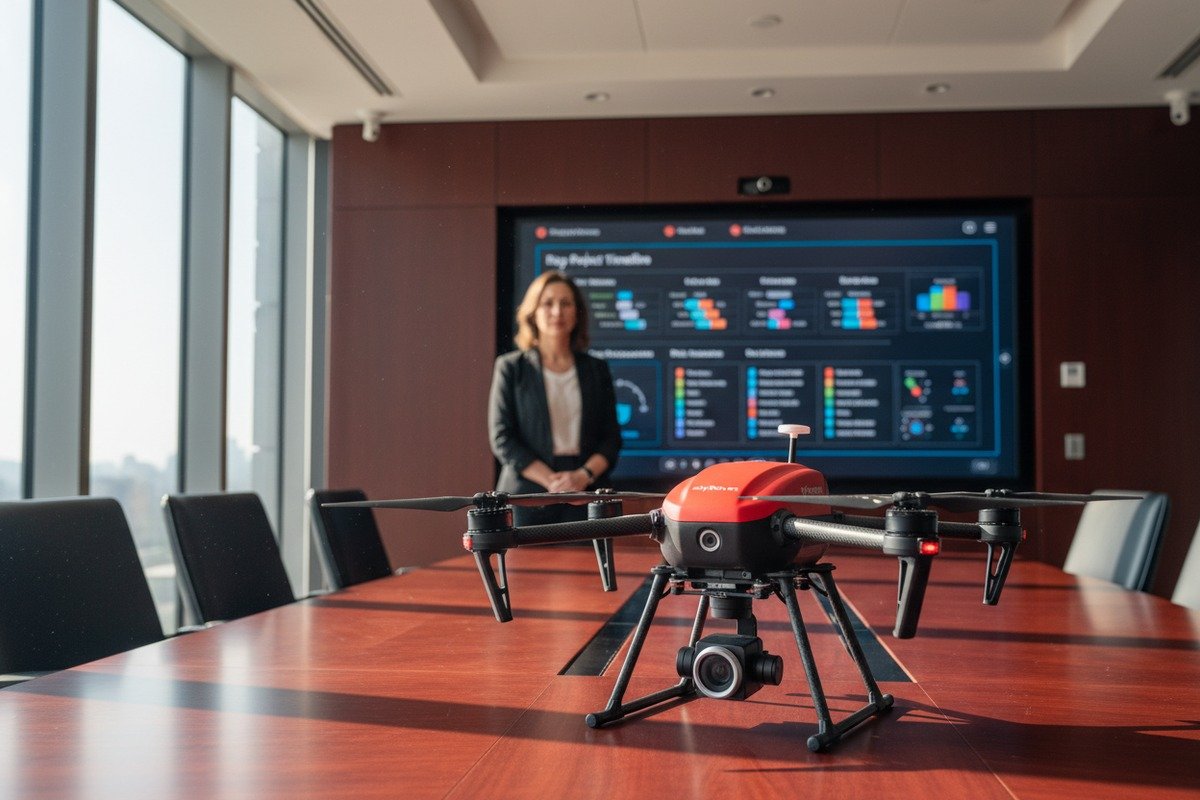
When our engineering team first tackled custom firefighting drone projects, we underestimated how regulations could stretch timelines by months FAA compliance 1. Many buyers face the same frustration—balancing urgent operational needs against complex development realities.
Evaluating timelines and risks for custom firefighting drone development requires assessing technology readiness levels, regulatory pathways, technical durability standards, and supply chain vulnerabilities. Most custom projects take 12-36 months depending on complexity, with FAA compliance and component sourcing being the largest delay factors.
This guide breaks down each critical evaluation area swarm capability 2. You will learn realistic timeframes, key risk categories, and practical ways to verify manufacturer capabilities before committing to a custom drone project.
How long should I realistically budget for the R&D and prototyping phases of my custom firefighting drone?
Our production teams have completed dozens of custom drone projects, and timeline expectations remain the most common source of miscommunication with clients electromagnetically noisy environments 3. The gap between desired delivery dates and realistic development schedules causes frustration on both sides.
Budget 6-12 months for basic R&D and prototyping using off-shelf components, 12-24 months for full custom production with regulatory compliance, and 24-36 months for advanced features like swarm capability or heavy payload systems. Regulatory approvals often add 6-12 additional months.

Understanding Development Phases
Custom firefighting drone development follows distinct stages. Each phase has its own timeline drivers and potential delays. When we map out projects with clients, we divide work into six core phases.
The first phase covers needs analysis and planning. This takes 4-8 weeks. During this time, we define operational use cases, environmental conditions, sensor requirements, and payload capacity needs. Fire departments operating in the US West face different challenges than urban rescue teams. These differences shape every subsequent decision.
The second phase involves proof-of-concept and demo flights. This typically requires 8-16 weeks. Our engineers build initial prototypes using existing components to validate core concepts. Thermal imaging integration 4, flight stability in wind, and basic autonomy features get tested here.
Timeline Breakdown by Project Complexity
| Project Type | R&D Phase | Prototyping | Testing & Validation | Total Timeline |
|---|---|---|---|---|
| Basic Custom (off-shelf components) | 2-3 months | 2-4 months | 2-4 months | 6-12 months |
| Mid-Level Custom (modified systems) | 4-6 months | 4-8 months | 4-6 months | 12-24 months |
| Advanced Custom (swarms, heavy payloads) | 8-12 months | 8-12 months | 8-12 months | 24-36 months |
Factors That Accelerate or Delay Timelines
Several factors can speed up your project. Working with manufacturers who have existing technology stacks for AI obstacle avoidance 5 reduces development time significantly. Our flight controllers already incorporate 360-degree obstacle detection, which eliminates months of software development for clients.
Vendor packages that include training and deployment support also accelerate timelines. When we provide on-site training as part of the project scope, clients integrate drones into operations faster.
Delays most commonly stem from regulatory requirements. FAA waivers for Beyond Visual Line of Sight operations 6 take 3-6 months to obtain. If your project requires swarm operations or novel flight patterns, expect regulatory review to extend timelines by 50-100%.
Weather testing iterations also cause delays. Firefighting drones must perform in extreme conditions. Testing across seasons—summer heat, winter cold, high winds—cannot be compressed. Our testing protocols require minimum data collection across multiple weather scenarios before we approve production units.
Realistic Milestone Planning
For a mid-complexity custom firefighting drone, here is what a realistic schedule looks like:
Months 1-2: Requirements documentation and feasibility study
Months 3-5: Component selection and initial prototype assembly
Months 6-8: Flight testing and performance validation
Months 9-12: Software integration and thermal sensor calibration
Months 13-16: Environmental stress testing
Months 17-20: Regulatory submissions and compliance verification
Months 21-24: Production unit delivery and operator training
This schedule assumes no major design changes after month 6. Client-requested modifications after prototyping begins typically add 2-4 months per major change.
What technical risks should I evaluate to ensure my custom drone meets industrial durability standards?
During factory acceptance testing, we have seen drones that performed perfectly in controlled conditions fail dramatically when exposed to smoke, heat, and wind simultaneously. Technical risk evaluation must go beyond basic specifications.
Evaluate battery and payload limitations under thermal stress, weather vulnerability across temperature extremes, AI reliability in low-visibility conditions, structural integrity against heat exposure, and signal retention in electromagnetically noisy environments. Each risk category requires specific testing protocols and acceptance criteria.

Battery and Power System Risks
Battery performance degrades significantly in firefighting conditions. High ambient temperatures reduce lithium battery capacity by 15-25%. Cold conditions below freezing can cut flight time by 30-40%.
When we design firefighting drones, we specify batteries rated for -20°C to +60°C operational range. Hot-swappable battery systems allow continuous operations, but they add mechanical complexity and potential failure points.
| Risk Factor | Impact Level | Mitigation Strategy | Testing Requirement |
|---|---|---|---|
| High temperature capacity loss | High | Thermal management systems | 50+ hours at 50°C ambient |
| Cold weather performance drop | Medium | Battery warming systems | 20+ hours at -10°C ambient |
| Rapid discharge under load | High | Oversized battery capacity | Full payload flight testing |
| Charge cycle degradation | Medium | Premium cell chemistry | 500+ cycle endurance testing |
Structural and Material Durability
Firefighting drones face extreme environmental stress. Radiant heat from fires can exceed 1000°C at close range. Smoke particles clog cooling systems. Water and retardant chemicals corrode electronics.
Our carbon fiber frames resist temperatures up to 150°C without deformation. Motor housings use sealed bearings to prevent particle infiltration. All external electronics receive conformal coating against moisture and chemical exposure.
Weather and Environmental Resilience
Wind remains the most common cause of firefighting drone failures. Wildfires create their own weather patterns with sudden gusts exceeding 40 mph. Our drones maintain stable flight in sustained 25 mph winds with gusts to 35 mph.
Rain and water spray require IP54 or higher ratings 7 for reliable operation. Smoke density affects GPS signal quality and visual navigation systems. We integrate redundant positioning systems combining GPS, GLONASS, and visual odometry to maintain navigation in degraded conditions.
AI and Autonomy Reliability
Autonomous navigation in fire environments presents unique challenges. Thermal currents create turbulence that confuses altitude sensors. Smoke reduces LiDAR range from 100+ meters to under 20 meters. Flames create false obstacles for optical avoidance systems.
Our AI systems use sensor fusion 8 combining thermal imaging, radar, and inertial measurement. This redundancy ensures navigation continues when individual sensors fail or provide incorrect data. Testing protocols require successful obstacle avoidance with any two of three sensor systems disabled.
Signal and Communication Integrity
Radio frequency interference near fire scenes is severe. Emergency vehicle radios, aircraft communications, and power line corona discharge create electromagnetic noise. Video transmission and control signals must remain reliable.
We specify frequency-hopping spread spectrum radios with automatic channel selection. Control links maintain connection at 9+ mile range in clear conditions and 3+ miles in high-interference environments. Loss-of-signal protocols automatically return drones to launch points.
How can I verify that my manufacturer has the engineering depth to handle my specific software integration?
When clients visit our facility in Xi'an, we walk them through our software development environment and demonstrate live code modifications. This transparency separates manufacturers with genuine engineering capability from those who resell others' products.
Verify engineering depth by requesting API documentation, reviewing previous integration case studies, meeting software development teams directly, testing demo units with your specific protocols, and confirming ongoing technical support commitments. Manufacturers should demonstrate version control systems and provide source code escrow options.

Key Indicators of Software Capability
True engineering depth shows in documentation quality. When we provide API documentation, it includes complete function libraries, error handling procedures, and integration examples. Vague or incomplete documentation signals limited internal development capability.
Ask to see the manufacturer's development environment. Our 70-person team includes 15 dedicated software engineers who write and maintain flight controller firmware, ground station applications, and cloud data platforms. Companies without in-house software teams cannot provide meaningful customization.
Questions to Ask Your Manufacturer
| Question | Strong Answer | Weak Answer |
|---|---|---|
| What SDK do you provide? | Full SDK with documented APIs and sample code | "We can discuss after purchase" |
| Can you integrate with our fire management system? | Yes, we have done similar integrations with [specific examples] | "It should be possible" |
| Who handles software support post-delivery? | Our in-house team with defined SLA | "Our supplier provides support" |
| Do you offer source code escrow? | Yes, through [specific escrow service] | "What is escrow?" |
Testing Integration Before Purchase
Request a demo unit for integration testing before finalizing orders. We routinely ship evaluation units to qualified buyers for 30-60 day assessment periods. This allows your technical team to verify compatibility with existing systems.
During evaluation, test these specific capabilities:
- Data export to your incident management systems
- Real-time video streaming to your command infrastructure
- Automated flight logging in your required formats
- Integration with thermal camera analysis software
Evaluating Support Commitments
Software requires ongoing support. Bug fixes, security updates, and compatibility patches are necessary throughout product life. Our standard agreements include 1-year software updates with optional extended support contracts.
Ask about response time commitments. When clients report software issues, our support team responds within 24 hours for critical problems and 72 hours for non-critical requests. Remote diagnostic capabilities allow us to troubleshoot problems without on-site visits in most cases.
Training availability indicates engineering depth. We provide operator training, maintenance technician certification, and data analyst courses. Manufacturers without training programs likely lack the expertise to support complex integrations.
Red Flags to Watch
Avoid manufacturers who cannot answer technical questions directly. If sales representatives must "check with the factory" for basic software questions, internal engineering capability is limited.
Be cautious of manufacturers offering unlimited customization at low prices. Quality software development requires significant investment. Unrealistically low quotes often result in incomplete implementations or abandoned projects.
Request references from clients with similar integration requirements. When potential clients contact our existing customers, they consistently report that our technical support exceeds expectations. Manufacturers unwilling to provide references may have poor track records.
What logistics and compliance risks could potentially delay the delivery of my custom drone order?
Our export team handles shipments to the United States and Europe weekly. Despite this experience, unexpected customs holds, component shortages, and certification delays still occur. Understanding these risks allows better planning.
Major logistics and compliance risks include FAA certification timeline variability, customs clearance documentation errors, specialized component supply chain disruptions, export control regulation changes, and freight capacity constraints during peak seasons. Allow 4-8 weeks buffer for international shipments beyond quoted delivery dates.
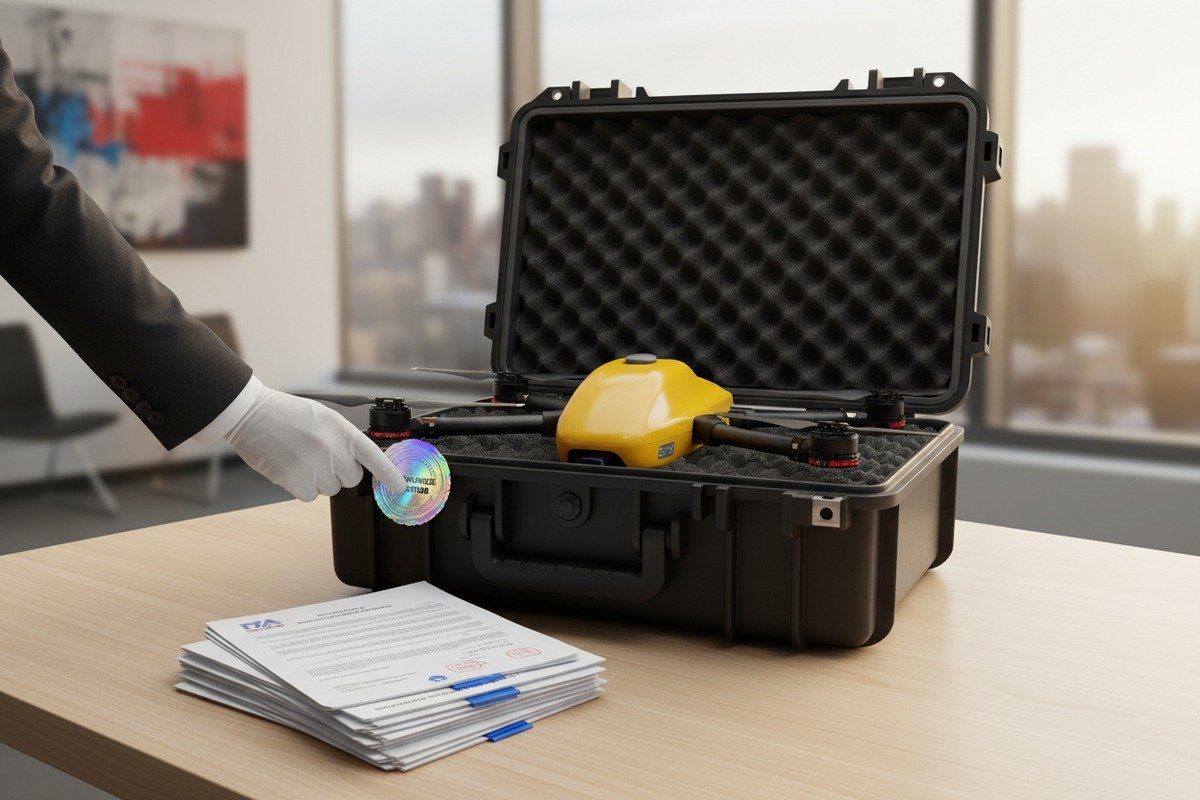
Regulatory Compliance Delays
FAA certification processes vary unpredictably. Standard waivers for commercial operations take 90-180 days. BVLOS waivers—first granted in 2021—now take 6-12 months. Swarm operation approvals remain rare and highly case-specific.
NIST testing standards 9 established in 2022 provide compliance benchmarks. Drones meeting these standards face smoother approval processes. Our firefighting drones comply with NIST test protocols, which we document in certification packages for clients.
| Compliance Item | Typical Timeline | Risk Factors | Mitigation |
|---|---|---|---|
| FAA Part 107 certification | 2-4 weeks | Application errors | Pre-submission review |
| BVLOS waiver | 6-12 months | Novel flight profiles | Early application |
| Import documentation | 2-4 weeks | Classification errors | Experienced broker |
| State/local permits | 4-8 weeks | Jurisdiction variations | Local legal review |
Supply Chain Vulnerabilities
Specialized components face longer lead times than standard parts. High-performance motors, thermal imaging sensors, and fire-resistant materials often have 12-16 week lead times. Single-source components create particular risk.
The 2024-2025 tariff changes affecting Chinese drone exports created temporary market uncertainty. While our supply chains adapted, some component costs increased. We maintain strategic inventory of critical parts to buffer against supply disruptions.
Customs and Import Challenges
Proper documentation prevents customs delays. Required documents include commercial invoices, packing lists, certificates of origin, and technology control declarations. Missing or incorrect documents cause holds lasting 2-4 weeks.
Harmonized tariff classification affects both costs and clearance speed. Industrial drones may classify under multiple codes depending on primary function. We work with experienced customs brokers in destination countries to ensure correct classification.
Export control regulations require verification that drone technology does not fall under restricted categories. Most commercial firefighting drones clear export controls, but payload systems and certain sensor packages require additional review.
Freight and Logistics Timing
Air freight capacity constraints affect delivery schedules during peak seasons. Q4 holiday shipping and Chinese New Year in Q1 create capacity shortages. We recommend placing orders 8-12 weeks before required delivery dates to avoid peak season delays.
Specialized packaging for drone shipments requires additional handling. Our crates include foam cushioning, humidity control, and impact indicators. Damaged shipments from inadequate packaging cause 4-8 week delays for replacement.
Mitigating Delivery Risks
We offer several options to reduce delivery risk. Phased delivery breaks large orders into multiple shipments, ensuring partial capability even if one shipment faces delays. Pre-positioning inventory in US warehouses eliminates import time for repeat orders.
Clear communication protocols prevent misunderstandings. Our project managers provide weekly status updates during production. Clients receive tracking information immediately upon shipment. Any potential delays trigger immediate notification with revised timeline estimates.
Door-to-door delivery service eliminates handoff risks. We maintain relationships with freight forwarders, customs brokers, and final-mile delivery services in all major markets. This integrated approach reduces total transit time and provides single-point accountability.
Conclusion
Custom firefighting drone development requires realistic timeline expectations, thorough technical risk evaluation, verified manufacturer capabilities, and proactive logistics planning. Budget 12-36 months depending on complexity, and maintain open communication with your manufacturing partner throughout the process.
Footnotes
1. Authoritative source for commercial drone regulations and compliance. ↩︎
2. Provides a general overview of drone swarm technology and applications. ↩︎
3. General explanation of EMI, relevant to drone signal integrity. ↩︎
4. Industry leader in thermal imaging, relevant to firefighting drone applications. ↩︎
5. Explains the concept of obstacle avoidance in robotics and AI. ↩︎
6. Direct FAA guidance on BVLOS operations for drones. ↩︎
7. Authoritative source for Ingress Protection (IP) codes and standards. ↩︎
8. Replaced with a comprehensive and authoritative Wikipedia article explaining sensor fusion. ↩︎
9. NIST’s official announcement and details on drone testing standards. ↩︎

 English
  Español de México
  Deutsch
  Français
  Русский
  العربية
