
When our R&D team releases a new firmware update 1, we see firsthand how quickly innovation can change farming outcomes. But here’s the problem: many buyers struggle to tell which drone suppliers genuinely innovate fast and which ones just talk big.
To evaluate a supplier’s product improvement speed, examine their firmware update frequency, review documented changelog histories, assess R&D team credentials, request technology roadmaps, and compare their update cycles against industry benchmarks like quarterly releases from leading manufacturers.
This guide walks you through practical methods to assess any agricultural drone 2 supplier’s true improvement velocity. Let’s dive into each critical evaluation area.
How can I verify the R&D team's ability to implement my requested agricultural drone feature improvements quickly?
Our engineers often receive feature requests from distributors across the US and Europe patent portfolio 3. We've learned that verifying R&D capability requires more than reading brochures. The real question is: can you trust what suppliers claim about their development speed technical account managers 4?
Request direct access to the supplier's engineering team, review their past implementation timelines for similar features, examine their patent portfolio for relevant innovations, and ask for case studies showing request-to-release cycles for custom modifications.

Ask for Concrete Evidence of Past Implementations
The best predictor of future performance is past performance. When we work with clients on custom flight controller modifications, we document every step. You should ask suppliers for the same transparency.
Request a list of feature improvements made in the last 12-18 months. Pay attention to the time gap between when a feature was requested and when it shipped. Top-tier suppliers typically deliver minor software updates within 4-6 weeks. Major hardware revisions take 3-6 months.
Evaluate Team Size and Expertise
A supplier with three engineers cannot match the output of a team of twenty. During factory visits or video calls, ask specific questions:
- How many engineers focus exclusively on agricultural drone development?
- What specialized backgrounds do they have (avionics, agronomy, software)?
- Do they have dedicated firmware and hardware teams?
Our team of 70 includes specialists in both hardware integration and software development. This separation matters because agricultural drones need rapid iteration on both fronts.
Review Patent and Research Activity
Patents reveal where a company invests intellectual effort. Search patent databases for the supplier's recent filings. Look for innovations in:
- Spray nozzle precision
- Battery management systems 5
- AI-based crop analysis
- Obstacle avoidance in agricultural settings
| Evaluation Criteria | Strong Indicator | Weak Indicator |
|---|---|---|
| Patent filings (past 3 years) | 5+ relevant patents | 0-1 patents |
| Engineering team size | 15+ dedicated engineers | Under 5 engineers |
| Feature request turnaround | Under 8 weeks for software | Over 6 months |
| Published research papers | Active collaboration with ag institutes | No published work |
| Beta testing program | Open to select partners | No beta access |
Test Their Responsiveness Before Committing
Send a detailed technical question via email. Note how long they take to respond and how thorough the answer is. A supplier that takes two weeks to answer a simple firmware question will likely be slow with actual development work.
When we receive technical inquiries from potential partners, our engineering team aims to respond within 48 hours. This responsiveness reflects the internal culture that drives fast product improvement.
What should I look for in a manufacturer's past update cycle to gauge their future improvement speed?
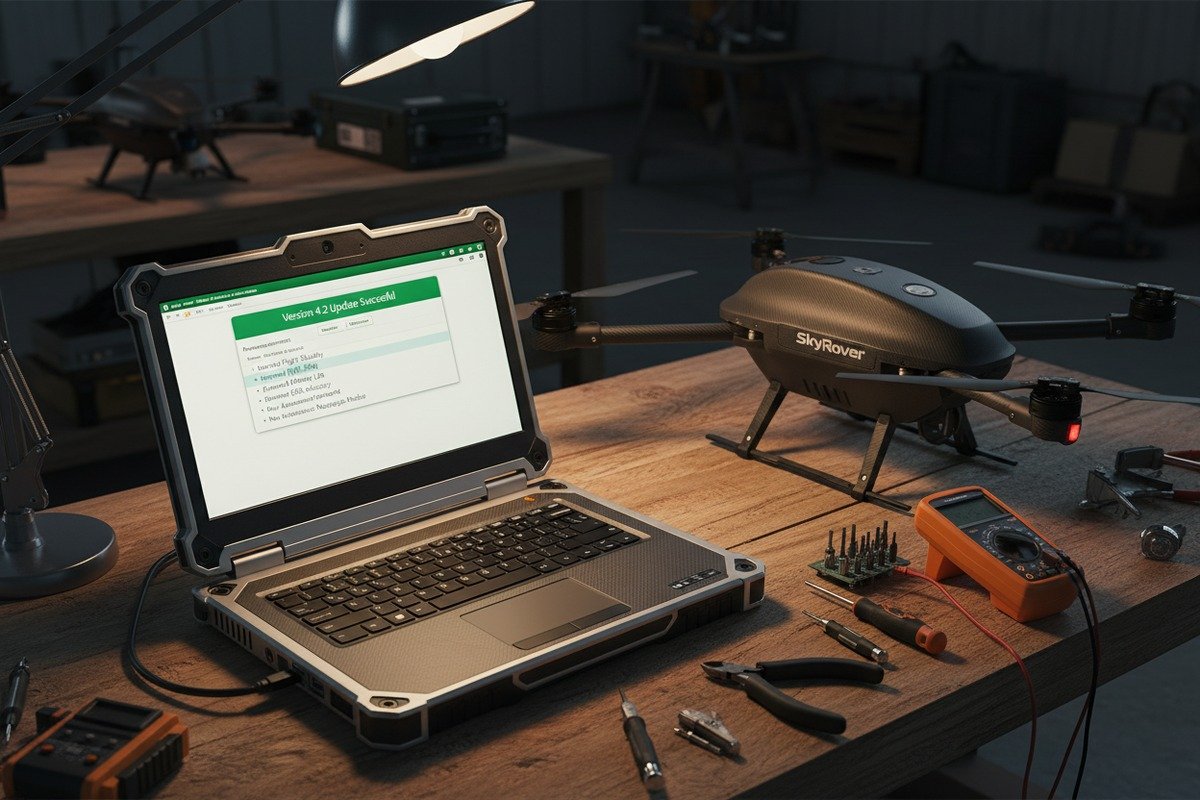
We track every firmware release, bug fix, and hardware revision in our internal systems. This discipline helps us maintain quality while moving fast. When you evaluate suppliers, their update history tells you everything about their operational DNA.
Analyze the supplier's changelog for update frequency, scope of improvements, bug fix response times, and consistency over 18-24 months. Consistent quarterly updates with meaningful enhancements indicate a mature, fast-moving development process.
Where to Find Update History
Not all suppliers make this information easy to find. Check these sources:
- Official website – Look for a "Downloads" or "Support" section with firmware archives
- App stores – Review the update history for their companion mobile apps
- User forums – Agricultural drone communities often track updates better than manufacturers
- Direct request – Ask the supplier for a formal changelog document
What Frequency to Expect
Industry leaders like DJI's Agras series release firmware updates roughly every 6-8 weeks. Smaller but serious players update quarterly. Be cautious if a supplier hasn't released any updates in over six months.
| Update Type | Industry Standard Frequency | Red Flag Threshold |
|---|---|---|
| Firmware (bug fixes) | Every 4-8 weeks | Over 3 months gap |
| Firmware (new features) | Quarterly | Over 6 months gap |
| Mobile app updates | Monthly | Over 2 months gap |
| Hardware revisions | Annual | No changes in 2+ years |
| SDK updates | Quarterly | Over 6 months gap |
Analyze the Substance of Updates
Frequency alone doesn't tell the whole story. Read the actual release notes. Meaningful updates include:
- Flight stability improvements
- Battery optimization (5-10% gains are realistic)
- New sensor compatibility
- Spray pattern precision enhancements
- Compliance updates for new regulations
Watch out for "updates" that only fix typos or make cosmetic UI changes. These pad the numbers without adding value.
Track Bug Fix Response Time
When our users in Europe reported an issue with GPS signal acquisition in 2024, we released a patch within three weeks. This speed matters because agricultural operations follow tight seasonal windows.
Ask suppliers about their most recent critical bug fix. How long did it take from first report to released solution? Anything under four weeks shows good responsiveness. Over eight weeks suggests internal bottlenecks.
Compare Against Competitors
Create a simple spreadsheet tracking update dates for 3-4 suppliers you're considering. After collecting data for their past 18 months, patterns become obvious. Some suppliers cluster updates around trade shows. Others maintain steady cadence. Steady wins for reliability.
How do I determine if a supplier can keep pace with the fast-evolving software needs of my agricultural clients?
When we develop software features for our agricultural drones, we constantly balance innovation with stability. Your clients need both. The agricultural technology landscape shifts rapidly—AI-powered crop analysis, OTA updates, integration with farm management platforms—and suppliers must keep up.
Evaluate the supplier's software architecture for modularity, their track record integrating third-party agricultural platforms, their OTA update capability, and their roadmap for AI and data analytics features that agricultural clients increasingly demand.

Check for Over-the-Air Update Capability
OTA updates have become essential. Farmers cannot afford to send drones back for every software improvement. Over-the-Air Update Capability 6 When we deploy a flight optimization update, our drones receive it automatically in the field.
Ask suppliers directly:
- Can firmware updates be delivered remotely?
- What percentage of updates require physical service?
- How long does an OTA update take to install?
Modern agricultural drones should handle most updates via OTA within 15-30 minutes.
Assess Integration with Agricultural Platforms
Your clients likely use farm management software 7. The drone's data needs to flow into these systems. Look for compatibility with:
- DroneDeploy
- Pix4D
- John Deere Operations Center
- Climate FieldView
- Custom API availability
Evaluate AI and Analytics Roadmap
AI-driven features now differentiate serious agricultural drone suppliers. In early 2026, the market expects:
| AI Feature | Current Standard | Emerging Capability |
|---|---|---|
| Crop health mapping | Basic NDVI analysis | Multi-disease identification |
| Spray optimization | Preset patterns | Real-time adaptive spraying |
| Obstacle avoidance | Ultrasonic sensors | Vision-based predictive |
| Flight planning | Manual waypoints | Autonomous field recognition |
| Data reporting | Basic PDF exports | Integrated farm analytics |
Ask suppliers what AI features they've released in the past year and what's planned for the next 12 months. Vague answers suggest they're not investing seriously.
Request SDK and Developer Documentation
If your business involves any customization, SDK quality matters enormously. When our partners need to integrate our drones with their proprietary systems, we provide comprehensive documentation and developer support.
Review:
- SDK update frequency (quarterly minimum)
- Documentation quality and completeness
- Developer community activity
- Sample code availability
Test Mobile App Quality
The companion app reflects overall software competence. Download it. Check the ratings. Read recent reviews. A poorly maintained app signals broader software issues.
Look for apps with:
- 4+ star ratings
- Regular updates (monthly or better)
- Responsive bug fixes
- Clean, intuitive interface
Can I rely on the supplier to provide the engineering support I need for every new product version?
Our technical support team handles calls from distributors across multiple time zones. We know that product improvement means nothing if customers cannot implement updates successfully. Engineering support transforms good products into lasting partnerships.
Verify the supplier offers dedicated technical account managers, provides comprehensive documentation for each release, maintains responsive support channels with under-48-hour response times, and includes engineering support costs in warranty or service agreements.

Define What Engineering Support Actually Means
Not all "support" is equal. Clarify exactly what the supplier provides:
| Support Level | What's Included | What's Extra Cost |
|---|---|---|
| Basic | Email support, FAQ access | Everything else |
| Standard | Phone support, remote diagnostics | On-site visits, custom development |
| Premium | Dedicated account manager, priority response | Major custom integrations |
| Enterprise | On-site training, joint development | Usually fully inclusive |
Most serious agricultural drone importers need at least Standard level. Premium makes sense for volumes over 50 units annually.
Evaluate Response Time Guarantees
Ask for written SLA (Service Level Agreement 8) terms. Acceptable benchmarks:
- Critical issues (drone grounded): 4-hour response
- Major issues (feature not working): 24-hour response
- Minor issues (questions, documentation): 48-hour response
When we commit to support timelines, we build internal processes to meet them. Suppliers who hesitate to provide written SLAs may not have such processes.
Check Support Infrastructure
Technical support requires infrastructure. During your evaluation, ask:
- What time zone does your support team operate in?
- Do you offer support in my language?
- Is there a ticketing system to track issues?
- Can I access a knowledge base or documentation portal?
For US-based distributors working with Chinese manufacturers like us, time zone coverage matters significantly. We maintain support availability that overlaps with US business hours.
Assess Training and Documentation Quality
Every product update should come with:
- Release notes explaining changes
- Updated user manuals
- Video tutorials for significant features
- Technical bulletins for known issues
Request samples of documentation from recent releases. Poor documentation suggests the supplier hasn't built proper technical writing into their process.
Understand Spare Parts and Repair Support
Engineering support extends to hardware. For agricultural drones operating in harsh field conditions, parts fail. Clarify:
- Spare parts availability and lead time
- Repair turnaround time
- Parts pricing (industry standard: 5-10% of drone cost annually)
- Warranty coverage for defects versus damage
Our door-to-door delivery service extends to spare parts, ensuring minimal downtime for our partners' operations.
Negotiate Support Terms Before Purchase
Lock in support commitments contractually. Include:
- Response time guarantees
- Support duration (minimum 2 years recommended)
- Escalation procedures
- Costs for support beyond standard coverage
Conclusion
Evaluating supplier improvement speed requires examining R&D capabilities, update histories, software roadmaps, and engineering support structures. Use these frameworks to identify partners who will grow with your agricultural drone business over time.
Footnotes
1. Explains what a firmware update is and its purpose for electronic devices. ↩︎
2. Provides a definition and common applications of drones in agriculture. ↩︎
3. Defines a patent portfolio and its strategic importance for companies and innovation. ↩︎
4. Describes the role and responsibilities of technical account managers in client relations. ↩︎
5. Explains the function and importance of battery management systems in rechargeable batteries. ↩︎
6. Defines over-the-air updates and their significance for wirelessly updating devices. ↩︎
7. Explains what farm management software is and how it aids agricultural operations. ↩︎
8. Defines a Service Level Agreement (SLA) and its role in service provider-customer contracts. ↩︎

 English
  Español de México
  Deutsch
  Français
  Русский
  العربية
