
Every week, our sales team receives inquiries from European distributors asking the same question: “Does your team actually understand what we need?” The European agricultural drone market is projected to reach $16.46 billion by 2035. Yet many buyers struggle to separate suppliers who truly grasp EU trends from those who simply copy marketing buzzwords.
To evaluate supplier insights on European agricultural drone trends, verify their knowledge of EASA regulations, assess their precision farming technology capabilities, examine their OEM customization capacity for EU markets, and confirm their ability to provide proper certifications and engineering support for European import requirements.
This guide breaks down exactly how procurement managers can test supplier claims GPS RTK positioning accuracy 1. We will cover regulatory knowledge, technical specifications, customization abilities, and certification support. Let’s dive into each critical area.
How can I verify if my drone supplier truly understands the latest EU EASA regulations and agricultural standards?
When our compliance team prepares export documentation for European clients, we often discover that many suppliers cannot explain basic EASA categories. This gap causes costly delays and failed shipments for buyers who trusted unverified claims.
To verify supplier EASA knowledge, ask specific questions about drone classification categories (Open, Specific, Certified), request documentation of previous EU-compliant deliveries, and test their understanding of national variations in agricultural drone policies across different EU member states.
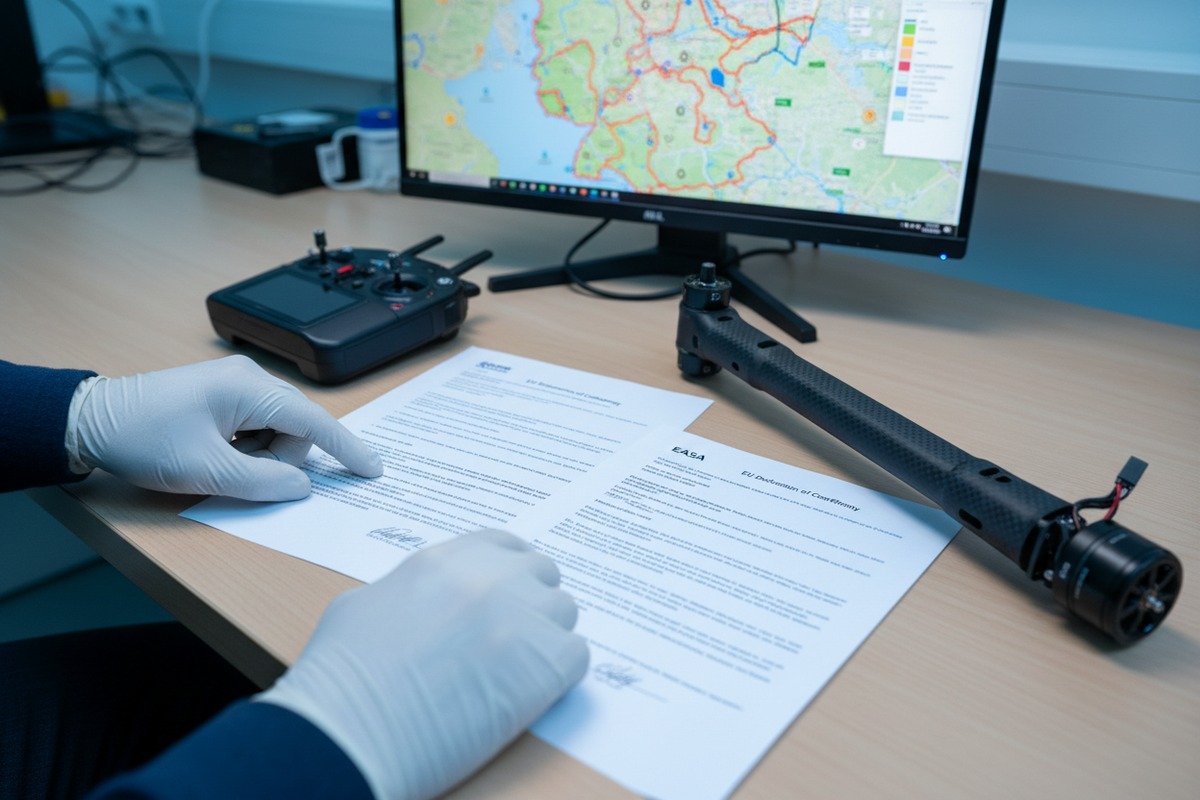
Understanding the EASA Framework
The European Union Aviation Safety Agency (EASA) 2 created a unified drone regulatory framework that all suppliers must understand. This framework divides drone operations into three categories based on risk level.
Our engineering team spent six months studying these regulations when we expanded into European markets. We learned that the "Specific" category covers most agricultural operations. This category requires operational authorization and risk assessment.
| EASA Category | Risk Level | Agricultural Application | Supplier Knowledge Test |
|---|---|---|---|
| Open | Low | Small crop monitoring drones under 25kg | Ask about subcategories A1, A2, A3 |
| Specific | Medium | Spraying drones, BVLOS operations | Request SORA documentation experience |
| Certified | High | Large autonomous systems | Verify type certificate knowledge |
Key Questions to Ask Your Supplier
Start with direct questions about operational limitations. A knowledgeable supplier will explain that agricultural spraying drones typically fall under the Specific category 3. They should mention the need for Operational Authorization (OpAuth) from national aviation authorities.
Ask about Beyond Visual Line of Sight (BVLOS) operations 4. The EU is gradually opening airspace for BVLOS agricultural flights. Suppliers who track this trend will discuss U-space integration and geographic zone requirements.
National Variations Matter
Germany, France, and Spain each have slightly different implementation rules. Our export team maintains separate compliance checklists for each country.
| Country | Special Requirements | Common Supplier Mistakes |
|---|---|---|
| Germany | LBA registration, specific insurance minimums | Ignoring state-level restrictions |
| France | DGAC authorization, French language documentation | Missing prefecture notifications |
| Spain | AESA certification, pilot licensing rules | Overlooking autonomous community rules |
| Italy | ENAC registration, no-fly zone awareness | Underestimating bureaucratic timelines |
Test your supplier by asking about these national differences. A supplier who only mentions "EASA compliance" without discussing country-specific requirements likely lacks real European market experience.
Red Flags to Watch For
Be cautious if a supplier cannot explain the difference between C-marked and non-C-marked drones. The CE marking 5 transition period has created confusion. Legitimate suppliers track these timelines closely.
Our quality control department rejected three potential component suppliers last year because they could not provide proper EU conformity documentation. This saved our European clients from import complications.
What specific technical capabilities should I look for to ensure drones meet European precision farming trends?
During our product development meetings, we review European customer feedback weekly. The most consistent demand? Advanced sensor integration and AI-driven analytics that actually work in diverse European farming conditions.
For European precision farming compliance, prioritize drones with multispectral and thermal imaging sensors, AI-powered crop analysis software, GPS RTK positioning accuracy, variable rate application systems, and seamless integration with Farm Management Information Systems (FMIS).
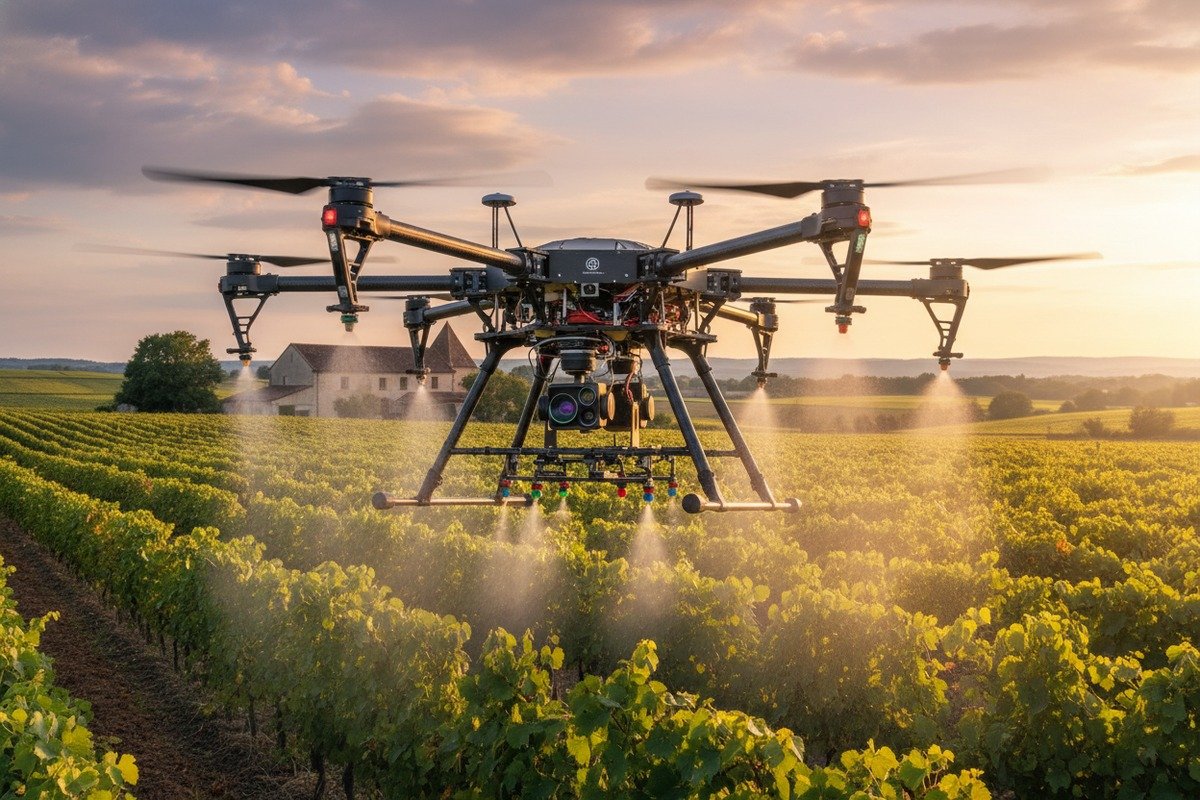
Sensor Technology Requirements
European precision agriculture demands sophisticated sensor packages. Our R&D team designs sensor mounts specifically for EU crop monitoring requirements. Multispectral imaging is now standard, but hyperspectral capabilities are becoming essential.
The sensor must capture data relevant to European crop varieties. Wheat, barley, rapeseed, and sugar beet have different spectral signatures than crops in other regions. Ask suppliers if they have calibrated their sensors for European agricultural conditions.
| Sensor Type | European Application | Key Specifications to Verify |
|---|---|---|
| Multispectral | NDVI crop health mapping | 5+ bands including Red Edge |
| Thermal | Irrigation management, stress detection | Resolution under 50mK NETD |
| Hyperspectral | Nutrient deficiency identification | 100+ spectral bands |
| LiDAR | Terrain mapping, canopy analysis | Points per second rate |
| RGB | Visual inspection, pest identification | Minimum 20MP resolution |
AI and Data Analytics Capabilities
The EU Green Deal 7 pushes farmers toward data-driven decisions. Your supplier must provide AI systems that generate actionable recommendations, not just raw data.
Our software development team spent two years building algorithms that understand European farming practices. We trained models on data from German wheat farms, French vineyards, and Spanish olive groves. Generic AI trained only on American or Asian crops will underperform.
Ask these specific questions:
- What training data did you use for your AI models?
- Can your system detect diseases common to European crops?
- Does your analytics platform integrate with existing FMIS used in Europe?
Variable Rate Application Technology
European regulations increasingly require precise pesticide and fertilizer application. The EU Green Deal targets a 50% reduction in pesticide use by 2030. Drones must support variable rate application (VRA) to meet these goals.
When we calibrate our spraying systems, we test them against European application rate standards. The nozzle configuration must produce consistent droplet sizes. Flow rate accuracy should be within 5% of settings.
Integration and Interoperability
European farms often use existing precision agriculture platforms. Your supplier should demonstrate integration with:
- John Deere Operations Center
- Trimble Ag Software
- CLAAS EASY
- CNH Industrial PLM
Our technical team provides API documentation for all major European FMIS platforms. We also support ISOXML data formats 8 required for equipment compatibility.
Battery and Payload Considerations
European agricultural operations often cover large areas. Battery endurance matters. Our latest agricultural drone models provide 45-minute flight times with full spray payloads.
However, European drones currently lag behind some Chinese and American models in spraying capacity. This is a known industry challenge. Honest suppliers will acknowledge this limitation rather than make unrealistic claims.
How do I assess if a manufacturer can provide the OEM customization required for the European market?
Our OEM department handles over 30 European customization projects annually. We have learned that European distributors need far more than logo placement. They require deep technical modifications to meet local market expectations.
To assess OEM customization capability, request examples of previous European customization projects, verify software localization options, confirm hardware modification flexibility, examine supply chain transparency for EU component sourcing, and evaluate the manufacturer's engineering collaboration process.

Levels of OEM Customization
Not all OEM services are equal. Some suppliers only offer cosmetic changes. European markets often require substantial modifications.
When we work with European partners, we provide three customization levels:
| Customization Level | What It Includes | Typical European Requirements |
|---|---|---|
| Basic | Logo, packaging, user manuals | CE marking, EU language documentation |
| Intermediate | Software interface, app branding, color schemes | Metric unit display, European map integrations |
| Advanced | Hardware modifications, custom sensors, firmware development | EASA-compliant components, EU frequency bands |
Software Localization Requirements
European customers expect software in their local languages. This goes beyond simple translation. Date formats, measurement units, and regulatory terminology must be correct.
Our software team maintains localized versions for German, French, Spanish, Italian, Dutch, and Polish markets. We also adapt interfaces for right-to-left text in markets where needed.
Ask potential suppliers:
- How many European languages do you support?
- Can you modify the flight planning interface for local map providers?
- Will you integrate with national registration databases?
Hardware Modification Capabilities
European radio frequency regulations differ from other regions. Drones sold in Europe must operate on approved frequency bands. Our production line includes dedicated assembly stations for EU-spec radio modules.
Some European customers require specific camera configurations. French vineyard operators prefer different sensor angles than German grain farmers. A capable OEM partner will accommodate these technical preferences.
Supply Chain Transparency
The EU is reducing dependence on certain foreign components. European buyers increasingly ask about supply chain origins. Our procurement team now documents component sourcing for all major parts.
We have established relationships with European battery and sensor suppliers. This allows us to offer partially EU-sourced builds for customers who require them. Tariff considerations make this increasingly important.
Collaboration Process Assessment
Evaluate how the supplier manages OEM projects. Request their typical project timeline. At our facility, a standard European OEM project follows this process:
- Requirements gathering (2 weeks)
- Technical feasibility review (1 week)
- Prototype development (4-6 weeks)
- Testing and certification (2-4 weeks)
- Production setup (2 weeks)
- Quality verification (1 week)
Suppliers who promise faster timelines may cut corners on quality or compliance verification.
Minimum Order Quantities and Flexibility
European distributors often serve smaller markets than American or Asian counterparts. Ask about minimum order quantities for customized products.
Our policy allows OEM orders starting at 50 units for intermediate customization. This flexibility helps European regional distributors compete effectively.
Can my supplier provide the engineering support and certifications I need to import drones into Europe?
Last month, our technical support team helped a German distributor resolve a firmware issue within 24 hours. That same week, we heard from a frustrated buyer whose previous Chinese supplier had not responded to support requests in three months. Engineering support separates reliable partners from risky vendors.
Reliable suppliers provide CE marking documentation, Declaration of Conformity, technical files for EU customs, remote diagnostic capabilities, spare parts availability within Europe, multilingual technical support, and clear warranty terms covering EU consumer protection requirements.

Essential Certification Documentation
European customs authorities require specific documentation. Missing paperwork causes shipment delays and storage fees. Our export compliance team prepares comprehensive document packages for every European shipment.
| Document | Purpose | Supplier Verification Method |
|---|---|---|
| CE Declaration of Conformity | Legal requirement for EU market entry | Request samples from previous shipments |
| Technical Construction File | Supports CE marking claims | Ask for table of contents outline |
| EU Type Examination Certificate | Required for certain drone categories | Verify issuing Notified Body credentials |
| Radio Equipment Directive Compliance | Confirms frequency band legality | Check against EU harmonized standards |
| Battery Safety Certificates | Lithium battery transport and safety | Verify UN38.3 test reports |
Remote Technical Support Capabilities
European customers operate in different time zones than Asian manufacturers. Our support structure includes dedicated European hours coverage. We staff our technical hotline from 6 AM to 10 PM Central European Time.
Effective remote support requires:
- Video diagnostic capabilities
- Screen sharing for software troubleshooting
- Firmware update delivery systems
- Remote flight log analysis
Ask potential suppliers about their support infrastructure. Request average response times for European customers. Our target is under 4 hours for critical issues.
Spare Parts and Repair Network
Drone downtime during planting or spraying season costs farmers money. European distributors need access to spare parts quickly.
We maintain parts inventory at a warehouse in the Netherlands. This allows 2-3 day delivery to most EU destinations. Compare this to 2-3 week shipping times from China.
Key spare parts to discuss:
- Propeller sets
- Motor assemblies
- Battery packs
- Sensor modules
- Flight controller boards
- Spray nozzle kits
Warranty and Consumer Protection Compliance
EU consumer protection laws require specific warranty terms. The standard legal guarantee is two years for consumer products. Commercial products may have different requirements.
Our warranty program for European customers includes:
- 24-month warranty on structural components
- 12-month warranty on electronic modules
- 6-month warranty on batteries
- Free firmware updates for product lifetime
Suppliers who offer shorter warranty periods may face legal complications in EU markets.
On-Site Engineering Support Options
For large deployments, some European customers require on-site technical assistance. Our field engineering team has conducted training sessions in Germany, France, and Spain.
Evaluate whether your supplier can provide:
- Installation supervision
- Pilot training programs
- Maintenance certification courses
- Custom integration support
These services demonstrate genuine commitment to European market success.
Cybersecurity and Data Protection
European GDPR regulations 9 apply to agricultural data collected by drones. Your supplier must explain how they handle flight data, crop imagery, and farm information.
Our data management policy includes:
- Local data storage options
- Encrypted transmission protocols
- Clear data ownership terms
- GDPR-compliant privacy policies
Ask suppliers directly about their data protection practices. Vague answers indicate potential compliance risks.
Conclusion
Evaluating supplier insights on European agricultural drone trends requires systematic verification across regulations, technology, customization, and support capabilities. Use the frameworks and questions provided here to separate genuinely knowledgeable partners from those making empty claims. Your European market success depends on choosing suppliers who truly understand this complex and rapidly growing sector.
Footnotes
1. Wikipedia explains RTK technology and its importance for precise positioning in agriculture. ↩︎
2. Official website for the European Union’s aviation safety agency. ↩︎
3. Official EASA page detailing requirements for the Specific drone category. ↩︎
4. EASA’s official information on drone operations, including BVLOS within the Specific category. ↩︎
5. Official EU portal providing comprehensive information on CE marking requirements. ↩︎
6. Official EASA page explaining drone regulations and categories. ↩︎
7. Official European Commission page detailing the objectives of the EU Green Deal. ↩︎
8. Wikipedia explains ISO 11783 (ISOBUS) and its agricultural data formats like ISOXML. ↩︎
9. Provides the full legal text and key information about the General Data Protection Regulation. ↩︎

 English
  Español de México
  Deutsch
  Français
  Русский
  العربية
