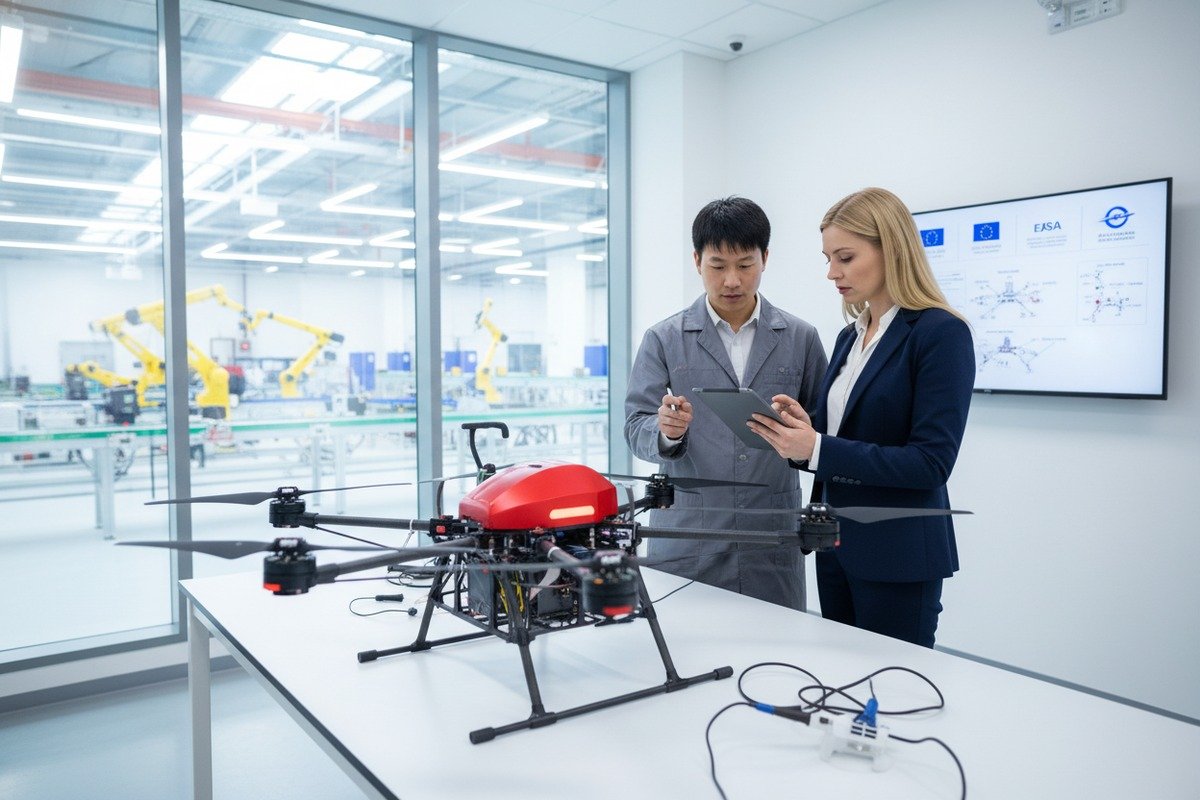
When our engineering team first started developing firefighting drones for European buyers, the regulatory landscape felt like a maze. Distributors struggled to find suppliers who truly understood EASA requirements 1 and C-class labeling. The cost of choosing the wrong partner? Delayed market entry, compliance failures, and damaged reputations.
To evaluate supplier R&D for custom firefighting drones in European markets, assess their EASA certification knowledge, C-class label compliance roadmap, Remote ID integration capabilities, firefighting-specific technical innovations, and long-term support infrastructure. A thorough supplier audit covers engineering expertise, regulatory adaptability, and component traceability.
This guide breaks down exactly what to look for when vetting drone manufacturers. We will cover engineering expertise, certifications, R&D collaboration opportunities, and long-term support. Let’s start with the fundamentals.
How do I assess if a drone manufacturer has the engineering expertise to meet my specific firefighting requirements?
Our production floor handles dozens of custom specifications every quarter. Yet, we see buyers struggle to separate genuinely capable suppliers from those who simply claim expertise. The wrong choice leads to drones that fail in real fire conditions. Lives and property depend on this decision.
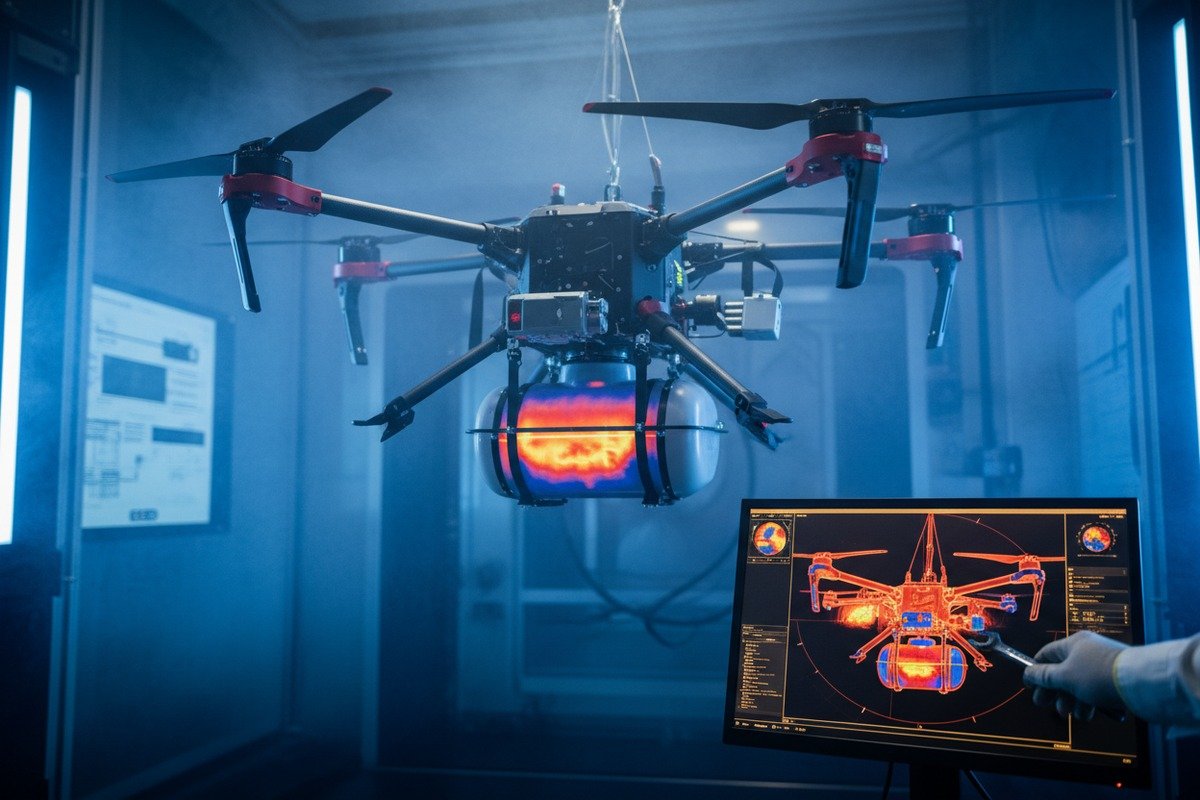
Assess engineering expertise by reviewing the supplier's prototype testing data, thermal imaging sensor integration, payload delivery systems, fire-resistant material certifications, and documented case studies from similar firefighting projects. Request technical specifications, visit production facilities when possible, and verify their track record with European emergency service clients.
Key Engineering Capabilities to Evaluate
When we design firefighting drones at our facility, every component must withstand extreme conditions. Here is what to examine in any supplier's R&D capabilities.
Thermal Resistance and Material Quality
Fire environments reach temperatures exceeding 1000°C in proximity zones. Ask suppliers about their frame materials. Our octocopter designs use carbon fiber composites 2 rated for sustained heat exposure. Request material test certificates and ask which fire-retardant coatings they apply.
Payload Delivery Systems
Firefighting drones must carry water, foam, or fire-retardant chemicals. Payload capacity 3 matters, but so does precision delivery. Our systems use stabilized dispensers that maintain accuracy even in turbulent conditions near active fires. Evaluate these specifications:
| Payload Feature | Minimum Standard | Optimal Standard |
|---|---|---|
| Maximum Payload Weight | 15 kg | 25+ kg |
| Dispensing Accuracy | ±3 meters | ±1 meter |
| Tank Material | Reinforced plastic | Fire-resistant composite |
| Release Mechanism | Manual trigger | Automated GPS-guided |
| Refill Time | Under 5 minutes | Under 2 minutes |
Sensor Integration
Modern firefighting drones require multi-sensor systems. At minimum, suppliers should offer thermal imaging, HD cameras, and environmental sensors. Advanced R&D teams integrate LiDAR for terrain mapping and gas detection sensors for hazardous material incidents.
Questions to Ask Suppliers
Direct questions reveal true capabilities. We recommend this checklist during supplier evaluations:
- Can you provide prototype testing data from simulated fire environments?
- What thermal imaging resolution do your drones achieve?
- How do your drones perform in smoke-heavy conditions?
- What is your failure rate during payload delivery tests?
- Do you have documented deployments with European fire services?
Red Flags to Watch For
Suppliers who cannot provide specific technical documentation should raise concerns. Vague answers about material specifications, missing test certificates, or reluctance to share engineering details suggest limited R&D depth. In our experience shipping to European distributors, transparent documentation separates serious manufacturers from assemblers who simply source components.
What certifications should I look for to ensure my custom drones comply with European aviation and safety standards?
When we began exporting to Germany and France, certification requirements seemed overwhelming. Many suppliers promise compliance but deliver products that fail at customs. The regulatory transition periods add complexity, but understanding the framework protects your investment.
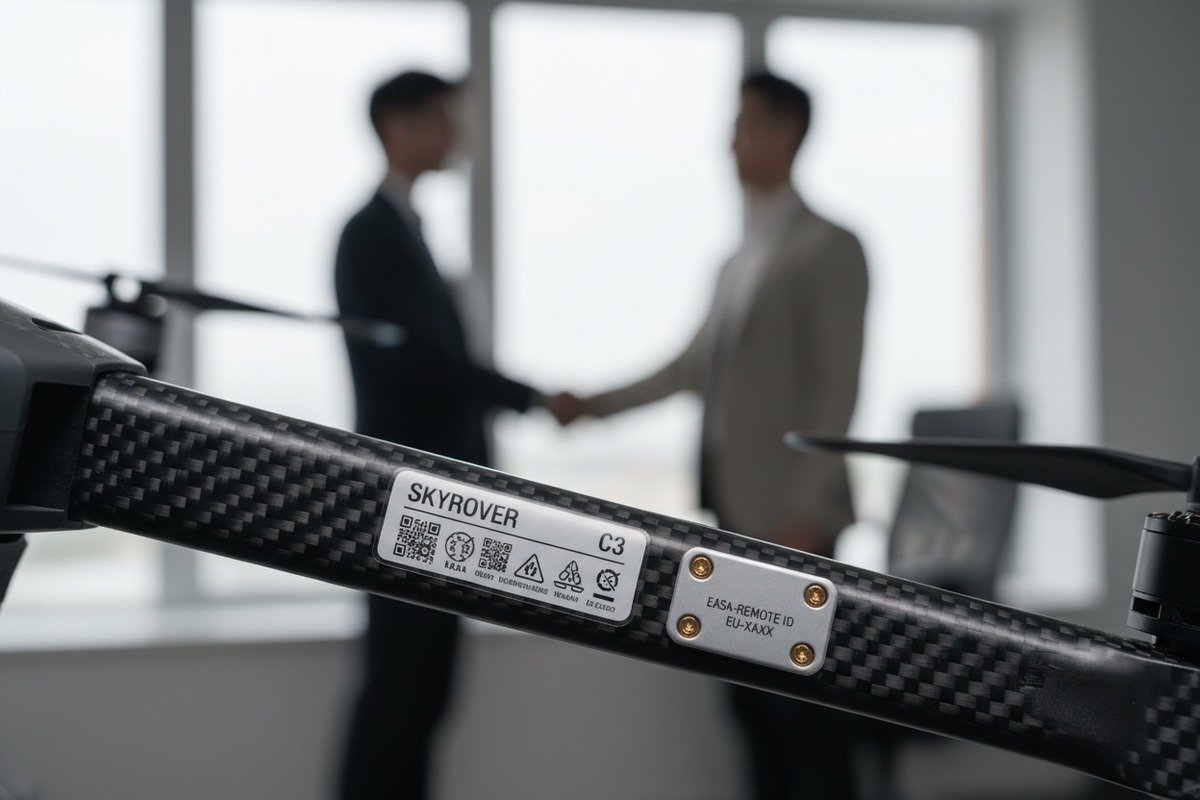
Look for EASA operational category compliance (Open, Specific, or Certified), C-class identification labels (C0-C6), Remote ID capability for drones over 100g, CE marking, and RoHS certification for hazardous substances. For firefighting applications, verify the supplier understands "Certified Category" requirements for high-risk public service operations.
Understanding EU Drone Classification
The European regulatory framework 4 categorizes drones by risk level. Firefighting drones typically fall under "Specific" or "Certified" categories due to their operational complexity and public safety implications.
Open Category
This covers low-risk operations with minimal requirements. Open Category 5 Firefighting drones rarely qualify here due to weight and operational altitude needs.
Specific Category
Most professional firefighting operations fit this category. Specific Category 6 It requires National Aviation Authority authorization and operational risk assessments. Our R&D team designs drones specifically to meet these standards.
Certified Category
High-risk operations like urban firefighting or transporting hazardous materials fall here. This requires full type certification similar to manned aircraft. Few suppliers have the R&D capacity for this level.
| Category | Weight Limit | Altitude Limit | Authorization Required | Typical Use |
|---|---|---|---|---|
| Open | Up to 25 kg | 120 meters | Registration only | Training, basic survey |
| Specific | No strict limit | NAA determined | Operational authorization | Professional firefighting |
| Certified | No strict limit | NAA determined | Full type certification | Urban emergency response |
C-Class Marking Timeline
The C-class labeling 7 system runs from C0 to C6. As of 2026, harmonized EU Cx labels are fully enforced. Suppliers must demonstrate their drones carry proper class markings or have a clear roadmap for compliance.
Key dates to understand:
- End of 2027: EU Cx labels tolerated for transitional period
- 2028: Full Remote ID mandatory for all drones over 100g
- UK market: Separate UK0-UK6 labels required; EU certificates not valid
Essential Certifications Checklist
| Certification | Purpose | Verification Method |
|---|---|---|
| CE Marking 8 | General EU market access | Request declaration of conformity |
| RoHS Compliance | Hazardous substance restriction | BOM review with supplier declarations |
| EASA Design Standards | Aviation safety | Prototype test documentation |
| Remote ID Capability | Airspace identification | Technical specifications review |
| IP Rating (IP54+) | Environmental protection | Third-party test certificate |
RoHS and Supply Chain Control
European RoHS regulations 9 restrict hazardous substances in electronic equipment. Our procurement team requires compliance declarations from every upstream component supplier. When evaluating manufacturers, request their full Bill of Materials and RoHS certificates for critical components like batteries, motors, and circuit boards.
Suppliers with robust supply chain control can provide component traceability. This matters because a single non-compliant part can block your entire shipment at European customs.
Can I collaborate directly with the supplier's R&D team to develop proprietary software or unique hardware features for my brand?
Our team works alongside distributors on custom development projects regularly. Yet, many buyers underestimate what collaboration requires from both sides. Without clear processes, custom projects become expensive failures. The right supplier partnership creates competitive advantages for your brand.
Yes, you can collaborate directly with supplier R&D teams if they offer OEM development services. Evaluate their software development capabilities, hardware customization flexibility, IP protection policies, and communication protocols. Request NDAs, define milestone-based development schedules, and verify they have dedicated engineering staff for custom projects.

What Collaboration Actually Looks Like
When European distributors approach our engineering team, we establish clear project frameworks. True R&D collaboration involves more than logo placement. It means developing proprietary features that differentiate your products.
Software Development Opportunities
Custom software gives you market advantages. Consider these development areas:
- Flight control algorithms optimized for specific firefighting scenarios
- AI-driven autonomous navigation through smoke and debris
- Integration with existing European emergency command systems
- Custom ground station interfaces with your branding
- Geo-fencing protocols for national no-fly zones
Hardware Customization Options
Physical modifications require manufacturing flexibility. Our facility handles custom frame designs, specialized payload systems, and sensor packages tailored to regional requirements.
Evaluating Supplier Collaboration Readiness
Not every manufacturer can support genuine R&D partnerships. Here is how to assess their capabilities:
Dedicated Engineering Teams
Ask whether they assign dedicated engineers to custom projects or rotate staff between orders. At our facility, custom development projects receive assigned teams who understand your specific requirements throughout the project lifecycle.
Communication Infrastructure
Time zone differences matter. We maintain English-speaking technical staff available during European business hours. Video conferencing, shared project management platforms, and regular progress updates should be standard.
IP Protection Policies
Your custom developments must remain yours. Request sample NDA documents and review their IP assignment clauses. Reliable suppliers clearly transfer ownership of custom-developed features to their clients.
Development Timeline Expectations
Custom firefighting drone development follows predictable phases. Set realistic expectations:
| Development Phase | Typical Duration | Key Deliverables |
|---|---|---|
| Requirements Definition | 2-4 weeks | Technical specification document |
| Prototype Design | 6-10 weeks | CAD models, initial schematics |
| Prototype Build | 4-6 weeks | Working prototype unit |
| Testing & Refinement | 8-12 weeks | Test data, design revisions |
| Certification Preparation | 4-8 weeks | Documentation for EASA compliance |
| Production Setup | 4-6 weeks | Manufacturing procedures |
Critical Questions for R&D Collaboration
Before committing to a development partnership, clarify these points:
- Who owns the intellectual property for custom-developed features?
- What is your engineering team's experience with European emergency service integrations?
- Can you provide references from previous custom development clients?
- How do you handle mid-project specification changes?
- What support do you provide during certification processes?
The difference between suppliers who assemble products and those who truly innovate becomes clear during these discussions. Our approach involves transparent communication about what is feasible within given timelines and budgets.
How can I verify that the supplier's R&D department provides long-term technical support and component availability for my fleet?
After years of fielding support requests from our distribution partners, one pattern emerges clearly. Buyers often overlook post-purchase support during supplier selection. Then problems arise two years later when components become unavailable. This creates expensive fleet downtime and frustrated end customers.
Verify long-term support by requesting the supplier's component lifecycle policies, spare parts pricing and availability commitments, remote technical support capabilities, firmware update roadmaps, and references from existing long-term clients. Examine their warranty terms, response time guarantees, and whether they maintain regional service centers in Europe.
Why Long-Term Support Matters for Firefighting Fleets
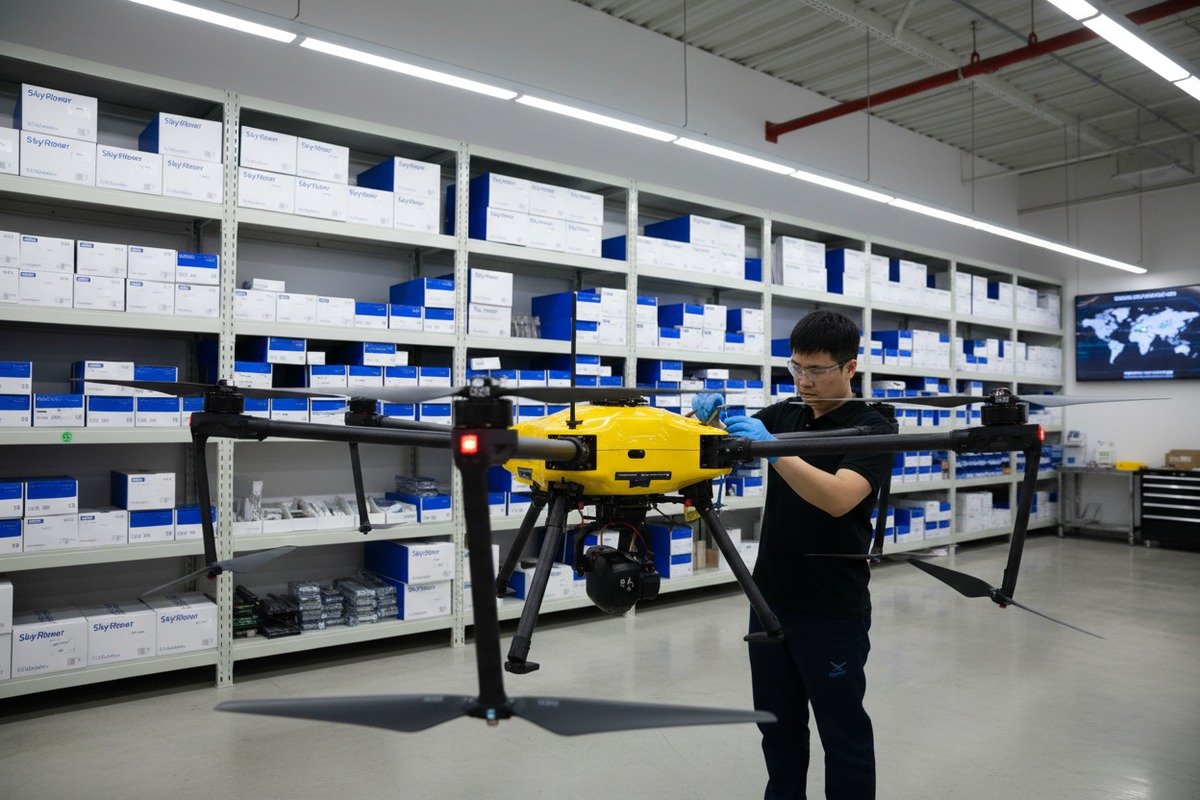
Firefighting drone fleets represent significant investments. Government agencies and professional services expect operational lifespans of 5-10 years. During that time, components wear, software requires updates, and regulations change. Suppliers without long-term support infrastructure leave you stranded.
Component Availability Commitments
Ask suppliers how long they guarantee component availability after purchase. Responsible manufacturers maintain spare parts inventories for minimum 5 years. At our facility, we document component sourcing and maintain backup supplier relationships for critical parts.
Firmware and Software Updates
European regulations evolve continuously. Remote ID requirements, geo-fencing databases, and airspace integration protocols change. Your drones need ongoing software updates to remain compliant. Verify whether the supplier provides these updates and for how long.
Support Infrastructure Assessment
Evaluate these specific support capabilities:
Remote Technical Assistance
Modern drone support relies heavily on remote diagnostics. Our technical team can access flight logs, analyze performance data, and guide troubleshooting via video call. Ask suppliers what remote support tools they provide.
Response Time Guarantees
For emergency service equipment, response time matters. Define acceptable support response windows in your supply agreements:
| Support Level | Response Time | Availability | Typical Cost Structure |
|---|---|---|---|
| Basic | 48-72 hours | Business days | Included in purchase |
| Standard | 24 hours | Business days | Annual fee |
| Premium | 4-8 hours | 24/7 | Premium annual fee |
| On-site | 24-48 hours | By arrangement | Per-incident fee |
Regional Presence
Some suppliers maintain European service centers or partner networks. This dramatically reduces turnaround time for repairs requiring physical intervention. Ask whether they have authorized service partners in your target markets.
Verifying Supplier Claims
Do not accept verbal assurances. Request documentation:
- Written component availability policy with specific timeframes
- Sample spare parts price list with delivery time estimates
- Contact information for current long-term clients as references
- Firmware update history showing regular maintenance releases
- Service level agreement templates
Building Support into Supply Agreements
When we structure agreements with our distribution partners, support terms receive equal attention to product specifications. Consider including:
- Minimum spare parts stock requirements at supplier facility
- Maximum spare parts delivery times to European addresses
- Firmware update frequency commitments
- Training programs for your technical staff
- Annual support pricing caps
Suppliers who resist documenting support commitments may struggle to deliver when problems arise. Our experience shows that clear written agreements prevent disputes and ensure your fleet remains operational.
Conclusion
Evaluating supplier R&D for custom firefighting drones requires systematic assessment across engineering capabilities, regulatory compliance, collaboration potential, and long-term support. Use the frameworks and checklists in this guide to make informed decisions that protect your European market position.
Footnotes
1. Explains the European Union Aviation Safety Agency’s drone regulations. ↩︎
2. Highlights the material’s strength-to-weight ratio and durability for drone construction. ↩︎
3. Defines the maximum weight a drone can carry, crucial for mission effectiveness. ↩︎
4. Provides an overview of the legal structure governing drone operations in Europe. ↩︎
5. Describes the low-risk drone operations with minimal requirements under EASA regulations. ↩︎
6. Describes the medium-risk drone operations requiring authorization under EASA regulations. ↩︎
7. Details the drone classification system (C0-C6) for European market compliance. ↩︎
8. Explains the mandatory conformity marking for products sold in the European Economic Area. ↩︎
9. Explains the EU directive limiting hazardous substances in electronic and electrical equipment. ↩︎

 English
  Español de México
  Deutsch
  Français
  Русский
  العربية
