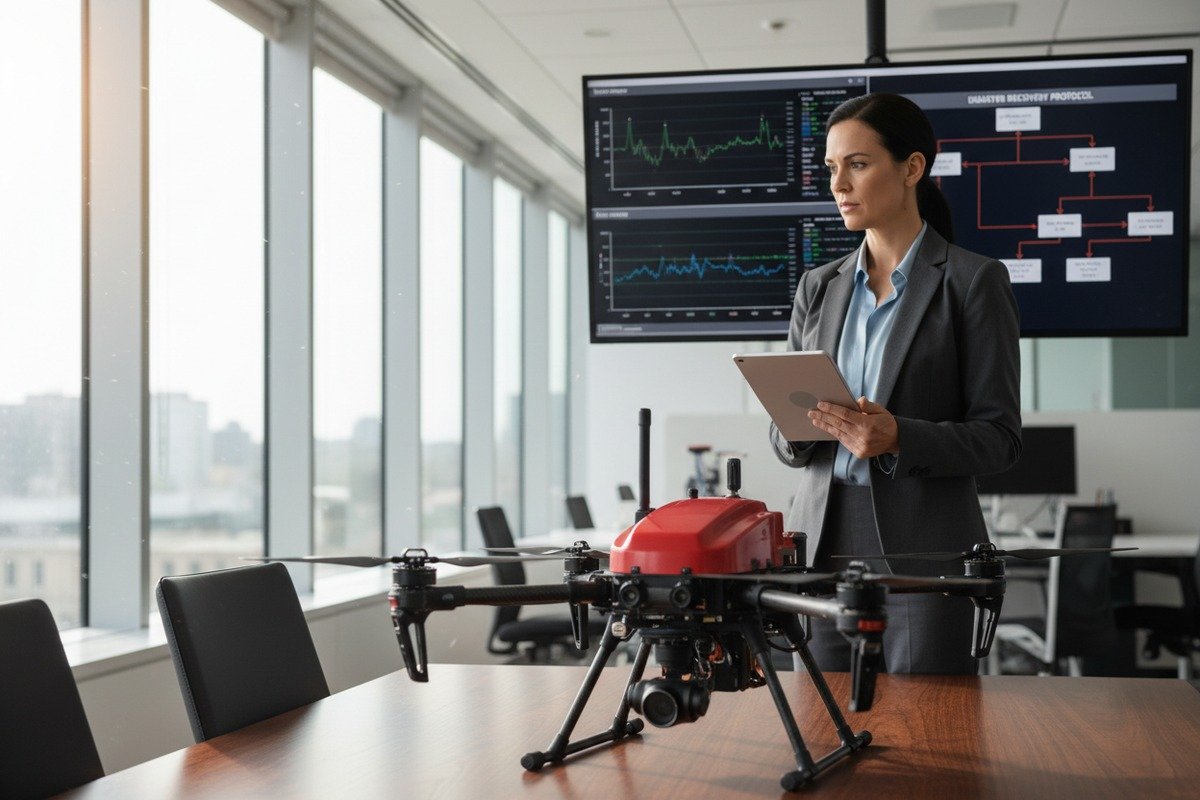
When our production team finishes assembling a firefighting drone 1, we know it might one day hover above an inferno. But what happens when that drone fails mid-mission Service Level Agreements 2? The supplier’s crisis response determines whether lives are saved or lost.
To evaluate supplier crisis management capabilities, assess their technical support response times, quality control certifications, export documentation experience, and long-term maintenance infrastructure. Request evidence of tested disaster recovery plans, spare parts inventory levels, and documented incident response protocols before signing any procurement contract.
This guide walks you through the critical questions every procurement manager should ask IP ratings of IP55 3. We will cover technical support verification, quality standards, export compliance, and maintenance support. Each section provides actionable frameworks based on our experience manufacturing and exporting industrial drones worldwide.
How can I verify that a supplier will provide immediate technical support if my firefighting drones fail during a mission?
When we ship drones to fire departments across the United States, our engineering team stays on standby Incoming Material Inspection 4. A drone failure during a wildfire is not a minor inconvenience. It can mean the difference between containing a blaze and watching it spread Dual-Use Concerns 5.
Verify immediate technical support by requesting documented Service Level Agreements with specific response time guarantees, 24/7 contact protocols, remote diagnostics capabilities, and evidence of past crisis interventions. Ask for references from existing clients who experienced mission-critical failures and how the supplier resolved them.
Define What "Immediate" Actually Means
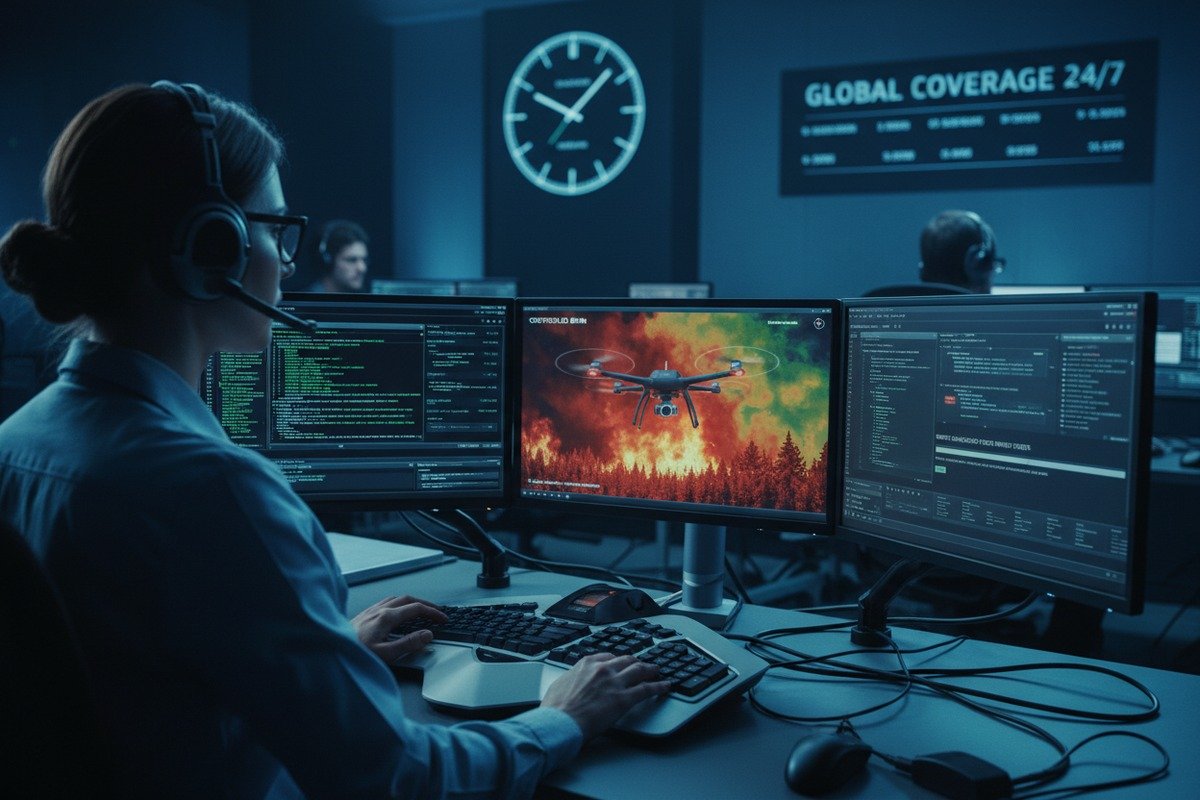
The word "immediate" means different things to different suppliers. Some consider 24 hours acceptable. For firefighting operations, you need response times measured in minutes, not hours.
Our engineers learned this lesson during a wildfire season in California. A client's drone experienced a motor controller fault. Because we had pre-established remote diagnostic protocols 6, our team accessed the drone's telemetry within 15 minutes. We identified a firmware conflict and pushed an over-the-air patch within the hour.
Ask suppliers to define their response tiers clearly:
| Support Tier | Response Time | Resolution Target | Availability |
|---|---|---|---|
| Critical (Mission Active) | Under 30 minutes | 4 hours | 24/7/365 |
| High (Pre-Mission) | Under 2 hours | 24 hours | Business hours + on-call |
| Standard (Non-Urgent) | Under 24 hours | 72 hours | Business hours |
Request Documented Evidence
Glossy marketing materials mean nothing. Request actual documentation:
- Service Level Agreements (SLAs): These should specify penalties if response times are missed
- Incident logs: Ask for anonymized records of past support cases
- Escalation procedures: Who gets contacted when the first-tier support cannot resolve the issue?
- Remote diagnostic capabilities: Can they access your drone's systems remotely?
Test Before You Commit
Before signing a large order, conduct a trial. Order a small batch and simulate a support request. Time the response. Evaluate the quality of assistance. This small investment reveals more than any sales presentation.
Our recommendation is to request a live demonstration of their support process. Have them walk you through a mock emergency scenario. Watch how their team coordinates. Notice if they have clear protocols or if they improvise.
Evaluate Communication Infrastructure
During a crisis, communication breakdowns cause failures. Verify that your supplier offers:
- Multiple contact channels (phone, email, dedicated app, video call)
- Multilingual support if operating internationally
- Direct access to engineering staff, not just call center agents
- Documented communication trees showing who handles what
What quality control standards should I demand to ensure my drones are durable enough for high-risk firefighting environments?
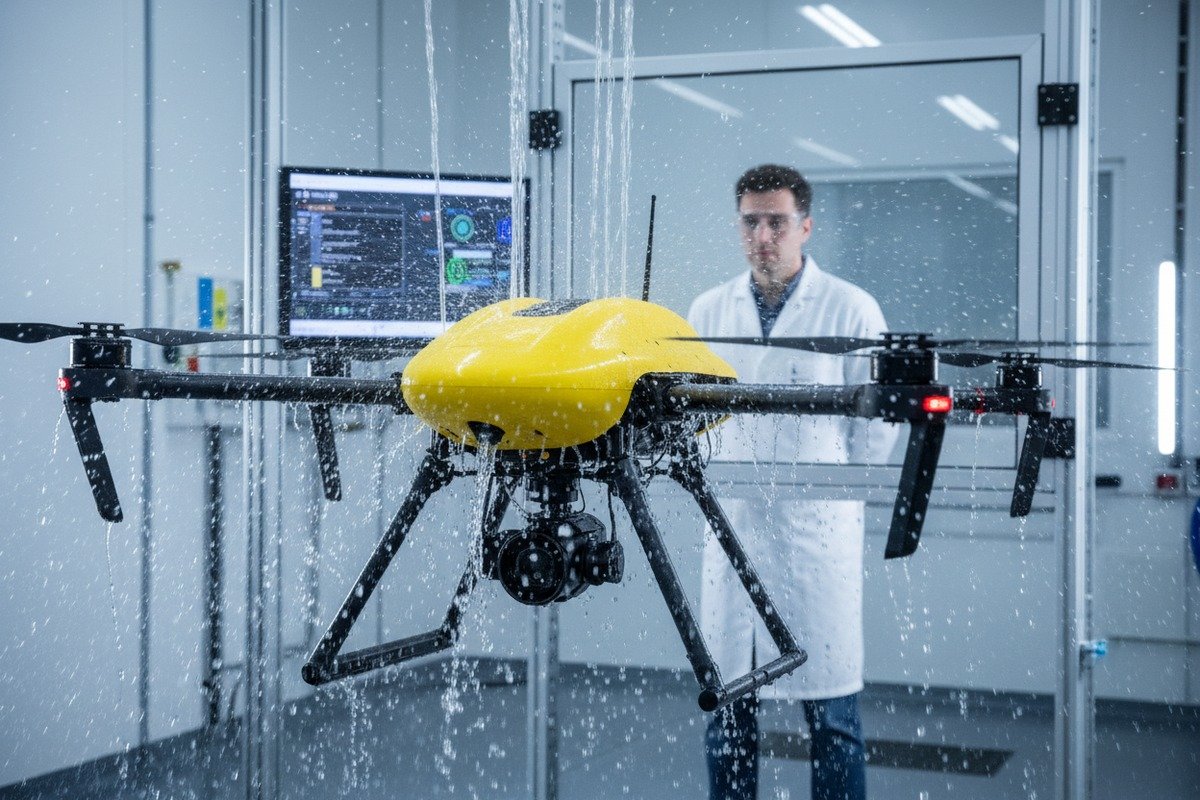
Our testing chambers simulate conditions most products never face. We expose drones to extreme heat, water ingress, and vibration because firefighting environments show no mercy. A drone that fails quality testing fails the people depending on it.
Demand ISO 9001 certification as a baseline, plus IP ratings of IP55 or higher for dust and water resistance. Request documented testing protocols for thermal exposure, vibration endurance, and electromagnetic interference. Verify suppliers conduct incoming material inspections, in-process quality gates, and final acceptance testing with traceable records.
Understand the Environmental Challenges
Firefighting drones face unique stressors:
- Extreme heat: Temperatures near active fires can exceed 200°C in thermal updrafts
- Smoke and particulates: Dense smoke clogs motors and sensors
- Water exposure: Drones may fly through water spray from ground crews
- Electromagnetic interference: Emergency communication equipment creates signal interference
- Rapid altitude changes: Thermal columns cause sudden lift and drop
Essential Certifications and Ratings
Not all certifications matter equally. Focus on these:
| Certification/Rating | What It Covers | Why It Matters |
|---|---|---|
| ISO 9001:2015 | Quality management systems | Ensures documented, repeatable processes |
| IP55 or higher | Dust and water ingress protection | Protects against ash and water spray |
| MIL-STD-810G | Environmental engineering considerations | Military-grade durability testing |
| CE/FCC | Electromagnetic compatibility | Prevents interference with emergency comms |
| DO-160 (optional) | Airborne equipment environmental conditions | Aerospace-level reliability |
Inspect the Testing Protocols
When we design a new firefighting drone, our quality team creates a testing matrix. Ask your supplier for equivalent documentation:
Incoming Material Inspection: Every component should be verified before assembly. Request their acceptance criteria for batteries, motors, flight controllers, and structural components.
In-Process Quality Gates: At what assembly stages do they inspect? What are the pass/fail criteria? How do they handle non-conforming units?
Final Acceptance Testing: What functional tests does every unit pass before shipping? Request sample test reports.
Demand Traceability
If a drone fails in the field, you need to trace the problem to its source. Quality suppliers maintain:
- Serial number tracking for major components
- Batch records linking raw materials to finished products
- Calibration records for test equipment
- Training records for assembly technicians
Visit the Factory if Possible
Nothing replaces an in-person audit. If visiting China is impractical, request a video walkthrough of the production line. Look for:
- Clean, organized workstations
- Visible quality checkpoints
- Proper ESD (electrostatic discharge) protection
- Dedicated testing areas with appropriate equipment
Our facility in Xi'an welcomes client audits. We find that clients who visit understand our quality commitment far better than those who only review documents.
How do I evaluate a supplier's export experience to ensure my shipments won't face customs issues or delivery delays?
In our experience exporting to the US and Europe, we have learned that paperwork failures cause more delays than production problems. A drone sitting in customs helps no one. Export expertise separates professional suppliers from those who will cost you time and money.
Evaluate export experience by requesting their customs clearance success rate, documentation samples for similar shipments, and references from clients in your country. Verify they understand your country's import regulations, dual-use restrictions, and required certifications. Ask about their freight forwarder relationships and contingency plans for logistics disruptions.

Know the Regulatory Landscape
Firefighting drones face complex export regulations:
Dual-Use Concerns: Drones with certain capabilities may require export licenses. Thermal cameras, long-range communication systems, and autonomous flight features can trigger additional scrutiny.
Country-Specific Requirements: The US, EU, and other regions have different certification requirements. A drone approved for sale in China may need additional testing for CE marking in Europe or FCC compliance in the US.
End-Use Documentation: Some countries require end-user certificates confirming the drone's intended application.
Questions to Ask Your Supplier
| Question | What the Answer Reveals |
|---|---|
| How many shipments have you completed to my country in the past year? | Practical experience with your specific market |
| What documents do you provide with each shipment? | Understanding of required paperwork |
| Have you ever had a shipment held at customs? What happened? | Honesty and problem-solving ability |
| Who is your freight forwarder? How long have you worked together? | Logistics network stability |
| Can you provide door-to-door delivery with DDP terms? | Willingness to take responsibility for customs clearance |
Documentation Checklist
Professional exporters provide comprehensive documentation:
- Commercial invoice with accurate HS codes 8
- Packing list with detailed weight and dimensions
- Certificate of Origin
- Product compliance certificates (CE, FCC, etc.)
- MSDS for lithium batteries
- Export license (if required)
- End-user statement (if required)
Understand Incoterms and Risk Transfer
Shipping terms determine who bears risk during transit. For drone imports, consider:
DDP (Delivered Duty Paid): The supplier handles everything including customs clearance. You receive the product at your door. This shifts maximum responsibility to the supplier.
DAP (Delivered at Place): The supplier delivers to a named place, but you handle import customs. This saves money but requires your customs expertise.
FOB (Free on Board): Risk transfers when goods are loaded onto the ship. You handle everything after that point.
For clients new to importing drones, we typically recommend DDP terms. The slightly higher cost is worthwhile to avoid customs complications.
Build Contingency Plans
Even experienced exporters face disruptions. Ask how your supplier handles:
- Port congestion delays
- Customs holds requiring additional documentation
- Shipping carrier failures
- Geopolitical disruptions affecting specific routes
Our logistics team maintains relationships with multiple freight forwarders. When one route faces problems, we pivot to alternatives. This redundancy has saved several clients from critical delivery failures.
Can my drone manufacturer provide the long-term maintenance support and spare parts I need to minimize my fleet's downtime?
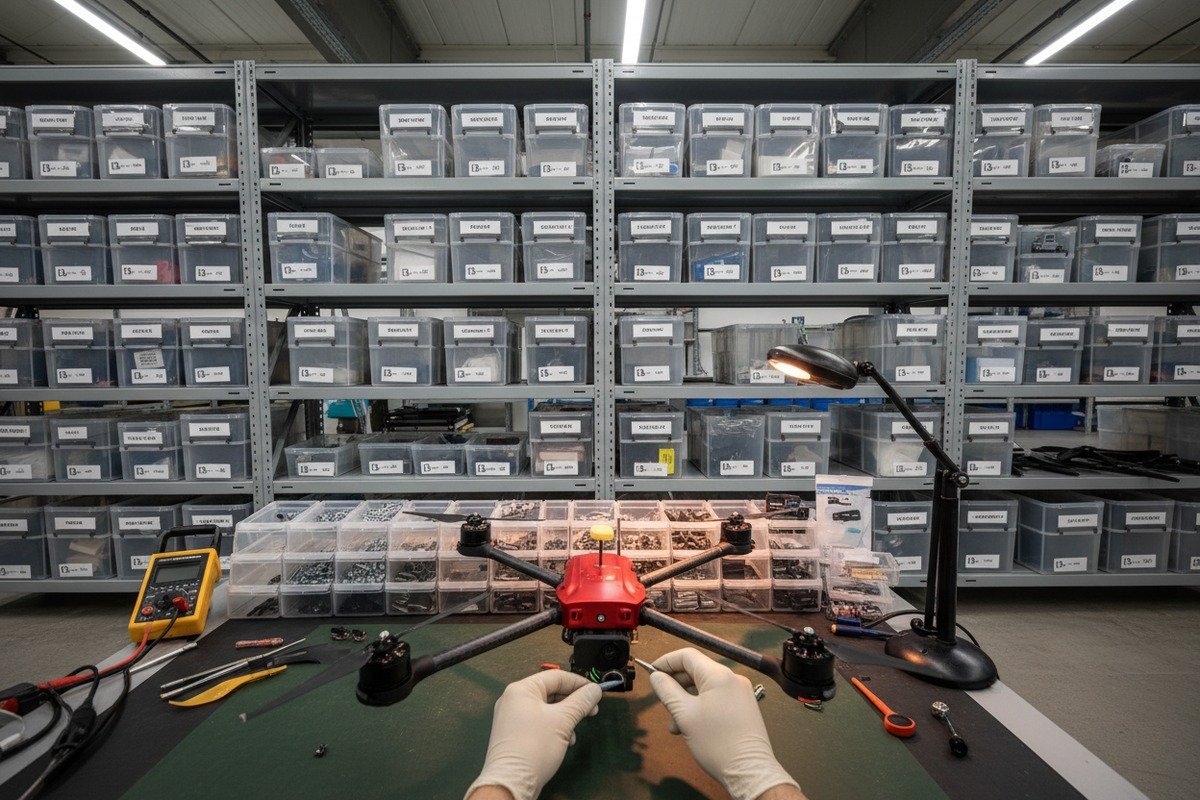
When we calibrate our flight controllers, we think beyond the initial sale. A firefighting drone fleet represents a multi-year investment. Without spare parts and maintenance support, even the best drones become expensive paperweights after the warranty expires.
Assess long-term support by requesting guaranteed spare parts availability periods, pricing for common replacement components, maintenance training programs, and documentation of their parts inventory management system. Verify they commit to supporting products for at least five to seven years after purchase and offer preventive maintenance schedules.
Calculate True Lifetime Costs
The purchase price is just the beginning. Consider:
| Cost Category | First Year | Years 2-5 (Annual) | Notes |
|---|---|---|---|
| Initial Purchase | 100% | 0% | One-time cost |
| Preventive Maintenance | 5-10% | 5-10% | Regular calibration, inspections |
| Spare Parts (Wear Items) | 2-5% | 5-15% | Propellers, batteries, filters |
| Major Repairs | 0-5% | 5-20% | Motor replacement, structural repairs |
| Training Updates | 2-3% | 1-2% | Operator certification, new features |
A supplier who offers low initial pricing but charges excessive spare parts prices may cost more over five years than a competitor with higher upfront costs but reasonable parts pricing.
Critical Spare Parts to Stock
For firefighting drone fleets, maintain inventory of:
High-Wear Items (replace frequently):
- Propellers
- Battery packs
- Air filters
- Camera lens protectors
Moderate-Wear Items (annual replacement typical):
- Motors
- ESCs (Electronic Speed Controllers)
- Gimbal components
- Landing gear
Emergency Spares (for unexpected failures):
- Flight controller boards
- GPS modules
- Communication modules
- Wiring harnesses
Evaluate Parts Availability Commitments
Ask your supplier:
- How long do you guarantee parts availability after the product discontinues?
- What is your typical lead time for spare parts orders?
- Do you offer spare parts kits at discounted pricing?
- Can I purchase parts directly, or must I use authorized service centers?
- What is your policy if a part becomes obsolete?
Professional manufacturers commit to minimum support periods. At our company, we guarantee seven-year parts availability for all firefighting drone models. This commitment is contractual, not just verbal.
Training and Documentation
Maintenance support includes knowledge transfer:
Operator Training: Basic daily checks, battery management, pre-flight protocols
Technician Training: Component replacement, system diagnostics, firmware updates
Documentation: Maintenance manuals, parts catalogs, troubleshooting guides, wiring diagrams
Some suppliers offer on-site training at their facility. Others provide video-based programs. The best offer both, plus ongoing support as your team encounters new issues.
Consider Regional Service Centers
For large fleet deployments, ask if the supplier has or plans regional service centers. A service center in North America can provide:
- Faster turnaround on repairs
- Local spare parts inventory
- In-person technical support
- Reduced shipping costs and delays
If no regional presence exists, discuss whether the supplier will support a third-party service relationship. Some clients designate a local drone repair shop as their authorized service provider, with the manufacturer providing parts and technical guidance.
Monitor Supplier Stability
Long-term support requires the supplier to remain in business. Evaluate:
- How long has the company operated?
- What is their financial health?
- Do they have diverse revenue streams beyond a single product line?
- Have they supported older products as promised?
Request references from clients who purchased products three or more years ago. Ask those references about parts availability and support quality over time.
Conclusion
Evaluating supplier crisis management capabilities protects your investment and the people who depend on your firefighting drones. Focus on documented evidence over promises. Test support systems before committing to large orders. Build partnerships with suppliers who demonstrate long-term commitment to your success.
Footnotes
1. Explains how drones are used by the USDA Forest Service in wildfire management. ↩︎
2. Defines SLAs as contracts between service providers and customers, outlining service levels. ↩︎
3. Explains the International Protection (IP) Code system for classifying protection against solids and liquids. ↩︎
4. Relates to quality management principles, including inspection of incoming products. ↩︎
5. Found the official European Union regulation on dual-use items on EUR-Lex. ↩︎
6. Provides a technical overview of remote monitoring and diagnosis technology. ↩︎
7. Official ISO page explaining the ISO 9001 standard for quality management systems. ↩︎
8. Official World Customs Organization page explaining the Harmonized System (HS) for classifying goods. ↩︎
9. Official ICC page detailing Incoterms 2020 rules, including DDP, for international trade. ↩︎

 English
  Español de México
  Deutsch
  Français
  Русский
  العربية
