
When our production team finishes assembling each agricultural drone 1, we know the real relationship with customers just begins. Many US importers face frustrating situations after purchase remote technical support 2. Parts arrive late. Support calls go unanswered. Software stops updating. These problems hurt your reputation and your clients’ crops.
To evaluate supplier after-sales support effectively, verify remote technical support availability during US business hours, confirm spare parts inventory in accessible locations, examine warranty terms for coverage details, and assess the supplier’s commitment to ongoing software updates and engineering assistance. Strong after-sales support protects your business investment and keeps your customers productive.
The sections below break down each critical factor. You will learn specific questions to ask, red flags to avoid, and practical methods to test supplier claims before committing to bulk orders.
How can I verify if a Chinese drone manufacturer provides reliable remote technical support for my US clients?
From our experience shipping agricultural drones across the Pacific, time zone differences create real challenges. A farmer in Texas needs help at 10 AM local time. That means midnight in China. Without proper support systems, your client waits hours while crops sit unsprayed.
Verify remote technical support reliability by requesting documented response time commitments, confirming support availability during US business hours, testing communication channels before ordering, and asking for references from current US customers. Reliable suppliers maintain dedicated support teams or partner networks to cover time zone gaps.

Test Before You Trust
Many suppliers claim excellent support. Few prove it before you order. Here is a practical approach. Send a technical question via email and live chat at different times. Record response times. Ask detailed questions about your specific use case. Evaluate answer quality.
Our engineering team handles support requests through multiple channels. We track every inquiry. Average response time matters, but resolution quality matters more. A fast reply saying "we will check" helps nobody.
Support Channel Assessment
| Support Channel | What to Check | Red Flags |
|---|---|---|
| Response time under 24 hours | No reply after 48 hours | |
| Live Chat | Availability during US business hours 3 | Chat only available in Chinese time |
| Phone/Video Call | Scheduled technical consultations | No English-speaking technicians |
| Remote Diagnostics | Screen-sharing capability | Requires shipping drone back for all issues |
| Knowledge Base | Comprehensive troubleshooting guides | Outdated or missing documentation |
Questions to Ask Suppliers
Request specific metrics. What percentage of issues get resolved remotely? How many support engineers speak English fluently? Do you have US-based support partners? Can you provide remote diagnostics through the drone's software?
When we calibrate flight controllers at our facility, we document every setting. This documentation helps our support team diagnose problems remotely. Suppliers who invest in proper documentation provide better long-term support.
Real-World Testing Method
Before placing a large order, request a sample unit. Create a simulated problem. Contact support. Time the response. Evaluate the solution quality. This investment saves thousands in future headaches.
What should I ask about a supplier's spare parts availability and delivery times to protect my business?
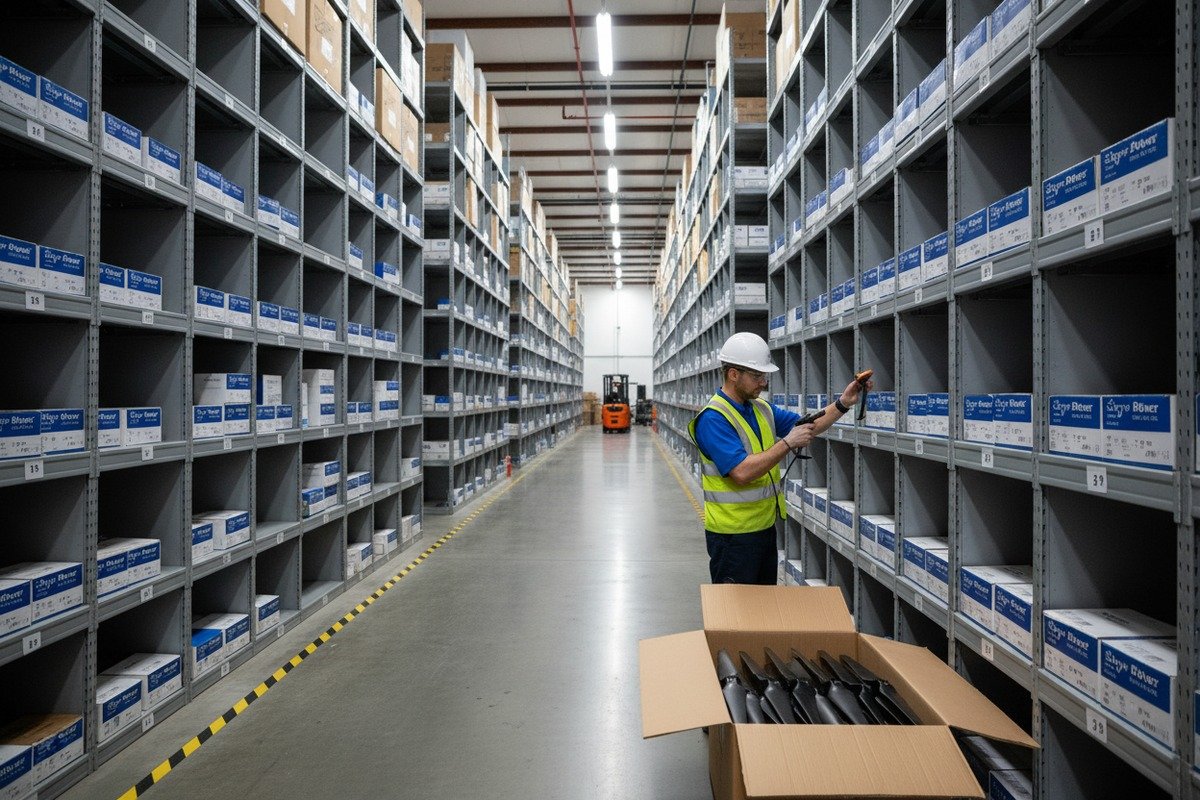
Our warehouse team packs replacement parts daily. We understand that a broken propeller in July means a farmer loses money every hour. The spray season waits for nobody. Parts availability directly impacts your customers' success and your reputation.
Ask suppliers about US-based parts inventory locations, typical delivery timeframes for common components, stock levels for critical wear items, expedited shipping options, and whether generic alternatives are compatible. Suppliers who maintain regional inventory or fast international logistics protect your business from costly downtime.
Critical Parts Categories
Agricultural drones have parts that wear out regularly. Propellers, spray nozzles, pump components, and batteries need frequent replacement. Other parts fail occasionally. Motors, ESCs, and frame components last longer but still require availability.
Parts Availability Checklist
| Part Category | Replacement Frequency | Acceptable Delivery Time | Ask About |
|---|---|---|---|
| Propellers | Every 50-100 flight hours | 3-5 business days | Pack quantity, material options |
| Spray Nozzles | Every season | 5-7 business days | Nozzle type compatibility |
| Batteries | Every 300-500 cycles | 7-10 business days | Shipping restrictions, certification |
| Pump Components | Annual replacement | 7-14 business days | Rebuild kits availability |
| Motors | 2-3 year lifespan | 14-21 business days | Compatible alternatives |
| Flight Controller | Rare failure | 14-30 business days | Exchange programs |
Inventory Location Strategy
Suppliers handle parts inventory differently. Some maintain US warehouses. Others ship directly from China. Some partner with US distributors who stock common items.
At our facility, we track which parts US customers order most frequently. This data helps us advise distribution partners on stocking levels. Ask your potential supplier how they analyze parts demand patterns.
Pricing Transparency
Request a complete parts price list before ordering drones. Calculate annual maintenance costs. Industry benchmarks suggest 5-10% of drone purchase price annually for parts and maintenance. If a supplier's parts prices push you above 15%, investigate alternatives.
Compatibility Questions
Can your drone use third-party parts? Some manufacturers design proprietary components. Others use industry-standard parts. Open designs often mean easier sourcing and lower costs. Proprietary systems may offer better integration but create supply chain risks 4.
How do I evaluate the quality of a supplier's warranty terms and repair services before placing a bulk order?
When we design warranty programs 5, we consider real-world agricultural conditions. Dust, humidity, chemical exposure, and rough field handling stress drone components. A warranty that excludes normal agricultural use protects nobody except the manufacturer.
Evaluate warranty quality by examining coverage duration, included components, exclusion clauses, claim procedures, repair turnaround times, and shipping cost responsibilities. Strong warranties cover at least 12 months, include major components, offer reasonable exclusions, and provide clear claim processes with defined response timelines.

Warranty Term Comparison Framework
| Warranty Element | Minimum Acceptable | Good | Excellent |
|---|---|---|---|
| Duration | 12 months | 18-24 months | 24+ months |
| Frame Coverage | Manufacturer defects | Defects + material failure | All structural issues |
| Electronics Coverage | Major components | All electronics | Electronics + software |
| Motor Coverage | 6 months | 12 months | 18+ months |
| Battery Coverage | 6 months / 200 cycles | 12 months / 300 cycles | 12 months / 400 cycles |
| Shipping Costs | Customer pays both ways | Customer pays outbound | Manufacturer covers both |
| Repair Turnaround | 30 days | 14 days | 7 days |
Exclusion Clause Analysis
Read warranty exclusions carefully. Common exclusions include crash damage, water damage beyond rated IP protection, unauthorized modifications, and improper maintenance. Reasonable exclusions protect both parties. Excessive exclusions signal a manufacturer looking to deny claims.
Our warranty documents specify exactly what "normal agricultural use" means. We define acceptable chemical exposure, operating temperatures, and maintenance requirements. Vague language benefits the manufacturer, not you.
Repair Service Infrastructure
Where will repairs happen? Options include shipping to China, shipping to US service centers, or on-site technician visits. Each approach has trade-offs.
Repair Service Model Comparison
Shipping to China costs less but takes 4-6 weeks. US service centers cost more but complete repairs in 1-2 weeks. On-site service offers fastest resolution but highest cost.
For bulk orders, negotiate repair terms specifically. Volume buyers often receive priority service, loaner units during repairs, or on-site technician visits included in purchase agreements.
Claim Process Documentation
Request the actual warranty claim procedure. How do customers initiate claims? What documentation is required? Who decides claim validity? What appeal process exists for denied claims?
We provide claim forms in our customer portal. Customers upload photos, flight logs, and descriptions. Our engineering team reviews within 48 hours. Clear procedures reduce frustration for everyone.
Extended Warranty Options
Many manufacturers offer extended warranties for additional cost. Evaluate these carefully. Calculate the break-even point. If extended warranty costs exceed expected repair costs, self-insuring may make more sense.
Can I trust my drone supplier to provide the engineering support and software updates my customers will need?
Our software development team releases updates monthly. Agricultural drone software evolves constantly. New crop patterns require new flight algorithms. Regulatory changes demand compliance updates. Customers who receive outdated software fall behind competitors.
Trust supplier engineering support by verifying their software update history, examining update delivery methods, confirming support for regulatory compliance changes, and assessing their capacity for custom development. Reliable suppliers demonstrate consistent update schedules, remote update capabilities, and responsiveness to customer feature requests.

Software Update Evaluation
Request the supplier's update history for the past 24 months. Look for regular releases. Check release notes for meaningful improvements versus minor bug fixes. Consistent updates indicate ongoing investment in the product.
Update History Assessment Criteria
| Assessment Area | Questions to Ask | Evidence to Request |
|---|---|---|
| Update Frequency | How often are updates released? | Release history log |
| Update Content | What types of improvements are included? | Recent release notes |
| Delivery Method | Can updates be applied remotely? | Update procedure documentation |
| Mandatory vs Optional | Which updates are required? | Update policy document |
| Rollback Options | Can customers revert to previous versions? | Technical documentation |
| Beta Programs | Can customers test new features early? | Beta program information |
Regulatory Compliance Support
US agricultural drone operations require FAA Part 107 certification 6 at minimum. Commercial spraying operations need Part 137 certification 7. State-level pesticide applicator licenses add complexity. Different states have different requirements.
Our engineering team monitors US regulatory changes. When FAA updates requirements, we adjust software accordingly. We provide documentation packages that help customers demonstrate compliance. Ask potential suppliers how they track and respond to regulatory changes.
Custom Development Capability
Your customers may need features the standard software lacks. Can the supplier modify software for specific requirements? What is the development timeline? What are the costs?
When we collaborate with distribution partners, we often customize software interfaces, reporting formats, or integration capabilities. Suppliers with strong engineering teams can adapt products to market needs. Those relying on third-party software have less flexibility.
Data Integration and Security
Modern agricultural drones generate valuable data. Multispectral imaging, spray records, and field mapping create datasets that integrate with farm management systems 8. Evaluate how supplier software handles data export, API availability, and third-party platform integration.
Data security matters increasingly. Where is data stored? Who owns it? What encryption protects it? US customers often prefer US-based data storage for sensitive agricultural information. Ask suppliers directly about their data handling practices.
Long-Term Partnership Indicators
Evaluate whether the supplier operates as a vendor or partner. Vendors sell products and move on. Partners invest in customer success over time. Indicators of partnership mentality include customer advisory boards, feature request processes, dedicated account management, and proactive communication about product roadmaps.
Our product roadmap incorporates feedback from distribution partners. Customers who suggest features see them implemented. This collaborative approach builds long-term relationships rather than transactional sales.
Conclusion
Evaluating after-sales support requires thorough investigation before purchase. Test support channels directly. Verify parts availability. Scrutinize warranty terms. Assess software update commitments. These steps protect your business and your customers' agricultural operations.
Footnotes
1. Provides an overview of agricultural drones and their applications in farming. ↩︎
2. Defines the concept and methods of providing technical assistance remotely. ↩︎
3. Explains typical operating times for businesses in the United States. ↩︎
4. Explains the concept of risks within a supply chain and their management. ↩︎
5. Official FTC guide for businesses on federal warranty law, directly relevant to understanding warranty programs. ↩︎
6. Official FAA page on becoming a certificated remote pilot, which covers Part 107 certification. ↩︎
7. Official FAA details regarding agricultural aircraft operations (Part 137). ↩︎
8. Provides an overview of systems used to manage agricultural operations. ↩︎

 English
  Español de México
  Deutsch
  Français
  Русский
  العربية
