
When our sales team receives inquiries about firefighting drone pricing, the most common question we hear is whether our tiered pricing truly reflects market value autonomous features 1. Procurement managers face a maze of price points ranging from $25,000 to $150,000 per unit. Without clear benchmarks, choosing the right tier feels like gambling with your budget.
To evaluate if firefighting drone tiered pricing is market-competitive, compare technical specifications against price points, verify volume discount thresholds match industry standards, confirm engineering support inclusion, and check that export certifications and delivery services are bundled. A competitive tier offers transparent value at each price level without hidden costs.
This guide breaks down each evaluation factor. We will examine technical performance benchmarks, volume pricing structures, OEM customization costs 2, and export service inclusions. Let us dive into the specifics so you can make confident purchasing decisions.
How do I compare the technical performance of firefighting drones against their specific price tiers?
Our engineering team often fields calls from buyers confused by wildly different price quotes for seemingly similar drones. The truth is that price tiers exist because technical capabilities vary dramatically. Understanding what you actually get at each tier prevents overpaying or underbuying.
Compare firefighting drone technical performance against price tiers by evaluating payload capacity, flight endurance, sensor quality, and autonomous features. Entry-level systems ($25,000-$50,000) offer basic thermal imaging and 20-minute flights. Mid-range units ($50,000-$100,000) add advanced sensors and 35-minute endurance. Premium drones ($100,000+) deliver full autonomy and extended payloads.
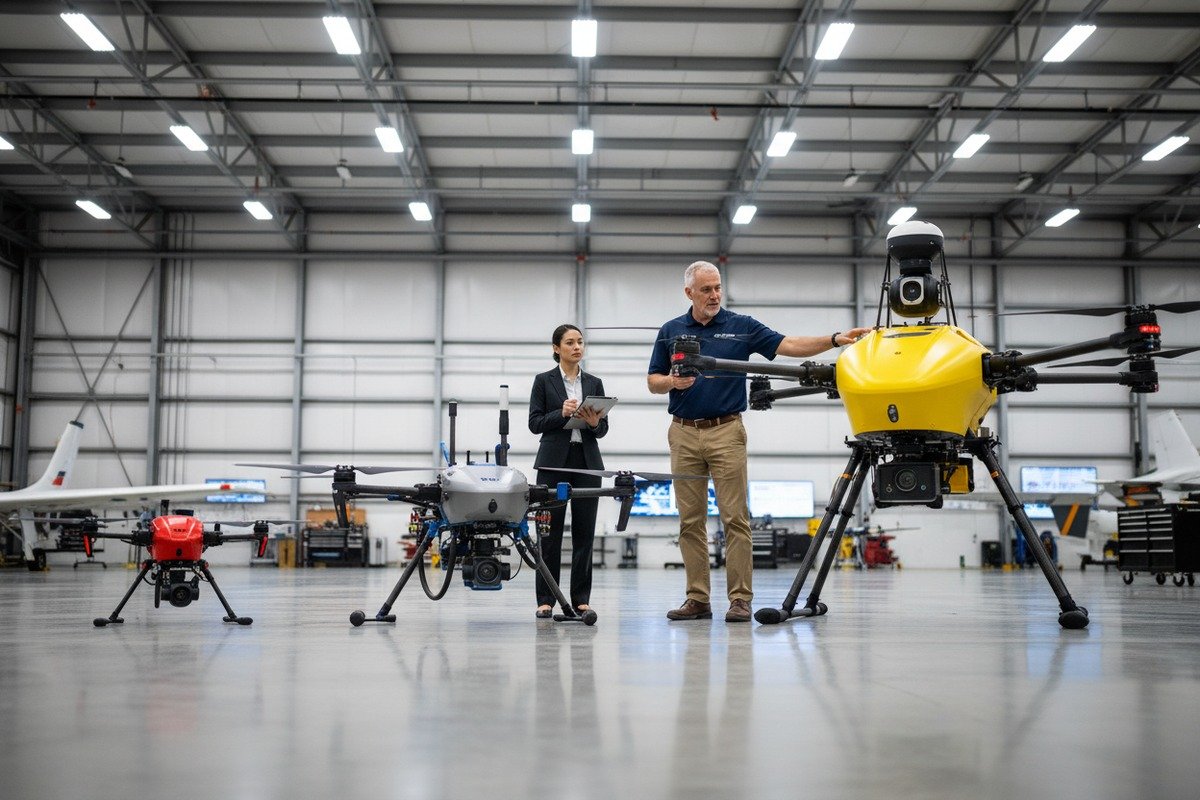
Breaking Down the Three Main Price Tiers
The firefighting drone market naturally segments into three pricing categories. Each tier serves different operational needs. Here is what our production lines deliver at each level.
| Price Tier | Payload Capacity 3 | Flight Time | Sensor Package | Autonomous Features |
|---|---|---|---|---|
| Entry ($25K-$50K) | 5-10 kg | 15-25 min | Basic thermal + RGB | Manual control, GPS waypoints |
| Mid-Range ($50K-$100K) | 10-25 kg | 25-40 min | Advanced thermal + LiDAR | Semi-autonomous, obstacle avoidance |
| Premium ($100K-$150K+) | 25-50 kg | 40-60 min | Full sensor suite | Full autonomy, AI fire prediction |
Key Performance Metrics That Justify Higher Prices
Not all specifications matter equally for firefighting operations. When we calibrate our flight controllers, we prioritize these critical factors:
Thermal Camera Resolution: Entry-level thermal cameras offer 160×120 resolution. Premium systems provide 640×512 or higher. Thermal Camera Resolution 4 This difference means spotting hotspots from greater distances.
Wind Resistance: Budget drones handle winds up to 10 m/s. Our premium models operate safely in 15 m/s winds. For wildfire operations, this capability is non-negotiable.
Real-Time Data Transmission: Lower tiers transmit compressed video with 2-3 second delays. Premium systems offer 4K streaming with sub-second latency. Incident commanders need instant information.
How to Match Your Needs to the Right Tier
Municipal fire departments with limited wildfire exposure often find mid-range systems sufficient. Wildfire management agencies and large metropolitan departments typically require premium capabilities. Private contractors serving multiple clients benefit from fleet diversity across tiers.
Ask these questions before selecting a tier:
- What is your typical response distance?
- How severe are weather conditions during operations?
- Do you need fire suppressant delivery or surveillance only?
- Will you operate single units or coordinated swarms?
The answers point directly to your appropriate price tier.
What volume thresholds should I look for to ensure my bulk drone order is truly market-competitive?
When distributors contact our export department for fleet purchases, they often arrive with unrealistic discount expectations. Volume pricing in firefighting drones follows predictable patterns. Understanding these patterns reveals whether a supplier offers genuine bulk savings or inflated base prices.
Market-competitive volume thresholds for firefighting drone orders typically start at 5 units for 5-8% discounts, 10-25 units for 10-15% discounts, and 50+ units for 18-25% discounts. True bulk pricing reduces per-unit cost while maintaining full warranty coverage and support services. Watch for suppliers who inflate base prices to offer fake "discounts."

Industry-Standard Volume Discount Structures
Our pricing team benchmarks against major competitors quarterly. Here is what genuinely competitive volume pricing looks like across the industry.
| Order Quantity | Expected Discount Range | Per-Unit Price (Mid-Range Example) | Red Flags |
|---|---|---|---|
| 1-4 units | 0-3% | $75,000-$77,000 | None expected |
| 5-9 units | 5-8% | $69,000-$73,000 | Less than 5% is below market |
| 10-24 units | 10-15% | $64,000-$68,000 | Warranty exclusions |
| 25-49 units | 15-20% | $60,000-$64,000 | Reduced support terms |
| 50+ units | 18-25% | $56,000-$62,000 | Stripped features |
Calculating True Volume Savings
Raw percentage discounts tell only part of the story. We advise buyers to calculate total cost of ownership 6 at each volume tier.
Hidden Costs to Watch:
- Shipping consolidation fees that negate per-unit savings
- Reduced warranty periods on bulk orders
- Excluded spare parts packages
- Limited technical support allocations
- Training session caps regardless of fleet size
A 20% discount means nothing if warranty drops from 24 months to 12 months. That hidden cost erases savings when repairs become necessary.
Negotiation Leverage Points
In our experience exporting to the US and Europe, buyers with certain characteristics earn better volume terms:
- Repeat purchase commitments: Annual purchase agreements unlock better pricing than one-time orders
- Payment terms flexibility: Upfront payment or shorter terms reduce supplier risk and cost
- Consolidated shipping dates: Single shipments cost less than multiple dispatches
- Reference permissions: Allowing case studies or testimonials holds value
The strongest negotiating position combines multiple factors. A buyer committing to 30 units annually with upfront payment and marketing cooperation can reasonably expect 22-28% below list price.
Regional Pricing Variations
Market maturity affects bulk pricing differently by region. North America's established market sees aggressive competition at higher volumes. Asia-Pacific's rapid growth supports premium positioning even for large orders. European buyers benefit from proximity to multiple manufacturers competing for EU contracts.
Does the tiered pricing account for the engineering support and customization I need for my OEM brand?
Our OEM partnerships reveal a consistent pattern. Buyers initially focus on unit price but later discover customization costs that reshape total investment. When we collaborate with clients on design and development, we structure transparent pricing that bundles engineering support appropriately.
Market-competitive tiered pricing should explicitly include engineering support levels at each tier. Entry tiers typically offer documentation and email support only. Mid-range tiers include dedicated technical contacts and basic firmware customization. Premium tiers bundle full OEM branding, custom software development, and on-site engineering support. Hidden customization fees indicate non-competitive pricing structures.

Engineering Support Levels by Price Tier
Different buyers need different support depths. Here is how competitive suppliers structure engineering support across tiers.
| Support Element | Entry Tier | Mid-Range Tier | Premium Tier |
|---|---|---|---|
| Documentation Access | Standard manuals | Enhanced technical docs | Full engineering specs |
| Email Response Time | 48-72 hours | 24 hours | 4 hours |
| Video Consultation | Not included | Monthly scheduled | On-demand |
| Firmware Updates | Standard releases | Priority access | Custom development |
| Integration Support | Self-service | Guided assistance | Dedicated engineer |
| OEM Branding | Logo placement only | Packaging + unit branding | Full white-label |
Customization Cost Transparency
When we design custom features for OEM partners, we separate one-time development costs from per-unit costs. This transparency reveals true market competitiveness.
One-Time Engineering Costs:
- Custom flight controller programming: $5,000-$15,000
- Proprietary app interface development: $10,000-$30,000
- Unique payload integration: $8,000-$25,000
- Regulatory certification support: $3,000-$10,000
- Custom packaging design: $2,000-$5,000
Per-Unit Customization Costs:
- OEM branding application: $50-$200 per unit
- Custom color schemes: $100-$300 per unit
- Modified sensor configurations: $500-$2,000 per unit
- Pre-loaded custom software: $100-$500 per unit
Competitive suppliers amortize one-time costs across minimum order quantities. A $20,000 development fee spread across 100 units adds only $200 per unit—reasonable for genuine customization.
Evaluating Software and AI Feature Bundles
Advanced analytics and AI capabilities increasingly differentiate pricing tiers. Our software development team builds mission planning tools and predictive fire modeling features that create genuine value.
Questions to ask about software inclusions:
- Are software licenses perpetual or subscription-based?
- What is the annual cost after the initial period?
- Can AI features be trained on your specific operational data?
- Who owns custom algorithms developed for your brand?
- What happens to software access if you change suppliers?
Premium tiers should include perpetual licenses for core functionality. Subscription models for advanced AI features are acceptable but must be disclosed upfront.
Long-Term Partnership Considerations
Engineering support quality often degrades after initial sales. Competitive suppliers maintain support levels throughout product lifecycles. Request references from current OEM partners in their second or third year of relationship. Their experience reveals true support quality better than sales promises.
How can I evaluate if the price includes the necessary export certifications and door-to-door delivery services?
Our export team handles shipments to the United States and Europe weekly. We have seen buyers receive surprise certification fees and delivery charges that added 15-20% to quoted prices. Competitive pricing includes all costs necessary to get compliant, functional drones to your warehouse.
Evaluate export pricing by confirming inclusion of all destination-country certifications (FAA, CE, FCC), customs documentation preparation, freight insurance, and door-to-door delivery. Market-competitive pricing bundles these services transparently. Request itemized quotes showing certification costs, shipping fees, and any excluded services. Hidden export charges indicate non-competitive or deceptive pricing.

Essential Certifications by Destination Market
Different markets require different certifications. When we prepare export documentation, we ensure all necessary approvals are obtained before shipment.
| Certification | Required For | Typical Cost | Who Bears Cost (Competitive) |
|---|---|---|---|
| CE Marking 7 | European Union | $3,000-$8,000 | Supplier (included) |
| FCC Part 15 8 | United States | $2,000-$5,000 | Supplier (included) |
| FAA Registration Compliance | United States | Documentation only | Supplier (included) |
| Radio Type Approval | Various countries | $1,000-$4,000 | Supplier (included) |
| Battery Transport Certification | All shipments | $500-$2,000 | Supplier (included) |
| Country-Specific Import Permits | Varies | $500-$3,000 | Often buyer responsibility |
Competitive suppliers pre-certify products for major markets. Requesting certification specifically for your order indicates either a new market entry or inadequate preparation—both raise costs.
Delivery Service Components
Door-to-door delivery involves multiple cost elements. Each should appear in competitive pricing.
Included in Competitive Pricing:
- Factory packaging and palletization
- Ground transport to port or airport
- Export customs clearance
- Ocean or air freight to destination country
- Basic freight insurance (110% of commercial value)
- Destination customs brokerage
- Ground delivery to your specified address
Often Excluded (Verify Carefully):
- Import duties and taxes (legally buyer's responsibility)
- Enhanced insurance coverage
- Expedited shipping upgrades
- Weekend or after-hours delivery
- Liftgate or inside delivery services
- Multiple delivery locations
Red Flags in Export Pricing
Our experience shipping to over 30 countries has taught us what distinguishes transparent suppliers from those who hide costs.
Warning Signs:
- Quote says "FOB China" without specifying port
- Certification costs listed as "TBD" or "market rate"
- Insurance coverage unspecified or marked as "buyer arranges"
- Delivery timeline vague or conditional
- No itemization of shipping components
- Unusual payment terms required before shipping details confirmed
Best Practices:
- Request DDP (Delivered Duty Unpaid) or DAP (Delivered At Place) 9 pricing
- Get written confirmation of included certifications
- Verify insurance coverage amounts and terms
- Confirm delivery timeline in writing with penalties for delays
- Request tracking information provision details
Calculating True Landed Cost
Your evaluation must consider total landed cost—the true price when products reach your warehouse. Here is a framework:
Quoted Unit Price: Starting point
+ Certification Costs: If not included
+ Freight Charges: If not included
+ Insurance: If not included
+ Import Duties: Typically 0-5% for drones in US/EU
+ Import VAT/Taxes: Varies by jurisdiction
+ Customs Brokerage: If not included
+ Last-Mile Delivery: If not included
= True Landed Cost
Competitive suppliers provide landed cost estimates or guarantees. They absorb certification and delivery costs into unit pricing. This transparency allows accurate budget planning.
Conclusion
Evaluating firefighting drone tiered pricing requires examining technical specifications, volume discounts, engineering support, and export services together. Competitive pricing offers transparency at every level. Use these frameworks to compare suppliers confidently. Your investment deserves clear value at whatever tier you choose.
Footnotes
1. Replaced 404 Wikipedia page with a working and relevant Wikipedia page section on autonomous aircraft features. ↩︎
2. Discusses the various costs associated with OEM product customization. ↩︎
3. Explains the importance of drone payload capacity for various applications. ↩︎
4. Explains the significance of thermal camera resolution in drone applications. ↩︎
5. Details factors influencing drone flight time and its operational significance. ↩︎
6. Replaced 403 Gartner link with an authoritative Wikipedia page defining Total Cost of Ownership. ↩︎
7. Explains the requirements and significance of CE marking for products in the EU. ↩︎
8. Replaced unknown HTTP error FCC link with an authoritative Cornell Law School link to the official 47 CFR Part 15 regulations. ↩︎
9. Clarifies the Incoterm DAP and its implications for international shipping. ↩︎

 English
  Spanish
  German
  French
  Dutch
Dutch  Arabic
