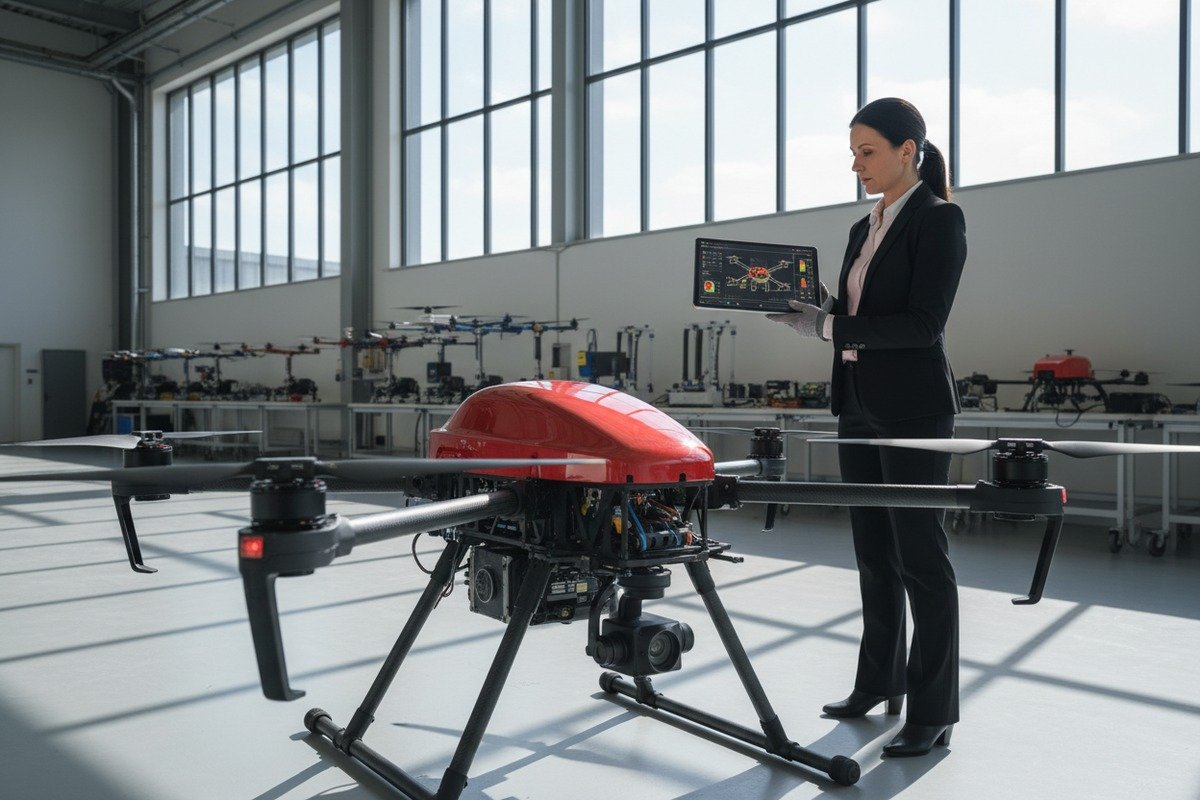
When our engineering team first designed thermal imaging systems 1 for rescue operations, we quickly learned that not all drone suppliers deliver equal results. Many procurement managers face frustrating gaps between supplier promises and actual field performance.
To evaluate firefighting drone suppliers effectively, assess their hardware customization capabilities, verify quality certifications like IP ratings and aviation compliance, confirm export expertise with door-to-door delivery experience, and examine post-purchase technical support availability including spare parts inventory and response times for emergency assistance.
The following sections break down each evaluation criterion so you can make confident supplier decisions for your SAR expansion project.
How can I evaluate a supplier's ability to customize drone hardware and software for my search and rescue needs?
Every rescue environment presents unique challenges IP ratings 2. Our production team has modified flight controllers, camera mounts, and payload systems for clients operating in deserts, mountains, and coastal flood zones. The wrong hardware configuration wastes time during emergencies FAA Part 107 compliance documentation 3.
Evaluate customization ability by reviewing the supplier's engineering team credentials, examining past custom project portfolios, testing prototype flexibility, and confirming their software development capabilities for mission-specific features like thermal overlay mapping, autonomous search patterns, and real-time data integration with your command systems.

Hardware Customization Indicators
A capable supplier should demonstrate clear engineering depth ISO 9001 quality management certification 4. When we collaborate with fire departments, we begin by mapping their specific operational environment. Does the team fly in high-altitude mountain terrain customs broker partnerships 5? Do they respond to structural fires in dense urban areas? Each scenario demands different hardware configurations remote diagnostic capabilities 6.
Ask potential suppliers these direct questions:
- Can you modify the airframe material for extreme temperature resistance?
- What camera sensor options do you offer beyond standard thermal imaging?
- Can you adjust motor power and propeller design for high-wind stability?
- Do you offer modular payload bays for swapping sensors during missions?
Strong suppliers maintain in-house engineering teams rather than outsourcing modifications. Request documentation showing their engineering staff qualifications and past modification projects.
Software Development Capabilities
Software flexibility often determines mission success more than hardware alone. Our development team has built custom flight planning modules, automated victim detection algorithms, and integration bridges connecting drone feeds to incident command platforms.
| Software Feature | Why It Matters | Questions to Ask |
|---|---|---|
| Custom flight path programming | Enables automated grid search patterns | Can you program specific search patterns for our terrain? |
| Thermal overlay mapping | Combines heat signatures with GPS coordinates | Does your software export thermal maps in standard GIS formats? |
| Multi-agency data sharing | Allows simultaneous feeds to multiple command centers | Can your system transmit to multiple receivers in real-time? |
| Autonomous return-to-home | Ensures drone safety during signal loss | What happens during communication blackouts? |
Prototype Testing Protocols
Never commit to large orders without field testing prototypes in your actual operating conditions. Reliable suppliers welcome this step. During our collaboration with European fire services, we shipped demo units for two-week field trials before finalizing specifications.
Request demonstration flights in conditions matching your typical operations. If you operate in smoky wildfire environments, test visibility range through actual smoke. If you deploy in flood zones, verify water resistance ratings under rain simulation.
What certifications and quality standards should I require to ensure my firefighting drones are mission-ready?
Quality failures during rescue operations cost lives. Our quality control process includes 47 checkpoint inspections before any drone leaves the factory. Yet many buyers overlook certification verification until problems emerge in the field.
Require suppliers to provide FAA Part 107 compliance documentation, CE or FCC marking for your import market, IP67 or higher ingress protection ratings, ISO 9001 quality management certification, and third-party testing reports for battery safety, thermal sensor accuracy, and flight controller reliability under stress conditions.

Essential Certification Categories
Certifications fall into three main categories: regulatory compliance, environmental durability, and component safety. Each category addresses different failure risks.
| Certification Type | Examples | What It Validates |
|---|---|---|
| Aviation Regulatory | FAA Part 107, EASA compliance, ENAC approval | Legal operation in designated airspace |
| Environmental Protection | IP67, IP68 ratings | Resistance to dust, water, and debris |
| Quality Management | ISO 9001, AS9100 | Consistent manufacturing processes |
| Component Safety | UN38.3 (batteries), CE marking | Safe operation of critical subsystems |
| Electromagnetic Compatibility | FCC Part 15, CE-EMC | Protection against radio interference |
IP Rating Requirements for SAR Operations
Ingress Protection ratings deserve special attention for emergency response drones. Firefighting environments expose equipment to water spray, smoke particles, and airborne debris. An IP65-rated drone may fail when deployed near active fire suppression water streams.
We recommend IP67 as the minimum standard for firefighting drones. This rating ensures protection against temporary water immersion—critical if a drone makes an emergency landing in flooded areas or encounters unexpected rainfall during extended search operations.
Battery Safety Standards
Lithium polymer batteries power most industrial drones. These batteries present fire and explosion risks if manufactured improperly. UN38.3 certification 7 confirms that batteries have passed transport safety tests including altitude simulation, thermal cycling, vibration, shock, and external short circuit protection.
Request battery test reports showing:
- Thermal runaway threshold temperatures
- Cycle life testing results (minimum 300 charge cycles)
- Cold weather discharge performance
- Hot-swap safety procedures
Third-Party Testing Verification
Supplier-provided certifications require independent verification. When we submit drones for testing, reports come from accredited laboratories—not our internal quality team. Ask suppliers to provide testing laboratory credentials and contact information so you can verify report authenticity.
Red flags include:
- Certifications without laboratory identification
- Expired certification dates
- Certifications from unaccredited testing facilities
- Refusal to provide original test reports
How do I verify that a manufacturer has the export expertise to handle my door-to-door delivery and customs?
Customs delays create operational gaps. In our experience exporting to the US and European markets, we have learned that proper documentation prevents weeks of cargo holds. One missing certificate can strand your equipment at port while emergencies continue.
Verify export expertise by requesting the supplier's export license documentation, reviewing their customs broker partnerships, examining their track record with drone-specific import requirements including FCC/CE compliance paperwork, and confirming they provide complete commercial invoices, packing lists, certificates of origin, and technical compliance declarations needed for smooth customs clearance.

Documentation Requirements by Market
Different import markets demand different paperwork. The United States requires FCC certification for any radio-transmitting device. European Union countries require CE marking and Declaration of Conformity. Incomplete documentation triggers inspection delays or outright cargo rejection.
| Market | Required Documents | Common Delay Causes |
|---|---|---|
| United States | Commercial invoice, FCC certification, packing list, certificate of origin | Missing FCC ID, incorrect HS codes |
| European Union | CE Declaration of Conformity, commercial invoice, EUR.1 certificate | Incomplete technical documentation |
| United Kingdom | UKCA marking (post-Brexit), commercial invoice, certificate of origin | Confusion between CE and UKCA requirements |
| Australia | Commercial invoice, certificate of origin, electrical safety compliance | Battery shipping restrictions |
Evaluating Shipping Partner Networks
Reliable suppliers maintain relationships with freight forwarders experienced in drone shipments. Lithium batteries face strict air cargo regulations. Improperly declared batteries can result in shipment rejection, fines, or permanent carrier blacklisting.
Ask potential suppliers:
- Which freight forwarders do you work with regularly?
- How do you handle lithium battery shipping compliance?
- What is your average customs clearance time for US shipments?
- Can you provide tracking visibility throughout transit?
Incoterms and Delivery Responsibility
Delivery terms determine where supplier responsibility ends. When our team offers door-to-door delivery, we handle freight booking, export customs, import customs brokerage, and final delivery coordination. This DDP (Delivered Duty Paid) 8 arrangement minimizes buyer risk.
Compare supplier offers carefully:
- EXW (Ex Works): Buyer handles everything after factory pickup
- FOB (Free On Board): Supplier handles export; buyer handles import
- CIF (Cost, Insurance, Freight): Supplier handles shipping to destination port
- DDP (Delivered Duty Paid): Supplier handles complete delivery including import duties
For buyers unfamiliar with international drone import procedures, DDP terms from experienced suppliers reduce risk significantly.
Track Record Verification
Request references from suppliers' previous US or European customers. Contact those references directly and ask:
- Did shipments arrive on schedule?
- Were customs clearances smooth?
- Did documentation meet import requirements?
- How did the supplier handle any shipping problems?
A supplier claiming extensive export experience should readily provide verifiable customer references in your target market.
What level of remote technical support and spare parts availability will I receive after my purchase?
Equipment failures during emergencies demand immediate solutions. When we receive urgent support requests from fire departments, our technical team responds within hours—not days. Yet many buyers discover inadequate support structures only after problems arise.
Expect suppliers to provide 24/7 emergency technical support hotlines, remote diagnostic capabilities for flight controller issues, guaranteed spare parts availability with defined delivery timeframes, comprehensive maintenance documentation, software update access, and clear warranty terms covering component replacement during the coverage period.

Technical Support Structure Evaluation
Support quality varies dramatically between suppliers. Some offer email-only support with multi-day response times. Others maintain dedicated technical staff for emergency assistance. Your operational requirements should determine minimum acceptable support levels.
Evaluate support structures using these criteria:
- Response time guarantees: What is the maximum wait time for emergency support?
- Communication channels: Phone, video call, email, remote desktop access?
- Technical staff qualifications: Are support personnel trained on your specific model?
- Language capabilities: Can support staff communicate clearly in your language?
- Time zone coverage: Does support availability align with your operating hours?
Spare Parts Inventory and Delivery
Grounded drones provide zero rescue capability. Fast spare parts access directly impacts your operational readiness. Our warehouse maintains inventory of all high-wear components: motors, propellers, batteries, camera gimbals, and flight controllers. When clients need parts urgently, we ship within 24 hours.
| Component Category | Typical Failure Causes | Recommended Spare Inventory |
|---|---|---|
| Propellers | Impact damage, debris strikes | 2 complete sets per drone |
| Motors | Bearing wear, overheating | 1 per drone |
| Batteries | Cycle degradation, damage | 3-4 per drone |
| Camera/Gimbal | Impact damage, water intrusion | 1 per 2 drones |
| Flight Controller | Electronic failure (rare) | 1 per 3 drones |
Ask suppliers for parts pricing and delivery timeframes before purchase. Some suppliers quote attractive drone prices but charge excessive amounts for replacement components.
Remote Diagnostic Capabilities
Modern industrial drones generate extensive flight logs and system telemetry. Skilled support teams can diagnose many issues remotely by analyzing this data. When flight controllers malfunction, our engineers request log files and often identify solutions without requiring physical inspection.
Verify that your supplier offers:
- Flight log analysis services
- Remote firmware diagnostics
- Video call support for guided troubleshooting
- Pre-configured replacement units for critical failures
Warranty Terms and Conditions
Warranty coverage varies significantly. Some suppliers offer 12-month coverage on all components. Others exclude batteries, motors, and propellers as "consumable items." Read warranty documents carefully before purchase.
Key warranty questions:
- What is the total warranty period?
- Which components are excluded from coverage?
- Does warranty cover labor costs for repairs?
- Can warranty service be performed locally, or must drones ship back to the manufacturer?
- What documentation is required for warranty claims?
Training and Documentation Access
Comprehensive documentation reduces support dependency. Suppliers should provide detailed maintenance manuals, troubleshooting guides, pilot training materials, and software operation instructions. Video tutorials accelerate learning for new team members.
Our client portal includes downloadable maintenance schedules, calibration procedures, and firmware update instructions. This self-service approach empowers clients to handle routine issues independently while reserving direct support for complex problems.
Conclusion
Selecting the right firefighting drone supplier requires systematic evaluation across customization capabilities, quality certifications, export expertise, and post-purchase support. These criteria protect your investment and ensure mission readiness when lives depend on your equipment.
Footnotes
1. Provides a clear explanation of how thermal cameras work. ↩︎
2. Explains Ingress Protection (IP) ratings and their international standard. ↩︎
3. Provides official information on FAA regulations for small unmanned aircraft systems. ↩︎
4. Explains the international standard for quality management systems and its benefits. ↩︎
5. Describes the role and responsibilities of customs brokers in international trade. ↩︎
6. Provides a general definition and explanation of remote diagnostics. ↩︎
7. Details the international safety standard for transporting lithium batteries. ↩︎
8. Explains the Incoterm DDP, where the seller assumes maximum responsibility. ↩︎

 English
  Español de México
  Deutsch
  Français
  Русский
  العربية
