
When our engineering team first reviewed the EU Cyber Resilience Act 1 requirements, we realized many drone buyers face a real problem. You need firefighting drones that work reliably in emergencies zero-day vulnerabilities 2. But how do you know if your supplier meets these new EU cybersecurity rules?
To evaluate firefighting drone suppliers for CRA compliance, verify their cybersecurity risk assessments, secure-by-design documentation, CE marking with CRA references, vulnerability management processes, and post-market support commitments lasting at least five years. Request third-party conformity certificates for critical-use drones.
This guide walks you through every step. We will cover technical requirements, documentation needs, and long-term support obligations. Let us help you make informed procurement decisions.
How do I verify if my firefighting drone manufacturer is fully prepared for EU Cyber Resilience Act standards?
Our export team handles compliance questions daily from European partners. Many buyers struggle to separate marketing claims from real CRA readiness. The stakes are high—non-compliant products face market bans and fines.
Verify CRA readiness by requesting the supplier's cybersecurity risk assessment documents, CE Declaration of Conformity referencing CRA, third-party audit certificates for critical products, documented secure-by-design processes, and evidence of ENISA-compliant vulnerability reporting systems.

Understanding the CRA Timeline and Scope
The EU Cyber Resilience Act creates mandatory cybersecurity requirements for all products with digital elements. Firefighting drones clearly fall under this scope. They contain sensors, software, network connections, and often AI systems.
Key dates matter for procurement planning:
| Milestone | Date | Requirement |
|---|---|---|
| Vulnerability Reporting | September 2026 | Suppliers must report exploited vulnerabilities to ENISA 3 within 24 hours |
| Full CRA Compliance | 2027 | All 13 essential requirements in Annex I must be met |
| Ongoing Support | Product lifetime or 5 years minimum | Continuous security updates and patch management |
Product Classification Matters
Not all drones face the same requirements. The CRA uses three categories:
General Products: Basic self-certification (Module A) is sufficient. Most consumer drones fit here.
Important Products (Class I and II): Require limited third-party assessment. Networked drones used in critical infrastructure likely fall here.
Critical Products: Require full third-party conformity assessment by notified bodies 4 like TÜV or DEKRA.
Firefighting drones typically qualify as "important" products. They connect to networks and support critical emergency operations. This means your supplier cannot simply self-declare compliance.
Red Flags in Supplier Evaluation
When we work with distributors, we notice common warning signs:
- No documented cybersecurity risk assessment
- CE marking without specific CRA references
- Vague or missing support period commitments
- No Software Bill of Materials (SBOM) 5 available
- Inability to explain vulnerability handling procedures
A prepared manufacturer will have these documents ready before you ask.
What technical security features must I demand from a drone supplier to ensure CRA compliance?
During our product development cycles, we test cybersecurity features extensively. Our engineers know exactly which technical elements matter for EU compliance. Many suppliers overlook these details.
Demand secure-by-default configurations, encrypted communications, access control mechanisms, automatic update capabilities, cryptographic authentication, secure boot processes, data protection features, and documented hardware supply chain verification from any CRA-compliant drone supplier.

Core Technical Requirements from Annex I
The CRA Annex I lists 13 essential requirements. Here is how they apply to firefighting drones:
| Requirement Category | Specific Features | Verification Method |
|---|---|---|
| Secure-by-Design 6 | Minimal attack surface, no unnecessary ports | Technical specification review |
| Access Control | Role-based permissions, strong authentication | Live demonstration |
| Cryptography | AES-256 encryption, TLS 1.3 communications | Security certificate review |
| Data Protection | Encrypted storage, secure data deletion | Technical documentation |
| Update Mechanism | Signed firmware, automatic patch delivery | System architecture review |
| Monitoring | Logging capabilities, anomaly detection | Feature demonstration |
Secure-by-Default Configuration
A CRA-compliant drone should ship with security enabled, not disabled. Check these specific items:
- Default passwords must not exist or must require immediate change
- Unnecessary network services should be disabled
- Encryption should be enabled by default
- Access logging should be active from first power-on
AI and Machine Learning Security
Modern firefighting drones use AI for thermal imaging analysis, navigation, and target identification. The CRA requires protection of these systems.
Ask your supplier about:
- Model integrity verification
- Protection against adversarial attacks
- Data poisoning prevention measures
- Explainable AI outputs for critical decisions
Anti-Jamming and Spoofing Technologies
Firefighting operations happen in challenging environments. GPS jamming and communication interference are real threats.
Evaluate these capabilities:
- Redundant positioning systems
- Encrypted control links
- Offline operational modes
- Secure fallback communication channels
A compliant supplier will demonstrate these features, not just list them in marketing materials.
Can my supplier provide the vulnerability management and technical documentation required by EU regulations?
Our quality team maintains extensive documentation for every product we export. We learned early that European customers need more than just product specifications. They need proof of ongoing security management.
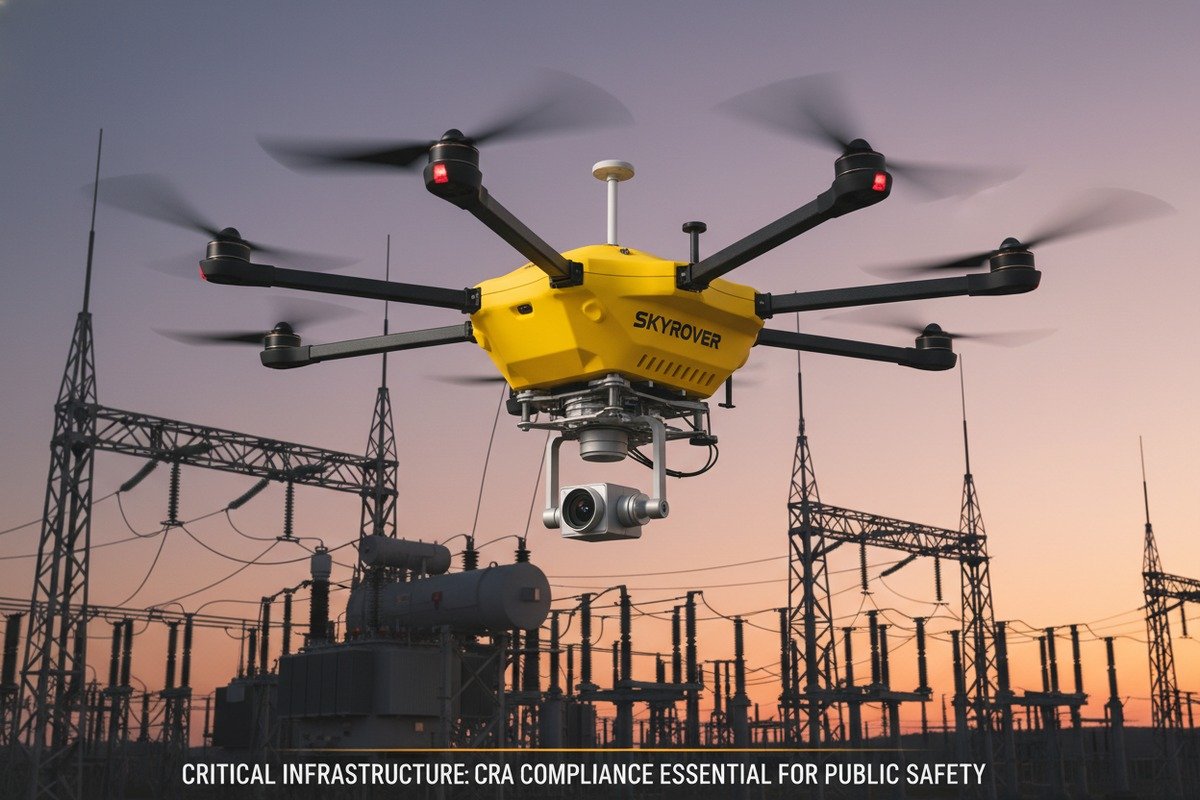
CRA-compliant suppliers must provide cybersecurity risk assessments, Software Bills of Materials (SBOMs), technical files with security summaries, conformity declarations, user security instructions, and documented vulnerability handling procedures with 24-hour ENISA reporting capability.
Essential Documentation Checklist
Request these documents from any potential supplier:
| Document Type | Purpose | Update Frequency |
|---|---|---|
| Cybersecurity Risk Assessment | Shows threat analysis and mitigation strategies | Annual or after significant changes |
| Software Bill of Materials (SBOM) | Lists all software components and versions | With each firmware release |
| Technical File | Contains design specifications and security architecture | Maintained throughout product life |
| EU Declaration of Conformity | Legal statement of CRA compliance | Updated when regulations change |
| User Security Manual | Instructions for secure deployment and operation | With major updates |
| Vulnerability Handling Policy | Procedures for discovery, assessment, and disclosure | Annual review |
Understanding SBOM Requirements
The Software Bill of Materials has become critical for supply chain security. An SBOM lists every software component in your drone, including:
- Operating system and version
- Third-party libraries
- Open-source components
- Custom application software
- Firmware modules
Why does this matter? If a vulnerability is discovered in any component, you need to know immediately whether your fleet is affected.
Our practice is to generate updated SBOMs with every firmware release. We share these with customers who request them.
Vulnerability Reporting Obligations
The CRA imposes strict timelines:
Within 24 hours: Suppliers must report actively exploited vulnerabilities to ENISA and affected users.
Within 72 hours: Severe security incidents must be reported with initial assessment.
Ongoing: All vulnerabilities must be handled throughout the support period.
Ask your supplier:
- How will you notify us of discovered vulnerabilities?
- What is your process for emergency patches?
- Can you demonstrate your ENISA reporting capability?
Third-Party Component Verification
Firefighting drones contain components from multiple sources. CRA requires suppliers to verify the security of their supply chain.
Questions to ask:
- Where do critical components originate?
- How do you verify component authenticity?
- What security testing do you perform on third-party software?
- Do you have visibility into your suppliers' security practices?
This mirrors the approach of US Blue UAS and Green UAS programs, which vet drone components for restricted origins.
How will my drone partner handle long-term security updates and firmware patches for my fleet?
When we design our support systems, we think about customers operating fleets for many years. A firefighting drone purchased today must remain secure in 2030 and beyond. This requires serious commitment from your supplier.
Evaluate long-term support by confirming minimum five-year security update commitments, automatic patch delivery mechanisms, clear end-of-support policies, spare parts availability, technical support accessibility, and documented procedures for handling zero-day vulnerabilities in deployed fleets.

Support Period Requirements
The CRA mandates security support for the expected product lifetime or at least five years. For firefighting drones with typical 7-10 year operational lives, this creates significant obligations.
| Support Element | Minimum Requirement | Best Practice |
|---|---|---|
| Security Updates | 5 years from purchase | Product lifetime |
| Firmware Patches | Available within reasonable time | Automatic delivery within 30 days |
| Vulnerability Response | 24-72 hour reporting | Real-time notification system |
| Technical Support | Duration of support period | Dedicated emergency hotline |
| Documentation Updates | With each security change | Continuous online access |
Automatic Update Mechanisms
Your fleet needs updates without manual intervention on each unit. Evaluate:
- Over-the-air update capability
- Update authentication and verification
- Rollback options if updates fail
- Scheduling to avoid operational disruption
- Bandwidth requirements for fleet-wide deployment
Planning for End-of-Support
Every product eventually reaches end-of-support. A responsible supplier provides:
- Minimum 12-month advance notice
- Migration path to newer products
- Extended support options for critical users
- Final security hardening before support ends
- Data migration assistance
Spare Parts and Repair Support
Security updates mean nothing if your drones cannot operate. Long-term support includes:
- Guaranteed spare parts availability
- Reasonable pricing for components
- Repair documentation access
- Training for authorized service centers
From our experience, customers value knowing they can maintain their fleet independently if needed. We provide repair manuals and component specifications to qualified partners.
Evaluating Supplier Financial Stability
Long-term commitments require long-term supplier viability. Consider:
- Company history and track record
- Financial statements if available
- Customer references from long-term relationships
- Escrow arrangements for critical software
A supplier promising ten-year support must demonstrate capability to deliver it.
Conclusion
Evaluating firefighting drone suppliers for CRA compliance requires systematic verification of documentation, technical features, and long-term support commitments. Start your evaluation early, request specific evidence, and build relationships with suppliers who demonstrate genuine compliance readiness.
Footnotes
1. Official EU page explaining the Act’s purpose and scope. ↩︎
2. Wikipedia offers a clear explanation of zero-day vulnerabilities and their impact. ↩︎
3. Replaced 404 ENISA link with the current official ENISA homepage. ↩︎
4. European Commission explains the role of notified bodies in EU conformity assessment. ↩︎
5. NIST provides a clear definition and context for SBOMs. ↩︎
6. CISA provides authoritative guidance on Secure by Design principles. ↩︎
7. Wikipedia provides a comprehensive overview of cryptographic authentication methods. ↩︎

 English
  Español de México
  Deutsch
  Français
  Русский
  العربية
