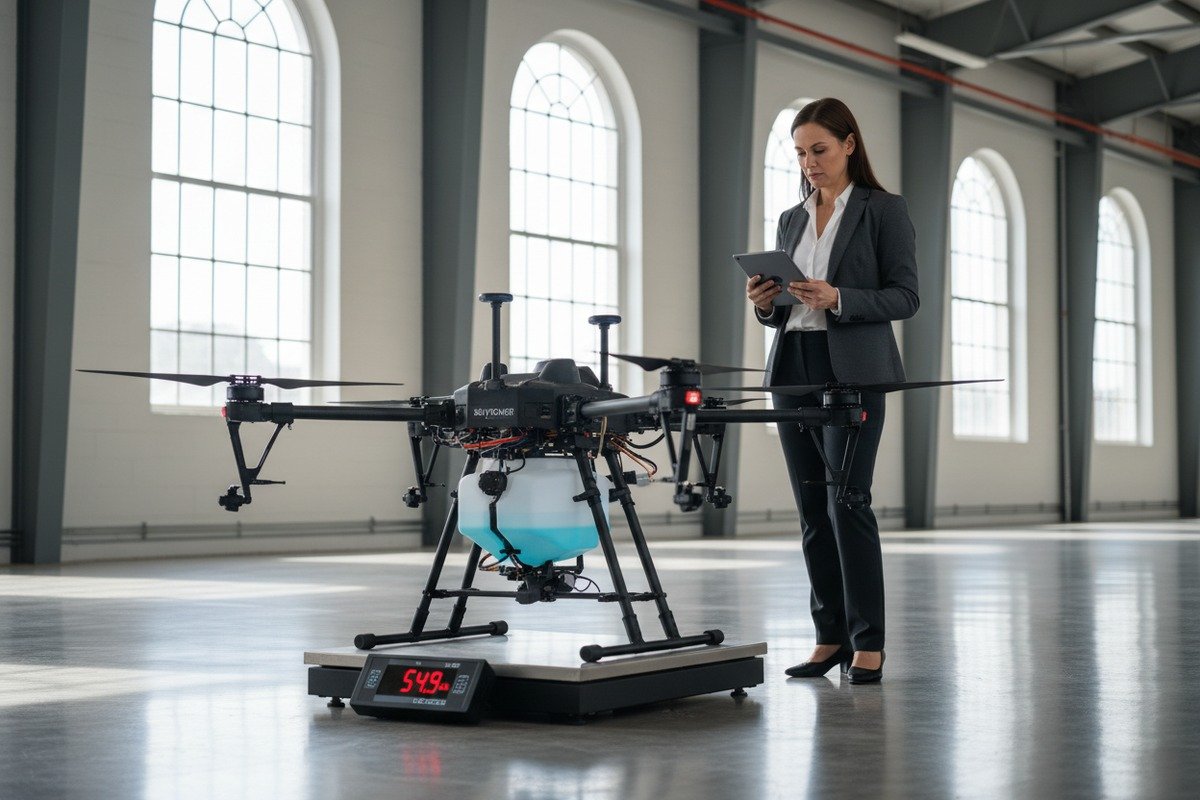
Every week, our engineering team fields calls from US buyers confused about weight limits Part 107 Waivers 1. They purchased a drone overseas, only to discover it exceeds exemption thresholds when fully loaded. This mistake costs them months in paperwork and thousands in delayed operations.
To evaluate agricultural drone weight for US state exemption standards, calculate total takeoff weight including the drone frame, batteries, and maximum payload. Drones under 55 pounds qualify for simpler Part 107 exemptions, while heavier units require Section 44807 applications. Always verify weight with full spray tanks, not empty specifications.
The following sections break down exactly how to verify weight compliance, what documents to request, and how weight choices affect your Part 137 certification path.
How do I determine if my drone's empty weight meets specific US state exemption criteria?
When we ship agricultural drones to American distributors, weight verification is the first conversation we have Section 44807 applications 2. Many buyers focus only on empty frame weight. They forget that the FAA cares about maximum takeoff weight 3—not what sits in your warehouse Part 137 certification requirements 4.
To determine if your drone meets US state exemption criteria, weigh the complete aircraft with batteries installed, then add your maximum intended payload. If this total stays under 55 pounds, you qualify for Part 107 operations. States generally follow FAA federal thresholds, though some require additional agricultural permits.

Understanding the 55-Pound Threshold
The FAA draws a hard line at 55 pounds. This number represents maximum takeoff weight, not empty weight airworthiness certification 5. Our production team always provides two specifications: empty frame weight and maximum operational weight.
Here is why this matters. A drone frame might weigh 28 pounds empty. Add batteries at 8 pounds. Now you are at 36 pounds. Your spray tank holds 4 gallons of liquid pesticide carbon fiber components 6. Water weighs roughly 8.3 pounds per gallon. That is 33 pounds of payload. Your total? 69 pounds—well above the exemption threshold.
State Versus Federal Standards
Most US states do not create separate weight exemptions. They defer to FAA regulations 7. However, state agricultural departments add licensing requirements.
| State | FAA Alignment | Additional Requirements |
|---|---|---|
| California | Full FAA deferral | State pesticide applicator license |
| Texas | Full FAA deferral | Department of Agriculture registration |
| Florida | Full FAA deferral | Commercial applicator certification |
| Iowa | Full FAA deferral | Restricted use pesticide permit |
Practical Weight Calculation Steps
Our engineers recommend this process:
- Weigh the drone with all flight-ready components
- Record battery weight separately
- Calculate maximum liquid payload weight
- Add seed or granular spreader capacity if applicable
- Sum all components for true takeoff weight
Empty Weight Documentation
When we build drones for US export, we include detailed weight certificates. These documents list every component. Buyers should request this breakdown from any supplier.
| Component | Typical Weight Range |
|---|---|
| Carbon fiber frame | 12-25 lbs |
| Motors and ESCs | 4-8 lbs |
| Flight controller system | 1-2 lbs |
| Battery packs | 6-15 lbs |
| Spray system (empty) | 5-12 lbs |
| Landing gear | 2-4 lbs |
The empty weight alone tells only part of the story. You need operational weight to determine your regulatory category.
What documentation should I request from my supplier to verify the maximum takeoff weight for regulatory compliance?
Our export department processes compliance paperwork daily. We have learned which documents US customs and regulatory bodies actually need. Without proper documentation, buyers face import delays and certification rejections.
Request these documents from your supplier: official weight certificate listing empty and maximum takeoff weights, component breakdown sheet, FAA-format specifications, payload capacity documentation, and battery weight certificates. These records prove compliance during Part 107 or Section 44807 applications and satisfy customs requirements.

Essential Weight Documentation Package
When our team prepares shipments for US customers, we compile a complete documentation package. Each document serves a specific regulatory purpose.
The weight certificate is most critical. This document must show measurements from calibrated equipment. Our quality control team uses certified scales with current calibration records. The certificate includes the date, equipment serial number, and technician signature.
Component Weight Breakdown
A detailed breakdown protects buyers during FAA applications. Examiners want to see exactly what contributes to total weight. Our standard breakdown includes:
| Document Type | Purpose | Who Requires It |
|---|---|---|
| Weight Certificate | Proves total weight compliance | FAA, Customs |
| Component Breakdown | Details individual part weights | FAA exemption applications |
| Battery Specifications | Confirms power system weight | Part 107 registration |
| Payload Capacity Sheet | Shows maximum liquid/solid load | Part 137 certification |
| Calibration Records | Validates measurement accuracy | FAA auditors |
Supplier Verification Questions
Ask your supplier these specific questions:
- What scale calibration standard do you use?
- Can you provide photos of the weighing process?
- Does the weight include standard accessories?
- What is the margin of error on your measurements?
- Will you provide a signed attestation letter?
Red Flags in Documentation
Through years of export experience, we have seen problematic documentation patterns. Watch for these warning signs:
- Weight listed only in round numbers
- No calibration date on certificates
- Missing technician signatures
- Specifications copied directly from marketing materials
- No serial number linking documents to your specific unit
Legitimate suppliers measure each production unit. Mass-produced specifications without unit-specific verification suggest corner-cutting.
Documentation for Different Exemption Paths
Part 107 applications require less extensive documentation than Section 44807 exemptions. However, providing complete records speeds both processes.
For Part 107 with agricultural exemptions, include:
- Weight certificate showing under 55 lbs total
- Registration confirmation
- Pilot certification records
For Section 44807 exemptions on heavier drones:
- Detailed airworthiness documentation
- Complete maintenance manual
- Flight testing records
- Engineering specifications
How will choosing a heavy-lift agricultural drone affect my ability to secure a Part 137 operating certificate?
Our customers often want maximum payload capacity. Bigger tanks mean fewer refill trips. But during consultations, we explain the regulatory trade-offs. Heavy-lift capability comes with paperwork complexity that affects operational timelines.
Heavy-lift drones exceeding 55 pounds require Section 44807 exemptions before Part 137 certification, adding 30-90 days to your approval timeline. You will need aircraft-specific FAA listing, Blanket COA 5-3-2 compliance, and potentially restricted airspace operations. Sub-55-pound drones streamline Part 137 applications significantly.

The Part 137 Certification Framework
Part 137 governs agricultural aircraft operations 8. This applies to any drone dispensing pesticides, fertilizers, or seeds. Weight does not exempt you from Part 137—it determines your path to compliance.
When we design spray systems, we balance tank capacity against regulatory burden. A 10-liter tank keeps most configurations under 55 pounds. A 38-liter tank pushes into heavy exemption territory.
Weight Categories and Approval Timelines
| Weight Category | Exemption Required | Typical Processing Time | Operational Restrictions |
|---|---|---|---|
| Under 55 lbs | Part 107 + Part 137 | 30-60 days | Standard VLOS, LAANC eligible |
| 55 lbs and over | Section 44807 + Part 137 | 60-90 days | 500ft bubble, COA restrictions |
| Heavy swarming ops | Part 108 pathway | Varies by category | Population-based limits |
Section 44807 Exemption Process
For drones exceeding 55 pounds, the FAA requires detailed safety cases. Our engineering team helps customers prepare these applications. The process includes:
- Submit exemption petition with safety analysis
- Provide aircraft specifications and weight documentation
- Demonstrate equivalent safety to manned aircraft operations
- Receive aircraft listing on FAA docket
- Obtain operational approval
This process takes time. Buyers wanting immediate field deployment should consider sub-55-pound configurations.
Operational Limitations for Heavy Drones
Heavy drones face airspace restrictions that lighter aircraft avoid. The 500-foot lateral bubble requirement means maintaining distance from non-participating persons. Blanket COA 5-3-2 limits operations in certain controlled airspace.
These restrictions matter less for remote agricultural operations. Large farms in rural areas face minimal airspace complexity. But buyers serving suburban agricultural properties face more constraints.
Cost-Benefit Analysis
We help customers evaluate whether heavy-lift capacity justifies regulatory complexity:
Advantages of heavy-lift (55+ lbs):
- Larger spray coverage per flight
- Fewer battery swaps
- Higher seed/fertilizer capacity
- Better wind resistance
Disadvantages:
- Longer exemption processing
- More extensive documentation
- Airspace restrictions
- Higher insurance premiums
- More complex maintenance requirements
Part 108 Future Considerations
Part 108, finalized in early 2026, changes the landscape for heavy agricultural drones. This rule enables BVLOS operations based on population categories. Rural agricultural areas fall into Category 1—the least restricted.
Smart buyers consider future regulations when purchasing. A heavy drone that requires extensive exemptions today might operate freely under Part 108 rules tomorrow.
Can I customize my drone's hardware configuration to stay under the 55-pound threshold for easier US deployment?
Our design engineers work with customers on exactly this challenge. Many agricultural operators need substantial payload capacity but want Part 107 simplicity. The answer often lies in smart configuration choices during the ordering process.
Yes, you can customize drone hardware to stay under 55 pounds through lighter frame materials, smaller battery configurations, reduced tank sizes, and modular payload systems. Work with your manufacturer to specify carbon fiber components, optimize motor sizing, and select appropriate tank capacity that keeps maximum takeoff weight compliant.

Configuration Strategies for Weight Compliance
When customers request sub-55-pound configurations, our team evaluates every component. Small changes add up to significant weight savings.
Frame material choice matters most. Our standard carbon fiber frames weigh 30-40% less than equivalent aluminum structures. The cost increases, but regulatory simplicity often justifies the premium.
Component Weight Optimization Options
| Component | Standard Option | Lightweight Option | Weight Savings |
|---|---|---|---|
| Frame | Aluminum alloy | Carbon fiber | 3-5 lbs |
| Motors | Standard efficiency | High-efficiency | 1-2 lbs |
| Battery | High capacity | Optimized capacity | 2-4 lbs |
| Tank | 20L standard | 10L compact | 8-12 lbs (water weight) |
| Landing gear | Steel | Carbon composite | 1-2 lbs |
Tank Capacity Trade-offs
The spray tank creates the largest weight variable. Water weighs approximately 8.3 pounds per gallon. A 5-gallon (20L) tank adds over 40 pounds when full.
Our modular tank systems let operators choose capacity based on the job. A 2.5-gallon tank keeps most configurations under 55 pounds total. Operators make more refill trips but avoid heavy exemption requirements.
Battery Configuration Impact
Battery selection significantly affects total weight. Our engineering team can specify smaller battery packs that reduce weight while maintaining adequate flight time.
Consider this comparison:
- Standard configuration: 6S 22000mAh battery = 12 lbs
- Optimized configuration: 6S 16000mAh battery = 9 lbs
- Flight time difference: Approximately 8-10 minutes
For small field operations, shorter flight times may be acceptable. The regulatory simplicity outweighs the operational inconvenience.
Modular Payload Systems
We design drones with quick-release payload mounts. This feature allows operators to swap between configurations:
- Light spray tank for Part 107 operations
- Heavy tank for Section 44807 permitted operations
- Seed spreader attachment
- Mapping sensor payload
One drone platform can serve multiple regulatory categories depending on mission configuration.
Working With Your Supplier
During the ordering process, communicate your weight requirements clearly. Provide your supplier with:
- Target maximum takeoff weight
- Minimum required payload capacity
- Expected flight duration needs
- Operational environment details
Our sales team uses this information to recommend optimal configurations. We can adjust specifications during production rather than after delivery.
FCC Compliance Considerations
Post-2025 regulations restrict certain foreign drone components. The NDAA requires 60% US components for "domestic" classification. This affects customization options.
Buyers should verify that customized configurations maintain compliance with both FAA weight standards and FCC equipment regulations. Our team tracks these requirements and advises customers accordingly.
Conclusion
Evaluating agricultural drone weight for US compliance requires understanding total takeoff weight, not just empty specifications. Request complete documentation from your supplier, consider how weight affects Part 137 certification timelines, and explore customization options to optimize regulatory positioning. The right configuration decision made during purchase saves months of paperwork and thousands in operational delays.
Footnotes
1. Official FAA page for Part 107 waivers and exemptions. ↩︎
2. Explains the FAA’s special authority for certain unmanned aircraft systems. ↩︎
3. Defines the critical weight limit for drone operations under FAA regulations. ↩︎
4. Official eCFR page for Part 137, detailing agricultural aircraft operations and certification requirements. ↩︎
5. Informative article explaining airworthiness certification for drones, a more precise term for ‘weight certificates’ in this context. ↩︎
6. Details the use and benefits of carbon fiber in UAV structural design. ↩︎
7. Provides a general overview of Federal Aviation Administration drone rules. ↩︎
8. Official legal text defining and regulating agricultural aircraft operations. ↩︎

 English
  Español de México
  Deutsch
  Français
  Русский
  العربية
