
Every minute counts when a firefighting drone sits grounded waiting for repair. Our production team has seen how extended downtime can cripple emergency response operations and damage customer relationships.
To ensure firefighting drone repair turnaround time meets business requirements, implement preventive maintenance schedules, maintain strategic spare parts inventory, partner with authorized service centers offering clear SLAs, leverage remote engineering support, and establish regional repair hubs to minimize shipping delays and maximize fleet readiness.
In this guide, we share practical strategies from our manufacturing and export experience. You will learn how to keep your firefighting drone fleet operational and ready for critical missions.
How can I ensure my supplier has enough spare parts in stock to meet my repair turnaround time?
Running out of critical spare parts 1 during an emergency response season is a nightmare scenario. Our warehouse team has worked with distributors worldwide who faced this exact problem.
Ensure your supplier maintains adequate spare parts by requesting inventory transparency reports, negotiating safety stock agreements, establishing automated reorder triggers, and verifying their supply chain redundancy for critical components like motors, propellers, and thermal imaging modules.
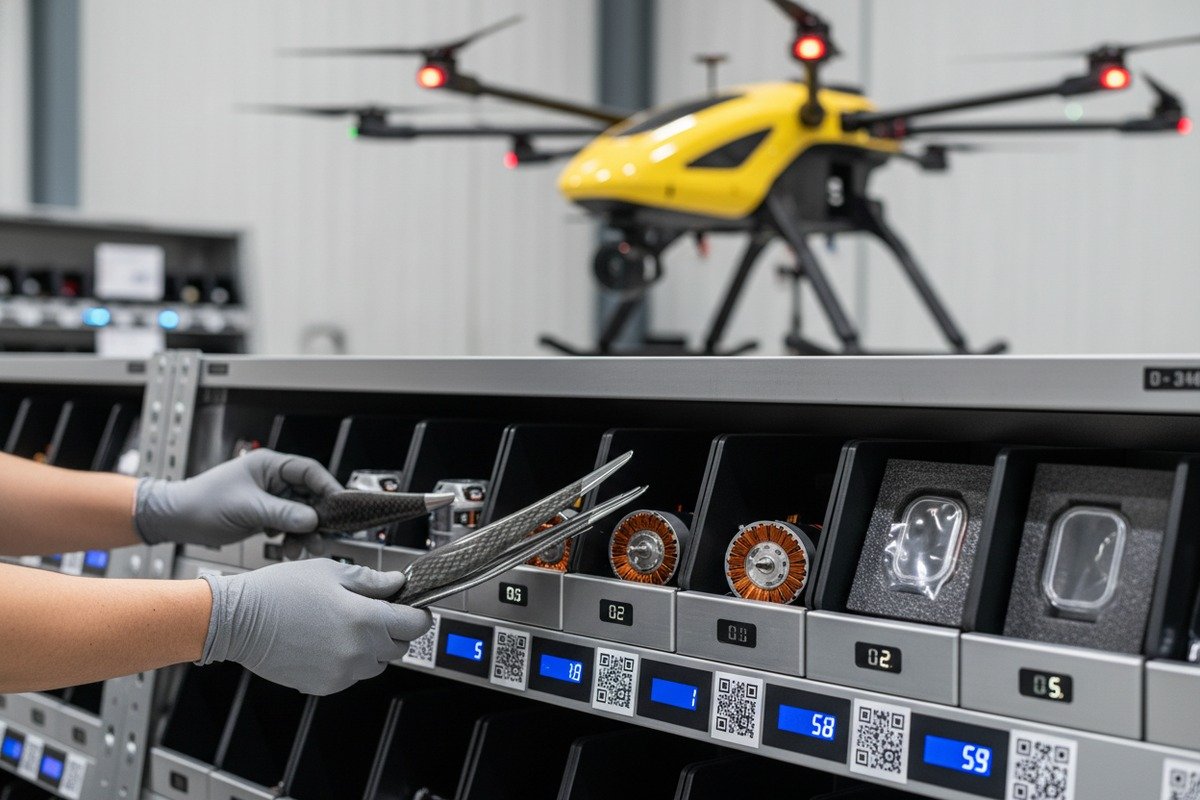
Why Spare Parts Availability Determines Your Repair Success
When a firefighting drone goes down, the clock starts ticking. NFPA 1710 standards 2 require 240-second travel times for fire suppression. Your repair TAT should not exceed 10-20% of your operational cycle. This means every day of delay compounds into missed missions and potential liability.
At our facility in Xi'an, we keep a minimum three-month supply of high-turnover components. We track consumption patterns across all export markets. This data helps us predict demand spikes during fire seasons in the US and Europe.
Critical Components to Stock
Not all parts carry equal weight. Some components fail more frequently than others. Focus your inventory discussions on these categories:
| Component Category | Typical Lifespan | Stock Priority |
|---|---|---|
| Propellers | 300 flight hours or 1 year | High |
| Batteries | 200-400 charge cycles | High |
| Motors | 500-800 flight hours | Medium |
| Gimbal assemblies | 400-600 flight hours | Medium |
| Thermal sensors | 1000+ flight hours | Low |
| Flight controllers | 1000+ flight hours | Low |
How to Verify Supplier Inventory Levels
Ask your supplier for quarterly inventory reports. Request visibility into their minimum stock thresholds. Good suppliers use Computerized Maintenance Management Systems 3 to track parts movement. They should share lead times for each component category.
We provide our distributors with real-time inventory dashboards. This transparency helps them plan purchases and avoid stockouts. When a part runs low, automated alerts trigger reorders before problems arise.
Building Your Own Buffer Stock
Smart distributors maintain local inventory as well. Keep common wear items on-site. Propellers, batteries, and basic mounting hardware should be immediately available. This dual-layer approach cuts repair time dramatically.
For our US distributors, we recommend stocking at least two complete propeller sets per drone in their fleet. Batteries require intermediate storage protocols to prevent swelling. Store them at 40-60% charge in cool, dry conditions.
What remote engineering support can I get to help me troubleshoot firefighting drone issues immediately?
When a drone shows error codes on the field, waiting days for a technician is not acceptable. Our engineering team has developed support protocols specifically for urgent troubleshooting scenarios.
Effective remote engineering support includes 24/7 video call diagnostics, real-time flight log analysis, firmware troubleshooting guides, step-by-step repair tutorials, and direct access to engineers who understand your specific drone configuration and payload requirements.

The Value of Immediate Technical Response
Fire departments and emergency response contractors cannot afford diagnostic delays. When thermal imaging sensors drift out of calibration, missions get compromised. Remote support bridges the gap between problem identification and resolution.
Our team operates across time zones to support US and European customers. We maintain video call capabilities with screen sharing for real-time guidance. This approach resolves approximately 60% of issues without shipping the drone anywhere.
Types of Remote Support Services
| Support Level | Response Time | Issues Covered | Delivery Method |
|---|---|---|---|
| Tier 1 – Basic | Under 4 hours | Firmware updates, settings reset | Email, chat |
| Tier 2 – Technical | Under 2 hours | Sensor calibration, motor diagnostics | Video call |
| Tier 3 – Engineering | Under 1 hour | Hardware failure analysis, crash forensics | Video call + log analysis |
| Emergency | Immediate | Mission-critical failures | Direct phone line |
What to Expect from Quality Remote Support
Good remote support starts with flight log analysis 4. Your drone records everything. Motor temperatures, GPS accuracy, battery voltage curves, and sensor readings all tell a story. Our engineers read these logs to pinpoint problems accurately.
We also maintain a library of common issues and solutions. Firefighting drones face unique challenges. Smoke exposure affects sensors. Heat stress impacts batteries. High-altitude operations strain motors. Our documentation addresses these specific scenarios.
Maximizing Remote Support Effectiveness
Prepare before contacting support. Gather flight logs from the last five missions. Note error codes and when they appeared. Describe environmental conditions during the issue. This information speeds up diagnosis significantly.
We train our distributors to collect this data systematically. A prepared support request gets resolved twice as fast as an unprepared one. This discipline directly impacts your repair TAT.
Building In-House Troubleshooting Capability
Remote support works best when your team has basic diagnostic skills. We offer online training programs covering common issues. Certified technicians can perform many repairs on-site with our guidance.
This hybrid approach combines manufacturer expertise with local responsiveness. Your technicians handle routine issues. Our engineers tackle complex problems. Together, you minimize downtime effectively.
How do I know if my manufacturer's quality standards are high enough to reduce my overall repair needs?
Poor quality means frequent repairs. Frequent repairs mean extended downtime. Our quality control processes 5 exist specifically to break this cycle before it starts.
Evaluate manufacturer quality standards by reviewing their certification credentials, requesting defect rate data, examining testing protocols for harsh conditions, verifying component sourcing practices, and assessing their track record with similar firefighting drone deployments in demanding environments.

Why Quality Standards Matter for Repair TAT
Prevention beats repair every time. A drone that never breaks down never needs repair time. This simple logic drives our entire manufacturing philosophy. We invest heavily in quality control because we know it saves our customers from operational headaches.
Firefighting drones face extreme conditions. Smoke, heat, water spray, and high winds stress every component. Only drones built to high standards survive these challenges reliably.
Key Quality Certifications to Verify
| Certification | What It Covers | Why It Matters |
|---|---|---|
| ISO 9001 | Quality management systems | Ensures consistent manufacturing processes |
| IP55 Rating | Dust and water resistance | Critical for firefighting environments |
| CE Marking | European safety compliance | Required for EU market, indicates testing rigor |
| FCC Certification | Radio frequency compliance | Required for US operation |
| Component Traceability | Supply chain documentation | Ensures genuine parts, enables recalls |
Testing Protocols That Predict Field Performance
We test every drone before shipping. But testing matters only if it simulates real conditions. Our quality assurance includes thermal stress testing 6, vibration analysis, and extended flight trials. We push drones beyond normal operating limits to find weaknesses early.
For firefighting applications, we specifically test motor performance at elevated temperatures. We verify thermal camera calibration accuracy after heat exposure. We stress-test battery management systems under high-drain conditions.
Questions to Ask Your Manufacturer
Request their defect rate data. Ask what percentage of units require warranty repairs within the first year. Anything above 5% suggests quality problems. Ask about their incoming component inspection process. Do they test parts before assembly, or just assemble and hope?
Our defect rate runs below 2% for shipped units. We achieve this through multiple inspection gates. Raw materials get tested. Sub-assemblies get tested. Final products get tested. Nothing ships without passing all checkpoints.
Component Quality and Sourcing Transparency
Ask where critical components come from. Motors, batteries, and sensors should come from established suppliers with quality track records. Some manufacturers cut costs by using unverified suppliers. This gamble leads to field failures and extended repair cycles.
We source motors from suppliers with aerospace industry credentials. Our batteries come from manufacturers with documented safety records. This selective approach costs more upfront but reduces total cost of ownership dramatically.
Long-Term Quality Indicators
Look at warranty terms. Manufacturers confident in their quality offer comprehensive warranties. Short warranties or excessive exclusions suggest they expect problems. Our standard warranty covers defects for extended periods because we rarely see claims.
What can I do to make sure my drone repair parts don't get delayed by international shipping or customs?
Customs delays turn a 72-hour repair into a two-week ordeal. Our export team has shipped thousands of drones and parts to the US and Europe. We know exactly where delays occur and how to prevent them.
Prevent international shipping and customs delays by maintaining proper export documentation, using experienced freight forwarders, pre-clearing parts classifications, establishing regional distribution hubs, and working with suppliers who have established customs clearance channels in your target markets.

Understanding Common Delay Causes
International shipments fail for predictable reasons. Missing documentation tops the list. Incorrect harmonized system codes 7 cause inspections. Lithium battery shipping restrictions create complications. Dual-use technology concerns trigger additional scrutiny.
When we ship to US distributors, we prepare complete documentation packages. Commercial invoices match packing lists exactly. HS codes are pre-verified. Battery compliance certificates accompany every shipment. This preparation prevents most delays before they start.
Documentation Requirements by Region
| Document | US Requirement | EU Requirement | Purpose |
|---|---|---|---|
| Commercial Invoice | Required | Required | Value declaration, duty calculation |
| Packing List | Required | Required | Contents verification |
| Certificate of Origin | Often required | Required for preferences | Tariff rate determination |
| Lithium Battery Declaration | Required | Required | Safety compliance |
| MSDS for Batteries | Required | Required | Hazardous goods handling |
| Export License | Sometimes required | Sometimes required | Dual-use technology control |
Choosing the Right Shipping Partner
Not all freight forwarders handle drone parts competently. Choose partners with experience shipping lithium batteries and electronics. They understand the specific regulations and documentation requirements. They know which carriers accept these shipments and which do not.
We work with freight forwarders who specialize in drone industry shipments. They maintain relationships with customs brokers in destination countries. They pre-clear shipments when possible. They track packages proactively and intervene when issues arise.
Regional Hub Strategy
The fastest way to avoid international shipping delays is eliminating international shipping entirely. Establish regional inventory hubs. Stock common repair parts in-country. Ship domestically when repairs are needed.
For our major US distributors, we recommend maintaining inventory in bonded warehouses or domestic facilities. Parts clear customs once during initial import. Subsequent distribution stays domestic. This approach cuts delivery time from weeks to days.
Battery Shipping Complications
Batteries cause most drone shipping problems. They are classified as dangerous goods. Airlines restrict quantities. Ground shipping has its own regulations. Many carriers refuse battery shipments entirely.
We package batteries according to IATA dangerous goods regulations 8. Each battery includes test reports proving compliance. Packaging meets UN 3481 requirements. This preparation prevents rejections and delays. We also offer battery-less shipments when customers have local battery sources.
Pre-Clearance and Compliance Programs
Some countries offer trusted trader programs. These programs pre-approve regular importers for expedited customs processing. US C-TPAT and EU AEO programs provide benefits including faster clearance and fewer inspections.
We encourage our distributors to pursue these certifications. The application process requires documentation and sometimes facility inspections. But approved participants see significantly faster customs processing. This investment pays off through reduced repair TAT.
Conclusion
Meeting firefighting drone repair TAT requirements demands a comprehensive approach. Focus on spare parts availability, remote engineering support, manufacturing quality, and logistics optimization. These four pillars work together to keep your fleet mission-ready.
Footnotes
1. Found a relevant and authoritative article on critical spare parts management. ↩︎
2. Official NFPA page for the NFPA 1710 standard. ↩︎
3. Authoritative definition and explanation of CMMS from IBM. ↩︎
4. Authoritative guide on flight log analysis for drones from PX4. ↩︎
5. Comprehensive explanation of quality control processes. ↩︎
6. Explains testing to verify device functionality and reliability over specified temperature ranges. ↩︎
7. Defines the international product nomenclature for customs tariffs and trade statistics. ↩︎
8. Provides guidelines and regulations for the safe air transport of hazardous materials. ↩︎

 English
  Español de México
  Deutsch
  Français
  Русский
  العربية
