
When our production team ships agricultural drones overseas, warning label compliance often gets overlooked until customs flags a shipment ANSI Z535.4-2023 standards 1. This creates costly delays and legal exposure for importers.
To ensure ANSI warning label compliance when sourcing agricultural drones from China, verify your supplier understands ANSI Z535.4-2023 standards, request compliance documentation, conduct pre-shipment inspections, test label durability for outdoor conditions, and collaborate directly with factory engineering teams on customized safety labeling.
The following sections break down each critical step signal words 2. You will learn exactly what to ask your supplier, which documents to collect, and how to avoid common pitfalls that lead to rejected shipments or liability claims.
How can I verify that my Chinese supplier understands the specific ANSI Z535 standards required for US agricultural drones?
In our experience exporting to the US market, many buyers assume all warning labels are similar UV resistance rating 3. This assumption leads to expensive redesigns after products arrive at port.
Verify your Chinese supplier’s ANSI understanding by requesting sample labels showing correct signal words (DANGER, WARNING, CAUTION), proper color codes, safety alert symbols, and message panels. Ask for written confirmation they follow ANSI Z535.4-2023, not just Chinese GB 2894 standards.

The Core Differences Between Chinese and US Standards
Chinese manufacturers typically follow GB 2894 for safety colors and GB/T standards for product labeling. Chinese GB 2894 standards 4 While these share some similarities with ANSI, critical differences exist. The signal word formats differ. Pictogram styles vary. Message panel layouts follow different conventions.
Our engineers discovered this gap when a US distributor returned a batch of hexacopter drones. The labels used correct colors but wrong signal word placement. This small detail cost the importer weeks in relabeling.
Key Elements to Check in Supplier Samples
When evaluating supplier samples, examine these specific elements:
| ANSI Z535.4 Element | Correct Specification | Common Chinese Error |
|---|---|---|
| DANGER signal word | White text on red background | Red text on white background |
| WARNING signal word | Black text on orange background | Orange text on black background |
| CAUTION signal word | Black text on yellow background | Missing safety alert symbol |
| Safety alert symbol | Equilateral triangle with exclamation mark | Circle or different symbol shape |
| Message panel | Hazard, consequence, avoidance steps | Only hazard description |
Verification Questions to Ask Your Supplier
Send your supplier these direct questions before placing orders:
- Do you have the ANSI Z535.4-2023 standard document in your design department?
- Can you show previous US orders with compliant labels?
- Who reviews label designs for export compliance?
- Will you accept our provided label templates?
If suppliers hesitate or provide vague answers, this signals potential problems. Strong suppliers answer confidently and provide documentation quickly.
Using Third-Party Audits
Consider hiring a third-party inspection company to audit your supplier's label compliance capabilities. Third-Party Audits 5 Companies like Intertek, SGS, or Bureau Veritas offer pre-production audits. These audits cost between $300-800 but prevent much larger losses from non-compliant shipments.
During audits, inspectors verify that the factory has proper reference materials, trained staff, and quality control processes for ANSI-compliant labeling.
What documentation should I request from my manufacturer to prove ANSI label compliance during the import process?
Our export documentation team handles hundreds of shipments yearly. The most common customs delays come from missing or incomplete label compliance records.
Request these documents from your manufacturer: label design files with ANSI Z535.4 specifications marked, material test certificates for label durability, pre-shipment inspection reports showing label placement photos, and a signed compliance declaration referencing the specific ANSI standard version used.
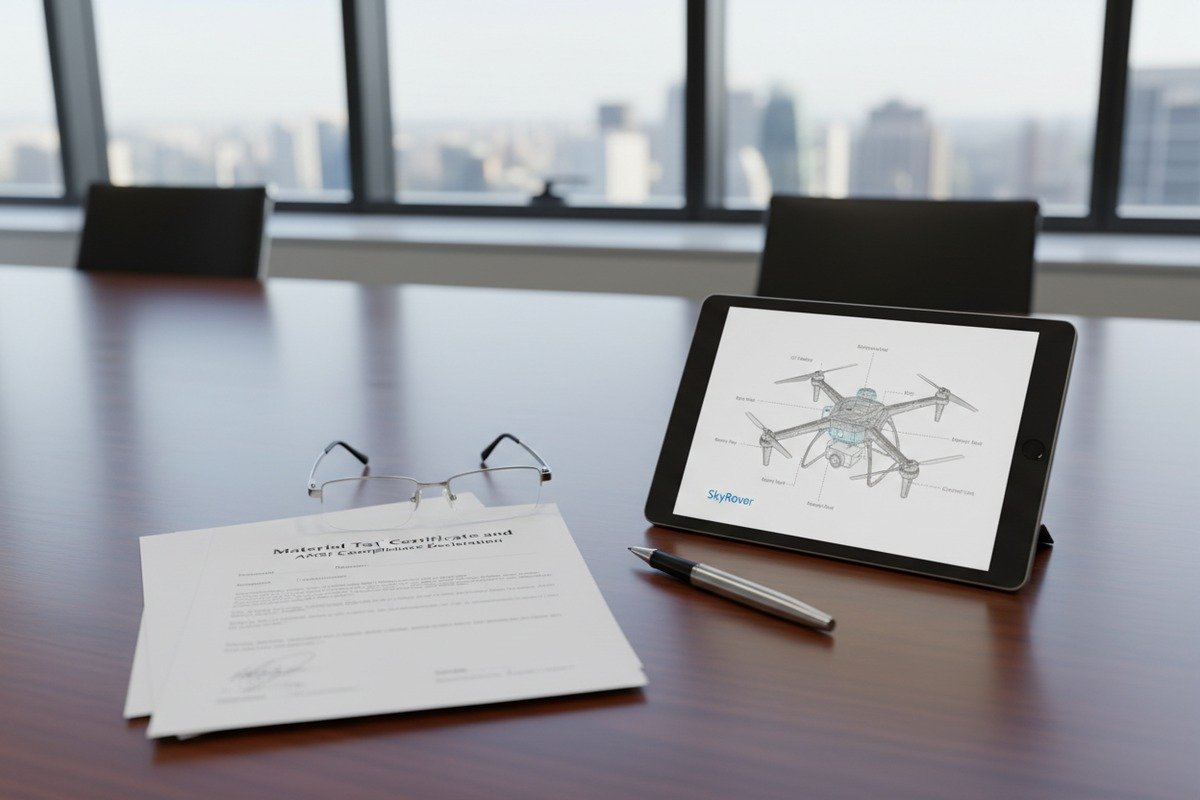
Essential Document Checklist
Create a formal document request list for your supplier. Include all items below:
| Document Type | Purpose | When to Request |
|---|---|---|
| Label design proof | Verify colors, text, symbols match ANSI | Before production starts |
| Material specification sheet | Confirm UV/chemical resistance ratings | Before production starts |
| Production sample photos | Visual confirmation of applied labels | During production |
| Pre-shipment inspection report | Third-party verification of final products | Before shipping |
| Compliance declaration letter | Legal record of supplier commitment | With final shipment |
Label Design File Requirements
The design files should include exact Pantone or RAL color codes matching ANSI specifications. Our design team uses these references:
- DANGER: Pantone 485 Red, White
- WARNING: Pantone 151 Orange, Black
- CAUTION: Pantone 109 Yellow, Black
Request vector files (AI, EPS, or PDF format) showing all label designs. These files prove the supplier created labels intentionally matching ANSI standards, not accidentally.
Material Test Certificates
Agricultural drones face harsh conditions. Labels must survive UV exposure, chemical contact, temperature extremes, and physical abrasion. Ask for material test certificates 6 showing:
- UV resistance rating (minimum 3 years outdoor exposure)
- Chemical resistance to common agricultural chemicals
- Temperature tolerance range (-20°C to +60°C minimum)
- Adhesive peel strength specifications
Reputable label material suppliers like 3M, Avery Dennison, or Brady provide these certificates. If your drone manufacturer uses unknown label materials, request independent testing.
Organizing Documents for Customs
Keep all compliance documents organized in a single file for each shipment. US Customs may request proof that products meet safety requirements. Having organized documentation speeds clearance and demonstrates due diligence.
Include photographs of actual labels on finished drones. These photos should clearly show label text, colors, and placement. Take photos from multiple angles showing all required warning locations.
Legal Review of Documentation
Before your first major order, have a product liability attorney review your documentation package. They can identify gaps that could create legal exposure. This review typically costs $500-1500 but provides significant protection against future claims.
The attorney should verify that your compliance declaration language properly transfers liability to the manufacturer for label accuracy while protecting your import business.
How do I ensure the warning labels on my OEM drones are durable enough to withstand harsh outdoor farming environments?
When we test our agricultural hexacopter drones in field conditions, label failure ranks among the top warranty complaints from distributors. Faded or peeling labels create liability exposure.
Ensure label durability by specifying UV-resistant materials rated for 3+ years outdoor exposure, chemical-resistant overlaminate coatings, industrial-grade adhesives tested for temperature cycling, and proper surface preparation protocols. Conduct accelerated aging tests before mass production.
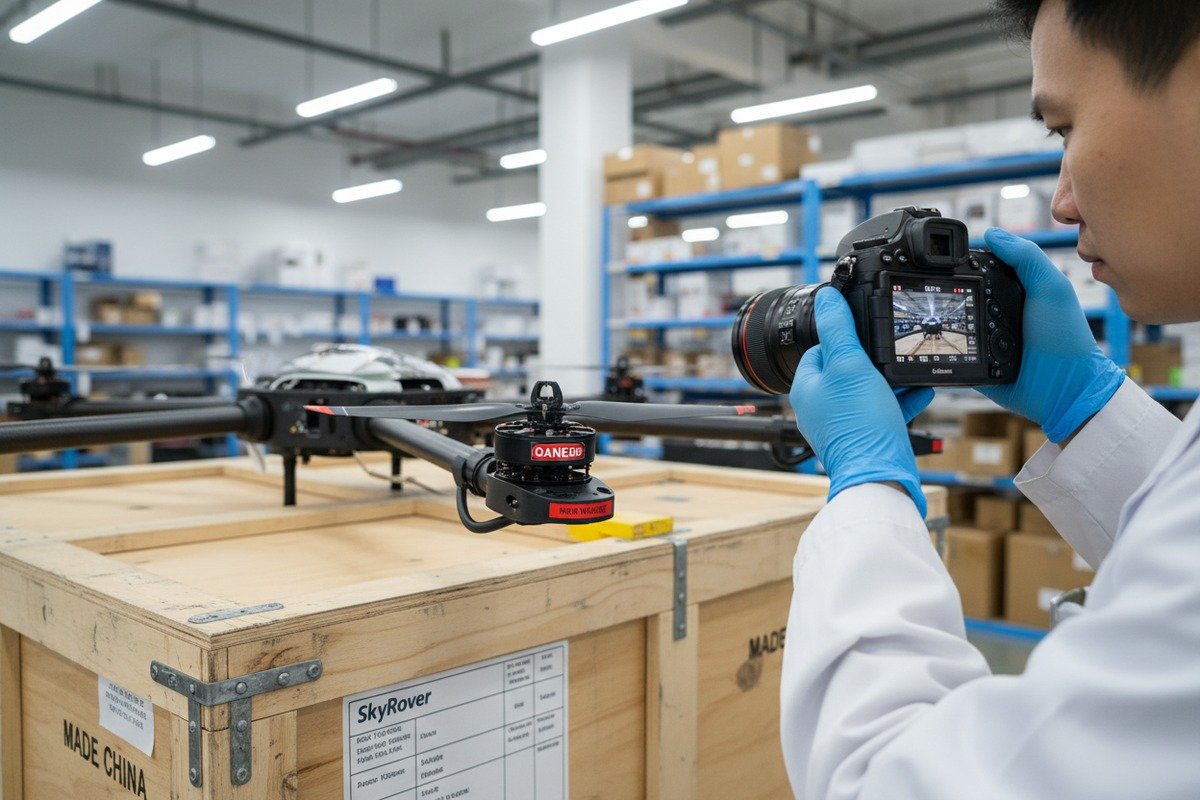
Understanding Agricultural Environment Challenges
Agricultural drones face unique environmental stresses that office or warehouse equipment never experiences. The matte black carbon fiber frames on our hexacopter models absorb significant heat. Label adhesives can fail when surface temperatures exceed 70°C.
Chemical exposure presents another challenge. Pesticides, herbicides, and fertilizers contain solvents that attack standard label materials. A label that looks perfect in the factory may become illegible after one spray season.
Material Specifications for Ag Drone Labels
| Material Property | Minimum Specification | Preferred Specification |
|---|---|---|
| Base material | Vinyl or polyester | Polyester with UV inhibitors |
| Thickness | 2 mil (0.05mm) | 3-4 mil (0.08-0.10mm) |
| Adhesive type | Acrylic permanent | High-performance acrylic |
| UV resistance | 2 years | 5+ years |
| Temperature range | -20°C to +60°C | -40°C to +80°C |
| Chemical resistance | Common agricultural chemicals | ASTM D543 tested |
Testing Protocols Before Mass Production
Our quality control team developed a testing protocol specifically for agricultural drone labels. Before approving any label design for production, we conduct these tests:
Accelerated UV Testing: Place sample labels in a UV chamber for 500 hours. Accelerated UV Testing 7 This simulates approximately 2-3 years of outdoor exposure. Check for fading, cracking, or delamination.
Chemical Immersion Testing: Submerge label samples in common agricultural chemicals (glyphosate solutions, fertilizer mixtures) for 24 hours. Labels should remain legible with no adhesive failure.
Thermal Cycling Testing: Subject labels to repeated cycles between -20°C and +70°C. Complete 50 cycles minimum. Inspect for edge lifting or adhesive migration.
Abrasion Testing: Use standardized abrasion testing equipment to simulate handling wear. Labels should remain legible after 100 abrasion cycles.
Surface Preparation Requirements
Even the best labels fail if applied to improperly prepared surfaces. Carbon fiber and plastic surfaces require specific preparation:
- Clean surface with isopropyl alcohol to remove mold release agents
- Allow complete drying (minimum 10 minutes)
- Apply labels at temperatures between 18-25°C
- Use roller or squeegee to eliminate air bubbles
- Allow 24-hour cure time before handling
Include these preparation requirements in your supplier quality agreement. Factory workers often skip steps under production pressure unless requirements are formally documented.
Ongoing Quality Monitoring
Request that your supplier implements incoming quality inspection for label materials. Each batch of label stock should be checked against specifications before use. Keep retention samples from each production batch for reference if problems appear later in the field.
Can I collaborate with the factory's engineering team to customize safety labeling for my specific drone models?
Our engineering team works directly with OEM customers every month on custom labeling projects. The best results come from early collaboration before production tooling begins.
Yes, you can collaborate with factory engineering teams to customize safety labeling. Start by providing your specific hazard analysis, required warning content, and placement preferences. Work with their design team to create label templates that meet both ANSI standards and your brand requirements. Establish a formal approval process for final designs.

Benefits of Custom Label Collaboration
Generic warning labels may not address the specific hazards of your drone configuration. Our agricultural hexacopter models have different hazard profiles than smaller consumer drones. The chemical spray systems, high-capacity batteries, and long carbon fiber propeller arms each require specific warnings.
Custom collaboration ensures labels address:
- Your specific battery voltage and capacity hazards
- Chemical handling warnings for your spray system design
- Propeller strike zones based on your frame geometry
- Operational altitude and range limitations
The Collaboration Process
Effective collaboration follows a structured process. Rushing this process leads to errors and delays.
| Phase | Activities | Timeline |
|---|---|---|
| Hazard Analysis 8 | Identify all drone-specific hazards requiring warnings | Week 1-2 |
| Content Development | Write warning text following ANSI message panel format | Week 2-3 |
| Design Review | Factory design team creates label mockups | Week 3-4 |
| Sample Production | Physical samples for review and testing | Week 4-5 |
| Final Approval | Sign off on production-ready designs | Week 5-6 |
Conducting Your Hazard Analysis
Before contacting the factory engineering team, complete your own hazard analysis. This analysis identifies what warnings your drone needs. Consider these hazard categories for agricultural drones:
Mechanical Hazards: Propeller strikes, pinch points, moving parts during folding/unfolding
Electrical Hazards: High-voltage batteries, charging risks, water exposure risks
Chemical Hazards: Spray system contents, tank filling procedures, drift exposure
Operational Hazards: Flight altitude limits, weather restrictions, no-fly zone awareness
Document each hazard with the potential consequence and required avoidance action. This documentation becomes the basis for label content development.
Working with Factory Design Teams
When our customers provide clear hazard analysis documents, our design team can create accurate labels quickly. Vague requests lead to multiple revision cycles.
Provide your design team with:
- Complete hazard analysis document
- Required languages for label text
- Brand guidelines (colors, fonts, logo placement if applicable)
- Placement diagrams showing where labels must appear
- Reference photos of competitor products with compliant labels
Approval and Change Control
Establish a formal approval process for label designs. Designate one person in your organization with authority to approve final designs. Document all approvals in writing.
After production begins, any label changes require formal change control. This prevents confusion when labels differ between production batches. Keep records of all approved label versions with effective dates.
Cost Considerations
Custom label development typically adds $500-2000 to initial order costs depending on complexity. This covers design time, sample production, and testing. Per-unit costs for custom labels are usually only $0.50-2.00 higher than generic alternatives.
This investment pays returns through reduced liability exposure and professional product appearance. Customers notice quality labeling, and it builds confidence in your overall product quality.
Conclusion
ANSI warning label compliance requires attention at every stage of your China sourcing process. Verify supplier understanding, collect proper documentation, specify durable materials, and collaborate on custom designs. These steps protect your business from customs delays, liability claims, and product returns.
Footnotes
1. Official source for ANSI Z535.4-2023, detailing design and application of safety signs. ↩︎
2. Explains the definitions and compliance for signal words in ANSI Z535 safety labels. ↩︎
3. Explains what UV-resistant labels are and factors contributing to their durability outdoors. ↩︎
4. Provides information on the Chinese national standard for safety colors and signs. ↩︎
5. Defines third-party audits and their importance for compliance and unbiased evaluation. ↩︎
6. Describes testing and certification services for label materials and systems to ensure performance. ↩︎
7. Explains the process and purpose of accelerated UV testing for material durability. ↩︎
8. Provides a general overview and definition of process hazard analysis. ↩︎

 English
  Español de México
  Deutsch
  Français
  Русский
  العربية
