
We often see buyers frustrated by grounded fleets because their previous supplier disappeared or failed to provide support. When we build our SkyRover drones in Chengdu, we prioritize longevity over quick sales to prevent this exact scenario for our clients.
To evaluate a supplier, assess their operational history of at least four years, verify on-time delivery rates above 95%, and confirm direct manufacturing status. Prioritize partners offering ISO 9001 certification, modular hardware for easy upgrades, and clear total cost of ownership models that account for maintenance and downtime.
Let’s break down the specific criteria you need to check before signing a contract to ensure your operation scales successfully.
How can I verify the manufacturing quality and durability standards of the agricultural drones?
Cheap plastic frames crack under pressure, ruining harvest schedules and wasting budget. At our factory, we rigorously test every unit against dust, water, and vibration to ensure your investment survives harsh field conditions without failure.
Verify quality by requesting IP rating certificates for dust and water resistance, specifically looking for IP65 or higher. Demand factory audit reports and evidence of ISO 9001 compliance. Review the component supply chain for branded electronics and conduct flight tests to confirm stability under maximum payload capacity.
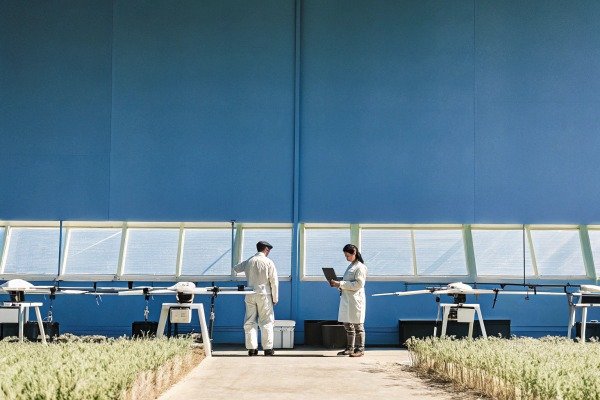
When you invest in agricultural drones, you are buying a tool that must perform in hostile environments. Fields are dusty, humid, and often involve handling corrosive chemicals. A drone that looks good on a specification sheet may fail within weeks if the manufacturing quality does not meet industrial standards. You need to look beyond the brochure and audit the build quality yourself.
Assess Material and Ingress Protection
The first indicator of durability is the material used for the airframe. In our production lines, we utilize carbon fiber composites rather than standard plastics. carbon fiber composites 1 Carbon fiber offers the necessary rigidity to handle heavy liquid payloads while remaining light enough to maximize battery life. You should ask the supplier for specific material sheets.
Furthermore, agricultural drones must be washable. Ingress Protection (IP) rating 2 After spraying pesticides or fertilizers, the machine needs to be cleaned to prevent corrosion. You must verify the Ingress Protection (IP) rating. Ingress Protection (IP) rating 3 An IP rating of IP65 or IP67 is standard for high-quality agricultural drones.
- IP65: Dust-tight and protected against water jets (you can hose it down).
- IP67: Dust-tight and protected against temporary immersion.
Do not accept a supplier's word for it. Ask to see the third-party lab testing certificates that validate these ratings. If a supplier cannot provide a certificate from an accredited laboratory, they likely have not tested the drone properly.
Review Testing Protocols and Quality Control
A reliable partner will have a documented quality control (QC) process. Before we ship any unit to the US or Europe, we perform flight stability tests, load tests, and battery discharge cycles. You should ask your potential supplier for a "Factory Acceptance Test" (FAT) report. This report should detail the specific tests that individual drone passed before packaging.
Additionally, inquire about the components inside the drone. High-quality suppliers use branded motors, Electronic Speed Controllers (ESCs), and flight controllers from reputable sources or reliable proprietary designs. Avoid suppliers who use generic, unbranded electronics, as these are often the first points of failure.
Manufacturing Standards Comparison
Use the table below to compare what a professional industrial supplier offers versus a hobbyist or low-end supplier.
| Feature | Professional Industrial Supplier | Low-Cost / Hobbyist Supplier |
|---|---|---|
| Frame Material | Carbon Fiber / Aviation Aluminum | Molded Plastic / Fiberglass |
| IP Rating | Certified IP65 / IP67 | Unrated or claimed "Water Resistant" |
| Testing | 100% Load & Flight Tested | Batch Sampling Only |
| Connections | Industrial Aviation Plugs | Standard USB / Fragile Connectors |
| Component Sourcing | Traceable, Branded Parts | Generic, Mixed Batches |
What should I ask about OEM capabilities and software customization support?
Standard software often fails to integrate with specific farm management systems or unique crop workflows. Our engineering team regularly modifies flight controllers and payload interfaces to help clients seamlessly export data to their existing platforms.
Ask specifically about API openness and data portability to ensure compatibility with your Farm Management Information Systems. Confirm if the supplier provides SDK access for third-party integrations and inquire about their engineering team's capacity to modify payload interfaces or flight algorithms to meet your unique operational requirements.

In modern agriculture, the drone is just one part of a larger digital ecosystem. You might be using a specific Farm Management Information System (FMIS) to track crop health Farm Management Information System (FMIS) 4, soil moisture, or yield data. If your drone supplier locks you into a closed system, you will struggle to move data between your drone and your farm management software. This creates data silos and inefficiencies.
The Importance of API and SDK Access
You need to ask if the supplier offers an open Application Programming Interface (API) 5 Application Programming Interface (API) or a Software Development Kit (SDK). Software Development Kit (SDK) 6 An open API allows your technical team or a third-party developer to write software that talks to the drone.
- Data Portability: Can you automatically pull flight logs and spray data into your own servers?
- Mission Planning: Can you upload flight paths generated by your own GIS software directly to the drone?
We have found that professional buyers often need to integrate drone data with tractor data or satellite imagery. If the supplier does not support these integrations, you might find yourself manually copying data from one screen to another.
Hardware Customization for Specific Needs
Sometimes, the software is fine, but the physical tool needs changing. You might need to mount a specific multispectral camera, a granular spreader for seeds, or a specialized sensor for research. An Original Equipment Manufacturer (OEM) capable supplier will have a modular design.
Ask the supplier if they have an engineering team that can assist with these modifications. Many "suppliers" are just trading companies who buy and resell finished boxes. They cannot change a single screw for you. A true manufacturer can adjust the mounting brackets, change the voltage output for payloads, or even redesign the landing gear to suit tall crops.
Assessing Customization Levels
When interviewing suppliers, categorize them based on their willingness and ability to customize. This table helps identify where a supplier fits.
| Customization Level | Description | Suitability for Long-Term Partnership |
|---|---|---|
| Box Mover | Sells fixed configurations. No changes allowed. | Low. Good for simple, small-scale usage only. |
| Light OEM | Can add your logo and change packaging. | Medium. Good for branding, but limits technical growth. |
| Technical Partner | Offers SDK, custom payload integration, and firmware tweaks. | High. Essential for scaling and complex operations. |
| Co-Developer | Jointly develops new airframes or flight logic with you. | Very High. Ideal for specialized large-scale service providers. |
How do I ensure the supplier offers reliable after-sales service and spare parts availability?
Waiting weeks for a simple propeller replacement costs you money every hour the weather is good. We stock critical spares in our warehouses to ensure our partners never face prolonged downtime during peak planting or spraying seasons.
Ensure reliability by negotiating a Service Level Agreement that guarantees response times under two hours and spare parts shipping within 24 hours. Verify the supplier’s inventory of critical components like motors and ESCs, and check if they provide detailed video repair guides to empower your local maintenance teams.

The reality of agricultural drone operations is that crashes and wear-and-tear happen. A drone is a high-performance machine operating in difficult conditions. The difference between a profitable season and a disaster often comes down to how fast you can get a broken drone back in the air.
The "Total Cost of Ownership" Trap
Many buyers focus solely on the upfront purchase price. However, the Total Cost of Ownership (TCO) is heavily influenced by maintenance. If a cheap drone breaks and you have to wait six weeks for a part from overseas, the cost of that downtime (lost yield, missed spray windows) far exceeds the savings on the initial purchase.
You must ask the supplier about their "End of Life" (EOL) policy. How long will they manufacture parts for the model you are buying? A reputable partner will guarantee part availability for at least 5 years after a model is discontinued.
Training and Self-Repair Capabilities
For international partnerships, sending a drone back to the factory for repair is not practical due to shipping costs and customs delays. Therefore, the supplier must empower you to fix it.
- Repair Manuals: Do they provide clear, English-language video tutorials and schematics?
- Module Design: Is the drone built with modular parts (arms, motors, pumps) that can be swapped in the field with basic tools?
We encourage our clients to stock a "crash kit" or "maintenance kit" along with their initial order. This kit contains the most frequently replaced items. A supplier who cares about your success will recommend this proactively.
Recommended Spare Parts Inventory
When evaluating a supplier, ask them to provide a recommended spare parts list for a fleet of 5 drones. Their list should look something like this. If they say "you don't need spare parts," run away.
| Component Category | Specific Part | Why It Is Critical | Recommended Stock Qty (Per 5 Drones) |
|---|---|---|---|
| Propulsion | Propellers (CW/CCW) | Most common damage from minor collisions. | 10 Sets |
| Propulsion | Motors & ESCs | Wear out over time or fail if stalled. | 2 Units Each |
| Spraying System | Nozzles & Filters | Clog frequently with heavy chemicals. | 20 Units |
| Spraying System | Water Pump | Critical failure point; stops operation completely. | 2 Units |
| Structure | Landing Gear / Skids | Break during hard landings. | 2 Sets |
| Power | Charging Cables | Often damaged by field handling. | 3 Cables |
Does the drone manufacturer have sufficient export experience and certifications for my region?
Customs delays can hold up equipment for months if the paperwork is slightly incorrect or missing. We have spent years navigating US and European regulations to ensure our shipments clear borders smoothly and legally without unexpected tariffs.
Confirm the manufacturer holds necessary certifications like FAA compliance for the US or CE markings for Europe. Request proof of successful past shipments to your region to verify their logistics capability. Check their battery transport certifications, such as UN38.3, to avoid hazardous material shipping delays.
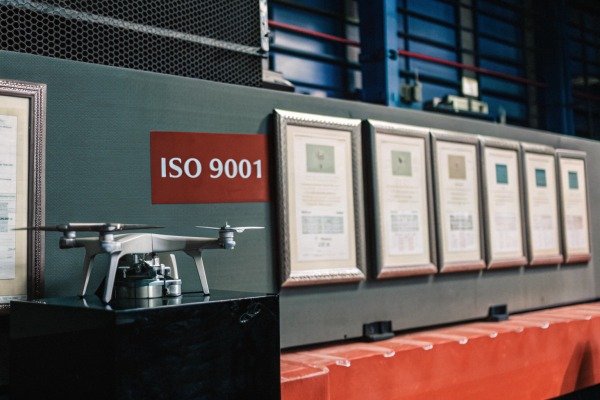
Manufacturing a good drone is only half the battle. Getting it to your door in the United States or Europe is the other half. The logistics of shipping high-capacity lithium batteries and industrial electronics are complex. A supplier without export experience can cause you significant legal and financial headaches.
Battery Regulations and Safety
The most critical certification for shipping drones is UN38.3. This is the United Nations standard for the transport of lithium batteries. Without this test report, airlines and shipping companies will refuse to carry the batteries. If a supplier tries to ship batteries as "general cargo" to save money, they are breaking the law and risking your shipment being seized by customs.
Always ask for the MSDS (Material Safety Data Sheet) and the UN38.3 test report before you place an order. Verify that the capacity listed on the document matches the battery you are buying.
Regional Aviation Certifications
Different regions have different rules for what hardware can fly.
- United States (FAA): While the FAA largely regulates the operator (Part 107/137), the hardware must meet Remote Remote ID requirements 7 ID requirements. Remote ID requirements 8 You need to ensure the manufacturer has compliant Remote ID modules built-in or available as add-ons.
- Europe (EASA): The EU has strict class markings (C-ratings). Ensure the drone has the correct CE marking and Declaration of Conformity. Declaration of Conformity 9
Logistics and Incoterms
Finally, discuss the shipping terms (Incoterms). shipping terms (Incoterms) 10 Many inexperienced suppliers only offer "EXW" (Ex Works), meaning they leave the box at their factory door, and you have to figure out how to get it to your country. This is very risky for you.
We recommend looking for suppliers who offer "DDP" (Delivered Duty Paid) or at least "DAP" (Delivered at Place).
- DDP: The supplier handles shipping, insurance, customs clearance, and pays the import duties. You just receive the package.
- DAP: The supplier gets it to your door, but you pay the import duties.
Ask the supplier for references or redacted Bills of Lading from previous shipments to your country. This proves they know which Harmonized System (HS) codes to use to minimize unnecessary tariffs and avoid customs inspections that delay delivery.
Conclusion
Selecting a partner goes beyond specs. Focus on verified durability, responsive support, and proven logistics. A strong partnership ensures your fleet scales profitably for years to come.
Footnotes
1. Comprehensive overview of carbon fiber properties and applications in industrial manufacturing. ↩︎
2. Official international standard body defining IP codes used for equipment durability. ↩︎
3. Official IEC standards page explaining the levels of protection for electrical enclosures. ↩︎
4. Product documentation for a leading agricultural data management platform. ↩︎
5. Authoritative definition of API technology from a major industry leader. ↩︎
6. Technical definition and components of software development kits for system integration. ↩︎
7. Official government regulation page detailing Remote ID compliance for drones. ↩︎
8. FAA official guidelines on Remote ID compliance for unmanned aircraft systems. ↩︎
9. European Union aviation safety portal explaining drone certification and conformity requirements. ↩︎
10. International Chamber of Commerce rules for the use of domestic and international trade terms. ↩︎

 English
  Español de México
  Deutsch
  Français
  Русский
  العربية
