
Walking through our factory floor in Chengdu, I often see clients struggling to define what “quality” actually looks like before shipping. Without a clear plan, you risk receiving expensive hardware that doesn’t fit your local farming needs.
To establish a standard acceptance process, create a phased checklist covering pre-sourcing due diligence, prototype flight testing, and third-party pre-shipment inspections (PSI). Verify 100% of critical components like motors and flight controllers against the contract, and validate software compatibility before final payment.
Let’s break down the exact steps to secure your investment and ensure operational readiness.
What key performance indicators should be included in my pre-shipment inspection checklist?
When our engineers prepare units for export to the US, they know that visual checks alone aren’t enough to guarantee field performance. Missing hidden defects now means costly downtime later.
Your pre-shipment inspection checklist must include verifying motor vibration levels, battery cell voltage balance, and spray system pressure stability. Ensure the payload capacity meets specifications and check that the frame construction aligns with moisture-proof and shock-resistant standards for safe international transport.
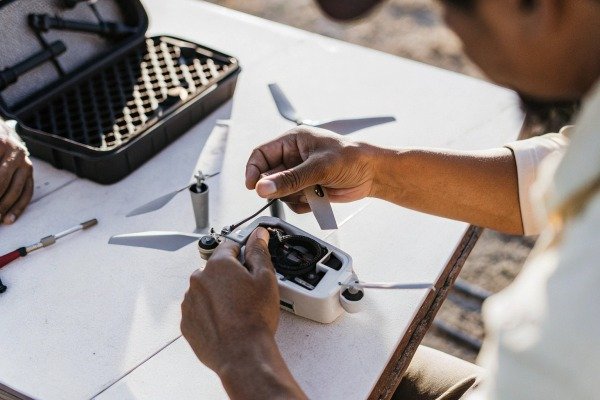
Establishing a robust checklist is the primary defense against quality fade. quality fade 1 In our experience manufacturing mid-to-high-end drones, we see that generic checklists often miss the nuances of agricultural UAVs. You need to be specific about the hardware.
Physical Build and Component Verification
The first layer of your checklist must confirm that the physical components match your purchase order. It is common in the industry for suppliers to swap components based on availability. You must verify the branding on the Electronic Speed Controllers (ESCs) Electronic Speed Controllers 2 and the model numbers on the motors.
Our team recommends a "Golden Sample" approach. This means you compare every production unit against the initial prototype you approved. Look for carbon fiber integrity. Any cracks, delamination, or loose screws carbon fiber integrity 3 on the arm folding mechanisms are grounds for immediate rejection.
Functional Bench Testing
Before the drone ever flies, it must pass bench tests. This involves powering on the unit and connecting it to the Ground Control Station (GCS). Ground Control Station 4 You need to check the sensor health status. The compass, accelerometer, and barometer must show normal readings without excessive noise.
We also stress the importance of the spray system stress test. Run the pumps with water for at least 10 minutes to check for leaks at the nozzle connections or pressure drops in the lines.
Critical KPI Checklist for PSI
Use this table to guide your inspection team or third-party agency:
| Component Category | Inspection Item | Acceptance Criteria |
|---|---|---|
| Propulsion System | Motor & Propeller Balance | No visible wobble; vibration logs show <2.0 vibration score. |
| Power System | Battery Cell Voltage | All cells balanced within 0.02V of each other; no puffing. |
| Spray System | Pump Pressure & Flow | Consistent flow rate matches specs (e.g., 5L/min); zero leaks. |
| Frame & Structure | Carbon Fiber Arms | No scratches >1mm; folding mechanism locks securely without play. |
| Electronics | GPS/RTK Module | Locks onto >15 satellites within 2 minutes of cold start. |
By adhering to these specific indicators, you move beyond a simple "does it look nice?" check and ensure the machine is airworthy.
How do I verify the flight endurance and spraying accuracy of my agricultural drones remotely?
We frequently conduct live video tests for our overseas partners who cannot visit Xi’an personally, ensuring they see real-time data. Relying solely on paper specs often leads to disappointment regarding actual battery life.
Verify performance remotely by demanding live-streamed flight tests that demonstrate full-load hovering time and autonomous waypoint navigation. Request raw flight log files to analyze battery voltage curves and use water-sensitive paper during spray tests to visually confirm droplet density and swath width.

Validating performance from across the ocean requires more than just a video clip. You need data transparency. When we collaborate with clients on design and development, we emphasize that flight endurance and spray width are variable based on environmental conditions. Therefore, your verification process needs to mimic your local environment as closely as possible.
The Full-Payload Endurance Test
Many datasheets list "max flight time" with no payload. This is irrelevant for agriculture. You must request a hover test with a full tank (e.g., 20L of water). Watch the battery voltage curve. It should drop linearly. If you see sudden voltage sags under load, the batteries are not high-quality industrial grade.
Require the factory to provide the flight log file (often a .bin or .log file). You can open this in standard mission planner software to see the true current draw (Amps) and total power consumption.
Spray Pattern Verification
Spraying accuracy defines the drone's value. To verify this remotely, ask the factory to lay out water-sensitive paper on the ground.
- Swath Width: Fly the drone at a fixed height (e.g., 2 meters).
- Coverage: Spray water over the paper.
- Result: The paper turns blue where droplets hit.
This gives you undeniable visual proof of the effective spray width and droplet density. If the droplets are too fine, they drift; if too large, they waste fluid.
Remote Verification Protocol
Below is a standard protocol we suggest for remote acceptance:
| Test Phase | Activity Description | Data to Request |
|---|---|---|
| Hover Test | Hover at 3m height with 100% payload until battery hits 20%. | Uncut video + Flight Log (.bin). |
| Speed Test | Fly max speed (e.g., 10m/s) to check frame stability. | Video of attitude stability + Vibration logs. |
| Spray Test | Fly over water-sensitive paper at operational speed. | High-res photos of the paper + Flow rate data. |
| RTH Test | Trigger "Return to Home" function manually. | Video of landing accuracy (distance from home point). |
Using this data-driven approach removes the "trust" variable and replaces it with engineering certainty.
Which technical documents and certifications must I validate during the product acceptance phase?
During our exports to Europe and the US, we have seen shipments delayed simply because a battery MSDS was outdated or missing. Incorrect paperwork can freeze your assets at customs indefinitely.
You must validate the CE/FCC electromagnetic compatibility certificates, UN38.3 test reports for lithium batteries, and the Material Safety Data Sheet (MSDS). Additionally, require a Certificate of Origin for tariff assessments and an English-language user manual that complies with local aviation authority safety guidelines. aviation authority safety guidelines 5

Documentation is often the most overlooked part of the acceptance process, yet it is critical for both legal import and safe operation. Our team in Xi'an spends considerable time ensuring these files are accurate because we know that a drone stuck in customs is useless to you.
Essential Import Certifications
For the US and European markets, safety and radio transmission standards are non-negotiable.
- FCC/CE Marks: These certify that the radio transmission (telemetry and video link) does not interfere with other frequencies. Without this, your equipment might be illegal to operate.
- Battery Safety (UN38.3 & MSDS): Lithium polymer batteries are classified as dangerous goods. dangerous goods 6 Lithium polymer batteries 7 Airlines and shipping lines will refuse your cargo without a valid UN38.3 test report. The MSDS (Material Safety Data Sheet) must be current (usually updated annually).
Operational and Maintenance Manuals
We often see generic "Chinglish" manuals in the market. For a professional acceptance process, you must demand high-quality English documentation. This should include:
- Maintenance Schedules: Exactly when to change propellers or grease motors.
- Troubleshooting Guides: Error codes and their meanings.
- Disclaimer and Safety Guidelines: Crucial for liability protection in your local market.
Documentation Checklist
Ensure these documents are digitally delivered and verified before the final balance payment:
| Document Name | Function | Critical Check Point |
|---|---|---|
| Commercial Invoice | Customs Valuation | Matches the PO value and HS Code exactly. |
| Packing List | Inventory Check | Lists net weight, gross weight, and battery count. |
| UN38.3 Report | Shipping Safety | Must match the specific battery model/capacity. |
| MSDS | Chemical Safety | Issue date must be within the current year. |
| User Manual | Operations | English language, clear diagrams, safety warnings. |
| Certificate of Origin | Tax/Duty | Used to determine import tariffs or exemptions. |
Verifying these documents ensures that once the hardware arrives, you can legally clear it and immediately put it to work.
What steps should I take if the delivered drones fail to meet the agreed quality standards?
Our service team always advises defining the “worst-case scenario” terms before the initial deposit is ever paid. Discovering a defect after delivery is stressful, but a pre-agreed protocol solves it quickly.
If drones fail quality standards, immediately quarantine the affected units and document defects with photos and log data. Invoke your contract’s penalty clauses to request free replacement parts or a full refund, and require a root cause analysis report from the supplier to prevent recurrence.

Even with strict controls, issues can happen during transit or initial startup. The key is to handle this professionally and systematically. As a company that values long-term relationships, we encourage clients to have a clear "Dispute Resolution" clause in their contract. Dispute Resolution 8
Immediate Quarantine and Documentation
If a drone fails your incoming quality check (IQC), do not attempt to repair it yourself. Disassembling the unit often voids the warranty. Instead:
- Tag it: Clearly label the unit as "Non-Conforming."
- Isolate it: Move it to a separate quarantine area.
- Record it: Take high-resolution photos of the physical damage or screenshots of the software error. Download the black box logs if possible.
Negotiating the Remedy
Once you have the evidence, present it to your supplier immediately. A reputable supplier should offer:
- Spare Parts: For minor issues (e.g., a broken landing gear leg), shipping a replacement part is the fastest solution.
- Return for Repair: For complex electronics failures, the unit may need to go back to the factory.
- Compensation: If the delay causes you economic loss, you might negotiate a discount on the next order.
Root Cause Analysis (RCA)
Don't just ask for a fix; ask why it happened. Was it a soldering error? A bad batch of sensors? Requesting an RCA report forces the manufacturer to investigate their own production line. RCA report 9 This improves future quality for you.
Recommended Action Plan Table
Here is how to categorize and react to different defect levels:
| Defect Severity | Example Issue | Recommended Action |
|---|---|---|
| Critical | Battery fire, motor failure in flight, structural crack. | Reject lot. Demand full replacement and RCA report. |
| Major | GPS won't lock, pump leaks, remote controller disconnects. | Quarantine unit. Request replacement parts or unit swap. |
| Minor | Cosmetic scratch, missing screw, damaged packaging box. | Accept with condition. Request spare parts or credit note. |
By categorizing defects, you keep the conversation rational and solution-oriented, ensuring your fleet gets back in the air quickly.
Conclusion
Establishing a standard acceptance process is the bridge between buying a product standard acceptance process 10 and building a reliable agricultural fleet. By rigorously defining your inspection criteria, validating performance data, and securing proper documentation, you protect your capital and ensure operational success.
Footnotes
1. Authoritative educational source defining the specific manufacturing risk mentioned in the text. ↩︎
2. Technical specifications for industrial-grade ESCs used in agricultural UAVs. ↩︎
3. Information on the properties and structural integrity of carbon fiber materials. ↩︎
4. Technical documentation for agricultural drone ground control software and systems. ↩︎
5. Official FAA regulations for commercial drone operations and safety guidelines. ↩︎
6. IATA sets the global standards for transporting dangerous goods by air. ↩︎
7. IATA standards for the safe transport of lithium batteries by air. ↩︎
8. General background on methods for resolving conflicts between buyers and suppliers. ↩︎
9. ASQ provides the industry-standard definition and methodology for Root Cause Analysis. ↩︎
10. ISO 9001 is the global standard for quality management systems and acceptance processes. ↩︎

 English
  Español de México
  Deutsch
  Français
  Русский
  العربية
