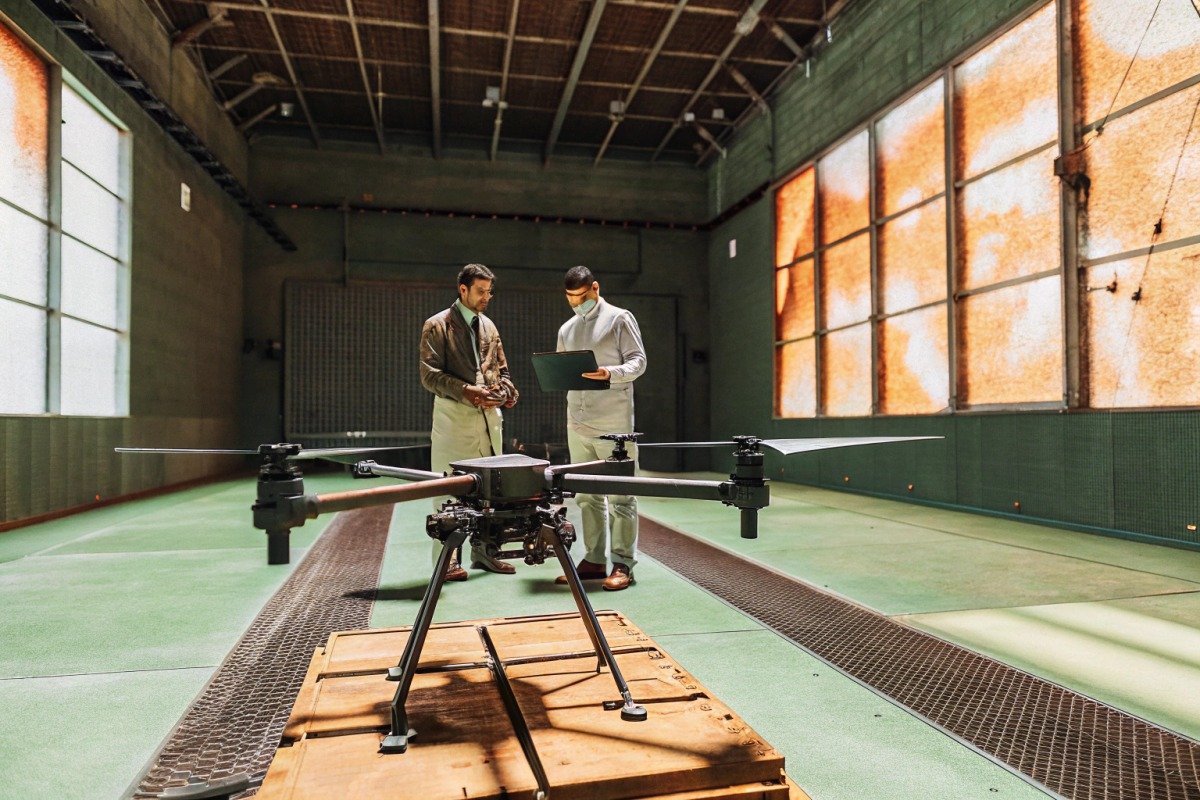
When our production line ships a firefighting drone overseas, we know the stakes. A failed unit during a wildfire response means lives at risk. That is why Factory Acceptance Testing 1 matters so much.
Developing FAT standards for firefighting drones requires defining operational use cases, establishing performance benchmarks for thermal imaging and flight endurance, testing regulatory compliance, verifying cybersecurity protocols, and ensuring payload reliability under simulated fire conditions before accepting delivery from your supplier.
This guide walks you through every step. From building your FAT checklist to managing remote inspections, you will learn how to hold suppliers accountable and protect your investment.
What specific performance criteria should I include in my firefighting drone FAT checklist?
When our engineers finalize a drone configuration for fire departments, the first question we always hear is about the checklist. What numbers matter? What features cannot fail? These questions keep procurement managers up at night.
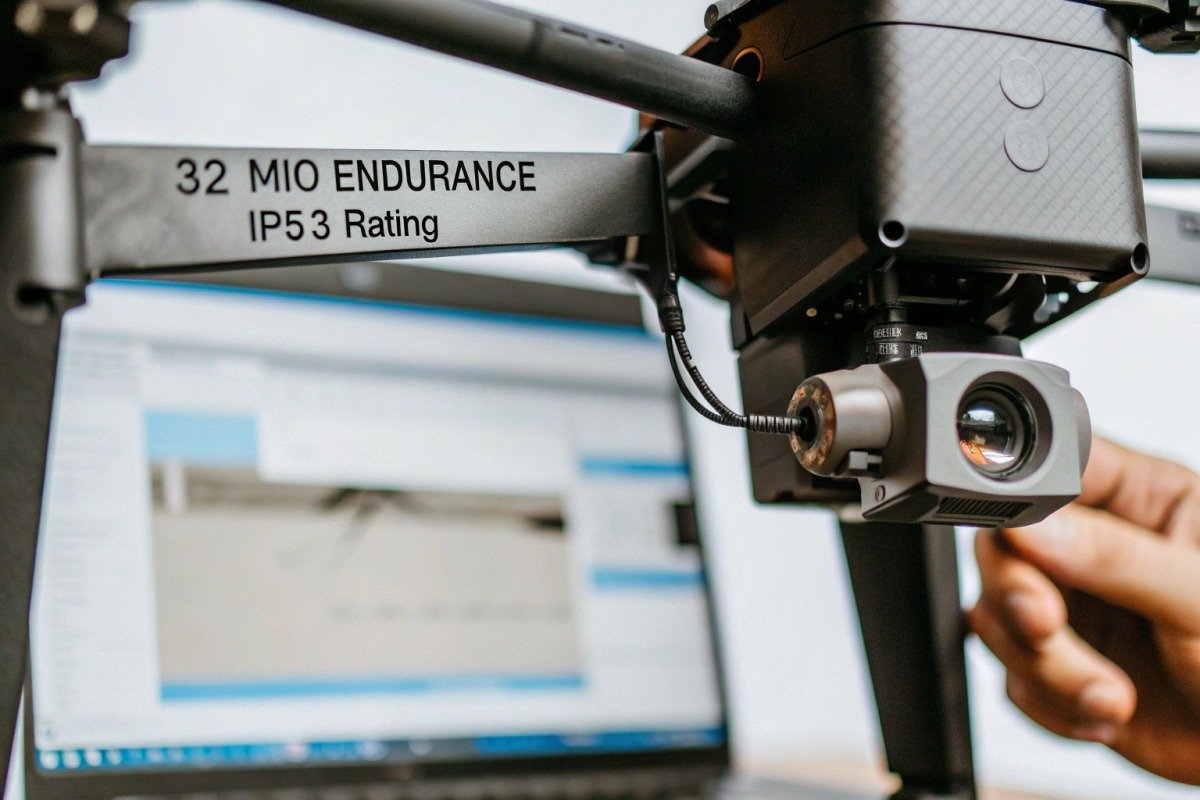
Your firefighting drone FAT checklist should include flight endurance minimums of 32 minutes, thermal camera resolution standards, IP53 or higher weather ratings, deployment time under 55 seconds, control range exceeding 200 meters, and operational temperature tolerance from -30°C to 50°C.
Flight Endurance and Range Requirements
Flight time determines how long your drone can stay over an active fire scene. Our testing data shows that anything below 30 minutes creates operational gaps. Firefighters need continuous situational awareness. Battery swaps during critical moments waste precious time.
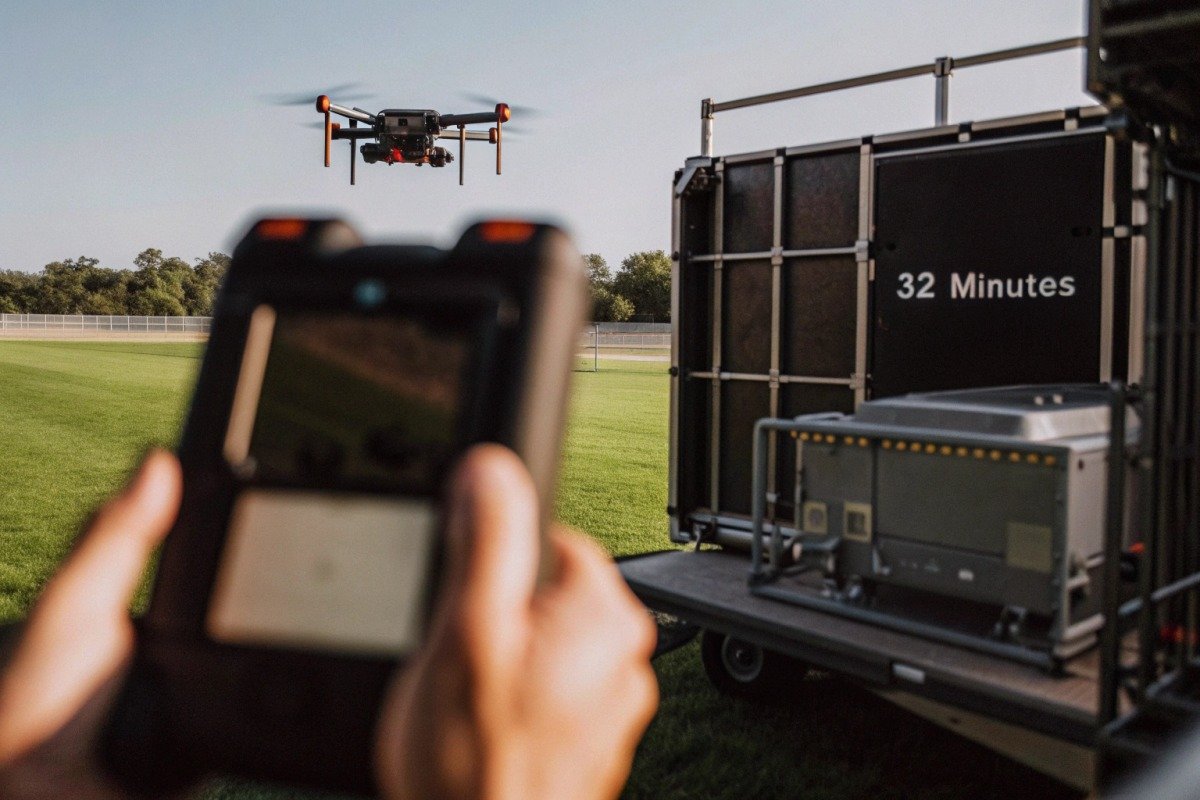
Set your minimum flight endurance at 32 minutes under standard conditions. But here is what most buyers miss: test this at maximum payload weight. A drone that flies 35 minutes empty may only manage 22 minutes carrying a full sensor suite.
Control range matters equally. Urban fires may allow close operations. Wildland fires demand standoff distance. Specify a minimum of 200 meters operational range, with clear line-of-sight requirements documented.
Thermal and Optical Camera Specifications
The camera system is your drone's primary value. Without quality thermal imaging 2, you simply have an expensive toy over a fire scene.
| Camera Specification | Minimum Standard | Recommended Standard |
|---|---|---|
| Thermal Resolution | 320 × 240 pixels | 640 × 512 pixels |
| Optical Zoom | 10x | 32x |
| FLIR Compatibility | Required | Required |
| Day/Night Operation | Required | Required |
| Refresh Rate | 30 Hz | 60 Hz |
Thermal cameras must detect temperature differentials accurately. During our factory calibration process, we test sensors against known heat sources. Your FAT should include similar validation.
Environmental Resistance Standards
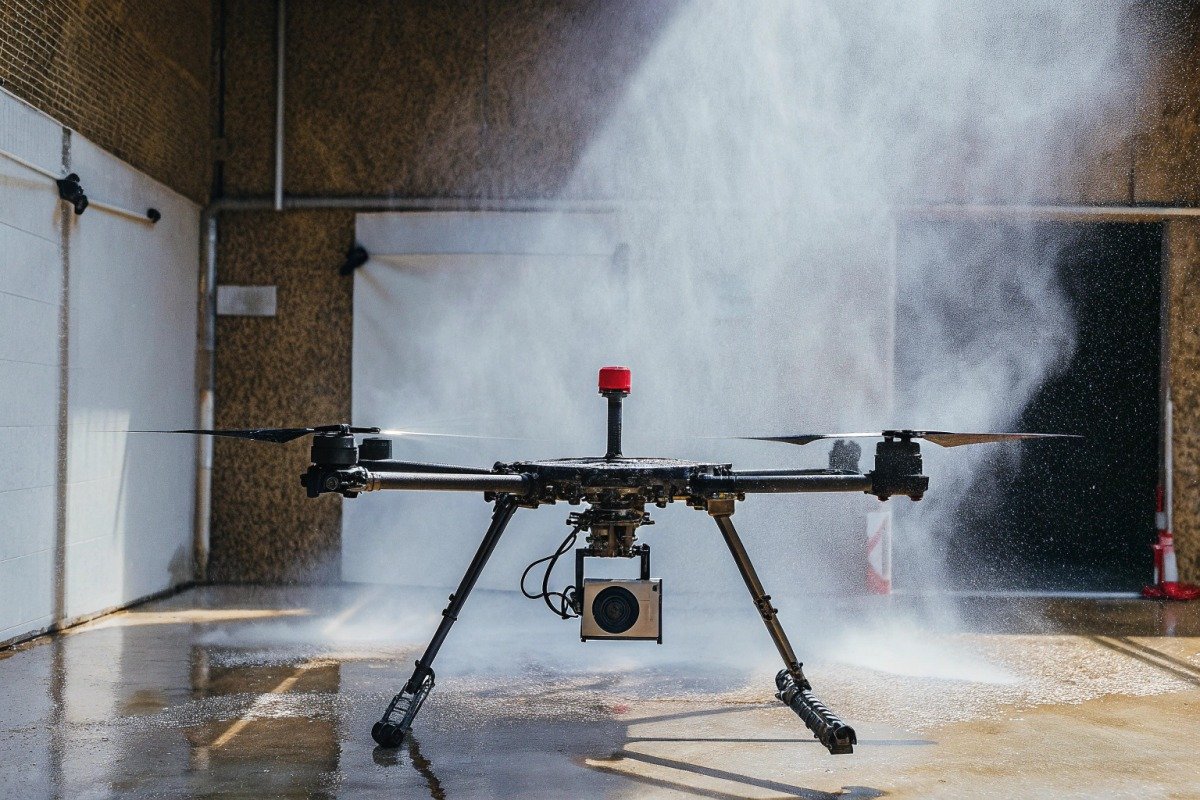
Firefighting drones encounter smoke, heat, water spray, and debris. Your checklist needs hard numbers for environmental tolerance.
IP ratings 3 tell part of the story. IP53 protects against dust and light rain. IP56 handles heavier water exposure. For operations near active fire lines, demand IP56 minimum.
Temperature tolerance is equally critical. Drones approaching fire perimeters face extreme heat. Specify operational range from -30°C to 50°C. Cold tolerance matters for departments in northern climates responding to winter structure fires.
Deployment Speed Metrics
Emergency response has no time for lengthy setup procedures. Track deployment time from case opening to airborne status. Our production teams benchmark this at under 55 seconds for trained operators.
Include rapid deployment testing in your FAT. Time multiple cycles. Look for consistency. A drone that deploys in 45 seconds once but averages 90 seconds has a design problem.
How can I verify that my custom OEM features meet my engineering standards during the factory test?
In our experience exporting to US fire departments, custom OEM requirements create the most friction during FAT. Standard features have established test protocols. Custom software or modified hardware needs tailored verification methods.
Verify custom OEM features by providing detailed engineering specifications with acceptance thresholds, requiring documented test procedures for each modification, witnessing live demonstrations of custom functions, and demanding raw test data rather than summary reports for independent analysis.

Documenting Custom Specifications Precisely
Vague requirements produce vague results. When you request a custom payload release mechanism, define every parameter.
Write specifications that include:
- Exact release altitude range
- Payload weight capacity with tolerances
- Actuation response time
- Failure mode behavior
- Manual override requirements
Our engineering teams appreciate precise specs. They eliminate guesswork and reduce revision cycles. More importantly, they give you clear pass/fail criteria during FAT.
Creating Test Procedures for Modified Systems
Every custom feature needs a corresponding test procedure. Do not assume your supplier will develop appropriate tests. Provide written protocols.
| Custom Feature | Test Procedure Elements |
|---|---|
| Modified payload bay | Load testing at 110% capacity, release mechanism cycling, vibration resistance |
| Custom software integration | API response validation, data format verification, error handling scenarios |
| Extended antenna system | Range testing at specified intervals, interference resistance, signal quality metrics |
| Specialized landing gear | Impact testing, folding mechanism durability, weight distribution analysis |
When we collaborate with clients on custom development, we jointly create these test procedures. Both parties agree on methods before manufacturing begins. This prevents disputes during acceptance testing.
Witnessing Live Demonstrations
Paper reports can hide problems. Live demonstrations reveal actual performance.
Schedule video-conference sessions for key custom feature tests. If budget allows, send a representative to the factory. Our facility regularly hosts client engineers for FAT witnessing.
During live demonstrations, request multiple test cycles. Single successful tests prove little. Consistent performance across ten or twenty repetitions demonstrates reliability.
Analyzing Raw Test Data
Summary reports filter information. Raw data tells the complete story.
Request oscilloscope captures for electrical systems. Demand flight logs with full telemetry for autonomy features. Ask for video recordings of mechanical tests.
Our quality team provides clients with complete data packages. We understand that your engineering standards may exceed our default thresholds. Raw data lets you apply your own analysis.
Managing Design Iteration Cycles
Custom features rarely pass FAT on the first attempt. Plan for iteration.
Establish clear revision procedures in your purchase contract. Define how many revision cycles are included. Set timelines for fixes and retesting.
Communication during iteration matters enormously. Weekly engineering calls keep projects moving. Document all changes and their rationale. Maintain version control for software modifications.
What certifications and test reports should I demand from my supplier to guarantee product durability?
Our quality control department fields certification questions daily. Procurement managers understand that certifications matter, but many struggle to identify which ones actually indicate durability versus which ones simply check regulatory boxes.
Demand FAA Part 107 compliance documentation, NDAA compliance certificates for government procurement, IP rating test reports from accredited laboratories, battery safety certifications meeting UN38.3 standards, electromagnetic compatibility test results, and extended cycle testing data showing performance after 500 or more flight hours.
Regulatory Compliance Certifications
Start with non-negotiable regulatory requirements. In the United States, FAA regulations govern all drone operations. Your supplier must demonstrate their product can legally operate.
| Certification | Purpose | Required For |
|---|---|---|
| FAA Part 107 5 Compliance | Legal commercial operation | All US deployments |
| NDAA Section 889 | Security compliance | Government purchases |
| FCC Part 15 | Radio frequency approval | US radio transmission |
| C-Class (EU) | European operation | EU market sales |
| RoHS | Environmental safety | Most markets |
NDAA compliance deserves special attention. Government fire departments cannot purchase drones containing components from prohibited Chinese manufacturers. Our US-bound products undergo supply chain audits to verify compliance.
Environmental and Durability Test Reports
Certifications confirm regulatory compliance. Test reports verify durability. These are different documents serving different purposes.
Request IP rating test reports from accredited testing laboratories. Internal testing has value, but independent verification carries more weight. Look for test reports following IEC 60529 standards.
Temperature cycling test data shows how components age under thermal stress. Our production line subjects samples to repeated heating and cooling cycles. Components that survive 1,000 cycles will handle years of operational deployment.
Battery Safety Documentation
Battery failures create fires. In firefighting drones, this irony carries serious consequences.
UN38.3 certification is the minimum standard for lithium battery transportation and safety. UN38.3 standards 6 Beyond this baseline, request extended battery cycle testing data. How does capacity degrade after 200 charge cycles? After 500?
Our battery suppliers provide detailed degradation curves. We share this data with clients. A battery that loses 30% capacity after 300 cycles will cost more in replacements than one that maintains 85% capacity at the same point.
Electromagnetic Compatibility Testing
Fire scenes overflow with radio traffic. Incident command communications, portable radios, vehicle systems, and nearby infrastructure all generate electromagnetic interference.
EMC testing 7 verifies your drone maintains stable control amid this electronic noise. Request test reports showing performance under EMI exposure at frequencies common to fire service communications.
Our testing protocols include simulated radio interference at various power levels. Drones that pass these tests maintain reliable control links during chaotic incident scenes.
Extended Operational Testing Data
Short-term tests reveal manufacturing defects. Extended testing reveals design durability.
Ask for flight hour accumulation data. How do motors perform after 500 hours? What about gimbal systems? Control surfaces? These numbers predict your total cost of ownership more accurately than purchase price alone.
When we develop new models, prototypes accumulate thousands of test flight hours before production begins. We share summary statistics from this testing with serious procurement clients.
How do I manage the FAT process remotely to ensure my firefighting drones are ready for deployment?
When we calibrate flight controllers at our Xi'an facility, most of our US and European clients cannot attend in person. Time zones, travel costs, and scheduling conflicts make remote FAT management essential rather than optional.
Manage remote FAT by establishing video-conference inspection schedules, requiring real-time test streaming with multiple camera angles, using third-party inspection services for physical verification, implementing digital documentation systems with timestamped records, and creating clear escalation procedures for failed tests.
Establishing Video-Conference Protocols
Remote witnessing works when both parties commit to transparency. Schedule specific inspection sessions in advance. Account for time zone differences realistically.
Our standard remote FAT protocol includes:
- Pre-test briefing explaining procedures
- Multiple camera positions showing test setup
- Real-time audio communication with test technicians
- Screen sharing for digital instrumentation
- Post-test review session for questions
Video quality matters. Require minimum resolution standards. Poor video hides details that might indicate problems.
Using Third-Party Inspection Services
When video witnessing is insufficient, third-party inspectors bridge the gap. Several inspection companies specialize in Chinese manufacturing facilities.
| Inspection Service Type | Best Used For | Typical Cost Range |
|---|---|---|
| Pre-shipment inspection | Final quality verification | $300-500 per day |
| Production monitoring | Ongoing quality oversight | $400-600 per day |
| Technical testing witness | Complex FAT procedures | $500-800 per day |
| Full audit | Comprehensive supplier evaluation | $1,500-3,000 total |
We welcome third-party inspectors. Their presence demonstrates our confidence in our processes. Select inspectors with drone or aerospace experience when possible.
Digital Documentation Requirements
Remote FAT generates extensive digital records. Organize these systematically.
Require timestamped photographs of serial numbers matching test records. Demand video files with embedded metadata showing recording dates. Request test equipment calibration certificates proving instrument accuracy.
Create a shared document repository accessible to both parties. Our project managers maintain client-specific folders with all FAT documentation. Nothing ships until documentation is complete and approved.
Handling Failed Tests Remotely
Failed tests happen. Remote management makes resolution more challenging.
Establish clear escalation procedures before FAT begins. Define who has authority to approve corrective actions. Set timelines for fixes and retesting.
Document failure modes thoroughly. Request root cause analysis for any failed test. Understanding why something failed prevents recurrence.
Our quality team provides failure reports within 48 hours. We propose corrective actions and schedule retesting. Transparent failure handling builds trust even when problems occur.
Pre-Shipment Verification Steps
After FAT completion, verify units before shipping.
Require photographs of packed units with visible serial numbers. Confirm serial numbers match FAT documentation. Request packing inspection showing proper cushioning and protection.
Shipping damage wastes FAT investment. Proper packing verification prevents arguments about whether damage occurred in transit or existed before shipment.
Conclusion
Developing FAT standards protects your firefighting drone investment. Define performance criteria clearly. Verify custom features rigorously. Demand proper certifications. Manage remote processes professionally. Your fire department deserves equipment that performs when lives depend on it.
Footnotes
1. Provides a comprehensive overview of acceptance testing, including factory acceptance tests. ↩︎
2. Provides a detailed explanation of thermal imaging technology. ↩︎
3. Authoritative explanation of IP ratings (Ingress Protection codes). ↩︎
4. Provides a general definition of original equipment manufacturer components. ↩︎
5. Official federal regulation governing small unmanned aircraft systems operations. ↩︎
6. Outlines safety requirements for lithium batteries during transportation. ↩︎
7. Describes the evaluation of electronic devices for electromagnetic compatibility. ↩︎
8. Explains independent verification of product quality and compliance in manufacturing. ↩︎

 English
  Español de México
  Deutsch
  Français
  Русский
  العربية
