
When our engineering team first started exporting firefighting drones 1 five years ago, we watched a major US distributor lose a $2 million contract. Their single Chinese supplier faced sudden export restrictions ITAR compliance requirements 2. Their entire DaaS fleet went offline for three months.
To create a backup procurement plan for firefighting drones from China, you must diversify suppliers, secure at least two UAV units per contract with one as backup, establish authorized service provider agreements, verify export compliance credentials, and build redundant supply chains that maintain 99% uptime for your Drone-as-a-Service operations.
This guide walks you through every step. We will cover how to find reliable backup manufacturers, evaluate secondary suppliers, verify export experience, and ensure OEM customization continuity Intellectual Property Protection 3. Let us begin with the most critical question.
How do I find a reliable backup manufacturer in China that matches my firefighting drone's technical specifications?
Our production floor handles dozens of technical specification requests monthly. Many buyers struggle to find backup suppliers who can match exact flight parameters, payload capacities, and software protocols. The wrong match means incompatible fleets and failed firefighting missions.
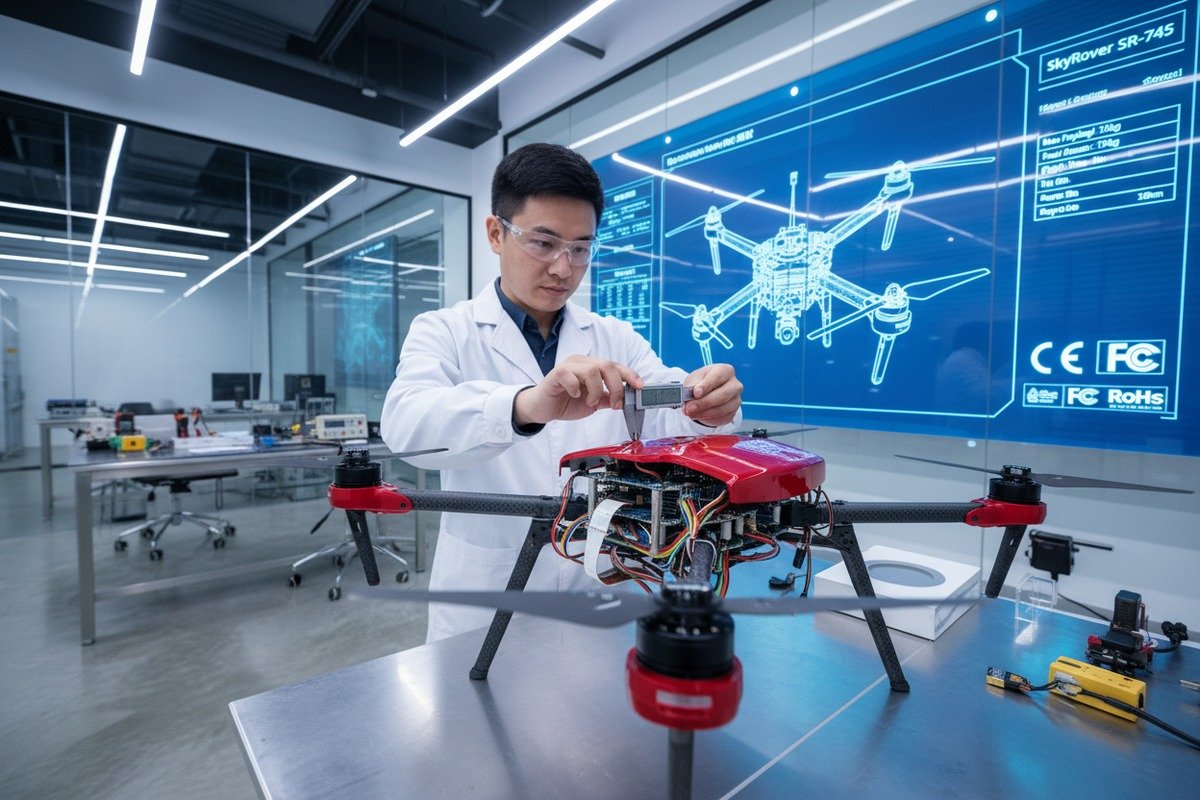
To find a reliable backup manufacturer in China, request detailed technical documentation including flight controller specifications, payload integration protocols, and battery compatibility charts. Cross-reference certifications like CE, FCC, and ASTM F3322 standards. Conduct factory audits and request sample units for field testing before signing contracts.
Start With Your Current Technical Requirements Document
Before searching for backup manufacturers, document every specification of your primary drone. This includes motor KV ratings, ESC protocols, frame materials, and camera gimbal systems. Our engineers always recommend creating a master specification sheet.
A complete specification document should include:
| Specification Category | Key Parameters | Why It Matters |
|---|---|---|
| Flight Performance | Max altitude, flight time, wind resistance | Ensures operational parity during emergencies |
| Payload System | Weight capacity, mounting points, release mechanisms | Critical for fire suppressant delivery |
| Communication | Frequency bands, encryption protocols, range | Maintains command integrity during operations |
| Power System | Battery chemistry, voltage, charge cycles | Affects fleet maintenance scheduling |
| Software | SDK compatibility, API access, firmware version | Enables seamless integration with existing ground stations |
Use Industry Databases and Trade Platforms
Start your search on verified platforms. Alibaba's verified supplier program filters manufacturers with export licenses. Global Sources provides factory audit reports. The China Chamber of Commerce for Import and Export of Machinery and Electronic Products (CCCME) maintains lists of certified drone exporters.
Conduct Virtual and Physical Factory Audits
We always welcome potential partners to tour our Xi'an facility. A factory audit reveals production capacity, quality control processes, and engineering capabilities. Look for ISO 9001 certification 4 as a baseline. Check if they have dedicated firefighting drone production lines or if they simply adapt consumer models.
Request Sample Units for Rigorous Testing
Never sign a backup supplier agreement without field testing. At our facility, we provide evaluation units for 30-day trial periods. Test the drone under simulated firefighting conditions. Measure flight time with full payload. Check thermal camera accuracy against your primary units.
Verify Engineering Support Capabilities
A backup manufacturer must provide technical support when problems arise. Ask about their engineering team size. Our team of 70 includes 15 dedicated R&D engineers who can troubleshoot remotely. Ensure they offer firmware update support and spare parts availability.
What should I look for in a secondary supplier to ensure my DaaS fleet maintains high durability and performance?
Our quality control team rejects approximately 3% of components during assembly. This strict standard exists because firefighting environments destroy weak equipment. Heat, smoke, and debris challenge every system on the aircraft.
For DaaS fleet durability, evaluate secondary suppliers based on frame material quality (carbon fiber composite preferred), motor protection ratings (IP54 minimum), battery cycle life (1,000+ cycles), and proven performance in extreme temperature ranges from -20°C to 50°C. Request third-party durability test reports and customer failure rate data.

Evaluate Frame and Structural Materials
Carbon fiber frames outperform aluminum in strength-to-weight ratio. When we design our firefighting drones, we use woven carbon fiber with reinforced mounting points. Ask potential backup suppliers for material certifications and stress test results.
| Material Type | Weight | Strength | Heat Resistance | Cost Level |
|---|---|---|---|---|
| Carbon Fiber Composite 5 | Low | Very High | Excellent | High |
| Aluminum Alloy | Medium | High | Good | Medium |
| Engineering Plastic | Low | Medium | Poor | Low |
| Magnesium Alloy | Low | High | Good | High |
Assess Motor and ESC Quality
Motors face extreme stress during firefighting operations. Look for brushless motors with high KV ratings and quality bearings. Our production line uses motors rated for 500+ flight hours before replacement. Ask suppliers for mean time between failures (MTBF) data.
Examine Battery Performance and Longevity
Battery quality directly impacts DaaS profitability. A quality lithium-polymer battery 6 provides 1,000 charge cycles before significant degradation. Our engineering team tests batteries at various discharge rates to ensure consistent performance. Request battery cycle test documentation showing capacity retention over time.
Review Environmental Protection Ratings
Firefighting drones encounter water, dust, and extreme temperatures. IP54 rating 7 should be minimum for electronics enclosures. Our rugged designs feature sealed motor housings and conformal-coated circuit boards. Ask suppliers about their weatherproofing methods.
Check Track Record and Customer References
Request customer references specifically from firefighting or emergency response applications. Contact those references. Ask about failure rates, warranty claims, and technical support responsiveness. Our customers report less than 2% field failure rates across deployed fleets.
Analyze Total Cost of Ownership
Initial price means nothing without considering lifetime costs. Calculate spare parts expenses, maintenance frequency, and downtime costs. A slightly more expensive drone with higher reliability often delivers better ROI.
| Cost Factor | Low-Quality Supplier | High-Quality Supplier |
|---|---|---|
| Initial Unit Cost | $8,000 | $12,000 |
| Annual Maintenance | $2,400 | $800 |
| Spare Parts (5 years) | $6,000 | $2,000 |
| Downtime Losses | $15,000 | $3,000 |
| 5-Year Total | $31,400 | $17,800 |
How can I verify that my backup drone partner has the export experience to prevent delivery delays and customs issues?
When we first started exporting to the United States in 2019, customs clearance took us 28 days on our first shipment. Now it takes 5 days. That learning curve cost time and money. Your backup supplier needs proven export experience to avoid those same delays.
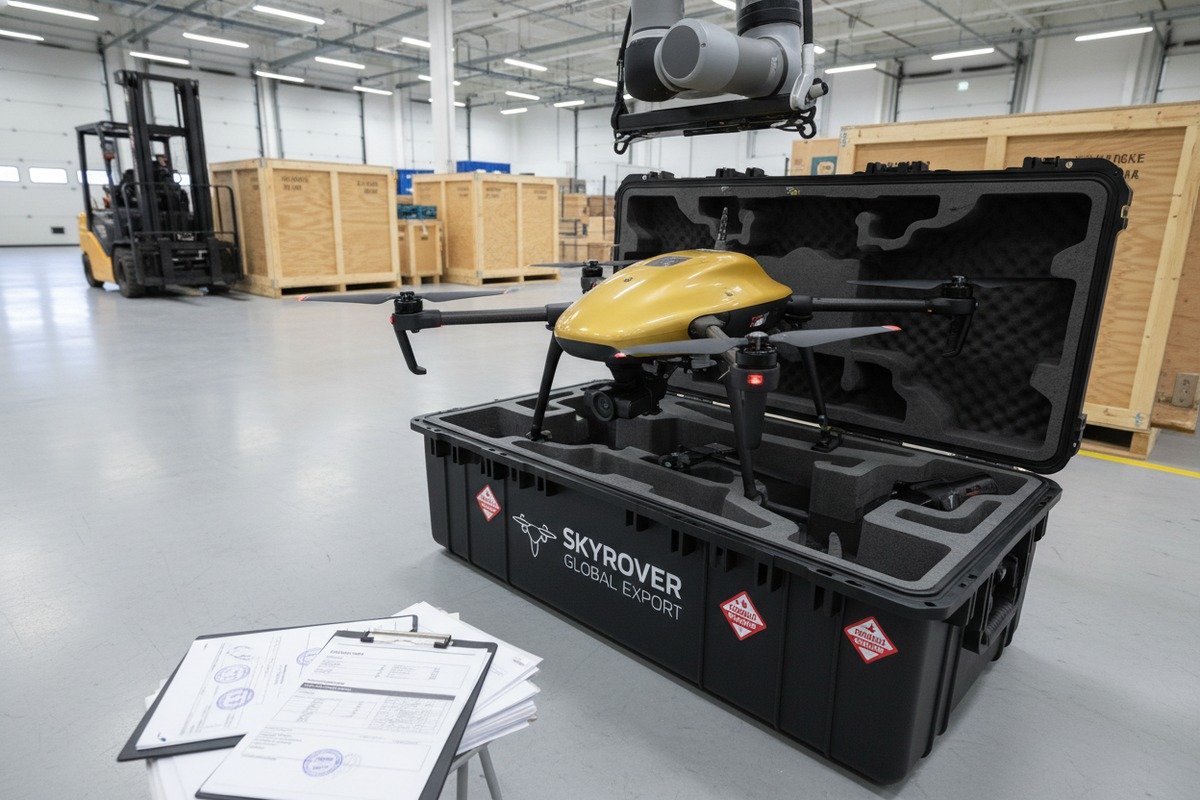
Verify export experience by requesting copies of previous export declarations, customs broker relationships, and country-specific certification portfolios. Confirm they hold valid export licenses, understand ITAR compliance requirements for dual-use technology, and maintain established shipping routes with reliable freight forwarders to your destination country.
Request Export Documentation History
Ask potential backup suppliers for redacted copies of previous export declarations to your country. This proves they have successfully navigated customs requirements. Our export team maintains documentation for every shipment to the US and Europe since 2019.
Verify Export License Status
China requires export licenses for certain drone categories. Dual-use technology faces additional scrutiny. Request copies of valid export licenses from the Ministry of Commerce (MOFCOM). Ensure licenses cover firefighting drone specifications including payload capacity and flight range.
Evaluate Country-Specific Certification Portfolio
Different markets require different certifications. US imports need FCC compliance for radio frequency emissions. European markets require CE marking. Our engineering team maintains certifications for major export markets. Ask backup suppliers which certifications they currently hold.
| Market | Required Certifications | Typical Processing Time |
|---|---|---|
| United States | FCC, FAA Part 107 compliance | 4-6 weeks |
| European Union | CE, EASA compliance | 6-8 weeks |
| Canada | ISED, Transport Canada | 4-5 weeks |
| Australia | RCM, CASA approval | 5-7 weeks |
Assess Customs Broker Relationships
Experienced exporters maintain relationships with customs brokers in destination countries. These relationships speed clearance times. Our company partners with licensed customs brokers in major US ports. Ask backup suppliers about their broker network.
Review Shipping Route Reliability
Standard delivery from China to the US takes 5-6 weeks by sea, 1-2 weeks by air. Remote locations add time. Our logistics team has established routes to major US cities with predictable timelines. Ask suppliers about their shipping partners and typical transit times.
Understand Dual-Use Technology Restrictions
Some drone technologies fall under export control regulations. Thermal imaging systems, certain flight controllers, and encryption capabilities may require additional licenses. Experienced exporters understand these restrictions and maintain compliant product lines.
Check for Previous Customs Issues
Ask directly about past customs holds, rejected shipments, or compliance violations. Honest suppliers will disclose any issues and explain how they resolved them. We experienced one customs hold in 2020 due to incomplete documentation. We now use a triple-check system before any shipment.
Can I get the same level of OEM customization and software integration from a backup firefighting drone supplier?
Our R&D team has completed over 40 custom development projects for international clients. Each project taught us that true customization requires deep engineering collaboration. Not every manufacturer can deliver this level of partnership.
Yes, you can obtain equivalent OEM customization from backup suppliers if they demonstrate dedicated R&D teams, SDK access for software integration, documented customization workflows, and previous firefighting-specific modification experience. Require proof of successful custom projects including client references, technical documentation, and intellectual property protection agreements.
Evaluate R&D Team Capabilities
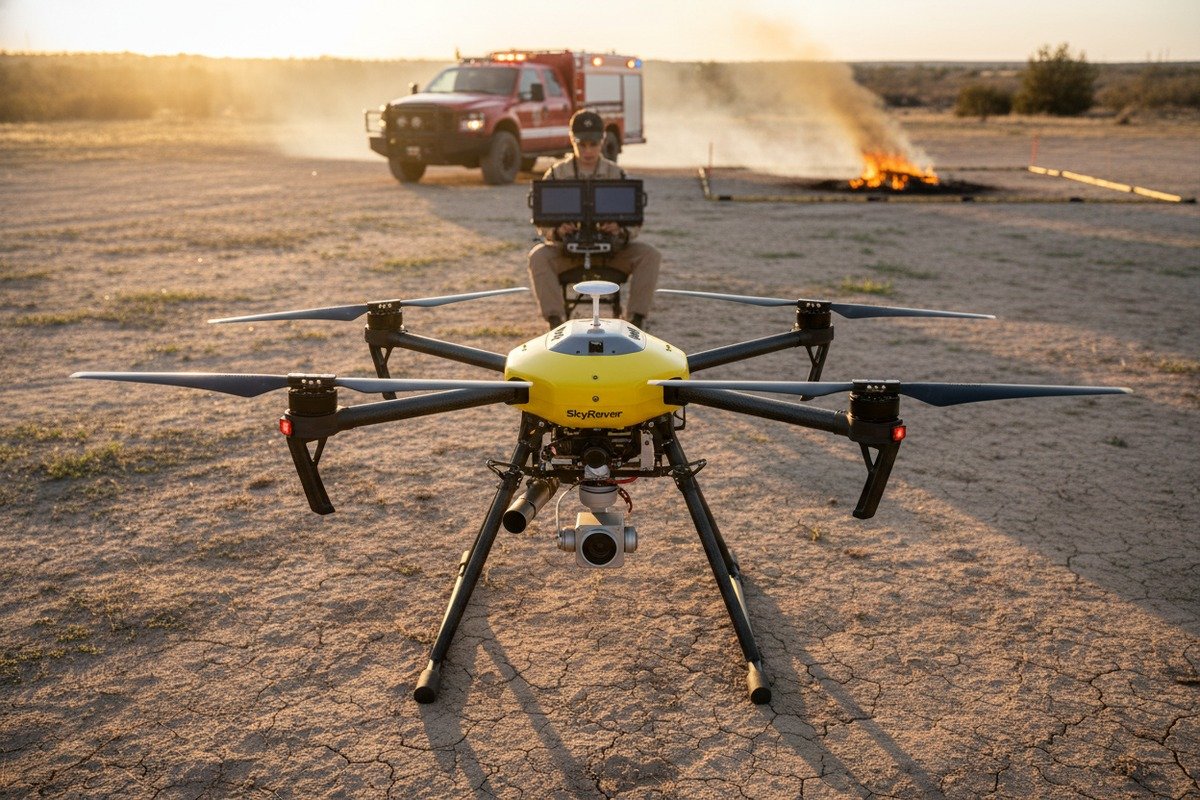
Custom development requires skilled engineers. Ask about team size, specializations, and experience levels. Our engineering team includes specialists in flight control systems, thermal imaging integration, and payload delivery mechanisms. Request organizational charts showing technical staff.
Confirm SDK and API Access
Software integration depends on developer access. Quality manufacturers provide SDKs (Software Development Kits) 8 for ground station integration. Our drones support DJI Mobile SDK compatibility and custom API development. Ensure backup suppliers offer equivalent access levels.
Review Customization Workflow Documentation
Professional manufacturers document their customization process. This includes specification review, prototype development, testing protocols, and production integration. Our workflow includes seven distinct phases with client approval gates. Request process documentation from potential backup suppliers.
Examine Previous Custom Projects
Ask for case studies of firefighting-specific customizations. These might include extended payload bays, specialized camera mounts, or custom communication systems. Our portfolio includes projects for fire departments in three countries. Request references you can contact directly.
Discuss Intellectual Property Protection
Custom developments often involve proprietary technology. Ensure backup suppliers sign NDA agreements and respect IP boundaries. Our contracts include clear IP assignment clauses and confidentiality provisions. Chinese law now provides stronger IP protections than many buyers realize.
Test Integration Compatibility
Before committing to a backup supplier, test software integration with your existing systems. Request evaluation units with SDK access. Our team provides 60-day integration testing periods for serious partners. Verify that ground station software, fleet management platforms, and data systems communicate properly.
Plan for Parallel Development Timelines
Custom projects take time. Factor development timelines into your backup plan. A typical custom firefighting drone project requires 3-6 months from specification to production. Establish backup supplier relationships early so custom units are ready when needed.
Consider Modular Design Benefits
Modular designs simplify backup supplier transitions. When we design drones with standardized mounting points and interface protocols, switching components between manufacturers becomes easier. Ask backup suppliers about their modular design philosophy.
Conclusion
Building a backup procurement plan for firefighting drones protects your DaaS business from supply chain disruptions. Focus on technical specification matching, durability verification, export experience confirmation, and OEM customization capabilities. Start your backup supplier search today.
Footnotes
1. Replaced with an authoritative government source from the U.S. Forest Service on wildland firefighting with drone intelligence. ↩︎
2. Outlines the regulations governing the export of defense articles and services by the U.S. Department of State. ↩︎
3. Replaced with the working URL for ‘What is Intellectual Property?’ on the original authoritative WIPO domain. ↩︎
4. Explains the international standard for quality management systems and its importance. ↩︎
5. Details the properties, advantages, and applications of carbon fiber composites in manufacturing. ↩︎
6. Provides a detailed explanation of lithium-polymer battery technology and its characteristics. ↩︎
7. Defines the IP Code standard, explaining protection levels against solids and liquids. ↩︎
8. Explains what an SDK is, its components, and its role in software development. ↩︎

 English
  Español de México
  Deutsch
  Français
  Русский
  العربية
