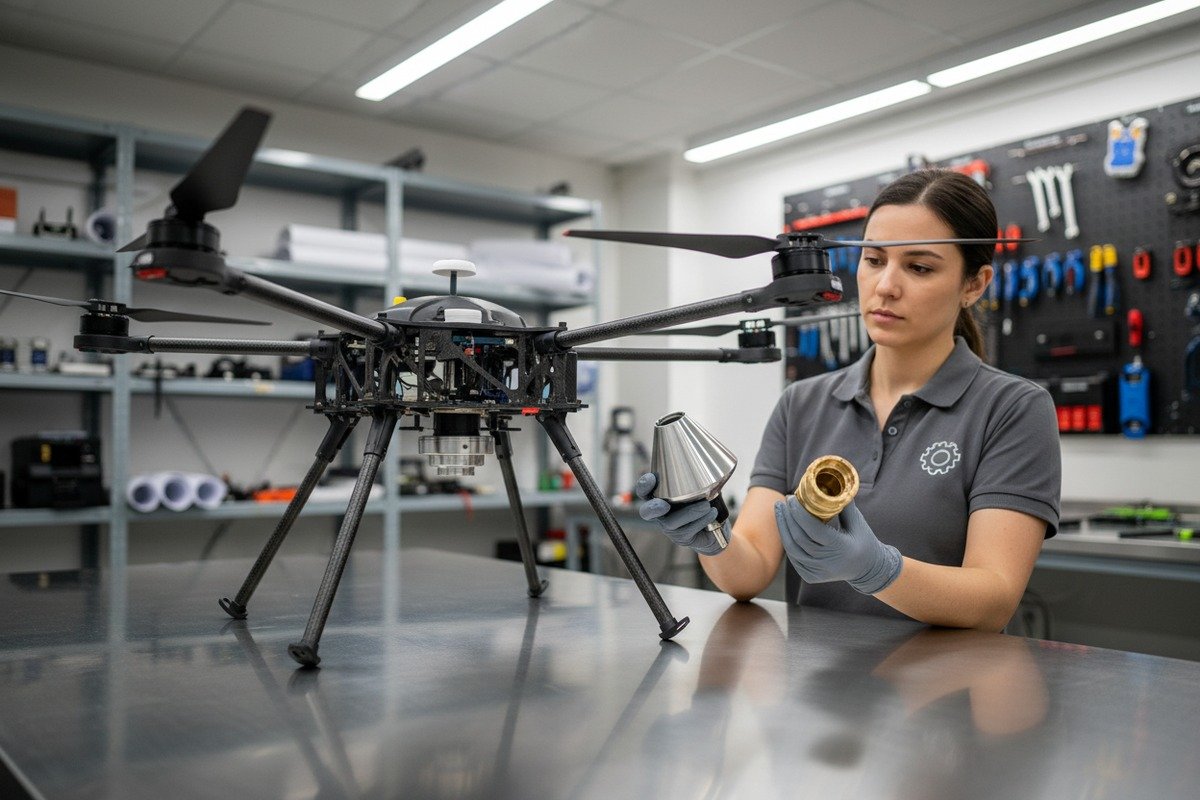
When our production team in Xi’an receives inquiries about swapping nozzle types on agricultural drones 1, we often find customers underestimating the complexity involved. The assumption that any nozzle fits any drone leads to costly mistakes, voided warranties, and poor spray performance in the field.
To confirm centrifugal and pressure nozzle interchangeability, you must verify your drone’s electrical capacity, pump pressure range, mounting interface compatibility, and manufacturer approval. These two nozzle families operate on fundamentally different principles and are rarely plug-and-play without platform-specific engineering modifications.
Let me walk you through the key verification steps we recommend to our distributors in the United States and Europe. Each factor plays a critical role in determining whether your drone can support both nozzle types effectively.
How can I determine if my drone's hardware and plumbing are compatible with both centrifugal and pressure nozzle systems?
Our engineering team encounters this question weekly from procurement managers evaluating fleet upgrades. The frustration is real—you invest in a high-end agricultural drone, only to discover the nozzle system cannot handle your diverse application needs.
To determine hardware and plumbing compatibility, check your drone's pump pressure rating, electrical output capacity, mounting thread specifications, and tank filtration system. Centrifugal atomizers require dedicated power connections, while pressure nozzles need consistent hydraulic pressure between 30–60 PSI.

Understanding the Core Differences
Centrifugal atomizers 2 and pressure nozzles operate on completely different principles. Centrifugal systems use spinning discs powered by electric motors to create droplets through centrifugal force. Pressure nozzles rely on hydraulic pressure 3 forcing liquid through fixed orifices. This fundamental difference affects every aspect of compatibility assessment.
When we design our SkyRover agricultural drones, we engineer the spray system around a specific nozzle family. The electrical wiring, pump specifications, and mounting brackets are all optimized for one approach. Retrofitting requires more than just swapping parts.
Key Hardware Specifications to Verify
| Component | Pressure Nozzle Requirements | Centrifugal Nozzle Requirements |
|---|---|---|
| Pump Output | 30–60 PSI consistent pressure | Minimal pressure needed |
| Electrical Supply | None beyond main pump | 12–24V dedicated motor power |
| Mounting Interface | Standard threaded connections | Custom bracket with wiring channel |
| Filtration | Fine mesh (50–100 mesh) | Coarse mesh (acceptable) |
| Tank Material | Chemical-resistant polymer | Same requirement |
Plumbing System Considerations
Your drone's plumbing must handle the specific demands of each nozzle type. Pressure nozzles are sensitive to particulate contamination 4. A single clog can disrupt spray uniformity across an entire field. Our quality control team tests every pressure nozzle drone with multiple filter stages.
Centrifugal atomizers tolerate high-viscosity liquids and particulate matter much better. The spinning disc design eliminates narrow orifices that cause plugging. However, they require clean electrical connections and weatherproof motor housings.
Mounting Interface Compatibility
Thread sizes and mounting patterns vary between manufacturers. The DJI Agras series uses different mounting specifications than XAG platforms. Before attempting any nozzle swap, measure your current mounting interface precisely. Even a 1mm difference can cause leaks or mechanical failure during flight.
Our export customers often request adapters for non-standard mounting configurations. We can manufacture custom brackets, but this adds cost and lead time. Always verify compatibility before placing orders.
Will my drone's flight control software allow me to switch between these nozzle types without losing flow rate accuracy?
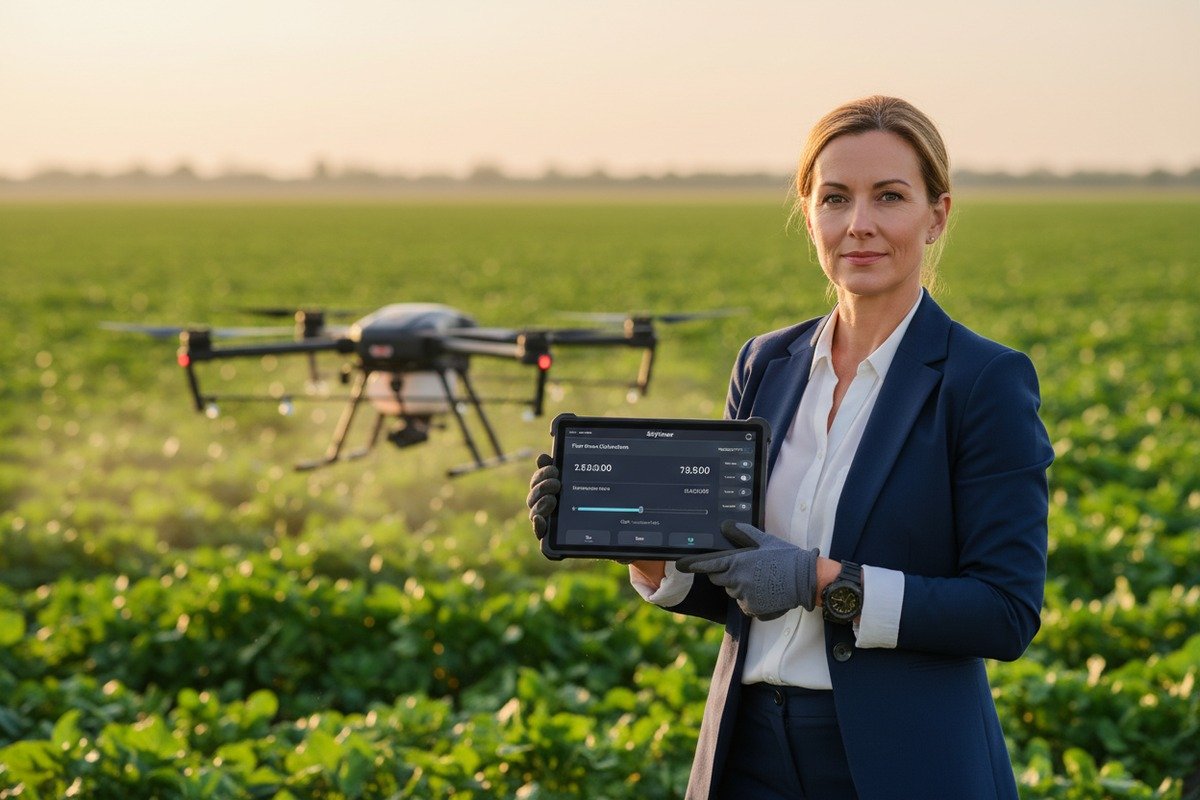
Software compatibility is often overlooked in nozzle interchangeability discussions. Our firmware engineers spend months calibrating flow rate algorithms 5 for specific nozzle configurations. Changing nozzle types without software updates can result in significant application errors.
Your drone's flight control software may require recalibration or firmware updates when switching nozzle types. Centrifugal atomizers and pressure nozzles have different flow rate characteristics, and inaccurate software settings can cause over-application or under-application by 20–30%.
How Flow Rate Calculation Differs
Pressure nozzles follow predictable flow rate curves based on operating pressure. Higher pressure means higher flow rate—the relationship is well-documented and easy to program. Our flight controllers use lookup tables derived from manufacturer specifications.
Centrifugal atomizers are different. Flow rate depends on disc rotation speed, liquid viscosity, and feed rate to the disc. The software must account for motor RPM variations and adjust accordingly. This requires different control algorithms.
Software Calibration Requirements
| Parameter | Pressure Nozzle Calibration | Centrifugal Nozzle Calibration |
|---|---|---|
| Flow Rate Input | Pressure sensor reading | Motor RPM + feed rate |
| Droplet Size 6 Control | Pressure adjustment | Disc speed adjustment |
| Coverage Calculation | Swath width × speed | Variable based on disc pattern |
| Response Time | Fast (pressure change) | Slower (motor acceleration) |
| Error Correction | Pressure regulator feedback | Motor current monitoring |
Firmware Update Considerations
When we release new nozzle options for our SkyRover drones, we always provide corresponding firmware updates. These updates include revised flow rate tables, new calibration routines, and adjusted spray pattern calculations. Running old firmware with new nozzle types causes accuracy problems.
Some manufacturers lock their flight controllers to specific nozzle configurations. Attempting to use unauthorized nozzles may trigger error codes or disable spray functions entirely. Always check with your manufacturer before modifying nozzle setups.
Field Calibration Procedures
Even with correct firmware, field calibration remains essential. We recommend conducting water tests over a measured area before applying chemicals. Compare the actual liquid dispensed against the software's reported application rate. Discrepancies greater than 5% indicate calibration problems.
Our technical support team provides remote calibration assistance for customers in the United States and Europe. We can adjust software parameters based on your specific nozzle configuration and application requirements.
Integration with Variable Rate Application
Modern precision agriculture relies on variable rate application 7—adjusting spray volume based on field maps and sensor data. Centrifugal and pressure nozzles respond differently to rate change commands. Pressure nozzles adjust quickly by modulating pump output. Centrifugal systems require motor speed changes, which take longer to stabilize.
If your operation uses variable rate technology, verify that your flight control software supports the response characteristics of your chosen nozzle type. Fast rate changes work better with pressure nozzles. Gradual zone-based changes suit centrifugal systems.
How do I assess the impact of switching nozzle types on my spray coverage and overall application efficiency?
Coverage assessment determines whether your chemical investment delivers results. Our field testing in diverse climates has shown that nozzle type significantly affects deposition patterns, drift losses, and crop penetration. The wrong choice wastes money and harms efficacy.
To assess spray coverage impact, conduct controlled field trials comparing droplet distribution, canopy penetration, and drift under identical conditions. Centrifugal nozzles typically produce finer, more uniform droplets (130–300 microns), while air-induction pressure nozzles create coarser droplets (350–550 microns) that reduce drift by up to 90%.
Droplet Size and Its Consequences
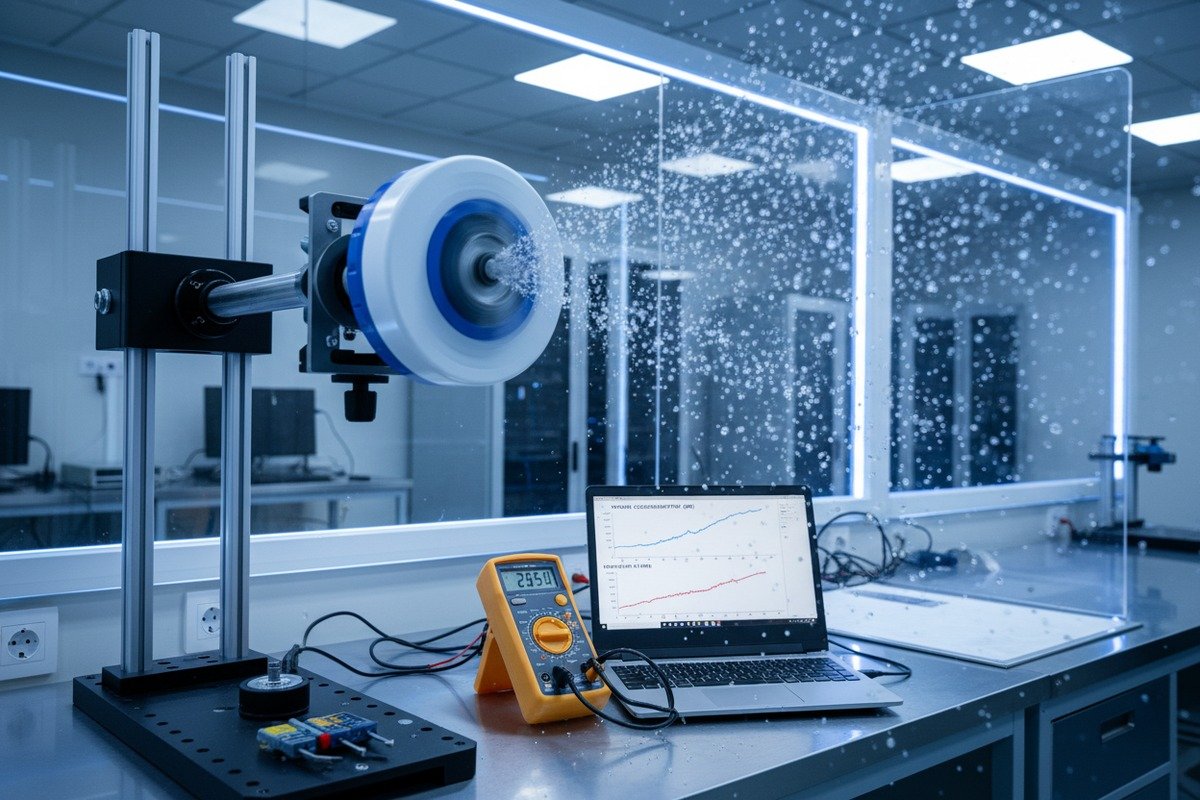
Droplet size determines coverage quality, drift potential, and chemical efficacy. Fine droplets provide excellent coverage but drift easily. Coarse droplets resist drift but may bounce off leaves or fail to penetrate dense canopies.
Our agronomist partners have documented clear patterns. Fungicides and insecticides requiring systemic absorption perform better with fine droplets from centrifugal atomizers or hollow cone nozzles. Contact herbicides work effectively with coarser droplets from air-induction nozzles.
Coverage Comparison by Nozzle Type
| Nozzle Type | Droplet Size Range | Best Applications | Drift Risk | Canopy Penetration |
|---|---|---|---|---|
| Centrifugal Atomizer | 130–300 µm | Fungicides, insecticides, fertilizers | Moderate to high | Excellent |
| Flat Fan Pressure | 250–400 µm | General herbicides, broad-acre crops | Moderate | Good |
| Air-Induction Pressure | 350–550 µm | Drift-sensitive herbicides (dicamba, 2,4-D) | Very low | Fair |
| Hollow Cone Pressure | 50–200 µm | Insecticides, dense canopy crops | Very high | Excellent |
Conducting Your Own Coverage Tests
Set up water-sensitive paper strips at multiple heights within your target canopy. Fly identical patterns with each nozzle type. Compare the resulting droplet density and distribution. This simple test reveals coverage differences that specifications alone cannot capture.
We include water-sensitive paper in our demo kits for distributors. The visual evidence helps customers understand why nozzle selection matters more than price per unit.
Environmental Factors Affecting Coverage
Wind speed above 10 km/h dramatically increases drift risk for fine-droplet systems. Temperature inversions trap spray below the target zone. Humidity affects evaporation rates, particularly for small droplets.
Centrifugal atomizers excel in calm morning conditions with moderate humidity. Their uniform droplet size maximizes coverage efficiency. Pressure nozzles with air-induction tips perform better in windy afternoon conditions when drift control is paramount.
Efficiency Metrics to Track
Beyond coverage, track these operational efficiency factors:
- Battery consumption: Centrifugal atomizers draw additional power, reducing flight time by 5–15%
- Chemical utilization: Better coverage means less chemical needed per hectare
- Field completion rate: Faster coverage speeds up overall operation
- Rework frequency: Poor coverage requires repeat applications
Our customers report that choosing the right nozzle for each application type improves overall efficiency by 15–25% compared to using a single nozzle type for everything.
Can my manufacturer help me design a customized modular system that supports interchangeable nozzle configurations?
Customization inquiries represent our fastest-growing service category. Procurement managers recognize that operational flexibility requires purpose-built solutions. Off-the-shelf drones rarely meet the diverse needs of multi-crop operations.
Yes, manufacturers with engineering capabilities can design customized modular systems supporting interchangeable nozzle configurations. This requires collaborative development covering electrical integration, mounting standardization, software calibration, and component certification—typically adding 8–12 weeks to delivery timelines.
What Modular Design Involves
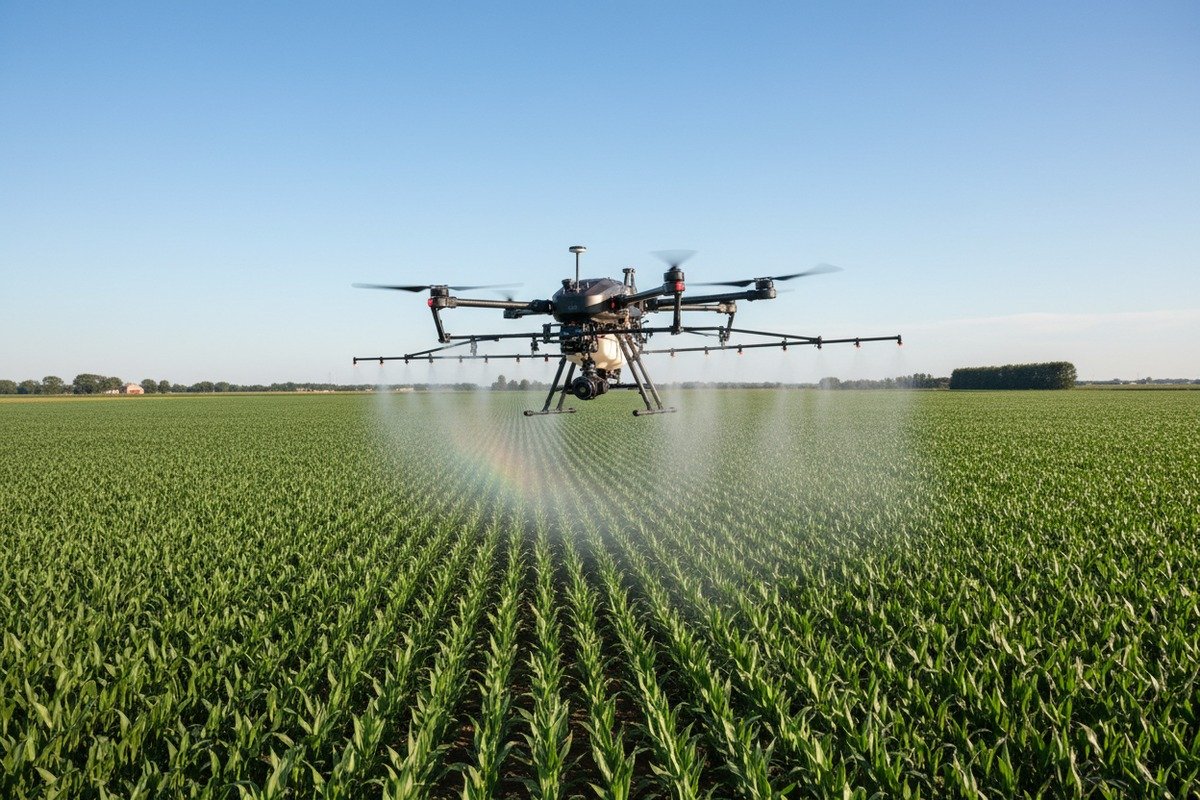
True modularity means more than quick-connect fittings. It requires designing the entire spray system with interchangeability in mind. Electrical connections must support both powered centrifugal atomizers and passive pressure nozzles. Software must recognize and calibrate for multiple nozzle profiles.
Our development team in Xi'an has completed over 40 custom modular projects for international clients. Each project follows a structured process: requirements gathering, prototype development, field testing, and production scaling.
Customization Options and Lead Times
| Customization Level | Description | Typical Lead Time | Minimum Order |
|---|---|---|---|
| Basic Adapter Kit | Mechanical adapters for single platform | 2–3 weeks | 10 units |
| Electrical Integration | Power supply modifications | 4–6 weeks | 25 units |
| Software Calibration | Custom firmware with nozzle profiles | 6–8 weeks | 50 units |
| Full Modular System | Complete redesign for interchangeability | 8–12 weeks | 100 units |
Collaborative Development Process
We begin every custom project with detailed requirement documentation. What nozzle types do you need to support? What chemicals will you apply? What crops and field conditions are typical? These answers shape the engineering approach.
Next, our team creates 3D models and electrical schematics for review. We share these with customers before committing to prototypes. This saves time and prevents costly redesigns later.
Prototype units undergo our standard 72-hour burn-in testing plus extended field trials. We ship test units to customers for real-world validation. Only after customer approval do we begin production manufacturing.
OEM Branding and Documentation
Many distributors require OEM branding on customized products. We accommodate logo placement, custom color schemes, and branded packaging. All documentation—user manuals, calibration guides, and warranty cards—can carry your company branding.
For customers importing into regulated markets, we provide all necessary compliance documentation. This includes CE marking 9 for Europe, FCC certification components, and detailed technical files for customs clearance.
Long-Term Support Considerations
Custom modular systems require ongoing support. We maintain spare parts inventory for all custom designs and provide firmware updates as needed. Our technical team offers remote diagnostics and can dispatch field technicians for on-site troubleshooting.
The investment in customization pays dividends through operational flexibility. One modular drone can handle fertilizer application with centrifugal atomizers in spring, herbicide spraying with air-induction nozzles in summer, and fungicide treatment with hollow cone tips in fall.
Cost-Benefit Analysis
Custom development costs more upfront but often delivers better long-term value. Consider this comparison:
| Approach | Upfront Cost | Flexibility | Annual Operating Cost |
|---|---|---|---|
| Single nozzle drone | Lower | Limited | Higher (may need multiple drones) |
| Modular custom system | Higher | Full | Lower (one drone, multiple applications) |
For operations spraying more than 500 hectares annually with multiple chemical types, modular systems typically achieve ROI within 18 months.
Conclusion
Confirming centrifugal and pressure nozzle interchangeability requires systematic verification of hardware compatibility, software calibration, coverage performance, and manufacturer support capabilities. Work with experienced suppliers who understand both nozzle technologies and can support your long-term operational needs.
Footnotes
1. Provides an overview of agricultural drone applications and benefits in farming. ↩︎
2. Wikipedia provides a clear and comprehensive explanation of rotary atomizers, which are also known as centrifugal atomizers. ↩︎
3. Designing Buildings Wiki offers a concise and clear definition of hydraulic pressure. ↩︎
4. Britannica provides an authoritative definition and explanation of particulate matter, relevant to contamination. ↩︎
5. Explains Variable Rate Technology (VRT), which inherently relies on algorithms for precise flow rate control in agricultural applications. ↩︎
6. Direct EPA .gov source providing guidelines for spray drift, including information on droplet size spectrum. ↩︎
7. Describes variable rate application as a key component of precision agriculture and its benefits. ↩︎
8. Details the design and effectiveness of air-induction nozzles for reducing spray drift. ↩︎
9. Provides official information on CE marking for products sold within the European Economic Area. ↩︎

 English
  Spanish
  German
  French
  Dutch
Dutch  Arabic
