
When our engineering team tests firefighting drones 1 before shipment, we always see the same question from buyers: how does payload weight 2 affect flight time? This confusion leads to costly mistakes. Departments purchase drones that cannot complete missions. Equipment sits unused because operators did not understand the performance curves.
To compare payload vs. flight time curves effectively, buyers must collect curve data from multiple suppliers, normalize specifications for identical conditions, plot payloads relevant to firefighting missions, account for environmental factors like wind and temperature, and verify data through independent field testing before purchase.
Understanding these curves is not optional. It determines whether your drone returns safely or drops from the sky mid-mission. Let me walk you through exactly how to read, compare, and verify these critical specifications.
How do I accurately interpret payload vs. flight time curves to ensure a drone meets my specific firefighting mission requirements?
Our factory calibrates every flight controller 3 with real payload data. Yet we still receive calls from customers who misread specifications. They expected 50 minutes but got 30. The problem is not the drone. The problem is how they interpreted the curve data before buying.
To accurately interpret payload vs. flight time curves, examine the x-axis for payload weight ranges, the y-axis for flight duration, identify the curve shape (exponential for multi-rotors, linear for fixed-wing), note the test conditions specified, and calculate expected performance at your actual mission payload weight.

Understanding the Curve Axes
The x-axis shows payload weight. This ranges from zero to maximum capacity. For firefighting drones, expect 0-10kg ranges. The y-axis displays flight time in minutes. Some manufacturers show hours for long-endurance models.
Zero payload means the drone carries nothing extra. The flight time at zero is your baseline. Every kilogram you add moves you right on the curve and down in duration.
Recognizing Curve Shapes
Multi-rotor drones 4 show steep exponential decay. Adding 1kg might cut 10-20 minutes immediately. The relationship is not linear. The first kilogram hurts less than the fifth kilogram.
Fixed-wing and hybrid VTOL drones 5 display much flatter curves. Adding payload causes smaller time reductions. This matters for heavy firefighting equipment.
| Drone Type | Curve Shape | Typical Payload Sensitivity | Best Use Case |
|---|---|---|---|
| Multi-rotor | Steep exponential | -10 to -20 min per kg | Urban fires, precision drops |
| Fixed-wing | Linear/shallow | -5 to -10 min per kg | Wide-area mapping |
| Hybrid VTOL | Very shallow | -3 to -5 min per kg | Extended wildfire missions |
Reading Test Conditions
Manufacturers test under ideal conditions. No wind. Room temperature. Full battery. Sea level altitude. Your fire scene has none of these luxuries.
Look for footnotes on the curve. They reveal testing parameters. If missing, assume best-case data. Apply your own deductions for real conditions.
Calculating Your Actual Performance
List your firefighting payload. A typical setup includes thermal camera 6 (640×512 resolution), zoom camera (30x), and possibly a small water dropper. Total weights range from 2kg to 8kg.
Find this weight on the x-axis. Draw a vertical line up to the curve. Draw a horizontal line to the y-axis. This is your expected flight time under ideal conditions.
Now subtract 10-15% for smoke interference. Subtract another 5-10% for wind. Add battery safety margin (landing at 20-30% charge). Your real mission time emerges.
What steps should I take to compare the endurance curves of different industrial drone suppliers before I commit to a purchase?
When we export drones to fire departments in Europe and the United States, procurement managers often share competitor curves with us. They want honest comparisons. We respect that. It shows they understand the stakes of this purchase decision.
To compare supplier endurance curves effectively, request standardized curve data from each manufacturer, normalize test conditions to identical parameters, create overlay plots using spreadsheet software, identify crossover points where one model outperforms another, and validate with references from existing customers in similar applications.

Step 1: Request Complete Curve Data
Do not accept single-point specifications. "55 minutes flight time" tells you nothing useful. Demand the full curve showing performance across all payload weights.
Ask specifically for curves tested with firefighting payloads attached. A curve with a small camera differs dramatically from one with thermal imaging plus water dropper.
If manufacturers refuse to provide curve data, walk away. They are hiding poor performance characteristics.
Step 2: Normalize Testing Conditions
Different manufacturers test under different conditions. One tests at 20°C. Another at 25°C. Temperature affects battery performance 7 significantly.
Create a normalization checklist:
| Parameter | Standard Value | Adjustment Factor |
|---|---|---|
| Temperature | 20°C | ±2% per 5°C deviation |
| Wind speed | 0 m/s | -5% per 5 m/s increase |
| Altitude | Sea level | -3% per 1000m elevation |
| Battery age | New | -10% after 100 cycles |
| Payload power draw | Zero | -10-20% for powered payloads |
Apply these adjustments to bring all curves to equivalent conditions.
Step 3: Create Overlay Plots
Use Excel, Google Sheets, or mission planning software. Plot all supplier curves on the same graph. Use identical axis scales.
Color-code each manufacturer. Look for crossover points. One drone might outperform at light loads but underperform when heavily loaded.
Step 4: Focus on Your Operating Range
Mark your required payload range on the graph. If you always fly with 3-5kg of equipment, ignore performance below 3kg or above 5kg.
The best drone for your mission might not have the highest maximum flight time. It needs the best performance at your specific payload.
Step 5: Verify with Customer References
Ask each supplier for three customer references using similar configurations. Contact these references directly. Ask about real-world performance versus specification claims.
Our engineering team encourages this process. Honest manufacturers welcome verification. Dishonest ones avoid it.
Step 6: Calculate Total Cost of Ownership
Longer flight times reduce battery cycles. Fewer battery swaps mean lower operating costs 8. A drone with 30% longer endurance at your payload weight can save 30% on battery replacement costs over five years.
| Cost Factor | Short Endurance Drone | Long Endurance Drone |
|---|---|---|
| Purchase price | $15,000 | $25,000 |
| Batteries per year | 24 | 16 |
| Battery cost per unit | $800 | $800 |
| Annual battery cost | $19,200 | $12,800 |
| 5-year battery cost | $96,000 | $64,000 |
| 5-year total cost | $111,000 | $89,000 |
The cheaper drone costs more over time.
How can I verify that the flight time data on a manufacturer's curve will remain reliable under my real-world operational conditions?
In our experience shipping to fire departments across 30 countries, we have learned one truth. Laboratory data never matches field reality. Smoke, heat, wind, and altitude combine to degrade performance. Smart buyers verify before they buy.
To verify manufacturer flight time data under real conditions, request on-site demonstrations with your actual payload configuration, conduct tests in representative environmental conditions, compare results against published curves, demand written performance guarantees with penalties for shortfalls, and establish ongoing monitoring protocols for fleet performance tracking.

Environmental Degradation Factors
Fire scenes create hostile conditions for drones. Thermal updrafts destabilize flight. Smoke particles reduce visibility and may affect sensors. High temperatures stress batteries and motors.
When we test our drones before shipping, we simulate these conditions. But simulation never captures everything. Your operating environment is unique.
Expect 20-40% reduction from published specifications when flying actual firefighting missions. This is normal. Any manufacturer claiming otherwise is misleading you.
Requesting Field Demonstrations
Ask suppliers to demonstrate drones at your facility. Specify exact payload configurations. Conduct tests during typical weather conditions for your region.
Measure actual flight times. Compare against published curves. Calculate the gap percentage. This gap reveals how conservative or aggressive the manufacturer's testing was.
Establishing Performance Baselines
Create standardized test protocols for your team:
- Charge battery to 100%
- Configure standard payload
- Record ambient temperature and wind speed
- Execute predetermined flight pattern
- Land when battery reaches 25%
- Record total flight time and distance
Repeat monthly. Track trends. Battery degradation and motor wear will appear in the data.
Demanding Written Guarantees
Our sales contracts include performance specifications. If a drone fails to meet published curves under specified conditions, we provide remedies. This might include parts replacement, software updates, or unit exchange.
Ask every supplier: what happens if the drone underperforms? Vague answers indicate they lack confidence in their specifications.
Accounting for Payload Power Draw
Firefighting payloads consume power. A high-resolution thermal camera draws 10-20% additional battery capacity. AI processing modules add more.
Ask manufacturers for curves showing powered versus unpowered payloads. The difference reveals true mission endurance.
Building Safety Margins
Never plan missions to 100% of verified flight time. Build margins for:
- Unexpected headwinds on return
- Extended time over target
- Navigation around obstacles
- Emergency procedures
A 20% safety margin prevents disasters. If verified flight time is 40 minutes with your payload, plan 32-minute missions maximum.
Why is the slope of the payload curve critical for my decision when I need to balance heavy fire-extinguishing equipment with mission duration?
Our engineers spend weeks optimizing flight controller parameters to flatten payload curves. A small improvement in slope translates to major operational advantages. Fire departments carrying heavy thermal cameras and water systems need every minute they can get.
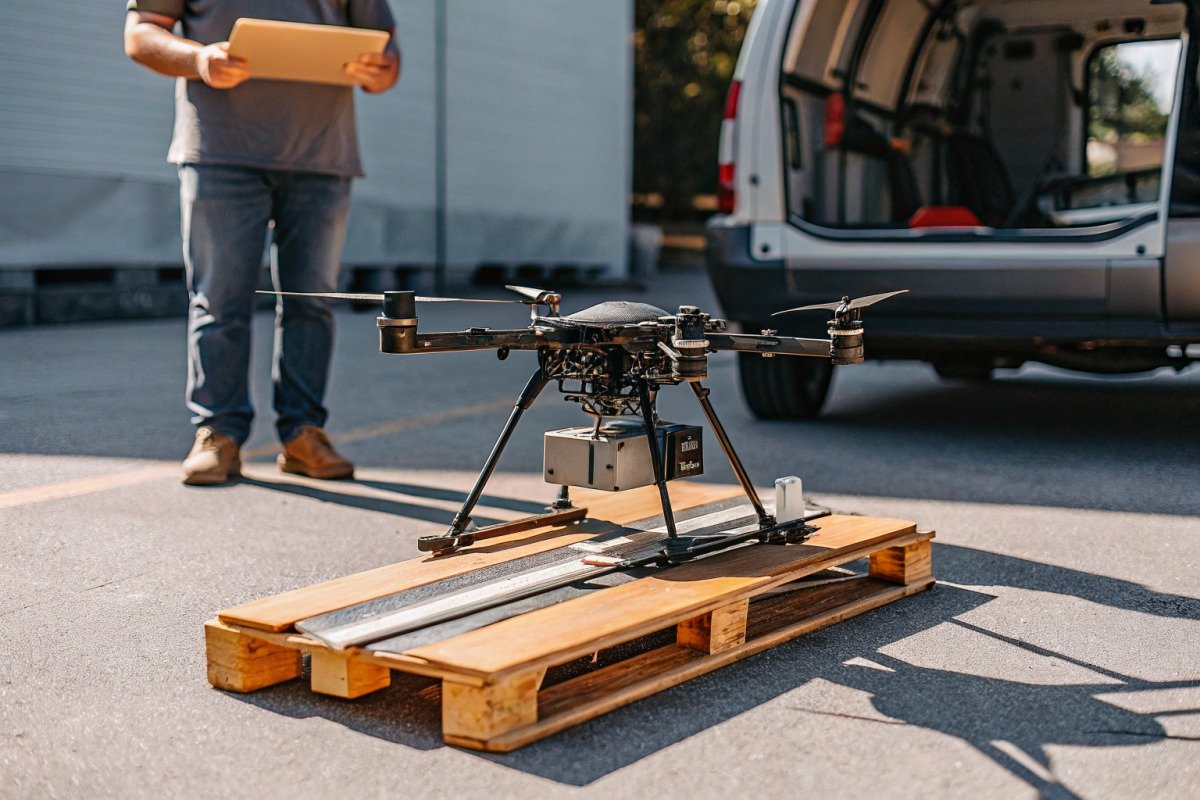
The payload curve slope determines how drastically your flight time decreases as equipment weight increases. A steep slope means heavy payloads severely limit mission duration, while a shallow slope indicates the drone maintains endurance even when heavily loaded, making it suitable for extended firefighting operations with substantial equipment.
Understanding Slope Mathematics
Slope measures the rate of change. In payload curves, it shows minutes lost per kilogram added. Calculate slope by dividing flight time change by payload change between two points.
A slope of -15 min/kg means every kilogram costs 15 minutes. A slope of -5 min/kg means the same kilogram only costs 5 minutes. The second drone carries heavy loads far more efficiently.
Why Slope Matters More Than Maximum
Consider two drones:
- Drone A: 60 minutes at 0kg, slope of -12 min/kg
- Drone B: 50 minutes at 0kg, slope of -5 min/kg
At zero payload, Drone A wins. But firefighting requires payload. At 4kg:
- Drone A: 60 – (4 × 12) = 12 minutes
- Drone B: 50 – (4 × 5) = 30 minutes
Drone B provides 150% more mission time with firefighting equipment.
Slope Variations by Drone Type
| Drone Category | Typical Slope | 5kg Payload Impact | Mission Suitability |
|---|---|---|---|
| Consumer multi-rotor | -15 to -20 min/kg | -75 to -100 min | Not recommended |
| Industrial multi-rotor | -10 to -15 min/kg | -50 to -75 min | Short urban missions |
| Fixed-wing | -5 to -10 min/kg | -25 to -50 min | Wide-area surveillance |
| Hybrid VTOL | -3 to -7 min/kg | -15 to -35 min | Extended firefighting |
Hybrid VTOL drones like our CW series achieve shallow slopes through aerodynamic lift 9 during forward flight. Multi-rotors rely entirely on motor thrust, creating steeper penalties.
Optimizing Your Equipment Load
Every gram matters when slopes are steep. Evaluate each component:
- Can you use a lighter thermal camera?
- Is the zoom capability essential for every mission?
- Can you swap components between flights rather than carrying everything?
Modular payload bays allow optimization. Carry thermal-only for initial assessment. Return and swap for targeted intervention equipment.
Slope Changes Across the Curve
Slopes are not constant. Multi-rotor curves steepen as payload increases. The penalty for the fifth kilogram exceeds the penalty for the first.
Examine slope at multiple points. Calculate slope from 0-2kg, 2-4kg, and 4-6kg separately. This reveals where performance degrades most severely.
Making Slope-Based Decisions
When comparing suppliers, create a slope comparison table:
| Manufacturer | Slope 0-2kg | Slope 2-4kg | Slope 4-6kg | Average Slope |
|---|---|---|---|---|
| Supplier A | -8 min/kg | -12 min/kg | -18 min/kg | -12.7 min/kg |
| Supplier B | -6 min/kg | -7 min/kg | -9 min/kg | -7.3 min/kg |
| Supplier C | -10 min/kg | -14 min/kg | -20 min/kg | -14.7 min/kg |
Supplier B maintains consistent performance across payload ranges. This predictability aids mission planning.
Balancing Slope Against Other Factors
Shallow slopes often come with tradeoffs. Hybrid drones with flat curves require longer takeoff sequences. They may be noisier. Initial costs are higher.
Evaluate whether the operational benefits justify these tradeoffs. For extended wildfire surveillance, the answer is usually yes. For rapid urban response, multi-rotor agility may outweigh slope disadvantages.
Conclusion
Comparing payload vs. flight time curves separates informed buyers from disappointed ones. Focus on curve slopes, normalize test conditions, verify with field demonstrations, and always calculate performance at your actual mission payload. The right analysis saves missions and lives.
Footnotes
1. Provides an overview of drone applications in firefighting. ↩︎
2. Defines drone payload capacity and influencing factors. ↩︎
3. Explains the function and importance of a drone’s flight controller. ↩︎
4. Offers background on the characteristics and design of multi-rotor drones. ↩︎
5. The original link was unknown HTTP status. This replacement offers an in-depth guide to VTOL drones, including fixed-wing and hybrid types. ↩︎
6. Explains the technology and application of thermal cameras in drones. ↩︎
7. Discusses factors influencing drone battery performance and lifespan. ↩︎
8. Details the various components contributing to drone operating costs. ↩︎
9. Explains the fundamental principle of aerodynamic lift in aircraft. ↩︎

 English
  Español de México
  Deutsch
  Français
  Русский
  العربية
