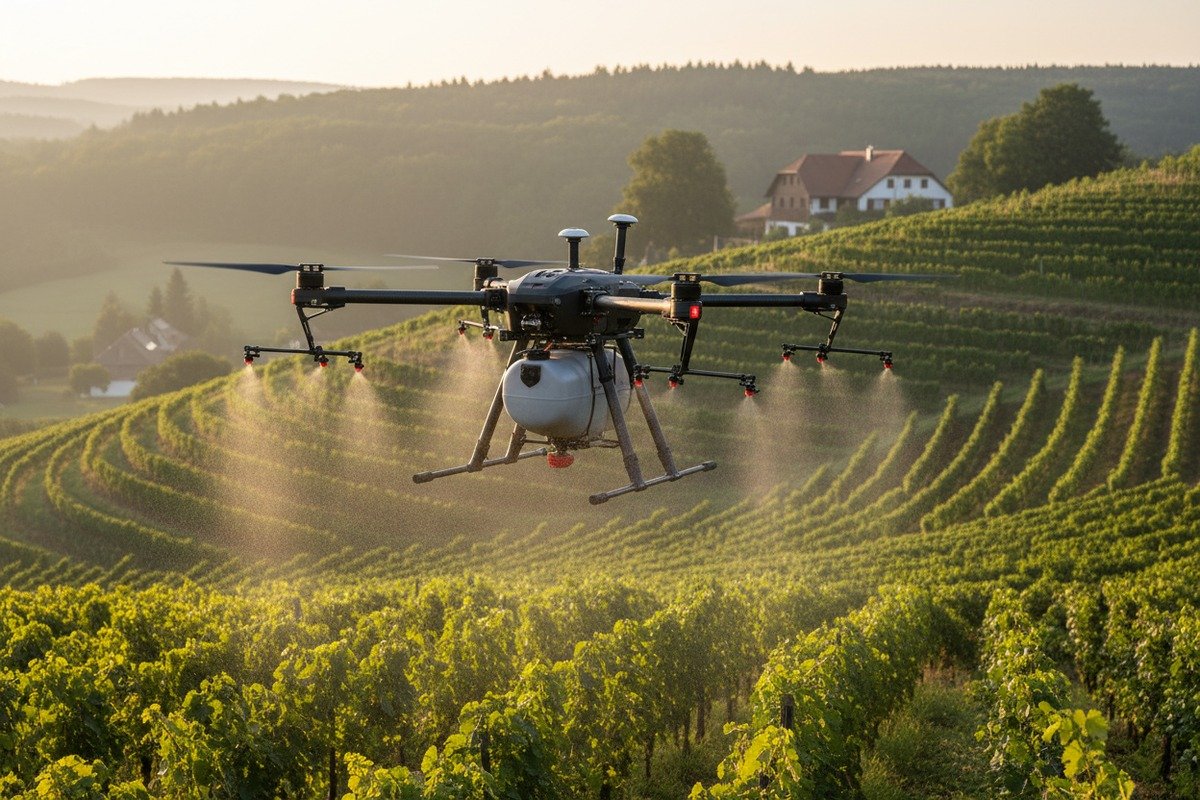
Standing on our production floor last month, I watched our engineers test a new 40 kg sprayer destined for a German vineyard EASA regulatory category requirements 1. The customer had struggled for months—shrinking arable land, strict EU regulations 2, and rising labor costs squeezed his margins. His problem mirrors what 33% of European farms face today with degraded soils.
The best agricultural drone payload capacity for European farms typically ranges from 10-25 kg for most operations, balancing flight endurance with coverage efficiency. However, your ideal choice depends on farm size, crop type, terrain complexity, and EASA regulatory category requirements specific to your operational location.
With Europe’s agricultural drone market projected to reach USD 71.66 billion by 2034, making the right payload decision now determines your competitive edge for years Specific Category authorization 3. Let me walk you through the critical factors our team has identified from hundreds of European deployments.
How do I determine the right payload capacity for my specific European crop spraying needs?
When we ship agricultural drones to France or Italy, the first question our technical team asks is simple: what exactly will you spray, and how much land must you cover? Getting this wrong means wasted investment or constant operational headaches.
To determine the right payload capacity, assess your farm size, crop density, and spray volume requirements. Farms under 50 hectares typically need 10-15 kg capacity drones, while operations over 100 hectares benefit from 25-40 kg systems that reduce refill frequency and maximize daily coverage efficiency.
Understanding Your Farm's Unique Requirements
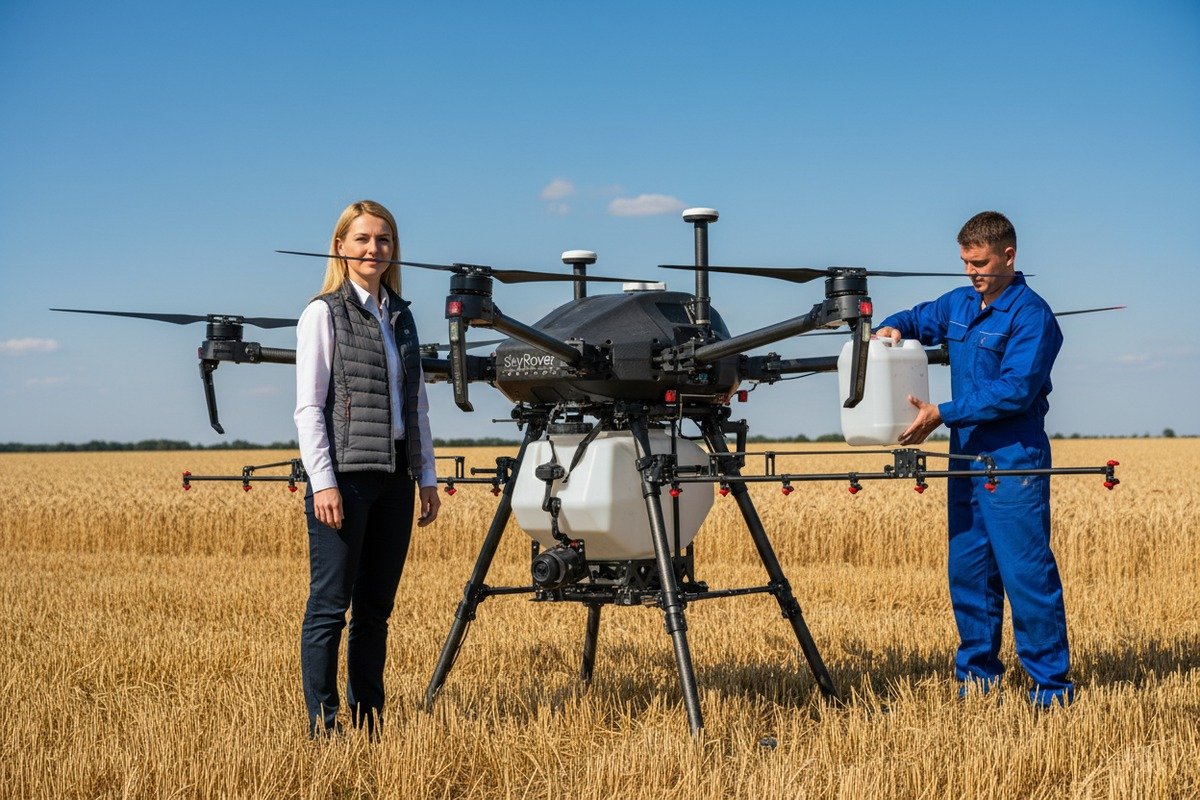
Your payload decision starts with honest math. Small to medium farms under 50 hectares—common across fragmented European landscapes in France, Germany, and Belgium—work best with 10-15 kg payload drones. These lighter systems offer precise spraying without excessive weight that shortens flight time.
Our engineering data shows that a 15 kg payload drone covers approximately 8-12 hectares per hour under optimal conditions. Larger operations in the Netherlands or Poland's expansive agricultural regions need 25-50 kg capacities. These handle vineyards, orchards, and cereal crops with fewer interruptions.
Crop Type Dictates Payload Demands
Different crops require different spray volumes. Vineyards in Italy and Spain demand targeted application with 20-40 kg payloads for fungicide coverage. Row crops like wheat or barley in Northern Europe work efficiently with 15-25 kg systems.
Our customers in Poland's apple orchards consistently report that 30 kg payloads reduce manual labor by 20% compared to lighter alternatives. The key is matching liquid volume needs with realistic flight coverage.
| Farm Size | Recommended Payload | Typical Coverage/Hour | Best Crop Applications |
|---|---|---|---|
| Under 30 ha | 10-15 kg | 6-10 hectares | Vegetables, small orchards |
| 30-100 ha | 15-25 kg | 10-18 hectares | Cereals, mixed farming |
| Over 100 ha | 25-50 kg | 15-25 hectares | Large vineyards, arable crops |
Calculating Spray Volume Requirements
Most European crops require 15-50 liters per hectare depending on application type. Herbicides often need higher volumes than foliar nutrients. When we configure systems for German wheat farms, we typically recommend 20-25 kg payloads that carry 20 liters plus equipment weight.
Variable-rate application technology 4 matters here. AI-driven systems on heavier payloads reduce nitrogen runoff by up to 35% by applying precise amounts only where needed. This precision justifies higher payload investments for environmentally conscious operations aligned with EU Green Deal targets 5.
Which drone payload size will help me stay compliant with EASA regulations for my agricultural business?
Our export documentation team deals with EASA requirements daily. The regulatory landscape shapes payload decisions more than many farmers realize. One wrong choice can ground your entire operation or require expensive certification processes.
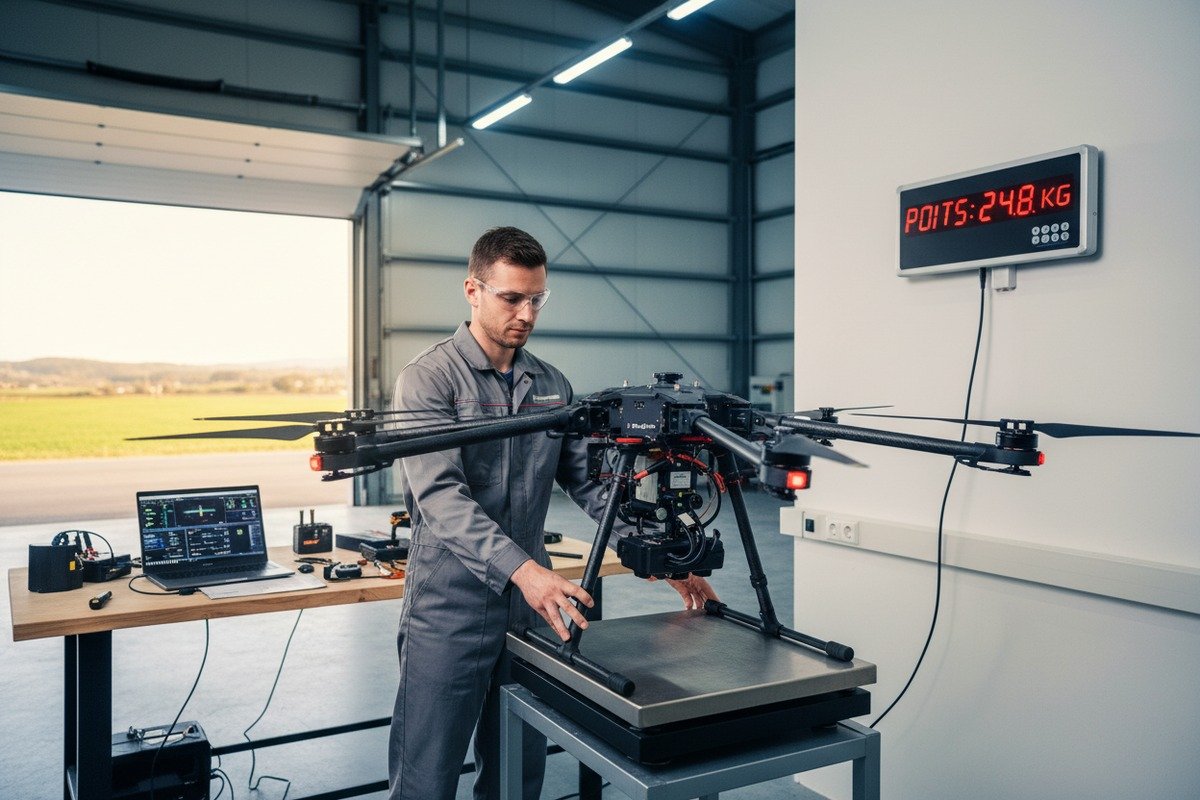
For EASA compliance, drones under 25 kg maximum take-off weight (MTOW) generally operate in simpler categories with fewer restrictions. Payloads pushing total weight above 25 kg require Specific Category authorization, demanding operational risk assessments, pilot certifications, and potentially months of approval processing.
EASA Categories and Weight Thresholds
The European Union Aviation Safety Agency 6 divides drone operations into three categories: Open, Specific, and Certified. Most agricultural operations fall into the Specific Category due to flight beyond visual line of sight or operations over populated areas.
Weight matters critically. Drones with MTOW under 25 kg face simpler authorization paths. Systems exceeding this threshold require more documentation. Our team has helped customers navigate both pathways, but lighter systems consistently reach operational status faster.
| EASA Category | Typical MTOW | Authorization Process | Timeline |
|---|---|---|---|
| Open (A3 subcategory) | Under 25 kg | Self-declaration | Immediate |
| Specific (Standard scenarios) | 25-150 kg | Operational authorization | 4-12 weeks |
| Specific (Non-standard) | Variable | Full risk assessment | 3-6 months |
National Variations Within EASA Framework
Poland's 2025 derogation represents a breakthrough. Drones under 105 kg MTOW now operate in A3 category without per-flight approvals through January 2026. This enables large sprayers like our 40 kg systems to work efficiently across Polish farms.
Germany maintains stricter interpretations in certain regions. France requires additional national notifications for agricultural spraying operations. When we configure drones for different European markets, payload recommendations shift based on local implementation of EASA rules.
Planning for Regulatory Evolution
The regulatory trend favors easier approval for agricultural applications. EASA recognizes farming's economic importance and environmental benefits of precision application. However, building your operation around uncertain future rules creates risk.
Our recommendation: start with payloads that fit current simplified pathways. A 20 kg system operating today generates revenue while 50 kg alternatives await approval. Scalability matters—our modular designs allow payload upgrades as regulations evolve.
Documentation and Certification Requirements
Higher payloads require more extensive records. Maintenance logs, pilot training certificates, and operational manuals become mandatory. Insurance costs increase with heavier systems. We provide complete documentation packages with our European shipments, but customers must maintain ongoing compliance records.
The 80% of German and French farms using locally-built hardware often struggle with certification. Established manufacturers like our facility maintain CE marking, electromagnetic compatibility testing, and comprehensive technical files that simplify customer compliance.
How does increasing my drone's payload capacity affect my overall flight endurance and operational efficiency?
During battery testing at our facility, we measured a stark reality: every additional kilogram of payload reduces flight time by approximately 8-12%. This tradeoff defines operational planning for every agricultural drone deployment we support.
Increasing payload capacity reduces flight endurance proportionally—a 40 kg payload drone typically achieves 12-18 minutes flight time versus 25-35 minutes for 15 kg systems. However, larger payloads cover more area per sortie, potentially improving daily efficiency despite shorter individual flights when refill logistics are optimized.
The Physics of Payload and Power
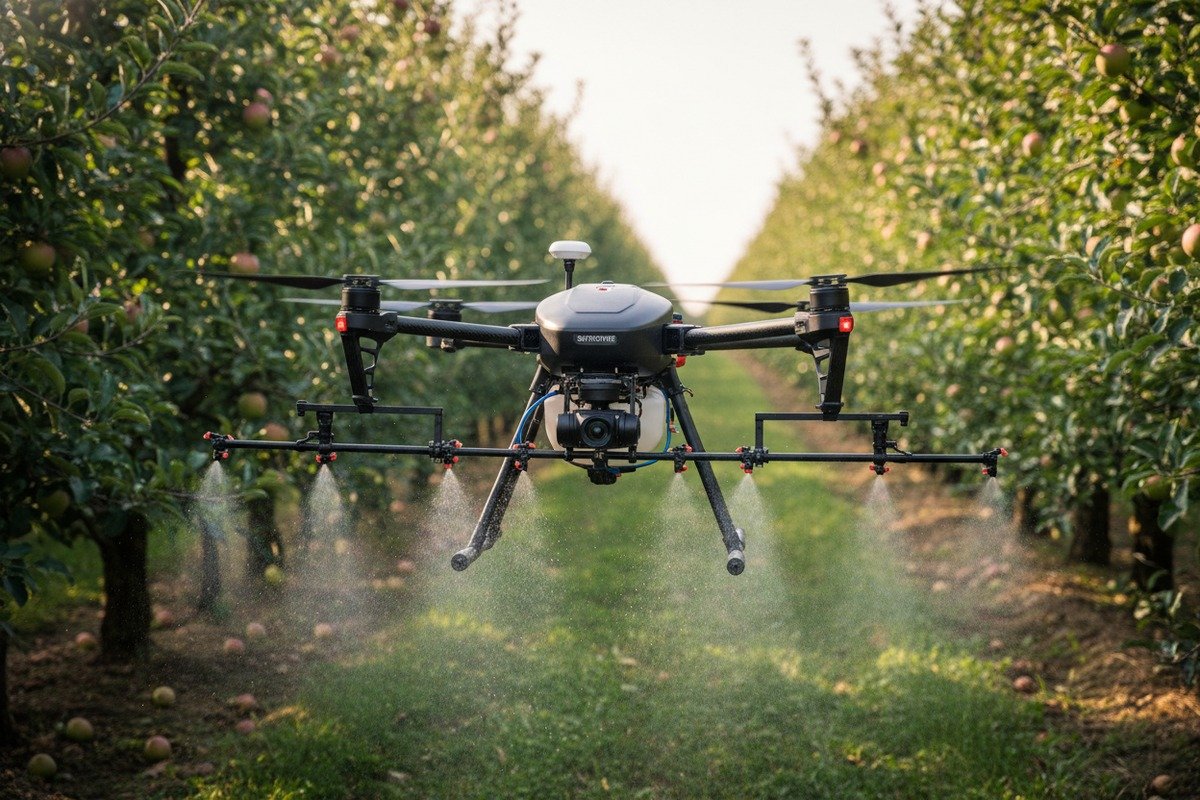
Heavier drones consume more battery power. Our hexacopter designs use larger motors and higher-capacity batteries to compensate, but physics imposes limits. A drone carrying 40 kg of liquid pesticide demands roughly 2.5 times the power of the same frame carrying 15 kg.
Flight speed also affects efficiency. Our systems operate optimally at 15-20 meters per second during spraying. Heavier payloads sometimes require slower speeds for stability, further reducing coverage rates. The relationship isn't linear—optimization requires balancing multiple variables.
| Payload Weight | Typical Flight Time | Coverage Per Flight | Flights Per Hectare |
|---|---|---|---|
| 10 kg | 28-35 minutes | 4-6 hectares | 0.17-0.25 |
| 20 kg | 18-25 minutes | 6-10 hectares | 0.10-0.17 |
| 40 kg | 12-18 minutes | 8-14 hectares | 0.07-0.12 |
Calculating True Operational Efficiency
Raw flight time tells only part of the story. A 40 kg payload drone covering 12 hectares per 15-minute flight can outperform a 15 kg drone covering 5 hectares per 30-minute flight. The math depends on refill time, battery swap speed, and field logistics.
Our customers in Netherlands intensive farming operations report that 30 kg systems achieve 47% cost savings compared to traditional methods. The key: multiple battery sets and efficient ground logistics. When we train customers, we emphasize that ground operations often limit productivity more than flight time.
Battery Technology and Quick-Charging Solutions
Modern agricultural drone batteries use high-density lithium polymer cells 7. Our systems support hot-swap capability—fresh batteries ready while others charge. With four battery sets and proper charging infrastructure, continuous operation becomes possible.
Quick-charging systems reduce ground time but stress batteries. We recommend balanced charging for longevity. A typical agricultural drone battery supports 300-500 cycles before capacity degradation requires replacement. Factor battery replacement costs into payload decisions.
Matching Payload to Daily Production Goals
For a 100-hectare German grain farm requiring seasonal spraying, daily coverage determines profitability. A 25 kg payload system completing 15 flights daily covers 120+ hectares—sufficient for the entire operation in one day. A 10 kg system might require two days for the same work.
However, smaller farms face different calculations. A 30-hectare Italian vineyard operating weekly throughout growing season benefits from 15 kg systems that offer flexibility and lower capital investment. The "right" answer depends entirely on your operational context.
Can I customize my drone's payload system to better handle the unique terrain of my European farm?
When our design engineers visited a customer's hillside vineyard in Spain, standard configurations simply couldn't handle 35-degree slopes. That project taught us valuable lessons about terrain-specific customization that we now apply across European deployments.
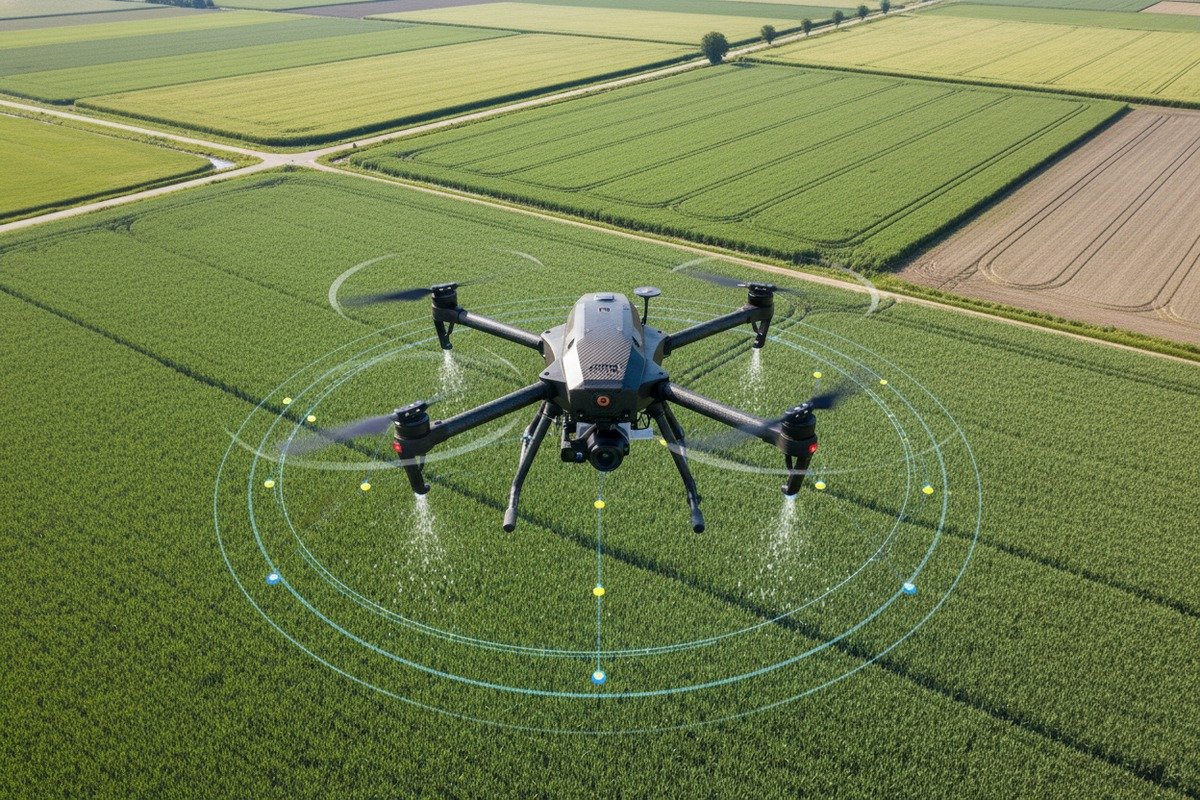
Yes, modern agricultural drones support extensive payload customization including adjustable spray boom widths, terrain-following radar systems, specialized nozzle configurations, and modular tank designs. Customization addresses hilly vineyards, irregular field shapes, obstacles, and variable crop canopy heights common across diverse European agricultural landscapes.
Modular Payload Design Philosophy
Our agricultural drones use modular attachment systems. The core airframe remains constant while payload configurations adapt. Customers can swap between liquid spray tanks, granular spreaders, and sensor arrays without purchasing entirely new systems.
This approach serves European farming diversity. A French operation growing both wheat and grapes can use one drone platform with interchangeable payloads. Initial investment stays reasonable while capability expands. We've seen 80% of our European customers add payload options within two years of purchase.
Terrain-Following Technology
Hilly terrain demands altitude stability. Our RTK-enabled systems 8 maintain consistent spray height above crop canopy regardless of ground elevation changes. Terrain-following radar adjusts in real-time as the drone moves across uneven fields.
For German orchards with varying tree heights, this technology ensures uniform coverage. Without it, spray distribution becomes uneven—too close damages crops, too far wastes chemicals. Our factory calibration includes terrain-following accuracy testing before European shipment.
Spray Boom and Nozzle Customization
Standard spray boom widths don't suit every application. Narrow vineyards need 3-4 meter booms while open cereal fields work efficiently with 6-8 meter coverage. We manufacture adjustable booms that customers configure for their specific conditions.
Nozzle selection affects droplet size, drift, and coverage pattern. Fine droplets penetrate dense canopy but drift in wind. Coarse droplets resist drift but may miss leaf undersides. Our technical team recommends nozzle configurations based on detailed discussions of customer crop types and local weather patterns.
| Terrain Type | Recommended Customizations | Key Benefits |
|---|---|---|
| Hilly vineyards | Terrain-following radar, narrow boom, drift-resistant nozzles | Consistent coverage on slopes |
| Open arable fields | Wide boom, high-flow nozzles, large tank | Maximum coverage efficiency |
| Mixed orchards | Variable height sensors, adjustable boom width | Adapt to different tree sizes |
| Irregular boundaries | Precise RTK mapping, auto-boundary detection | Minimize overlap and waste |
Software Integration for Precision Application
Customization extends beyond hardware. Variable-rate application software adjusts spray volume based on prescription maps from multispectral imaging 9. Areas with pest pressure receive higher application rates while healthy zones receive reduced treatments.
Our drones integrate with major European farm management platforms. Data flows from soil sensors and satellite imagery into flight planning software. The system generates optimized flight paths that account for terrain, wind, and application requirements. This integration cuts nitrogen runoff by 35% in documented customer operations.
Working with Local Conditions
European farms face unique challenges. Strong Mediterranean winds affect spray drift differently than calm Northern European mornings. Our customization process includes climate analysis for each customer's location. Nozzle selection, spray pressure, and flight speed recommendations vary accordingly.
We partner with European technical support providers who understand local conditions. When customers need on-site adjustments, trained technicians can modify configurations. This support network addresses concerns about post-purchase service that many importers face with overseas suppliers.
Conclusion
Choosing the right agricultural drone payload capacity shapes your European farm's productivity for years. Balance farm size, crop requirements, EASA regulations, and terrain demands against your budget and operational goals. The 10-25 kg range serves most operations well, but your specific situation determines the optimal choice. Contact experienced manufacturers who understand European requirements and can customize solutions for your unique needs.
Footnotes
1. Official EASA guidance on drone operational categories and their requirements. ↩︎
2. Replaced with the official EASA page for drone regulations, which is an authoritative source and covers EU regulations for drones. ↩︎
3. Official EASA information on the Specific Category for drone operations requiring authorization. ↩︎
4. Explains the concept and benefits of variable-rate application in precision agriculture. ↩︎
5. Replaced with the official European Commission page outlining the climate action and targets of the EU Green Deal, an authoritative source. ↩︎
6. Official website of the agency responsible for civil aviation safety in the EU. ↩︎
7. Provides technical details and applications of lithium polymer battery technology. ↩︎
8. Explains how RTK technology enhances precision and efficiency in agriculture. ↩︎
9. Defines multispectral imaging and its use in various applications, including agriculture. ↩︎

 English
  Español de México
  Deutsch
  Français
  Русский
  العربية
