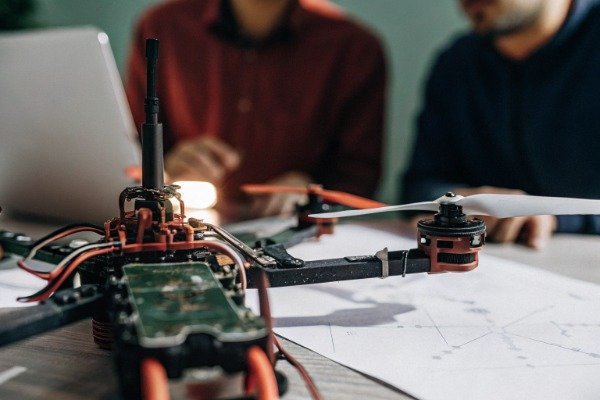
At SkyRover, we see many buyers struggle to verify engineering claims. Choosing the wrong partner risks project failure and wasted budget. You need a proven method to vet suppliers.
To evaluate a supplier's R&D capability, request specific case studies of past OEM projects and audit their engineering team's composition. Verify they own the flight control source code for deep customization and ask for a detailed product development roadmap that includes prototyping milestones and testing protocols.
To help you make the right choice, we have broken down the critical questions you must ask during the negotiation phase.
What questions should I ask about their engineering team's size and expertise?
When we hire engineers for our Chengdu factory, we look for specific skill sets. You need to know who is actually designing your drone, not just who is selling it.
Ask for a breakdown of their technical staff versus sales personnel to ensure a high engineering ratio. Specifically, inquire about the number of specialists in aerodynamics, software development, and structural engineering, as these roles are critical for executing complex custom firefighting drone projects successfully.

The Importance of Team Composition
When you evaluate a supplier for custom firefighting drones, the total number of employees is less important than the ratio of engineers to other staff. Many trading companies in China may have 50 employees, but 45 of them are sales representatives. A true manufacturer capable of R&D will have a significant portion of their workforce dedicated to technical roles.
You should ask for an organizational chart or a breakdown of their R&D department. You are looking for a mix of disciplines. A mechanical engineer can design the frame, but they cannot write the code for the flight controller. A software engineer can write the code, but they cannot ensure the drone remains stable in 10 m/s winds.
Vertical Integration of Technology
One of the most critical aspects we emphasize is vertical integration. This means the supplier controls the core technology. If a supplier buys their flight control systems from a third party (like JIYI or CubePilot) without having access to the source code, their ability to customize is limited. They can only change the hardware; they cannot change how the drone flies.
vertical integration 1
For firefighting drones, you might need the drone to behave differently when carrying a heavy fire extinguishing bomb versus when it is empty. This requires modifying the flight algorithms. If the supplier does not have a control algorithm engineer, they cannot do this for you.
control algorithm 2
Key Engineering Roles to Look For
Use the table below to understand which roles are necessary for different types of customization.
Table 1: Engineering Roles Required for Customization Types
| Customization Requirement | Critical Engineering Role | Why It Matters |
|---|---|---|
| Heavy Payload Stability | Aerodynamics Engineer | Ensures the drone remains stable when carrying heavy extinguishers or water hoses. |
| Custom Flight Behavior | Control Algorithm Engineer | Modifies the source code to adjust flight parameters for specific missions. |
| Data Security & Encryption | Software/Firmware Engineer | Protects sensitive data and ensures secure communication channels. |
| High-Heat Resistance | Material Science Engineer | Selects materials that can withstand high temperatures near fires without melting. |
| Structure Modification | Mechanical Engineer | Redesigns the frame to accommodate new sensors or deployment mechanisms. |
By verifying these roles exist within the supplier's team, you reduce the risk of outsourcing delays. If they have to hire an external freelancer to fix a bug, your project will stall. If the talent is in-house, the fix happens immediately.
Can the supplier provide examples of previous OEM customization projects?
Our portfolio includes custom cargo drones for European clients. Seeing proof is better than hearing promises when selecting a manufacturing partner.
Request a portfolio of "Problem-Solution" case studies that demonstrate how they solved specific technical challenges for previous clients. Look for evidence of complex integrations, such as unique payload mechanisms or high-heat resistance modifications, rather than just simple logo changes or color swaps.
Distinguishing Rebranding from Engineering
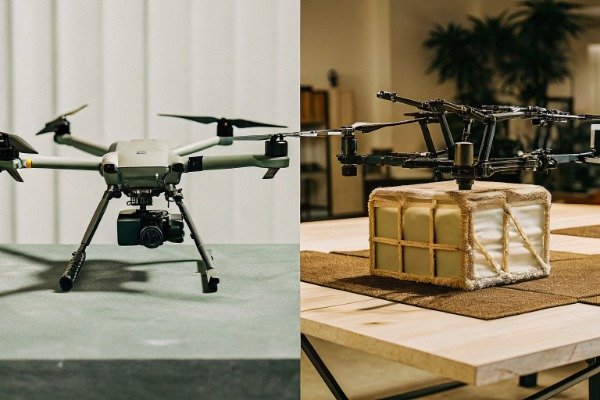
There is a big difference between "White Labeling" and "OEM Development." White labeling simply means putting your logo on a standard product. OEM development involves creating something new. Many suppliers will show you a standard drone and say, "We can customize this." You need to dig deeper to see if they have actually done it before.
Ask to see "Before and After" examples. A capable R&D team should be able to show you a standard model and then the customized version they built for a client. Look for structural changes. Did they change the landing gear? Did they integrate a new camera mount? Did they alter the battery compartment?
The "Field-to-Lab" Feedback Loop
In our experience, the best innovations come from the field. A supplier with strong R&D capabilities will have a feedback loop. This means they take data from real-world tests and use it to improve the design.
Ask the supplier for a "Failure Mode and Effects Analysis" (FMEA) report from a past project. This document shows that they anticipated potential failures (like a motor overheating) and engineered a solution to prevent it. If they cannot provide this, they likely skip the rigorous engineering steps and just build prototypes until one works. This is dangerous for firefighting equipment.
Failure Mode and Effects Analysis 3
Evaluating Complexity of Past Projects
You want to assess the difficulty of the projects they have delivered. Integrating a spotlight is easy; integrating a capsule launcher that communicates with the ground station is hard.
Table 2: Levels of Customization Complexity
| Level | Description | R&D Difficulty | What to Look For |
|---|---|---|---|
| Level 1: Cosmetic | Logo printing, color changes, custom packaging. | Low | High-quality print, durable paint. |
| Level 2: Modular | Swapping standard payloads (cameras, lights) using standard ports. | Medium | Clean wiring, secure mounting brackets. |
| Level 3: Structural | Changing the frame size, arm length, or landing gear. | High | CNC machined parts, carbon fiber molding. |
| Level 4: Systemic | Custom flight software, proprietary communication links, AI integration. | Very High | Custom SDKs, API documentation, source code access. |
If a supplier only shows you Level 1 or Level 2 examples, they may not be ready for a complex firefighting drone project. You need a partner who is comfortable operating at Level 3 and Level 4. This ensures that when you have a unique requirement, they have the technical depth to execute it.
Does the R&D team offer SDK support for integrating third-party software?
We often help clients integrate their own AI software into our flight controllers. Without open access, your custom drone becomes a closed box.
Verify if the supplier provides a comprehensive Software Development Kit (SDK) and open API documentation. This allows your team to integrate third-party applications, such as AI fire detection algorithms or fleet management software, directly into the drone's flight control system without vendor lock-in.

The Trap of Closed Systems
In the industrial drone market, hardware is becoming a commodity. The real value is in the software. For firefighting, you might want to use advanced software like FlytBase or BlueFire for real-time command and control. Or, you might want to run a custom AI algorithm that detects smoke signatures automatically.
If your supplier uses a "closed system," you cannot do this. You are stuck with the features they provide. If they stop updating their software, your drone becomes obsolete. An open SDK (Software Development Kit) is the key to future-proofing your investment.
What to Look for in an SDK
When we collaborate with clients on software, we provide documentation that explains how to talk to the flight controller. You should ask the supplier for their API (Application Programming Interface) documentation before you sign a contract.
Application Programming Interface 4
Give this documentation to your software team or a technical consultant. Ask them: "Is this well-written? Is it complete?" A good SDK will allow you to control the drone, read sensor data, and trigger payloads programmatically.
Integration with Firefighting Tech
Firefighting is moving towards automation. Drones need to communicate with other devices on the ground. For example, a drone might need to send thermal coordinates directly to a firefighter's tablet.
Table 3: SDK Capabilities Checklist
| Feature | Function | Why Firefighters Need It |
|---|---|---|
| Telemetry Stream | Real-time data (altitude, battery, GPS). | Commanders need to know drone status instantly. |
| Video Stream Access | Low-latency video feed access. | AI software needs raw video to detect fires. |
| Payload Control | Triggering drop mechanisms or lights. | Automated dropping of fire retardant balls. |
| Waypoint Upload | Sending flight paths to the drone. | Automating patrol routes over forests. |
| Gimbal Control | Moving the camera remotely. | Tracking a moving fire front automatically. |
If the supplier says, "We don't have an SDK, but we can write the software for you," be careful. This creates "Vendor Lock-in." You will have to pay them every time you want to make a small change. It is much better to have an open platform where you control the development.
Vendor Lock-in 5
How quickly can they provide 3D drawings or technical schematics for my requirements?
When a client sends us a request, our design team immediately starts the CAD process. Speed reflects a supplier's internal workflow efficiency.
Assess their Product Development Lifecycle (PDLC) speed by asking for a timeline on initial 3D renderings and technical schematics. A capable R&D team should be able to produce preliminary CAD models within a few days to visualize your specific requirements before manufacturing begins.

The Power of Rapid Prototyping
Time is money. In the drone industry, technology moves fast. If it takes a supplier three months just to give you a drawing, the technology might be old by the time the product is finished.
We utilize rapid prototyping tools like 3D printing and CNC machining. This allows us to create a physical part in hours, not weeks. You should ask your potential supplier about their prototyping equipment. Do they have 3D printers in-house? Do they have their own CNC machines? If they have to outsource every prototype part, the development process will be painfully slow.
CNC machining 6
The Design Verification Process
A professional R&D team follows a structured process. They do not just start building. They start with a design.
- Requirement Analysis: They listen to what you need (e.g., "I need a drone that can fly for 60 minutes with a 5kg payload").
- Conceptual Design: They create a rough sketch or block diagram.
- CAD Modeling: They create a detailed 3D model on the computer.
- Simulation: They test the model in software to see if it will fly.
- Prototyping: They build the first physical unit.
You should ask to see the "CAD to Reality" examples. Ask them to show you the 3D drawing of a past project and then the photo of the final product. They should look almost identical.
Product Development Lifecycle 7
Interpreting Response Times
The speed at which they provide technical drawings is a huge indicator of their competence.
Software Development Kit (SDK) 8
- 24-48 Hours: They likely have a modular design library and can quickly assemble a concept. This is excellent.
- 1 Week: This is standard for a custom design that requires some new engineering.
- 2 Weeks or More: This is a red flag. It suggests they are either overloaded with work or they do not have the in-house talent to design it themselves and are waiting on an external contractor.
Also, pay attention to the format. Professional engineers send STEP files or detailed PDF schematics with dimensions. If they send you a hand-drawn sketch on a napkin or a vague Photoshop image, they are not a serious manufacturing partner.
Data Security & Encryption 9
Conclusion
Evaluating R&D capability protects your investment. Verify their team structure, demand proof of past custom projects, ensure SDK availability, and test their design speed.
specialists in aerodynamics 10
Footnotes
1. Explains the business strategy of controlling multiple stages of the supply chain. ↩︎
2. Provides the mathematical foundation for managing dynamic system behavior. ↩︎
3. Defines the systematic method for identifying potential failures in design. ↩︎
4. Authoritative definition of how software components communicate and exchange data. ↩︎
5. Explains the dependency on a single supplier that makes switching costs high. ↩︎
6. Describes the automated manufacturing process used for precision parts. ↩︎
7. Outlines the complete process of bringing a new product to market. ↩︎
8. Explains the set of tools allowing creation of applications for a specific platform. ↩︎
9. Links to authoritative standards for information security and data protection. ↩︎
10. Defines the scientific principles required for flight stability and design. ↩︎

 English
  Español de México
  Deutsch
  Français
  Русский
  العربية
